

BeiGene's STAR Market IPO Application Accepted, Aiming to Raise RMB 20 Billion
BeOne
Developer of Molecular Targeted and Immune Anti-Tumor Drugs
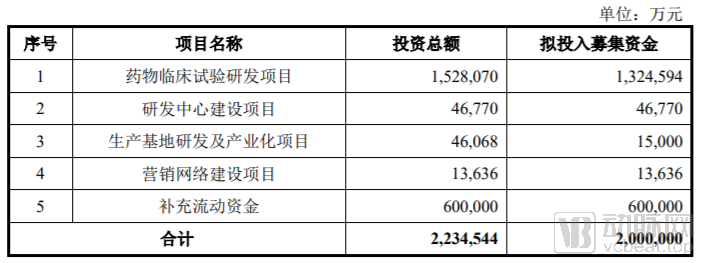
1Month29BeOne Medicines Ltd. (hereinafter referred to as “BeOne Medicines”) applies for listing on the STAR MarketAccepted, with planned fundraising200100 million yuan,For clinical trials, R&D center construction, R&D and industrialization at production bases, and replenishment of working capital.
(Data source: Prospectus)
Previously, BeOne Medicines listed on the Nasdaq in the United States on February 3, 2016, issuing a total of 7.59 million American Depositary Shares (ADS) at an offering price of $24 per share. Currently, BeOne Medicines’ U.S.-listed shares are trading at $332 per share, with a total market capitalization of $29.8 billion (approximately HK$231 billion). BeOne Medicines also listed on the Hong Kong Stock Exchange on August 8, 2018, issuing 65.6 million shares at an offering price of HK$108 per share. Currently, BeOne Medicines’ Hong Kong-listed shares are trading at HK$190.1 per share, with a total market capitalization of HK$225.4 billion.
If the listing on the STAR Market proceeds smoothly, BeOne Medicines will become the first innovative pharmaceutical company to be listed in all three markets: U.S. stocks, H-shares, and A-shares.
BeOne Medicines is a global, commercial-stage biotechnology company focused on the research, development, manufacturing, and commercialization of innovative medicines. The company possesses capabilities spanning early drug discovery, preclinical testing, clinical research, large-scale high-quality drug manufacturing, and science-based commercialization.
Since its inception, BeOne Medicines has advanced 11 self-developed drug candidates into clinical trials or commercialization stages, among which BRUKINSA® (zanubrutinib capsules) and BAIZEAN® (tislelizumab injection) have received marketing approval.
Data show that BRUKINSA® (zanubrutinib capsules), the first independently developed anti-cancer drug in China to receive U.S. FDA approval and Breakthrough Therapy designation, and the collaboration between BAIZEAN® (tislelizumab injection) and Novartis represents the highest upfront payment and total transaction value among all Chinese drug licensing deals to date.
On January 12, 2021, BeOne Medicines announced that it had entered into a collaboration and license agreement with global pharmaceutical giant Novartis for the development, manufacturing, and commercialization of its self-developed anti-PD-1 antibody drug, tislelizumab, in multiple countries. The upfront payment amounted to $650 million, with the total transaction value exceeding $2.2 billion, setting a new record for the highest licensing deal value for a single drug product in China.
BeOne Medicines has established a comprehensive oncology biology R&D system and built multiple drug discovery technology platforms, including a compound screening platform, a small-molecule kinase inhibitor optimization platform, an analytical chemistry research platform, a proteolysis-targeting chimera (PROTAC) technology platform, a bispecific/multispecific antibody discovery platform, a single B-cell antibody screening platform, and an antibody-drug conjugate (ADC) development platform.
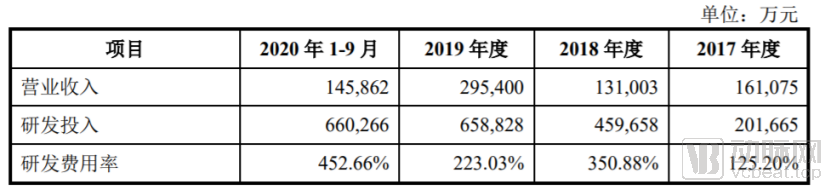
As of January 2021, BeOne Medicines had more than 2,100 R&D personnel, accounting for over 40% of its total workforce. Data shows that in the first nine months of 2020, BeOne Medicines reported operating revenue of RMB 1.459 billion and R&D expenses of RMB 6.6 billion, reflecting an exceptionally high level of R&D investment.
(Operating Revenue and R&D Investment)
Such substantial R&D investment naturally yields commensurate returns. The prospectus reveals that BeOne Medicines is conducting more than 60 ongoing clinical trials across over 35 countries and regions, including more than 25 Phase III or potentially registrable clinical trials.
For example, zanubrutinib has submitted 19 new drug and new indication marketing applications, covering 43 countries globally, and has been accepted in China, the European Union, Australia, Canada, Israel, and other countries and regions; tislelizumab has submitted two new indication marketing applications in China, which have been accepted; pamiparib has submitted one new drug marketing application in China and has been included in the priority review.
In addition, BeOne Medicines has built its product portfolio through in-house R&D and licensing collaborations, comprising a total of 47 commercialized products and clinical-stage candidates, including 7 commercially launched drugs, 5 candidates under regulatory review, and 35 clinical-stage candidates.
In terms of licensed collaborations, BeOne Medicines has been authorized by Bristol-Myers Squibb to market Revlimid® (lenalidomide capsules), Vidaza® (azacitidine for injection), and ABRAXANE® (paclitaxel protein-bound particles for injectable suspension) in mainland China; it has also been authorized by Amgen to market Xgeva® (denosumab injection) in mainland China. Notably, the conditional approval of Xgeva® for the treatment of patients with giant cell tumor of bone that is unresectable or where surgical resection may lead to severe functional impairment was included in the National Reimbursement Drug List on December 28, 2020, effective March 1, 2021.
In terms of manufacturing, BeOne Medicines has established a multi-functional industrialization base in Suzhou, China, designed in accordance with regulatory standards in the United States, the European Union, and China. Covering a total area of over 13,000 square meters, the facility includes a small-molecule drug production site with an annual output of approximately 100 million tablets and a pilot-scale biologics production facility with a capacity of 500 liters. Additionally, BeOne Medicines is constructing a large-molecule biologics manufacturing base in Guangzhou, with a total area of 100,000 square meters. Phase I and Phase II plants were completed in September 2019 and December 2020, respectively, currently providing a biologics production capacity of 24,000 liters. Phase III, with a planned capacity of 40,000 liters, is expected to be completed by the end of 2021, bringing the total capacity to 64,000 liters upon completion.
BeOne Medicines’ core products primarily include BRUKINSA® (zanubrutinib capsules), BAIZEAN® (tislelizumab injection), and pamiparib, an independently developed drug for which a New Drug Application has been submitted in China and included in the priority review program.
BRUKINSA®
BRUKINSA® (zanubrutinib capsules) is a small-molecule drug independently developed by BeOne Medicines, with its active ingredient zanubrutinib being a BTK small-molecule inhibitor. BRUKINSA® began achieving large-scale sales in 2020, recording sales volume of approximately 12,000 bottles and revenue exceeding RMB 160 million from January to September 2020.
Brukinsa® received accelerated approval from the U.S. FDA in November 2019 for the treatment of adult patients with mantle cell lymphoma (MCL) who have received at least one prior therapy; it received conditional approval from China’s National Medical Products Administration (NMPA) in June 2020 for the treatment of adult patients with MCL who have received at least one prior therapy, as well as adult patients with chronic lymphocytic leukemia (CLL)/small lymphocytic lymphoma (SLL) who have received at least one prior therapy.
In addition to the indications already approved for marketing, BeOne Medicines is seeking broader approval for zanubrutinib globally. For example, in the second quarter of 2020, the Australian Therapeutic Goods Administration accepted two New Drug Applications (NDAs) for zanubrutinib for the treatment of patients with relapsed or refractory mantle cell lymphoma and Waldenström’s macroglobulinemia; in May 2020, an NDA for zanubrutinib for the treatment of patients with mantle cell lymphoma who had previously received at least one prior therapy was accepted in Israel...
In 2019, the global market size for BTK inhibitors was $5.9 billion, projected to reach $16.4 billion by 2024, with a compound annual growth rate (CAGR) of 22.9%. In the United States, the market size for BTK inhibitors was $4.0 billion in 2019 and is expected to reach $10.1 billion by 2024, representing a CAGR of 20.5%. In China, the market size for BTK inhibitors was RMB 700 million in 2019 and is anticipated to grow to RMB 7.8 billion by 2024, with a CAGR of 60.1%.
Currently, only four BTK inhibitors have been approved worldwide, and BeOne Medicines’ Brukinsa® will have significant profit potential.
BAIZEAN®
Baizean® (tislelizumab injection) is an anti-PD-1 monoclonal antibody drug independently developed by the Company. Its active ingredient, tislelizumab, is a humanized IgG4 monoclonal antibody targeting the immune checkpoint receptor PD-1. Baizean® was launched for sale in China in March 2020, achieving sales volume of approximately 84,000 vials and revenue of nearly RMB 700 million from January to September 2020.
Baizean® received conditional marketing approval from the National Medical Products Administration (NMPA) of China in December 2019 and April 2020, respectively, for the treatment of patients with relapsed or refractory classical Hodgkin lymphoma (cHL) who have undergone at least two prior lines of systemic chemotherapy, and for patients with locally advanced or metastatic urothelial carcinoma (UC, bladder cancer) with high PD-L1 expression whose disease progressed during or within 12 months after platinum-containing chemotherapy, including neoadjuvant or adjuvant therapy. In January 2021, Baizean® was approved by the NMPA of China in combination with two chemotherapy regimens for the first-line treatment of patients with advanced squamous non-small cell lung cancer.
In addition to the indications already approved for marketing, BeOne Medicines is seeking broader approval for tislelizumab. In June 2020, China’s National Medical Products Administration (NMPA) accepted a supplemental new drug application (sNDA) for tislelizumab in combination with chemotherapy for the first-line treatment of patients with advanced non-squamous non-small cell lung cancer (NSCLC). In July 2020, the NMPA accepted an sNDA for tislelizumab as a monotherapy for patients with unresectable hepatocellular carcinoma who had previously received treatment. Furthermore, BeOne Medicines has conducted 35 clinical trials globally evaluating tislelizumab as both monotherapy and in combination regimens, including 17 registrational trials.
In terms of the market, the global market size for anti-PD-1/PD-L1 monoclonal antibodies was $23.2 billion in 2019 and is projected to reach $67.8 billion by 2024, representing a compound annual growth rate (CAGR) of 23.9% from 2019 to 2024E. According to the prospectus, three anti-PD-1 monoclonal antibody drugs and three anti-PD-L1 monoclonal antibody drugs have been approved in the U.S. market, while six anti-PD-1 monoclonal antibody drugs and two anti-PD-L1 monoclonal antibody drugs have been approved in the Chinese market, indicating relatively intense competition.
Pamiparib
Pamiparib is an investigational, highly selective small-molecule inhibitor of poly(ADP-ribose) polymerase 1 (PARP1) and PARP2, independently developed by BeOne Medicines. Pamiparib is currently undergoing global clinical development as a monotherapy or in combination with other agents for the treatment of various malignant solid tumors.
In July 2020, the New Drug Application (NDA) for pamiparib for the treatment of patients with advanced ovarian cancer, fallopian tube cancer, or primary peritoneal cancer who had received at least two prior lines of chemotherapy and harbored deleterious or suspected deleterious germline BRCA mutations was accepted by China’s National Medical Products Administration (NMPA) and included in the priority review program.
In addition, BeOne Medicines is conducting 12 clinical trials of pamiparib as monotherapy and in combination regimens worldwide, including two registrational clinical trials.
In 2019, the global market size for PARP inhibitors was $1.6 billion, projected to reach $9.6 billion by 2024, representing a compound annual growth rate (CAGR) of 42.5% from 2019 to 2024E. In China, the market size for PARP inhibitors was RMB 240 million in 2019, expected to reach RMB 4.57 billion by 2024, with a CAGR of 80.6% from 2019 to 2024E.
Currently, four PARP inhibitors have been approved in the U.S. market, and three have been approved in the Chinese market, leaving significant growth opportunities for pamiparib.
The prospectus shows that BeOne Medicines is not yet profitable. Its operating revenues for 2017, 2018, 2019, and the first nine months of 2020 were RMB 1.6 billion, RMB 1.3 billion, RMB 2.9 billion, and RMB 1.4 billion, respectively; its R&D expenses were RMB 2.0 billion, RMB 4.6 billion, RMB 6.5 billion, and RMB 6.6 billion, respectively.
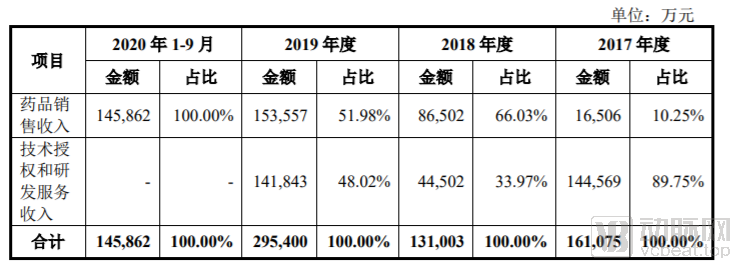
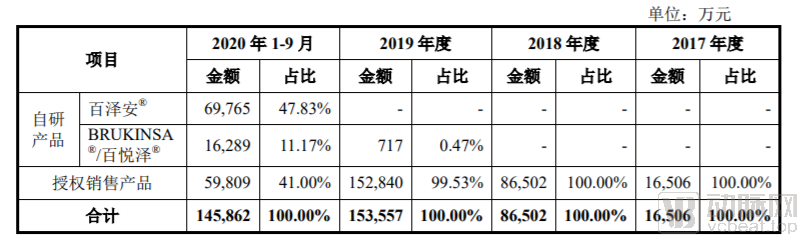
The aforementioned data indicate that the sales revenue of licensed products of BeOne Medicines declined from January to September 2020. Apart from this, the sales revenue of both self-developed products and licensed products of BeOne Medicines maintained consistent year-over-year growth during the reporting period.
BeOne Medicines explained: On March 25, 2020, China’s National Medical Products Administration suspended the importation, sale, and use in China of ABRAXANE® supplied to BeOne Medicines by Celgene Corporation (now a subsidiary of Bristol Myers Squibb), resulting in a decline in sales revenue from licensed products for BeOne Medicines during January–September 2020.
Regarding the future, BeOne Medicines is well-prepared and has formulated a development plan.
First, BeOne Medicines plans to continue fully leveraging the commercial potential of BRUKINSA® and BAIZEAN®, while steadily advancing clinical trials to expand the indications for both products, aiming to secure approvals for additional indications and thereby maximize their commercialization potential.
Second, fully leverage our global clinical development capabilities and strong commercialization strengths to continue expanding our clinical development and commercial teams.
Third, in terms of product development, we will continue to vigorously strengthen our independent R&D capabilities, evaluate opportunities for innovative therapies, and further expand our product pipeline. Through both in-house R&D and in-licensing, we will incorporate innovative drugs at the preclinical, clinical, and commercial stages into the company’s product pipeline.
Fourth, by designing targeted market access strategies to enter the global market in phases with more affordable drug prices.