

34 Companies Entered in 5 Years, $1.1 Billion Raised in 2: How Close Is Sports Rehabilitation to Its Breakthrough?

ZDROID MEDTECH
Rehabilitation Robot R&D and Manufacturer
On August 31, 2020, the news headline “Yi Jianlian Travels to the U.S. for Rehabilitation” quickly topped trending searches on major platforms. Almost immediately, nearly everyone began questioning why Yi Jianlian would choose to undergo rehabilitation treatment in the United States amid its severe COVID-19 outbreak, raising doubts as to whether domestic rehabilitation facilities were unable to meet his needs.
Yi Jianlian was well aware of the severity of the pandemic in the United States, but no athlete would dare to take their rehabilitative treatment lightly. For them,Failure to properly manage this stage can have minor consequences, such as impairing training and causing a decline in competitive performance, or major consequences, including forcing athletes into premature retirement and even causing irreversible impacts on their daily lives thereafter.
In the past, such regrets were not uncommon. Zhao Ruirui, a former star player of the Chinese women’s volleyball team, suffered a severe meniscal injury to her right knee after an accidental fall during a team training session. To avoid jeopardizing her participation in the upcoming Olympic Games, the team opted for conservative treatment. However, the rehabilitation outcomes were highly unsatisfactory; Zhao played only one point at the Olympics before sustaining another injury and being forced off the court, after which she was effectively in a semi-retired state.
Looking at the international sports arena, former world No. 1 and renowned British tennis player Andy Murray underwent hip surgery in early 2018. Prior to the procedure, he publicly stated that he would definitely return to competition and achieve even better results than before. However, things did not go as planned. Due to unsystematic postoperative rehabilitation, Murray’s competitive form upon his return was significantly diminished. His world ranking once fell outside the top 200, leaving him in the awkward position of struggling to secure a single victory.
"Having learned from past experiences, athletes now place great emphasis on post-surgical rehabilitation training, pinning their hopes on the best rehabilitation institutions and the most authoritative rehabilitation therapists."Driven by this market demand, the field of sports rehabilitation has gradually welcomed promising development opportunities, with a surge in the number of companies entering this sector and continuous capital inflow.
What Is Sports Rehabilitation?
German MTT (Medical Training Therapy) is explained as follows:Through systematic and targeted functional movement training, and with full consideration of the physiological recovery cycles of tissues, stimulation is applied to relevant tissue structures and the body’s overall organ systems, thereby inducing positive adaptations in both biological morphology and function.
In layman's terms, it is a method of physical rehabilitation that employs medical assessments—including pathological history taking, imaging analysis, postural evaluation, movement testing, and palpation—to guide targeted muscle training with appropriate volume. This approach utilizes external tools (such as resistance bands, dumbbells, barbells, and other fixed equipment) while accounting for tissue healing timelines, and incorporates manual joint mobilization when necessary to restore injured areas and promote overall recovery.
Unlike the general population, athletes have exceptionally high demands for rehabilitation training. From the athletes’ perspective, post-injury rehabilitation is far more critical than surgical intervention. As Professor Jiao Wei, Deputy Director of the Department of Sports Rehabilitation at Beijing Sport University, stated: “The primary distinction between sports rehabilitation and conventional rehabilitation lies in their objectives. Sports rehabilitation, a form of sports physical therapy, aims to help patients return to normal athletic activities, thereby entailing higher rehabilitation standards. In contrast, conventional rehabilitation focuses on restoring individuals to their daily living standards, which involves relatively lower requirements and is easier to achieve.”
Regarding the disciplinary classification within rehabilitation medicine, Zhao Yang, Operations Director at Changhe Medical, provided a detailed introduction: “Sports rehabilitation is primarily divided into three major sectors,”1. Cardiopulmonary Rehabilitation, with its core focus on enhancing cardiac and pulmonary function to enable athletes to withstand high-intensity competitions, such as Hui Ruoqi, former captain of the Chinese women's national volleyball team;2. Orthopedic Rehabilitation, primarily including meniscus and Achilles tendon repairs, which affect a relatively large population, such as the well-known "Chinese Flying Man" Liu Xiang;3. Pain Rehabilitation, with the aim of alleviating pain in a specific body part of athletes, which is a rehabilitation step that the vast majority of athletes frequently encounter.”
Former captain of the Chinese women’s national volleyball team and Rio Olympic champion, Wei Qiuyue, also underwent a rehabilitation journey. In 2014, to compete in the Olympics in optimal physical condition, Wei traveled to Chicago, USA, for minimally invasive knee surgery to remove loose bodies within the knee joint.
Post-surgery, Wei Qiuyue was admitted to the Shirley Ryan AbilityLab—the top-ranked rehabilitation center in the United States—for her recovery. According to Wei’s later recollections, when she first arrived at the rehab center, she relied on crutches and faced significant mobility challenges, being unable to perform even simple leg-lifting exercises.
Rehabilitation therapist Dr. Ho oversaw Wei Qiuyue’s entire rehabilitation process, devising a detailed plan that specified every step. The rehabilitation program was divided into three phases: Phase One focused on functional training, primarily aimed at enabling unassisted walking without crutches and performing simple prescribed movements; Phase Two centered on strength training, involving personalized, low-intensity exercises such as slow jogging and light jumping to effectively activate muscles; Phase Three targeted cardiopulmonary conditioning, further strengthening muscle power while introducing basic dynamic movements such as jumping, sprinting, and rapid agility drills.
After completing these basic rehabilitation exercises, athletes will progress to the specialized rehabilitation phase based on their individual conditions. For Wei Qiuyue, this involves ball-integrated training, primarily consisting of performing fixed on-court maneuvers such as passing, blocking, and defensive plays. The exercise intensity will be appropriately adjusted according to her recovery progress until it meets the requirements for normal athletic performance.
After a long and painful recovery, Wei Qiuyue returned to the national team in September 2015 after a one-year absence and helped the team win the World Cup title that year. In August 2016, she fulfilled her dream of competing in the Rio Olympics, where she played as a key starter and helped the team secure the gold medal.
After retiring, Wei Qiuyue once described this memorable rehabilitation experience: “Frankly speaking, I was quite apprehensive before going to the United States because my injury was severe, and I was deeply concerned that the final outcome might be unsatisfactory. However, after receiving close-up care, I found that both the rehabilitation physicians and nursing staff were highly professional. They developed a detailed training plan for me and supervised its implementation on a daily basis. Being able to see my gradual progress felt truly remarkable.”
Rehabilitation training is a “mandatory course” for every athlete and an indispensable part of their professional careers. With continuous advancements in rehabilitative medical technology, overall rehabilitation outcomes have improved significantly compared to the past. It is precisely these progressions that have made it possible for athletes plagued by injuries and illnesses to return to competition.
In addition to Yi Jianlian and Wei Qiuyue, top Chinese athletes such as Liu Xiang, Yao Ming, and Lang Ping have all undergone rehabilitation training abroad. Why do overseas rehabilitation institutions earn the favor of these high-level athletes? What exactly is their appeal?
In fact, the surgical complexity of most sports injuries is not high. Given that clinical medicine in China is already highly advanced, athletes can readily undergo surgery domestically. However, there remains a significant gap between China and developed countries in the critical area of sports rehabilitation, which necessitates our athletes to seek rehabilitation services abroad.
How is the rehabilitation system structured abroad, and where do its advantages lie?
Taking the United States as an example. After World War II, in order to carry out treatment and care for wounded soldiers and workers, the American Medical Association (AMA) completed the construction of a complete system of rehabilitation medicine on the basis of orthopedics and physical medicine, and specifically established the standardized title of "rehabilitation physician."
Rehabilitation medicine is a relatively weak segment within the vast U.S. healthcare industry cluster. According to data from the U.S. Centers for Medicare & Medicaid Services (CMS), rehabilitation medical expenditures in the United States amounted to approximately $42 billion in 2017, accounting for only about 1.3% of the nation’s total healthcare spending.
Nevertheless, the U.S. rehabilitation medicine industry remains at the forefront globally. As early as the 1950s, the United States had established a neighborhood-based, private clinic-style sports rehabilitation industry model, ensuring that individuals with sports injuries could access professional sports rehabilitation medical care within a 10-minute walk from their homes.
As time has progressed, the U.S. rehabilitation healthcare system, underpinned by advanced medical technologies and a robust talent training mechanism, has become highly mature and is capable of maximizing its market value.
In terms of talent development,The United States has established a comprehensive educational system for rehabilitation medicine, featuring a standardized four-year post-medical school training program that includes one year of internship and three years of residency. Many hospitals also offer subspecialty fellowship training in physical medicine and rehabilitation, providing an additional one to two years of specialized training for physicians who wish to further their expertise in areas such as pain management, spinal rehabilitation, sports rehabilitation, pediatric rehabilitation, or brain injury rehabilitation.
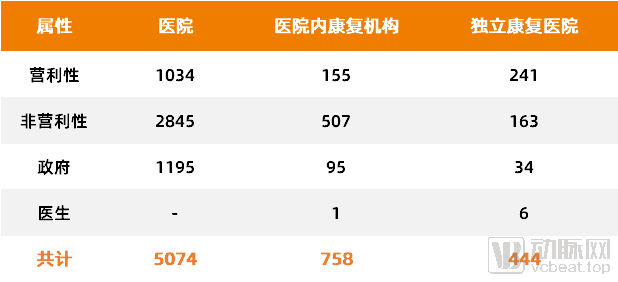
Data source: American Hospital Association; graphic by VCBeat
In terms of rehabilitation institutions, tens of thousands of individual or group practices operated by rehabilitation physicians or physical therapists are distributed across the United States, and some long-term care nursing facilities also provide rehabilitation services. Among the 5,000 general hospitals in the United States, 758 have established rehabilitation departments and rehabilitation beds, with an additional 444 specialized rehabilitation hospitals.
Some of these independent rehabilitation hospitals belong to large healthcare groups. For instance, Encompass Health (formerly known as Southern Health System in some contexts, but commonly referred to by its current corporate identity) operates 123 specialized rehabilitation hospitals across 30 states, accounting for 21% of the total number of inpatient rehabilitation beds nationwide. Among the 38 hospitals operated by Kaiser Permanente, the largest integrated managed care organization in the United States, one is a specialized rehabilitation hospital. Additionally, two of Los Angeles’ largest and most prestigious medical centers—UCLA Medical Center and Cedars-Sinai Medical Center—partnered two years ago with Select Medical, a leader in the rehabilitation sector, to jointly establish the California Rehabilitation Research Center, which has 138 beds. Select Medical employs this same collaborative model to manage rehabilitation services for Baylor Scott & White Health, Cleveland Clinic, and several other top-tier U.S. hospitals.
In terms of rehabilitation philosophy, the United States advocates for “front-loading rehabilitation.” Early rehabilitation intervention in the U.S. is manifested through bedside rehabilitation during the acute phase, which is implemented by non-rehabilitation departments in acute care hospitals. This approach provides patients with moderate-intensity rehabilitation therapy at an early stage, ensuring timely initiation of rehabilitative care. In contrast to the traditional Chinese belief that “sprains and fractures require 100 days of rest,” the U.S. emphasizes replacing prolonged bed rest with appropriate exercise, aiming to prevent muscle atrophy and enhance physical function.
In terms of healthcare payment, the United States has established diverse insurance reimbursement policies for the implementation of rehabilitation training, guiding the rapid development and improvement of various rehabilitation institutions. This approach meets patients’ rehabilitation needs at different levels and across various stages of treatment, facilitates timely, proactive, and smooth triage and referral for patients, and promotes the development of community-based rehabilitation service organizations.
It is precisely by relying on advanced medical technology and a comprehensive teaching system that the United States has consistently remained in the “first tier” of global rehabilitation, attracting tens of thousands of top athletes from around the world to seek recovery there.
Unlike the United States, which has established a comprehensive rehabilitation system, the field of sports rehabilitation in China started later and is currently still in its nascent stage. However, in recent years, with growing societal emphasis on sports rehabilitation and increasing awareness among athletes regarding their own recovery, the field has made significant progress.
1Policies Encourage the Decentralization of Rehabilitation Medical Resources
In the 2014 “Document No. 46,” the field of sports rehabilitation was highlighted as a key priority: “Vigorously develop sports medicine and rehabilitation medicine, actively research and develop sports rehabilitation technologies, and encourage social capital to establish various institutions such as those for fitness and health services, physical fitness assessment, and sports rehabilitation.”
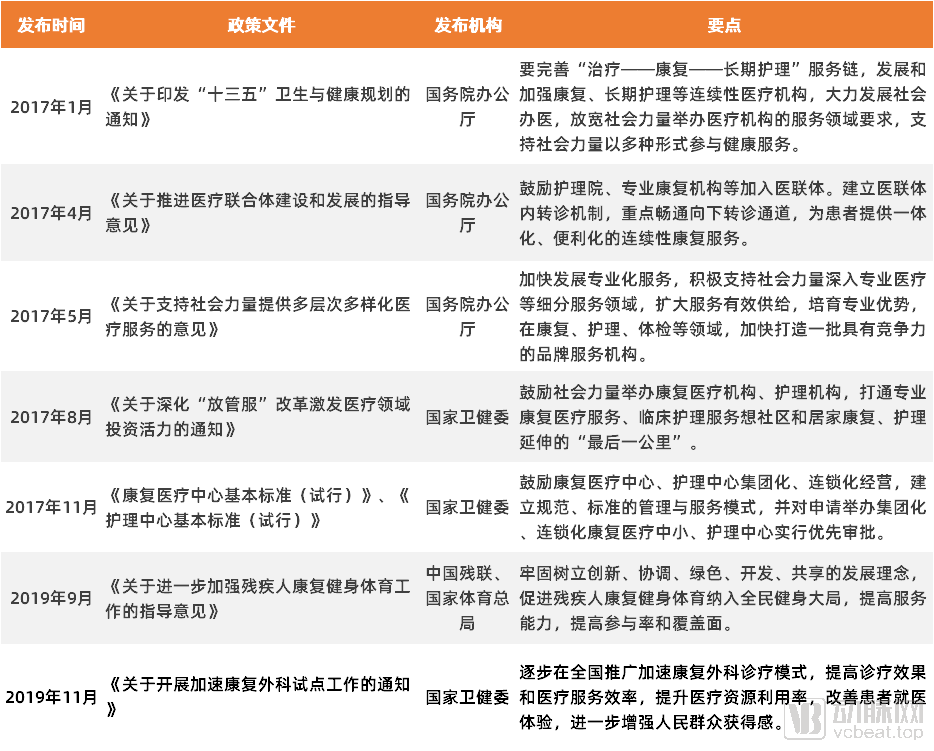
Until recent years, functional departments led by the State Council, the National Health Commission, and the General Administration of Sport have successively introduced relevant policies to vigorously support the development of the sports rehabilitation industry. These policies encourage the establishment of group-based and chain-operated rehabilitation medical centers and nursing centers, aiming to comprehensively build an integrated rehabilitation service chain encompassing “treatment–rehabilitation–long-term care.”
2The industrial chain covers 430 million sports participants.
Overall, the sports rehabilitation industry chain is broadly divided into three major segments. The upstream sector primarily consists of rehabilitation equipment manufacturers, while the downstream sector comprises sports medicine or rehabilitation departments in general hospitals and specialized rehabilitation institutions. The end customers are professional athletes and sports enthusiasts.
Upstream: Surge in the Number of Enterprises, Diversified Market Landscape
According to the "Special Research and Investment Strategy Analysis Report on China's Rehabilitation Medical Device Industry (2021-2026)," the market size of rehabilitation medical devices in China grew from RMB 11.6 billion in 2014 to RMB 28.2 billion in 2018, with a compound annual growth rate (CAGR) of 24.9%, outpacing the overall growth of the medical device industry.The market size of rehabilitation medical devices in China is projected to grow at an annual rate of 20%, reaching RMB 58 billion in 2022.
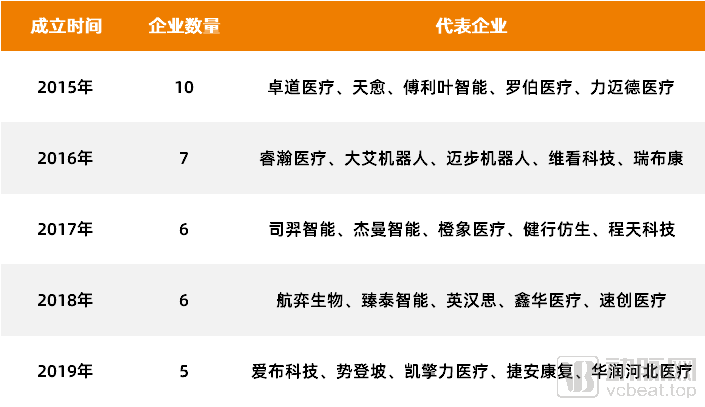
In terms of the number of enterprises, according to the VCBeat Orange Database,Over the past five years, 34 new medical rehabilitation equipment manufacturers have been established, with as many as 17 of them specializing in the field of rehabilitation robotics.As a high-end rehabilitation medical technology, rehabilitation robots are the product of deep integration between robotics and medical technologies. They can replace the mechanical and repetitive tasks performed by rehabilitation therapists, freeing them from burdensome and repetitive training duties. This allows healthcare professionals to focus more on optimizing treatment plans, while also enabling remote and centralized rehabilitation medical services.
Downstream: Hospital Rehabilitation Departments Strengthen Their Roles, While Independent Rehabilitation Institutions “Showcase Their Unique Strengths”
“Thirty percent depends on treatment, seventy percent on nursing.” As an independent department, the Department of Rehabilitation plays a pivotal role in the rehabilitative treatment of critically ill patients, and its significance should not be underestimated. With the growing public awareness of health and self-care, the Department of Rehabilitation will assume an irreplaceable and increasingly vital role that other specialized therapeutic disciplines cannot fulfill.
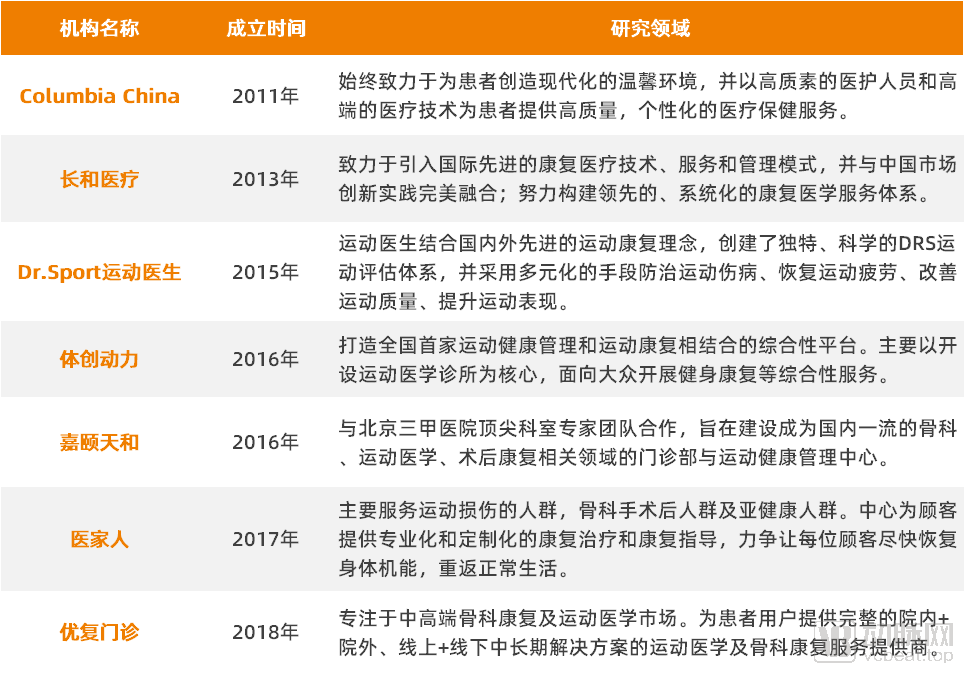
Guided by policy, domestic rehabilitation medical institutions have now taken shape and developed diverse rehabilitation service plans for a broad user base. According to the "White Paper on China's Sports Rehabilitation Industry," as of the end of 2020,The number of sports rehabilitation institutions has approached 400, with a growth rate exceeding 40% over the past three years., and in terms of specific service areas, they are mainly distributed in economically developed cities such as Shanghai, Beijing, and Guangzhou, with the average price per treatment session in first-tier cities ranging from 800 to 1,200 yuan.
End Users: The population of individuals engaged in physical exercise will reach 430 million.
The growing number of individuals engaging in physical activity and the heightened awareness of rehabilitation will continue to drive the development of the sports rehabilitation industry. According to data from the "White Paper on China's Sports Rehabilitation Industry,"In 2020, the number of people participating in physical exercise in China reached 430 million., based on an estimated sports injury rate of 10%-20%, the number of individuals with sports injuries is projected to reach 100 million, indicating significant potential for future demand in sports rehabilitation.
3Strong Capital Influx: Investment Reaches 800 Million Yuan in Two Years
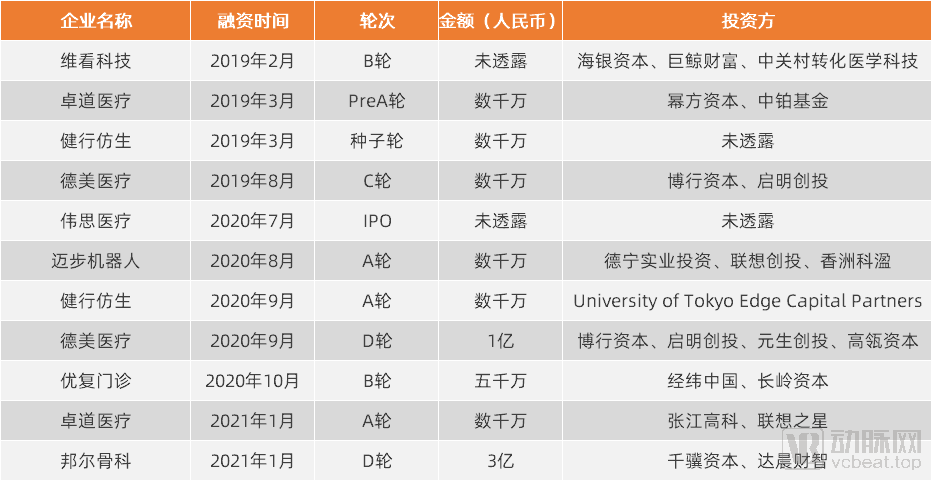 Data source: Arterial Orange, chart by VCBeat
According to the VCBeat database,From 2019 to the present, there have been a total of 11 financing events in the field of sports rehabilitation, with a total financing amount of approximately RMB 800 million., among which Bang’er Orthopedics secured RMB 300 million in financing in January 2021, marking the largest single-round funding amount in the past two years. Meanwhile, ZD Medical, Demei Medical, and Jianxing Bionics have each completed two rounds of financing, demonstrating strong market potential. On the other hand, as sports rehabilitation remains an emerging sector, financing activities are predominantly concentrated at Series A. Nevertheless, it is undeniable that with continuous technological optimization and a surge in market demand, increasing capital inflows will gradually converge on this field.
4Intensified Efforts in Cultivating Professional Talent
Talent has always been a key driver of industry development. In 2014, “National Fitness” was elevated to a national strategy, and the Outline of the “Healthy China 2030” Plan and the National Fitness Plan (2016–2020) were successively promulgated, explicitly stating that “"Vigorously develop sports medicine and rehabilitation medicine," and "strengthen the training of urgently needed professionals such as rehabilitation therapists and sports rehabilitation specialists."
In terms of teaching,Currently, there are 128 universities in China offering majors in Sports Rehabilitation., with Beijing Sport University (BSU) being the first higher education institution in China to enroll students in the Sports Rehabilitation and Health program. BSU established the Sports Rehabilitation and Health major in 2004 and officially began enrollment in 2005. The faculty includes 7 professors, 9 associate professors, and 6 lecturers, among whom 6 serve as doctoral supervisors and 11 as master’s supervisors. Currently, there are over 500 undergraduate students and more than 130 graduate students enrolled.
In 2020, the first rehabilitation college in ChinaChina Sports Rehabilitation Education CollegeUpon its official establishment, the College appointed Dr. Jin Dapeng, former Vice President of the Chinese Medical Association, as its Honorary Dean, and Dr. Li Guoping, former Director of the Sports Medicine Research Institute of the General Administration of Sport of China and founding Chairman of the Sports Medicine Branch of the Chinese Medical Association, as its Dean. Additionally, numerous experts and scholars from the sports and medical fields, both domestic and international, were engaged as advisors and vice deans, forming an authoritative and robust expert team dedicated to the integration of sports and medicine. In collaboration with higher education institutions, healthcare organizations at all levels, and relevant academic bodies, the College aims to further establish a professional educational platform for sports rehabilitation medicine.
5Intelligence Brings New Opportunities to Rehabilitation Medical Devices
Currently, there is still a significant gap between domestic and foreign sports rehabilitation equipment in terms of technology and services. However, with the integration of technologies such as AI and 5G, domestic sports rehabilitation equipment is expected to achieve "overtaking on a bend."
Wang Daoyu, founder of ZD Medical, told VCBeat, “Sports rehabilitation is a process in which patients interact with devices or robots. In such a complex medical context, the efficient integration of deep learning algorithms and treatment protocols into rehabilitation equipment will become the mainstream approach in this field. With the advent of the intelligence era, advanced emerging technologies are providing China’s sports rehabilitation device industry with an opportunity to align with, and even surpass, international standards.”
From the perspective of current market demand, sports rehabilitation is undoubtedly a “hot commodity” in the healthcare industry. However, at present, companies seeking to rapidly enter the sports rehabilitation market are generally constrained by limitations in talent, experience, and payment mechanisms.
1Sports Rehabilitation Therapists Face a Significant Shortage, with an Immature Talent System
Since 2008, with universities and sports colleges successively establishing majors in sports rehabilitation, the number of graduates in sports rehabilitation and related rehabilitation fields has increased year by year, yet it still fails to meet market demand. According to relevant statistics, there are only 128 undergraduate programs in China related to therapeutic rehabilitation and sports rehabilitation, compared to 219 in the United States, 280 in Germany, and 249 in Japan. Moreover, master’s and doctoral degree programs in these fields are even scarcer in China.
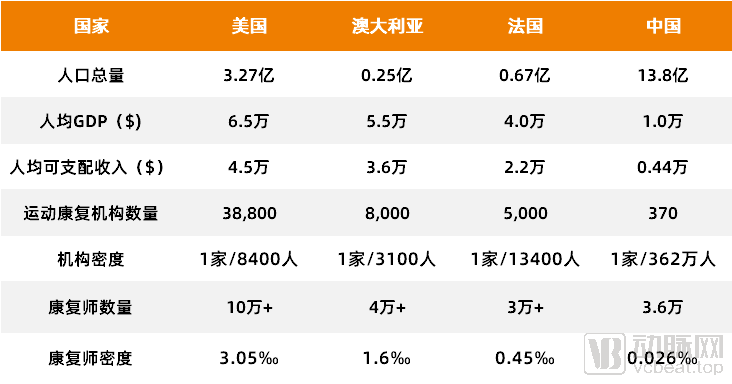
Data source: White Paper on China's Sports Rehabilitation Industry, chart by VCBeat
In terms of the per capita demand ratio, according to publicly available data,There are currently approximately 36,000 technically qualified rehabilitation therapists in China, with a therapist density of only 0.026 per thousand population., lagging far behind foreign countries; therefore, the shortage of talent will be a major factor limiting the development of sports rehabilitation in China.
2The market share is unreasonably distributed, with the majority concentrated among a small group.
Sports rehabilitation primarily serves three groups: professional athletes, sports enthusiasts, and individuals seeking a high quality of life. However, the current market distribution among these groups is imbalanced, resulting in a “top-light, bottom-heavy” structure for the sports rehabilitation industry.
Zhao Yang told VCBeat, “Currently, in the sports rehabilitation market, the proportion of professional athletes, sports enthusiasts, and individuals seeking a high quality of life follows a ‘7-2-1’ ratio. Market growth is primarily driven by professional athletes; however, the size of this group remains relatively stable, making it difficult to inject new vitality into the market.”To drive industry development, the market ratio should be “118,” with the primary market drivers concentrated among consumers who demand a high quality of life. Only in this way can this market model prove viable.”
3Consumers are relatively unfamiliar with the concept of sports rehabilitation.
The lack of clear understanding of sports rehabilitation is the primary reason why such services fail to gain widespread public acceptance. In China, sports injuries are still not generally perceived as medical conditions, and the profession of certified sports rehabilitation therapist remains relatively obscure. When faced with the choice between “I need to treat my illness” and “How can I restore physical function,” most people still opt for the former.
Zhao Yang shares this view, “For most people,'If injured, stop training; rest will facilitate recovery.'This is the primary concept for addressing sports-related injuries and illnesses. When people get injured or feel unwell during exercise, they do not immediately seek treatment at professional rehabilitation institutions; instead, they either stop participating altogether or wait until the injury or illness subsides before resuming activity. This approach often leads to more serious consequences. Ultimately, this stems from a widespread lack of understanding regarding the concepts and principles of sports rehabilitation. Greater efforts are needed to promote market awareness, so that the general public becomes more aware of and recognizes the existence and necessity of rehabilitative medical care.
4Healthcare Payment Becomes a Challenge: Whether Health Insurance Can Provide Comprehensive Coverage Is Key
Currently,China’s medical insurance has low coverage in the rehabilitation field, with only 20-plus items covered., with assessment items accounting for 40% and therapeutic items for 60%. Moreover, the overall investment is low and enthusiasm is weak, resulting in relatively low service fees covered by medical insurance in the rehabilitation field.
Specifically, China’s social health insurance covers only inpatient rehabilitation services, excluding outpatient care, and operates on a fee-for-service basis. In the commercial insurance sector, high-premium comprehensive medical insurance plans are available that cover rehabilitation costs at premium healthcare institutions such as United Family Healthcare; however, these plans cater to only a small segment of the population and lack broad applicability.
5Insufficient experience to provide professional medical solutions.
Due to the relatively limited number of rehabilitation cases encountered in China, physicians and related nursing staff generally lack experience, often resulting in an inability to provide specialized medical solutions when confronted with complex clinical challenges.
This impact also extends to the development of rehabilitation medical devices. Wang Daoyu told VCBeat, “Currently, the field of rehabilitation devices has made significant progress driven by intelligence, yet challenges remain. For the development of rehabilitation medical devices, due to the current lack of specialized medical protocols in China, cutting-edge clinical cases cannot be integrated into the equipment, thus preventing the realization of ‘integration of medicine and devices.’”
In clinical practice, sports rehabilitation is a prolonged process that requires close collaboration across multiple disciplines to achieve optimal outcomes. This operational model applies to the entire field of sports rehabilitation; due to the industry’s inherent characteristics, its growth rate and development cycle are relatively slow, necessitating coordinated efforts across multiple stages.
At this stage, the domestic sports rehabilitation sector in China is still plagued by various challenges, including a shortage of professionals, an imbalanced market structure, and insufficient public awareness, all of which are significantly hindering industry development. Nevertheless, there is reason to believe that with the deepening adoption of holistic health concepts, active policy support from the government, and the continuous efforts of enterprises, institutions, and talents operating in this field, sports rehabilitation will achieve qualitative improvements in the future. A comprehensive, top-down operational system will be established, thereby delivering high-quality rehabilitation services to patients and enabling them to return to physical activity more effectively.
This will be our shared goal.