

FDA Grants Breakthrough Device Designation to Three RDN Systems for Resistant Hypertension, Reviving a Once-Stalled Therapy
In December 2020, the FDA granted “Breakthrough Device” designation to renal denervation (RDN) products from three companies for the treatment of resistant hypertension, delivering long-awaited good news to the vast global population of patients with this condition.At the same time, for the RDN industry, it also means that since the setback in clinical trials in 2014, it has finally ushered in a moment of revival.
The approval of renal denervation (RDN) therapy signifies that patients with resistant hypertension now have an effective antihypertensive treatment option. Previously, these patients were defined as those whose blood pressure remained above 140/90 mmHg despite achieving dry weight and receiving appropriate, full-dose triple-drug antihypertensive therapy.
RDN offers a boon to patients with refractory hypertension and holds promise for expanding its indications in the future, providing an option for younger patients who are reluctant to take medications, seek to improve their quality of life, and wish to reduce dosing frequency.
It took nearly 20 years for renal denervation (RDN) therapy to gain FDA approval, a journey that included a significant downturn during which major industry players withdrew from the field, before finally achieving a remarkable turnaround in 2020.
Prior to 2014, the renal denervation (RDN) industry was bustling with activity. Industry giants such as Johnson & Johnson, Medtronic, Boston Scientific, and Abbott actively entered the field, with global mergers and acquisitions related to RDN technologies exceeding $5 billion. However, after 2014, Medtronic’s clinical trials failed to meet their primary endpoints, severely undermining industry confidence. Subsequently, Boston Scientific, Abbott, and Johnson & Johnson all abandoned their RDN pipelines. Only Medtronic, despite the significant setback, quickly regrouped and launched new clinical trials in 2015. The results of these trials were not published until 2020. The release of data demonstrating clinical efficacy immediately reignited industry interest.
In China, VCBeat (WeChat ID: vcbeat) has also observed that this industry is gradually recovering, with some startups securing hundreds of millions in financing and clinical trials progressing steadily. What exactly is the allure of the renal denervation (RDN) sector that has kept Medtronic committed? After hitting rock bottom, what breakthroughs have enabled this industry to climb once again? VCBeat conducted interviews and research with relevant experts.
Renal Artery Denervation: An Unfamiliar Term for Most, Yet Hypertension Is Widely Recognized. Why Can Renal Artery Denervation Treat Hypertension? This Is Perhaps a Question Posed by Everyone Engaged in This Field. The Key Lies in the Sympathetic Nervous System.
Blood pressure is controlled through the complex interplay of signals from multiple systems within the body, including the nervous system, circulatory system, and endocrine (hormonal) system.
You are likely familiar with the effects of adrenaline. Adrenaline helps humans stay alert and ready to respond when encountering danger. However, adrenaline has another physiological role: it acts as a hormone that regulates blood pressure. The renal arteries are richly innervated by sympathetic nerve plexuses. Overactivation of the renal sympathetic nerves leads to increased adrenaline secretion, enhanced sodium reabsorption, and reduced renal perfusion. Increased sympathetic nervous activity plays a key role in the pathophysiology of primary hypertension.
Recor Medical’s official website uses a schematic diagram to explain how the kidneys affect blood pressure.
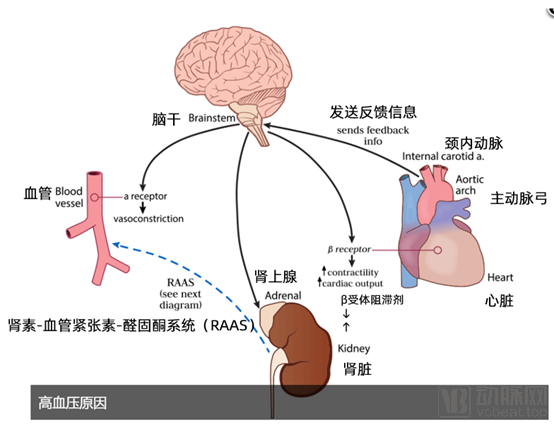
Image source: Recor Medical official website
Surgical sympathectomy for the treatment of hypertension was already being performed by physicians in the early 1930s, with demonstrated efficacy. In 2009, clinicians pioneered percutaneous catheter-based renal denervation via radiofrequency ablation, ushering in an era of minimally invasive therapy for resistant hypertension.
Minimally Invasive Percutaneous Catheter ApproachThe minimally invasive percutaneous catheter approach involves making a small incision in the groin while the patient is under anesthesia. A small, flexible catheter is inserted via femoral artery puncture and advanced into the renal arteries supplying the kidneys; both the left and right renal arteries undergo ablation during the procedure. Energy is delivered to the tissue surrounding the arteries for several seconds, generating heat that ablates the sympathetic nerves, thereby achieving renal denervation. The procedure lasts approximately 30 minutes, causes no significant discomfort to the patient, and its safety has been demonstrated in multiple clinical studies.
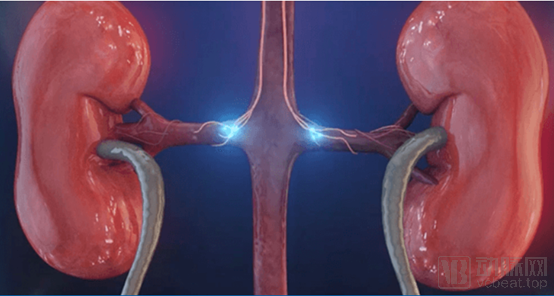
Schematic Diagram of Renal Artery Denervation. Image source: Recor Medical official website
The primary beneficiaries of hypertension treatment via sympathetic denervation are patients with resistant hypertension, which has long been a challenging issue in the management of high blood pressure. The significant market potential of resistant hypertension is a key reason for Medtronic’s sustained commitment to this field.
Resistant hypertension is not a rare condition; statistics indicate that approximately 5%–10% of hypertensive patients exhibit drug resistance. According to WHO data, there are over 1 billion individuals with hypertension worldwide, and this figure is projected to rise to 1.5 billion within the next few years. Based on a prevalence rate of 5%–10%, the number of patients with resistant hypertension is substantial and should not be underestimated.
In China, according to the latest survey data from the Chinese Hypertension Annual Conference, the number of hypertensive patients has exceeded 330 million. Based on a blood pressure control target of 140/90 mmHg, it is estimated that there are approximately 10 to 30 million patients with resistant hypertension in China.
Although hypertension may seem like a common condition, it is the leading cause of cardiovascular death. It significantly increases the risk of heart attack, stroke, heart failure, and kidney failure. Up to 25% of cases of end-stage renal disease are caused by hypertension.
In addition to refractory hypertension, renal denervation (RDN) also provides an alternative therapy for patients with hypertension. A set of data from the Medtronic official website shows that it is estimated that the direct cost of hypertension worldwide is about $400 billion per year. Nearly 20% of hypertensive patients do not adhere to oral drug treatment at all, and nearly half of them partially do not adhere to oral drug treatment, which highlights the need for alternative therapies.
Moreover, the trend of hypertension affecting younger populations is becoming increasingly evident, with young people demonstrating a greater demand for improved quality of life and reduced reliance on medication. In China, the prevalence of hypertension among young men aged 25 to 34 has exceeded 20%, indicating a clear trend toward earlier onset.
From the perspective of potential market scope, renal denervation (RDN) is not technically difficult to perform and may even be adopted by secondary hospitals in the future. The technical difficulty of renal artery ablation is lower than that of cardiac electrophysiology procedures, amounting to only 40–50% of the latter. For physicians with a background in cardiac electrophysiology ablation, proficiency in renal artery radiofrequency ablation can be fully achieved after performing just one or two cases.
The potential of renal denervation (RDN) technology is viewed favorably by multiple medical device manufacturers, yet its industrialization path has experienced significant setbacks.
Initially, the renal denervation (RDN) sector was indeed highly favored by numerous medical device manufacturers. In 2010, Medtronic entered the RDN market by acquiring Ardian for $800 million. In 2012, Boston Scientific entered the RDN market by acquiring Vessix Vascular; Boston Scientific paid an upfront consideration of $125 million, with up to an additional $400 million in contingent payments payable between 2013 and 2017 upon Vessix Vascular’s achievement of specified research and development milestones.
According to industry statistics, prior to 2014, mergers and acquisitions driven by strategic positioning in renal denervation (RDN) technology exceeded $5 billion globally.
However, in 2014, a pivotal clinical trial failed to meet its primary efficacy endpoint, causing the RDN market to plummet overnight.
In 2014, the SYMPLICITY HTN-3 clinical trial for Medtronic’s renal denervation (RDN) device failed to meet its primary efficacy endpoint for blood pressure reduction, severely undermining industry confidence.
Clinical data from the SYMPLICITY HTN-3 trial showed that 535 patients with resistant hypertension, defined as having a systolic blood pressure of 160 mmHg or higher, were enrolled. Two-thirds of the patients underwent renal artery radiofrequency ablation, while one-third served as the control group and received a sham procedure. Both groups were treated with a regimen of maximally tolerated doses of three or more antihypertensive medications, including diuretics.
Clinical results showed that systolic blood pressure decreased by 14 mmHg in the surgical group and by 12 mmHg in the sham-surgery group, casting doubt on the efficacy of renal artery radiofrequency ablation for the treatment of resistant hypertension.
Following a setback, the renal denervation (RDN) industry underwent a period of divergence. Industry leader Medtronic, after failing to meet its primary efficacy endpoints, swiftly pivoted to product improvements and initiated new clinical trials. Meanwhile, many other major players chose to abandon and exit this market.
Reviewing Medtronic’s past failures, numerous publications have summarized the reasons for its initial setbacks.
Multiple factors contribute to the failure of surgery to achieve clinical endpoints, with key issues including poor postoperative clinical control, insufficient operator proficiency, reduced and incomplete ablation points, and the use of single or non-optimized ablation devices.
After considerable turbulence, the once-bustling RDN market has seen its field of players dwindle significantly. Besides Medtronic, which has remained steadfast, the remaining key participants include ReCor Medical from the United States and SoniVie, an Israeli company.
2014 marked a critical turning point for the renal denervation (RDN) industry, severely undermining market confidence; it was not until 2020 that the sector regained its momentum.
Medtronic launched a new round of clinical trials, SPYRAL HTN-OFF MED, in 2015. In March 2020, the results of these new clinical trials were published in The Lancet, bringing renal denervation (RDN) back into the public eye.
The SPYRAL HTN-OFF MED clinical trial was conducted at 46 sites across nine countries, enrolling 331 patients with a mean 24-hour systolic blood pressure (SBP) ranging from 140 to 170 mm Hg. The mean age of the participants was 53 years, and 67% were male. The majority of patients had obesity, with a mean body mass index of 31, and approximately 5% had type 2 diabetes.
Patients in the clinical trial did not take any antihypertensive medications for three weeks prior to surgery and were assigned to either the surgical intervention group or the sham surgery group. The efficacy analysis showed a significant change in blood pressure within 3 months (P < 0.001).Office systolic blood pressure decreased by 9.2 mmHg (2.5 mmHg in the sham-operated group), and office diastolic blood pressure decreased by 5.1 mmHg (1.0 mmHg in the sham-operated group).
These data demonstrate that multi-electrode renal denervation (RDN) alone can significantly reduce blood pressure in patients without reliance on antihypertensive medications, heralding a new chapter in the RDN treatment of hypertension.
Many may wonder why Medtronic’s renal denervation product has repeatedly received the FDA’s Breakthrough Device designation, despite the modest blood pressure reductions observed in its latest clinical trials.
An industry insider explained that for every 10 mmHg reduction in blood pressure, there is significant clinical benefit in reducing hypertension-related complications. Although this numerical change may appear modest, it substantially lowers the risk of high-risk complications such as myocardial infarction, stroke, heart failure, and renal failure in patients with hypertension. Therefore, the blood pressure reduction achieved through surgery holds substantial clinical significance.
Furthermore, the blood pressure-lowering effect of RDN is effective “around the clock,” stated Dr. Michael Bohm, lead investigator of the Medtronic SPYRAL HTN-OFF MED clinical trial: “These results indicate that RDN offers an effective alternative to conventional pharmacotherapy. Moreover, its blood pressure–lowering effect provides consistent 24-hour coverage, particularly during the nighttime and early morning hours when cardiovascular and cerebrovascular events are most prevalent. This approach circumvents the limitations of delayed drug onset and fluctuating plasma drug concentrations (with peak–trough variations), thereby reducing the risk of adverse clinical events.”
This trial marks a milestone for the renal artery radiofrequency ablation industry. The RDN sector has also entered a period of resurgence and widespread advancement.
In 2020, Medtronic’s Symplicity Spyral™ renal denervation system finally received the FDA’s “Breakthrough Device” designation. Another major player, ReCor Medical, also secured the FDA Breakthrough Device designation for its Paradise™ ultrasound-based renal denervation system. Additionally, SoniVie, an Israeli company, obtained the FDA Breakthrough Device designation for its renal artery ultrasound ablation device.
The main components of the RDN system include the ablation generator and the ablation catheter. From a technical perspective, the manufacturing of the radiofrequency ablation generator and the control of the energy source represent core technical challenges. For instance, the temperature for nerve ablation needs to be maintained at approximately 50°C, requiring precise control over temperature variations.Compared with tumor ablation, nerve ablation imposes higher technical requirements on precise control, temperature regulation, and sensor feedback.
In the field of renal artery ablation, products from Medtronic, Recor, and SoniVie have all been granted Breakthrough Device designation by the FDA, yet there are significant differences in their technological approaches.
The primary distinction lies in the energy source: Medtronic employs radiofrequency ablation, whereas Recor and SoniVie utilize ultrasound ablation. In addition to the mainstream radiofrequency and ultrasound ablation modalities, cryoablation is also employed as an energy source for ablation.
An investor told VCBeat: “From a technical perspective, ultrasound ablation should be the most ideal technological approach; ultrasound is undoubtedly the future.In renal denervation, since sympathetic nerves are not entirely adherent to the blood vessels, ablation must target the nerves directly. The principle of radiofrequency ablation is to differentiate between blood vessels and nerves based on impedance. Ultrasound offers better penetration and broader coverage. However, given current technological capabilities, ultrasound ablation still has a long way to go. In contrast, radiofrequency ablation benefits from more extensive research and greater technical maturity, making it the mainstream approach for RDN applications at present.
Although ultrasound ablation technology is still in its early stages, it has the potential to evolve into a platform technology in the future. In addition to applying ultrasound neuromodulation for the treatment of refractory hypertension, SoniVie also has a product that uses minimally invasive ultrasound renal denervation to treat pulmonary arterial hypertension. Pulmonary arterial hypertension is a severe disease with limited therapeutic options, making future breakthroughs in this field highly anticipated.
RDN, a field with explosive growth potential, has also seen domestic startups begin to establish their presence. VCBeat has compiled a list of companies engaged in RDN product development both domestically and internationally, including four Chinese enterprises.
Why We Are Bullish on the RDN SectorAn investor explained that their interest in renal denervation (RDN) was initially sparked by the broader cardiovascular intervention sector, which saw significant momentum last year. Cardiac electrophysiology, in particular, attracted close attention. However, we believe that several leading players have already emerged in China’s cardiac electrophysiology market. In contrast, we have identified RDN as an opportunity to become a crucial component of the electrophysiology market while still representing a blue-ocean market with substantial untapped potential.
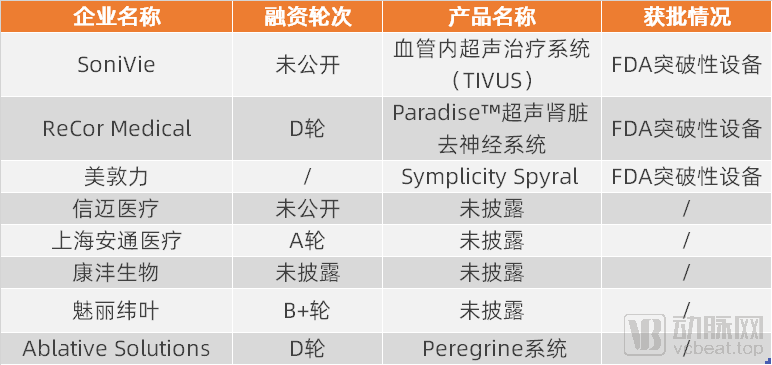
Looking back on the development of renal denervation (RDN), the setbacks experienced in 2014 may not have been entirely detrimental to the industry as a whole. First, they heightened the industry’s emphasis on clinical controls in trials and spurred the optimization of RDN products. For Chinese manufacturers, Medtronic’s “emergency brake” provided a window of opportunity for domestic companies to catch up. Currently, clinical trials for RDN devices by Chinese firms are advancing rapidly, potentially placing them on an equal footing with Medtronic in the future.
Domestic RDN companies are continuously improving and innovating. What distinguishes Xinmai Medical’s renal denervation product from others is the addition of a mapping system. In Medtronic’s renal denervation products, the ablation catheter directly ablates the rich sympathetic nerve plexus outside the renal arteries, whereas Xinmai Medical is attempting to use its mapping product to precisely locate the renal sympathetic nerves.
Approximately 70% of the ablation sites near the renal arteries are effective in lowering blood pressure; therefore, even blind ablation yields a certain antihypertensive effect. Most companies have opted for blind ablation in their products. However, Sinomed Medical believes that precise ablation guided by mapping can deliver superior clinical outcomes, a hypothesis that has been partially validated in clinical trials.
Precision Ablation Versus Blind Ablation: Currently, only Medtronic has released clinical data, and no definitive conclusion has been reached. More precise conclusions will emerge in the future following validation through large-scale clinical studies.
Meili Weiye has drawn on the lessons learned from HTN-3, implementing numerous improvements and innovations in design philosophy, product structure, trial design, and operational procedures. Its core technologies include an intelligent radiofrequency generator with wall-contact feedback and ablation endpoint feedback, as well as a unique basket-style six-electrode radiofrequency ablation catheter.
For domestic companies, the primary challenge at this stage is how to achieve the production of radiofrequency ablation devices and rapidly advance clinical trials.
The technical barriers to manufacturing energy source equipment are high, and there are few domestic companies capable of production. In the field of cardiac electrophysiology ablation, four companies in China, including MicroPort EP, Sichuan Jinjiang Electronics, and Huitai Medical, can manufacture radiofrequency ablation devices. There are also collaborations between renal denervation (RDN) companies and cardiac electrophysiology firms to co-produce radiofrequency ablation devices.
Another major challenge lies in clinical capabilities, encompassing both clinical trial design and execution. Renal denervation (RDN) places high demands on clinical trial design. To maximize the therapeutic efficacy of RDN, it is not only a test of the device itself but also requires careful consideration of combination therapies with medications and the optimization of clinical protocols.
In terms of clinical execution capability, half of the participants in RDN clinical trials are assigned to the sham surgery group, which poses certain challenges to clinical enrollment.
Currently, there are RDN products available on the Chinese market. Future product launches will still need to undergo a large-scale promotion process to gain gradual market acceptance. In the future, we anticipate that multiple RDN products will be launched in the Chinese market. Medtronic’s RDN product is highly likely to enter China, and Recor’s product may also enter the Chinese market through its shareholder, Otsuka Group.
Regarding future market acceptance, a clinical expert stated: “After its future launch, we believe that achieving widespread adoption will require time. For instance, it took ten to twenty years for atrial fibrillation radiofrequency ablation devices to progress from development to widespread use. Overall, however, I remain relatively optimistic.”