

From NICS to ERT: Yikon Gene's Three Stories Shaping China's Billion-Dollar Assisted Reproduction Landscape
With continuous socioeconomic development and an accelerating pace of life and work, fertility issues have become one of the critical challenges urgently needing resolution in China and worldwide. Over the past decade, the incidence of infertility in China has been steadily rising, reaching 15%, with nearly 50 million people affected. The ongoing delay in marriage and childbearing age, coupled with a growing number of advanced-age pregnant women driven by the two-child policy, as well as the urgent demand for eugenics and healthy childbirth due to concerns about birth defects, have made the assisted reproductive technology (ART) industry one of the markets with the greatest potential demand and the fastest growth rate within China’s healthcare services sector.
Reproductive health is not only a critical issue concerning human reproduction and sustainable development, but also a major challenge influenced by a combination of factors, including scientific and technological advancements, policies and regulations, ethics and morality, economic conditions, and medical resources. Innovation in technology, philosophy, and models centered on “patient-centricity” is likely to become the focal point for the future development of the reproductive health industry, with multidisciplinary collaborative innovations in assisted reproductive technology (ART) serving as the core driving force behind the growth of the ART sector. The field has evolved from traditional morphological diagnostics to contemporary genomics and other omics technologies, and from single-discipline testing to integrated, multidisciplinary approaches that incorporate genetics, genomics, physics, and artificial intelligence (AI) to provide more comprehensive solutions. Built on a foundation of safety, these technological advancements enable more precise, efficient, and convenient solutions to fertility challenges, thereby accelerating the translation of basic scientific research into clinical applications.
In recent years, numerous domestic and international enterprises and investors have expressed optimism about the growth of the assisted reproductive technology (ART) industry. By establishing systematic, patient- and provider-centered medical services and business models, and leveraging resource integration and cross-sector collaborations, they are driving rapid industry expansion to meet the growing demand for ART services. It is undeniable that, as national policies increasingly encourage childbirth, assisted reproduction (including genetic testing) will emerge as a new high-growth sector in the future.
Delivering High-Quality Medical Testing Services for the Health and New Beginnings of BillionsThis is the original aspiration of Yikon GENOMICS and the origin of its name. Since its establishment in 2012, spanning nine years, Yikon GENOMICS has evolved from a startup to a leading player in the industry. It specializes in the niche field of genetic testing for assisted reproduction, providing genetic testing services for three major clinical application scenarios: pre-conception and prenatal risk screening for couples planning pregnancy, chromosomal/genetic testing of embryos prior to transplantation, and genetic assessment of the endometrial environment.
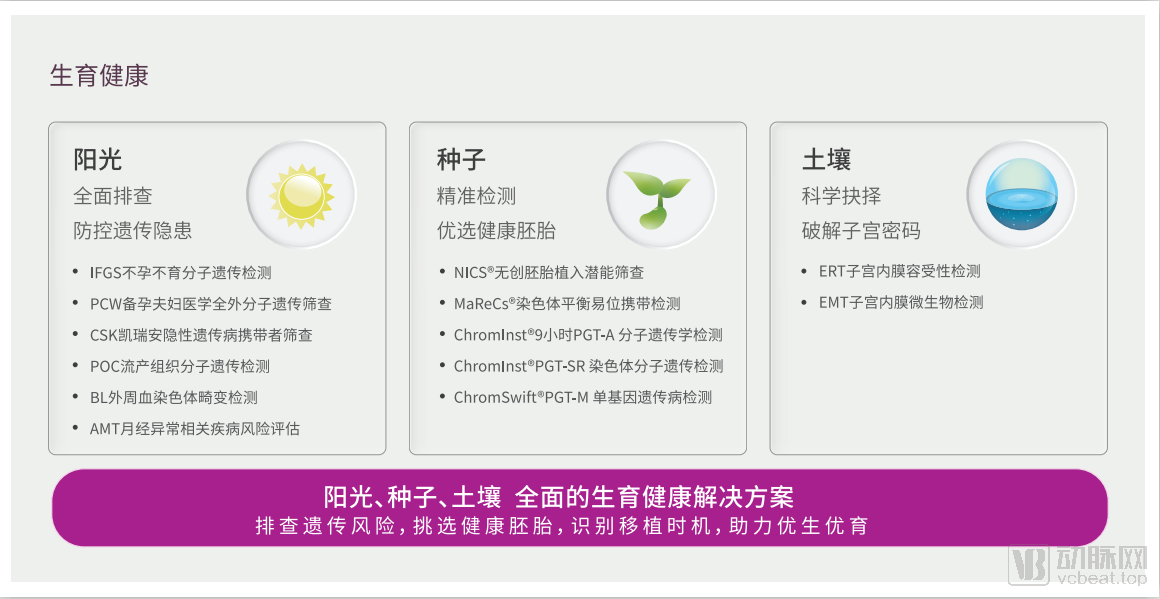
Yikon GENOMICS' Business Layout in Reproductive Health
Each type of genetic testing is akin to a farmer’s meticulous selection of sunlight, seeds, and soil when sowing; every step is equally important and indispensable. Only through their combined efforts can the successful conception of a healthy next generation be achieved. Guided by this philosophy, Yikon GENOMICS has structured its layout in the field of assisted reproductive genetic testing around three core dimensions: “seeds,” “soil,” and “sunlight.”
The Story of a Seed: Secondary Infertility in a Couple, Chromosomal Translocation, and NICS®Helping Them Fulfill Their Dream of a Second Child
PGT is the most commonly used testing technology in assisted reproduction, involving preimplantation genetic testing of embryonic cells via biopsy. It includes preimplantation genetic testing for monogenic disorders (PGT-M), preimplantation genetic testing for aneuploidy (PGT-A), and preimplantation genetic testing for structural rearrangements (PGT-SR).
These tests enable targeted genetic analysis of pre-implantation embryos, allowing for the precise selection of healthy, high-quality candidate embryos. However, this screening requires the biopsy of one blastomere or 3–5 trophectoderm cells from the embryo for Preimplantation Genetic Testing (PGT). This procedure demands sophisticated instrumentation and a high level of technical expertise from laboratory personnel. Even so, it remains difficult to assess whether such invasive manipulation adversely affects embryonic development and implantation success rates.
In March 2016, the world’s first non-invasive screening for embryo implantation potential (NICS®) A test-tube baby was born at the Reproductive Medicine Center of Wuxi Maternal and Child Health Care Hospital in Jiangsu Province, China. With the assistance of the novel NICS technology provided by Yikon GENOMICS for screening, a 30-year-old woman suffering from secondary infertility and her partner, who carries a chromosomal translocation, successfully gave birth to a healthy baby. This marks the world’s first successful IVF case using NICS technology, representing a significant leap forward in assisted reproductive testing technologies.
“Embryonic chromosomal abnormalities are the leading cause of pregnancy failure and spontaneous abortion. As maternal age increases, the risk of embryonic chromosomal abnormalities continues to rise, with the most direct consequences being miscarriage, missed abortion, or birth defects.”Dr. Lu Sijia, CEO of Yikon GENOMICSstated, “NICS technology can effectively mitigate the risk of hereditary diseases and reduce miscarriage rates, truly helping patients find relief from such unnecessary suffering.”
NICS®It is a non-invasive embryonic chromosomal screening that overcomes the technical limitations of PGT, which requires the acquisition of embryonic tissue/cells for chromosomal testing, by adopting a non-invasive detection method.Dr. Ren Jun, CTO of Yikon GENOMICSIntroduction: “NICS collects in vitro embryo culture media and determines the chromosomal status of embryos by detecting cell-free trace DNA present in the culture medium, thereby enabling aneuploidy screening.” This non-invasive biopsy approach minimizes potential damage to the embryo, truly achieving non-invasive chromosomal screening.
Yikon GENOMICS has been dedicated to the research and development of NICS since 2014.®technology, and finally in2016: Supporting the First NICS Case®The Birth of Test-Tube Babies. Currently, the company providesNICS®The technology has benefited over 4,000 families, resulting in the birth of 1,000 NICS babies.®Baby.Yikon GENOMICS is also actively promoting NICS.®Multicenter Clinical Study and Regulatory Registration of Non-Invasive Embryo Screening for Large-Scale Clinical Application
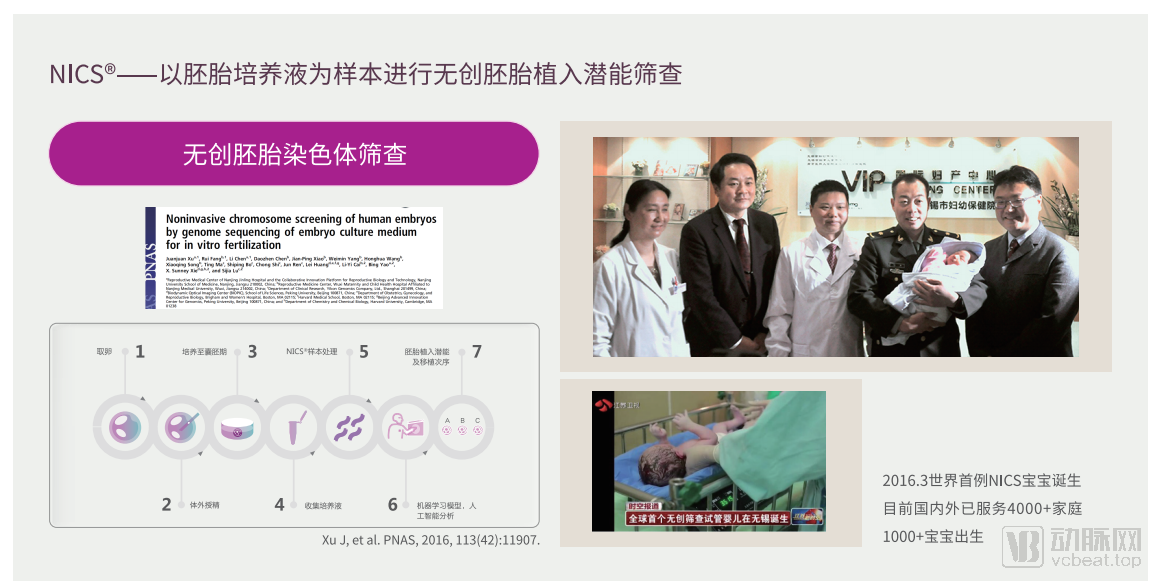
Yikon GENOMICS’ “The Story of Seeds”
Whether it is the initial PGT or NICS®, Yikon GENOMICS has woven all of this into “The Story of Seeds.” The preimplantation chromosomal/genetic testing services provided by Yikon GENOMICS include not only various types such as PGT-M, PGT-A, and PGT-SR, but also MaReCs.®Detection of Embryonic Chromosomal Balanced Translocation.
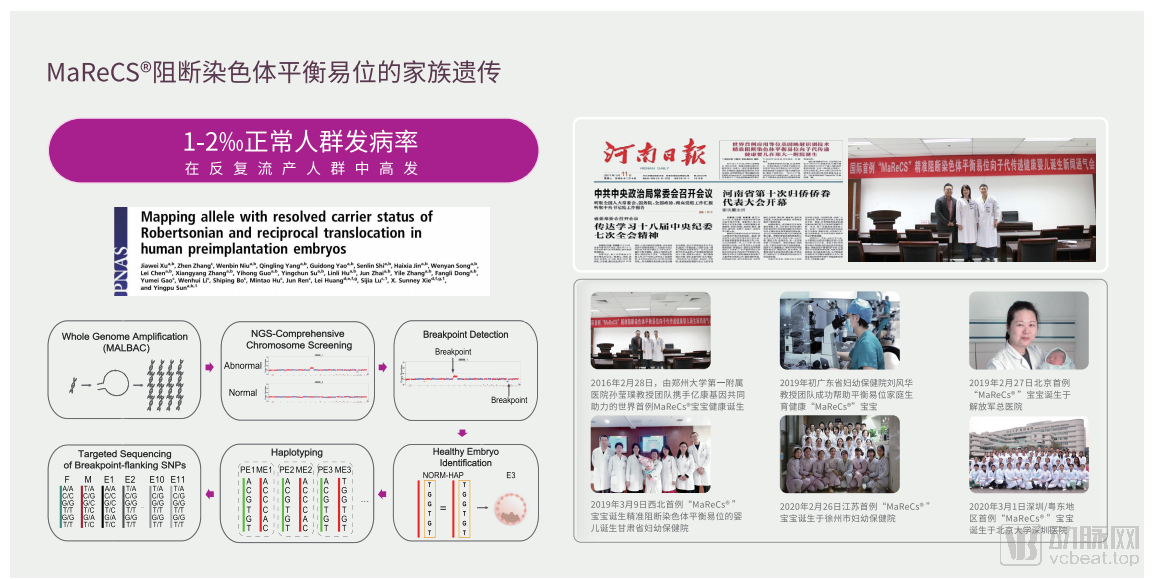
MaReCs®Technology Brings Hope to Carriers of Balanced Translocations
Balanced translocation is one of the common chromosomal structural abnormalities, with an incidence rate of 1‰–2‰ in the general population. Without intervention, pregnancy outcomes often manifest as infertility, recurrent miscarriage, embryonic arrest, fetal malformations, or the birth of children with intellectual disabilities.Yikon GENOMICS, in collaboration with Professor Sun Yingpu’s team from the First Affiliated Hospital of Zhengzhou University, jointly invented MaReCs.®Technology, it can accurately determine whether embryos are carriers of balanced translocations or Robertsonian translocations, allowing for the selection of normal embryos for transfer to precisely prevent the transmission of these translocations to offspring.
First Case of MaReCs®The baby was born in December 2016. Currently, this technology is also being applied in 13 provinces and municipalities across China, at nearly 80 reproductive medicine centers, with over 2,000 families having chosen MaReCs.®IVF Technology Fulfills Parents’ Dreams.
The Story of the Soil: Recurrent Implantation Failure in IVF, ERT®Precise Localization of the “Implantation Window”
Clinically, even the transfer of healthy embryos may result in consecutive failures. The physical and psychological toll of repeated implantation failure on women is self-evident. But why does this occur? This involves a key concept known as the “window of implantation”—the period during the menstrual cycle when the endometrium is receptive to embryo implantation, vividly referred to as the “window of implantation.”
Transferring embryos with synchronized development during the “implantation window” is a prerequisite for successful transplantation. However, the “implantation window” is not identical for every woman; approximately 25.9% to 40% of women experience an earlier or later implantation window compared to the conventional timeframe. Under standard transplantation protocols, embryos cannot be accurately implanted within the individual’s specific implantation window, leading to implantation failure. Furthermore, there are individual variations in the duration of the implantation window, meaning that each woman’s implantation window exhibits a certain degree of specificity. Therefore, precise localization of the female implantation window is increasingly necessary.
In 2018, a female patient who had experienced repeated implantation failures sought consultation with Professor Li Yanping at the Center for Reproductive Medicine of Xiangya Hospital, Central South University. After evaluation, Professor Li concluded thatNon-"window of implantation" transfer may be the root cause of this woman's recurrent implantation failure.! With the patient's consent, an endometrial receptivity test (ERT) was performed on the patient.®), accurately identified the optimal window for embryo transplantation for the patient, ultimately resulting in a successful delivery ofThe First ERT Baby。
What is ERT?®?ERT®How to Achieve Precise Analysis of Patient Endometrial Receptivity?Dr. Ren Jun, CTO of Yikon GENOMICSexplained the underlying principles to VCBeat: “ERT®"The test primarily detects endometrial epithelial cells. Specific changes in the gene expression profiles of these epithelial cells are closely associated with cyclical variations in endometrial receptivity. By applying machine learning to analyze these gene expression profiles, it is possible to assess the endometrium's receptivity to embryo implantation, thereby identifying the optimal 'window of implantation' for embryo transfer. This approach helps improve transplantation success rates for patients experiencing recurrent implantation failure and avoids the wastage of embryos."
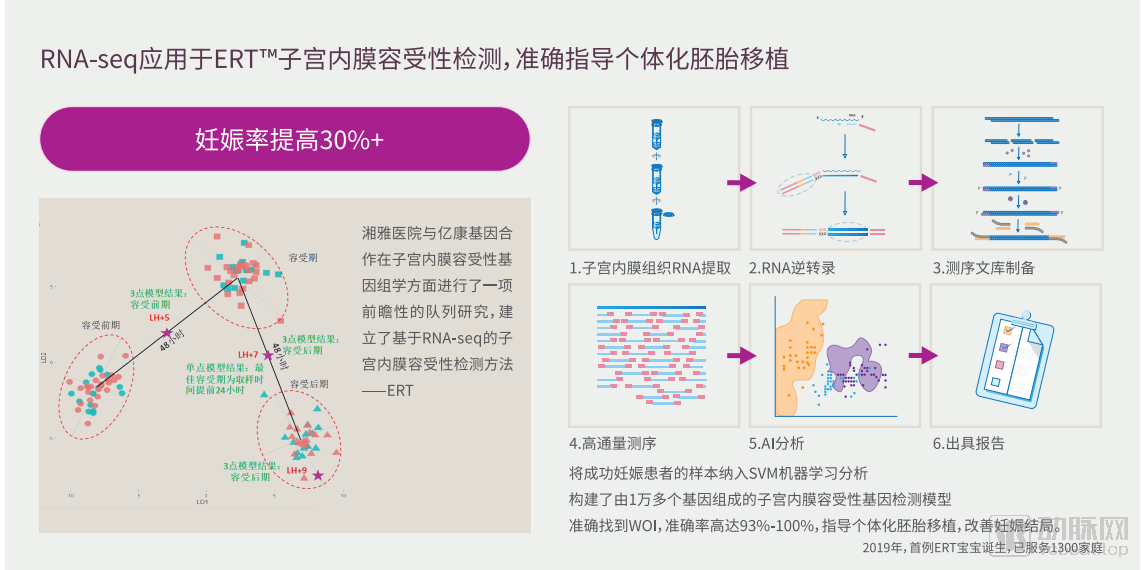 Composed by Yikon GENOMICS“The Story of Soil”
Yikon GENOMICS completed the acquisition of ERT in 2018.®Through technological R&D, the company has achieved the capability to integrate RNA-seq with AI-based analysis.>93.3% High Accuracy Rate, effectively increasing the clinical pregnancy rate for patients with recurrent implantation failure to over 70%, significantly improving clinical outcomes. Currently, Yikon Genomics has collaborated with more than 100 hospitals on ERT technology, benefiting over 1,500 families.
The Story of Sunshine: Moving Genetic Risk Prevention Upstream, Reproductive Health Matters to All
From addressing single-point issues to providing comprehensive and effective prevention, diagnosis, and treatment solutions. Over nine years of development, Yikon GENOMICS has written a story of reproductive health, expanding from “seeds” and “soil” to “sunlight”—Genetic Risk Screening for Couples Planning Pregnancy: Preconception and Prenatal AssessmentIt offers molecular genetic testing for infertility, molecular genetic testing for miscarriage, carrier screening for recessive genetic disorders in couples, and detection of chromosomal abnormalities.
Furthermore, Yikon GENOMICS remains committed to tracking medical advancements and the clinical application of scientific research technologies. Currently, multiple projects focused on male and female reproductive health and disease risk assessment are underway. By shifting the focus upstream, genetic screening is made accessible to men and women who may not yet have reached reproductive age or do not currently have plans for childbearing, thereby facilitating early intervention, timely treatment, and proactive reproductive planning.
Forging Technological Barriers with Craftsmanship: An Unshirkable Duty for the Health and Renewal of Billions
After nine years of dedicated development, Yikon GENOMICS has established its core brand influence in the field of assisted reproduction.Dr. Jiang Yueming, COO of Yikon GENOMICSIt was revealed that the Yikon GENOMICS brand currently covers nearly 300 reproductive medicine centers in mainland China, establishing collaborations with over 85% of reproductive medicine centers qualified for PGT. Meanwhile, through technology transfer, the company has promoted its efficient, convenient, and precise premarital/preconception and preimplantation genetic testing technologies to nearly 30 countries worldwide, cumulatively helping hundreds of thousands of families address infertility and achieve eugenics and healthy childbirth.
All of this would not have been possible without the core technological barriers that Yikon GENOMICS has built since its inception, as well as the strong and sustained innovation capabilities of its R&D team.
MALBAC®This technology served as the core foundation upon Yikon GENOMICS was established. It was incubated from the research achievements of the company’s founder, Dr. Lu Sijia, during his studies at Harvard University. By employing a unique DNA polymerase with strand-displacement activity for quasi-linear whole-genome pre-amplification, the technique locks in copy replication and subsequently performs exponential amplification via PCR. This ensures that all copies are derived exclusively from the parental template, thereby significantly reducing the probability of erroneous replication during amplification. Notable accomplishments enabled by this technology include the world’s first sequencing of a single human oocyte and the creation of the most comprehensive single-sperm gene map to date.
Facing the 3 billion DNA base pairs in a single human cell, MALBAC®Compared with other whole-genome amplification technologies on the market, this technology achieves higher amplification accuracy and enables 93% coverage in single tumor cell DNA detection, whereas conventional amplification techniques only achieve 50% to 70% coverage.
It is worth mentioning that, leveraging its extensive experience accumulated over the years in single-cell whole-genome amplification and detection, Yikon GENOMICS has successfully developed a one-step amplification and library preparation method for trace tissue samples.ChromInst®Patented Technology: This amplification technique, applicable throughout the genetic testing process, integrates “sample amplification” and “library construction” into a single-tube, two-step procedure completed in just 2.5 hours. It offers significant advantages over traditional methods currently on the market, which require cumbersome operational procedures lasting more than 20 hours. This innovation enables researchers to perform gene sequencing without changing reaction tubes, thereby improving efficiency while reducing the risk of amplification failure caused by environmental contamination.
These “cutting-edge techniques” have not only been widely applied in the field of assisted reproduction, but also extensively utilized in single-cell scientific research and clinical oncology testing, owing to their exceptionally high amplification sensitivity and accuracy.
“Yikon GENOMICS is, in essence, a company that provides testing technologies. Our technology enables the detection of extremely minute amounts of tumor tissue, delivering highly accurate tumor test results within two days.”Dr. Lu SijiaHe added, “It is precisely due to the technological synergies that we have expanded into the tumor detection business. Interestingly,”Hereditary Tumor Testing“It is linked to both oncology and assisted reproductive services. It is well known that many tumors have a hereditary family history, accounting for approximately 5–10% of all cancer cases. While the oncology department can only address the immediate tumor issues, genetic screening for hereditary cancers helps unaffected family members achieve early detection, diagnosis, and treatment.”
On the other hand, for families with hereditary tumors who wish to have offspring, genetic testing for hereditary tumors can identify the pathogenic variants responsible for the condition. Subsequently, preimplantation genetic testing (PGT) can be performed during the assisted reproductive technology (ART) process for patients with monogenic hereditary tumor syndromes. By selecting and transferring embryos that do not carry the pathogenic variants, familial transmission of hereditary tumors can be blocked at its source, thereby benefiting families affected by these conditions.
It is reported that Yikon GENOMICS will leverage its proprietary core technologies—including single-cell omics sequencing, one-step amplification library preparation, and AI-driven data analysis—to address the needs and pain points of patients and healthcare providers in reproductive health and cancer prevention and treatment. The company aims to provide professional, comprehensive diagnostic and therapeutic testing solutions, along with personalized genetic counseling and health management services.
Yikon GENOMICS Corporate Operations Overview
Since its establishment, Yikon GENOMICS has adhered to the principles of “standardization and compliance” in corporate operations and product development. The company has obtained ISO 9001:2015 and ISO 13485:2016 international quality certifications. All manufactured and marketed products are registered or filed with the China Food and Drug Administration (CFDA). It holds Medical Institution Practice Licenses issued by the Health and Family Planning Commissions of Shanghai and Suzhou, and achieved perfect scores in external quality assessment for over 30 test items. Yikon GENOMICS operates a 5,600 m² medical testing center, as well as a 2,200 m² GMP-compliant production workshop and technology transfer center.
Currently, Yikon GENOMICS has established extensive collaborative relationships with numerous medical institutions and research institutes in nearly 30 countries worldwide, inventing and translating multiple scientific achievements with value for assisting clinical diagnosis and treatment. As of the end of 2020, Yikon GENOMICS had applied for 55 patents, with 20 granted; obtained more than 50 software copyrights; and published 35 SCI papers (including 4 in journals such as Nature and Science).
In June 2017, Yikon GENOMICS’ PGS kit received special approval for innovative medical devices from the China Food and Drug Administration (CFDA) and is poised to obtain a Class III Medical Device Registration Certificate.