

INIBIO's 100% Pure A-Type Botulinum Toxin INIBO Completes Phase I/II Clinical Trials and Secures Export Authorization

INIBIO
Medical Aesthetics Product Research Company
Beauty, whether in appearance or in spirit, remains an enduring topic for women of the times.
From a physical perspective, the dream of “eternal youth” has arguably been shared by most women throughout history. For both humans and animals, at least 80% of external information is acquired through vision, making it the most critical sense. It is no wonder that some consider this an “era obsessed with appearances.” While this statement may not be entirely accurate, who does not wish for their looks to be “treated kindly” by the passage of time?
Eliminating the “traces” left by time seems to have become a secret weapon for many women to slow down the aging process. Botulinum toxin, a lethal substance once studied for use in biochemical weapons, has gradually carved out a niche in the beauty market. This is because, when diluted, botulinum toxin can achieve cosmetic anti-wrinkle effects.
Botulinum toxin, also known as botulinum endotoxin, is a lethal bacterial endotoxin secreted by Clostridium botulinum.When botulinum toxin acts on the nerve terminals of cholinergic motor neurons, it antagonizes the role of calcium ions in a certain manner, interfering with the release of acetylcholine from these terminals. This prevents muscle fibers from contracting, thereby inducing muscle relaxation and achieving wrinkle reduction for cosmetic purposes.
Regarding its safety, many doctors have stated that due to the minimal dosage of botulinum toxin used in cosmetic applications, it does not adversely affect the human body. Compared with other anti-wrinkle products, its efficacy and safety profile are unparalleled, making it currently the most effective method for treating dynamic wrinkles.
Where there is demand, there is a market; countless players have poured significant energy and financial resources into this sector.
INIBIO, Inc. of South Korea is one such company. Established in December 2017, this South Korean firm primarily engages in the research, development, and production of medical aesthetics-related products, with a focus on anti-aging treatments and botulinum toxin.
Currently, the company's developed Type A botulinum toxin product——“INIBO” completed Phase I and Phase II clinical trials in South Korea under the project code “INI101” and obtained export approval for the product.(The completion of Phase I and Phase II clinical trials demonstrates that INIBIO has ensured its stability and efficacy.)
It is reported that INIBO, a botulinum toxin product, has achieved 100% purity through the Quality by Design (QbD) system, which is currently used only in some advanced developed countries.
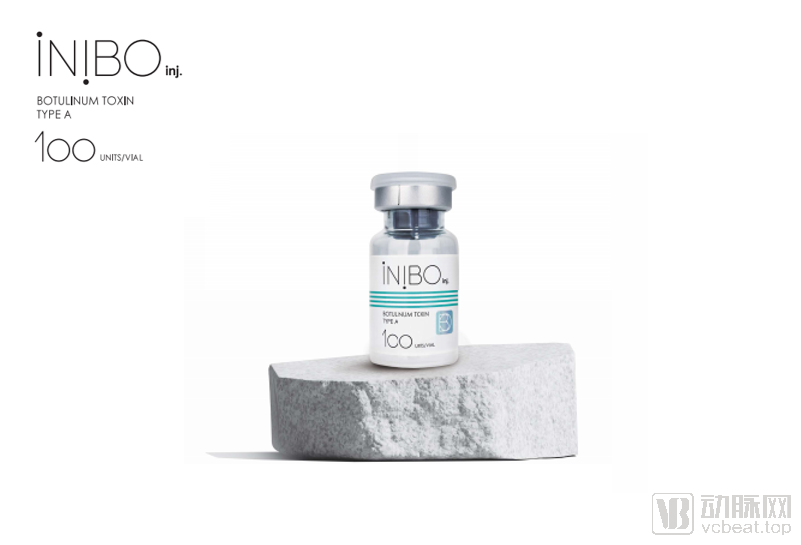
Owing to its exceptional purity and brand color, INIBIO is also known as "Jade Toxin."
Furthermore, INIBO will not be affected by the recent highly publicized controversy over “botulinum toxin strain origin” (the intellectual property dispute between South Korean botulinum toxin manufacturer Medytox and Daewoong Pharmaceutical regarding the origin of the botulinum toxin strain). Eight South Korean government agencies have verified its source and base sequence, confirming that there is no issue of falsification concerning the strain’s origin.
The strains of Clostridium botulinum studied in humans include types A through G, with type A exhibiting the highest susceptibility in humans. Among type A strains, three subtypes are available for commercial use (to date), but currently, only two of these are on the market.
ATCC 19397 is the remaining third strain and exhibits the highest susceptibility in humans among the three strains. This strain will make its market debut through the product INIBO. As ATCC 19397 is being used for commercial purposes for the first time, many industry experts are closely watching INIBO’s progress.
According to relevant sales agencies, the team has experience in obtaining health authority certifications in most countries, including the United States, Europe, and Canada. Therefore, when developing the product INIBO, the company prepared for entry into markets such as China, Europe, and the United States. In addition to type A botulinum toxin, INIBIO is also developing the world’s first type E botulinum toxin product.
Furthermore, VCBeat has learned that in October 2018, Shandong Buchang Pharmaceutical Group signed a contract for the exclusive sales rights and local clinical trials of INIBIO in China, preparing to officially introduce the product to the Chinese market.
According to statistics from the International Society of Aesthetic Plastic Surgery (ISAPS), there were 4.6278 million botulinum toxin injections worldwide in 2015. According to statistics from the American Society for Aesthetic Plastic Surgery (ASAPS), there were a total of 1,548,236 botulinum toxin injection procedures in 2017, ranking first among aesthetic medical treatments; in 2018, botulinum toxin remained the most popular procedure, representing a 3% year-over-year increase.
The situation in China is similar to that abroad. Data released by Gengmei and So-Young show that since 2016, botulinum toxin treatments have ranked second among the most popular medical aesthetic procedures for three consecutive years.
According to surveys and statistics from the New Thinking Industry Research Center, China’s botulinum toxin market size was approximately RMB 6.46 billion in 2018, with a compound annual growth rate (CAGR) of 15.5% from 2008 to 2018. Assuming this growth rate remains constant, the market size is projected to reach RMB 17.71 billion by 2025, indicating promising market prospects.