

Zwift Files for IPO After Raising $620 Million in Six Years, Aims to Become the 'American Keep'

Novator Partners
Investors in the Technology Sector

Highland Europe
A growth-stage technology fund with deep industry expertise.

Waypoint Capital
Venture Capital Firms

Shasta Ventures
A Venture Capital Firm Specializing in Financial Services

True.
Private Equity Firm

Zwift
Interactive Fitness Entertainment Platform

Causeway Media Partners
Equity and Venture Capital Institutions

Samchuly
Bicycle Manufacturer and Distributor
Zwift is an online fitness platform.
In 2014, cycling enthusiast Eric Min joined forces with his friends Alarik Myrin, Jon Mayfield, and Scott Barger to found Zwift, establishing its headquarters in Long Beach, California.
Six years on, Zwift has grown from an obscure small platform into a fitness-tech unicorn with 2.5 million registered users across 190 countries and regions. In light of its remarkable leap over the past six years, the industry has dubbed it “the U.S. version of Keep” and “the next Peloton.”
VCBeat reviews Zwift’s development history and business operations, aiming to explore the commercial logic behind its rise to fitness unicorn status in just six years.
It may be hard to believe, but the creation of Zwift began with founder Eric Min’s desire to go for a ride while he was in a foreign country.
It all began in November 2013. At that time, Eric Min had just relocated from New York to London. A devoted cycling enthusiast, Eric had been riding in New York for many years. After moving to London, he attempted to continue outdoor cycling, but he greatly missed the cycling social scene and racing culture he had left behind.
Eric Min once remarked in an interview, “When I was in New York, I often did indoor cycling training and occasionally organized friendly riding competitions with a small group of friends. I really miss New York’s cycling social scene. With social networks, Strava (a cycling speed-tracking app), and gaming technologies already well-established, why not try to replicate such a cycling community in London?”
Eric Min believes that whether it’s competitions, training, or cycling clubs, replicating even 80% of the experience would be valuable. To realize this vision, it is essential to achieve scale and build a global cycling community ecosystem. This was the founding impetus behind Zwift.
Zwift is essentially an online cycling training software. By simply connecting the Zwift app to an indoor bike, users can cycle along virtual scenery and routes displayed on their screen, and even invite friends to join them for online group rides.
This design perfectly aligns with Eric Min’s vision of “replicating the New York cycling community.”

Zwift Online Cycling Training (Image source: Zwift official website)
Relying on a single offering makes it difficult to gain a foothold in the highly competitive online fitness market, a reality Zwift knows well. In response to market demand, Zwift has expanded its business from cycling to running and esports.
Cycling Projects: Content and Services Lead the Charge in Profitability
Cycling enthusiasts and professional athletes are the core user base of Zwift.
“Smart hardware + paid content” has been the revenue model consistently adhered to by online fitness platforms. According to Zwift’s online store, stationary bikes are priced between $2,000 and $4,000, while some complementary hardware accessories cost tens to hundreds of dollars. Given such high prices, not all consumers are willing to make these purchases.
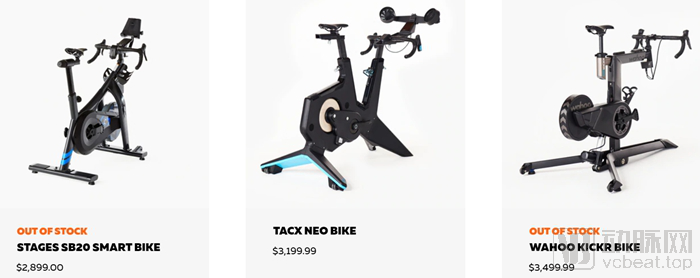
Zwift Bike Price (Image Source: Zwift Official Website)
Users’ spending on Zwift is primarily concentrated on its software. Zwift operates as a non-contractual paid subscription service, requiring registered users to pay a monthly fee of $15. Those who wish to purchase smart coaching for training guidance must pay an additional fee ranging from $300 to $700.
Although sales of expensive hardware devices are relatively lower, paid content and services have provided Zwift with substantial profit margins.
Running Events: Immersive Course Design Enhances Exercise Enjoyment
Running is the second sport launched by Zwift.
Traditional indoor treadmill training often involves users staring at a wall or out the window while exercising. This approach to running can be somewhat monotonous and makes it difficult to maintain focus.
Zwift’s virtual running platform offers a diverse array of scenarios and courses for running enthusiasts. These virtual environments are either based on real-world locations or are entirely fictional.
Runners connect to the Zwift app via devices mounted on their running shoes, allowing speed, cadence, and distance to be clearly displayed on the screen in front of them.
Similar to cycling programs, users can invite a few friends to join them for virtual companion running or engage in online PK sessions. Immersive course designs and interactive running scenarios make their indoor running training more enjoyable.

Zwift Users Immerse Themselves in Online Running (Image Source: Zwift Official Website)
Esports: Hosting Major Events to Expand Zwift’s Brand Influence
Zwift’s strategic presence in the esports sector is likely the most significant factor in attracting users and investors.
In September 2018, the Union Cycliste Internationale (UCI) announced its initiative to develop regulations for cycling esports. UCI President David Lappartient stated that the UCI is highly committed to fostering the growth of virtual cycling. British Cycling, the national governing body in the United Kingdom, has made a similar commitment to the UCI, expressing its intention to engage in a long-term partnership with Zwift to innovate the sport of cycling.
With the support of these official bodies, Zwift seized the opportunity to assist industry organizations in establishing cycling esports championships. Meanwhile, numerous world-class athletes have also joined Zwift for online training.
British cyclist Mark Cavendish has won 30 stages of the Tour de France. In an interview, Cavendish stated, “Before Zwift came along, I never imagined I’d do my cycling training indoors. It has transformed how professional racers train, attracting pro riders like myself.”
In January 2019, Zwift launched the KISS Super League, a virtual racing series designed for professional cyclists. Numerous prominent teams participated, including Team Cofidis, Israel Cycling Academy, and the UK-based Madison Genesis.
In July 2020, Zwift hosted the inaugural Virtual Tour de France, which was open to participants from more than 130 countries worldwide and live-streamed in its entirety, attracting 117,000 cycling enthusiasts who registered for the event.
In December 2020, Zwift hosted the inaugural UCI Cycling Esports World Championships. This was the first esports cycling event recognized by a world-class official sports governing body, with more than 80 athletes participating. Fans worldwide watched the race via Zwift’s official channels on YouTube and Facebook, while the sports streaming platform FloSports provided live coverage of the entire event.

Zwift Hosts the Inaugural UCI Cycling Esports World Championships (Image source: Zwift official website)
Professional athletes set the direction for the entire industry. For Zwift, entering the realm of professional sports by hosting or sponsoring major events helps propel the Zwift brand deeper into the sports and fitness industry.
Fitness and Socializing, Both at Once
An increasing number of fitness apps have integrated social features. Examples include Yueqi, a platform designed for motorcycle enthusiasts to arrange group rides; SportX, which uses geolocation as its core function to connect users with nearby fitness enthusiasts and venues; and Again, an app that encourages users to exercise together in groups.
No longer limited to simply tracking exercise duration, measuring running distance, and monitoring heart rate, today’s online fitness platforms have expanded to offer a wide array of content beyond the workouts themselves, making social fitness a growing trend.
Zwift’s social features are particularly prominent. On the Zwift platform, whether cycling, running, or competing in races, users can invite other strangers on the platform or friends from the real world to join them at any time. The realistic virtual scenarios provide an immersive exercise experience, allowing users to both work out and maintain social connections, achieving two goals with one effort.
Integrating Online and Offline Channels to Build Brand Momentum
Zwift offers virtual fitness and training platforms online, while hosting large-scale esports events offline.
Compared with traditional sports events, esports competitions not only possess equally strong competitive attributes but also boast a vast young audience and a unique content ecosystem. This provides new perspectives for brand promotion by host or sponsoring enterprises.
Zwift organizes an average of over 300 cycling events daily, launches new seasons every month, and hosts major competitions such as the Tour de France, the KISS Super League, and the UCI Cycling Esports World Championships, all of which generate substantial brand visibility for Zwift.
In September 2020, Zwift announced the completion of a $450 million Series C financing round. The round was led by KKR, a private equity investment firm, and saw participation from new investors including Permira, Specialized Bicycle Components’ venture capital fund, Zone 5 Ventures, and Amazon Alexa Fund, as well as existing investors True, Highland Europe, Novator, and Causeway Media Partners.
Zwift plans to use this investment to accelerate the development of its core software platform and bring Zwift-designed hardware to market, providing Zwift users with a more immersive experience.
It is reported that in December 2018, Zwift raised $120 million in Series B funding, led by European venture capital firm Highland Europe, with participation from Causeway Media Partners, Novator Partners, and True. It was through this round of financing that Zwift began to expand its business into the esports sector.
To date, the company has raised a total of $620 million in financing. This robust capital support has provided Zwift with continuous momentum for innovation and development.

Zwift’s Financing History (Data Source: VCBeat, Crunchbase)
During the pandemic, travel restrictions led to a downturn in the offline fitness industry. “Cloud fitness,” unconstrained by time or space, emerged as a new demand.
Where there is demand, there is opportunity. In the post-pandemic era, the international fitness market has undergone significant changes.
In September 2019, Peloton, an American interactive fitness platform company, went public on the Nasdaq. Initially, investor sentiment toward Peloton’s stock was bearish, and its share price once fell below the initial public offering (IPO) price. However, the pandemic reversed the challenges facing Peloton.
During the pandemic, demand for stationary exercise bikes and related online classes surged in a short period. Within one year, Peloton’s subscription base grew by 113%, reaching 1.1 million users. During this period, Peloton’s stock price repeatedly hit record highs, its market capitalization soared by 340%, surpassing $40 billion.
It is no exaggeration to say that while many companies suffered from the impact of the pandemic, Peloton unexpectedly became a major profiteer of the COVID-19 crisis.
In contrast, in the domestic market, “home fitness” and “at-home workouts” have become mainstream. During this period, internet-based fitness platforms such as Chengquan Relian, Yuepaoquan, and Yuedongquan rapidly carved out their respective niches within their targeted segments. Meanwhile, Keep, China’s largest online fitness platform, ushered in a new era of growth following the pandemic.
According to the "2020 Annual Exercise Report" released by Keep, the Keep app experienced a surge in user data following the outbreak of the pandemic. Over 200 million users on the Keep platform accumulated more than 1.1 billion kilometers in running distance and 400 million kilometers in walking distance throughout the year, while cycling distance exceeded 200 million kilometers. In total, users burned 191.3 billion calories and shed 25 million kilograms of fat over the course of the year.
In May 2020, Keep announced the completion of an $80 million Series E financing round. Just six months later, it swiftly closed a $360 million Series F round. Backed by capital giants such as Goldman Sachs, Tencent, and Bertelsmann Asia Investments, Keep’s valuation has doubled to $2 billion.
Capital Chases the Market: The Market Potential of Online Fitness Platforms Is Evident in the Favor Shown by Capital Giants.
Onelap, a large-scale online virtual cycling platform under Magene Technology, is currently the most widely used online cycling platform in China.
Like Zwift, users can mount their bicycles on a smart trainer and connect to a device running the Onelap app, enabling them to ride, train, and compete in a virtual world via the screen in front of them.
Given its high popularity among cycling enthusiasts, Onelap has even been hailed as the “Chinese version of Zwift.”
In August 2016, Onelap version 1.0 was launched. By integrating Magene’s indoor cycling hardware (smart trainers, cadence sensors, power meters, heart rate monitors, etc.) with gamified exercise modes, version 1.0 quickly gained popularity among cycling enthusiasts.
In May 2017, Onelap 2.0 was released. It became the designated racing platform for the inaugural cycling esports tournament held in Chengdu in July of the same year. By integrating live-streaming capabilities, Onelap made its initial foray into hosting high-end online cycling competitions.
In January 2018, Onelap version 3.0 was released, and its domestic version was officially renamed “Onelap Racing”; in December of the same year, the cycling competition of the “First National Smart Sports Games” once again selected Onelap Racing as its event platform.
In July 2019, Onelap Fitness launched the G801 smart stationary bike, officially entering the broader mass-market segment of smart fitness.
Like Zwift, Onelap has expanded its business scope to cover markets beyond cycling, including running, esports, and fitness hardware. Whether Zwift’s success foreshadows the commercial prospects of Onelap remains to be seen, but it currently serves as a meaningful reference point.
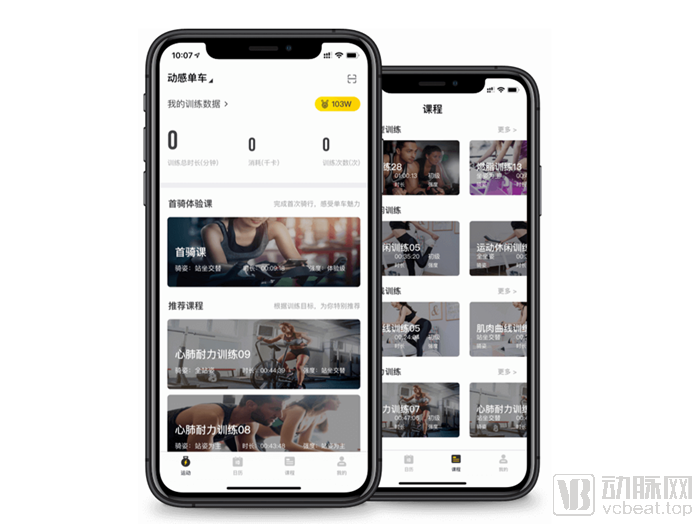
Onelap App Interface (Image Source: Onelap Official Website)
For online cycling platforms like Zwift and Onelap, breaking through in the fiercely competitive online fitness market has been driven partly by the tailwinds of the pandemic, and partly by the irreplaceable user experience these platforms deliver to their core audiences.
From a business perspective, both companies were founded on cycling initiatives and have continuously expanded their operational boundaries in response to user demands, introducing offerings such as running and e-racing. Whether this model can be replicated in other sectors as new user needs emerge remains uncertain; however, the potential commercial prospects are immense.
Zwift organically integrates elements of contemporary interest—such as “fitness,” “social interaction,” and “entertainment”—to build a healthy ecosystem within its vertical niche. Whether Zwift can become the “next Peloton,” as it hopes, remains to be seen.