

Sturdy & Biodegradable: World’s First-of-Its-Kind Cardiac Occluder Secures Regulatory Approval

Jinkui Medical
Developer and Manufacturer of Congenital Heart Disease Treatment Devices
On June 8, the National Medical Products Administration (NMPA) officially granted marketing approval to the innovative product, the self-expanding single-rivet fully degradable atrial septal defect occluder, independently developed by Shanghai Jinkui Medical Devices Co., Ltd. (Jinkui Medical).
1Three Key Terms Drive a Hardcore Breakthrough
Atrial septal defect (ASD) is one of the most prevalent congenital heart diseases, accounting for 10% to 15% of all congenital heart conditions[1].
Thanks to its minimal invasion and quick recovery, transcatheter interventional occlusion has become the primary therapy for secundum atrial septal defect, with a success rate exceeding 98%[2]. Still, nickel-titanium alloy occluders widely used in clinics remain inside the human body for a lifetime, and their long-term risks have aroused growing concerns.
Nickel accounts for roughly half of the composition of such alloy occluders. A major metal allergen, nickel ions may leach out in trace amounts and trigger chest pain, palpitations, rashes and other symptoms clinically known as "device syndrome". Besides, permanent metallic implants in the heart may lead to delayed arrhythmia, device-related thrombosis, tissue erosion and inflammatory responses.
These issues are particularly severe for pediatric patients. As children’s hearts grow, the embedded metal device may alter cardiac structure. Moreover, the permanent implant blocks the atrial septal passage, limiting options for other cardiac interventional surgeries later in life and bringing lifelong medical restrictions to patients.
Given the long-term safety hazards of metal occluders, biodegradable materials have emerged as a promising alternative. Domestic and overseas players launched relevant research and development at the early stage of this sector, but progress has been limited.
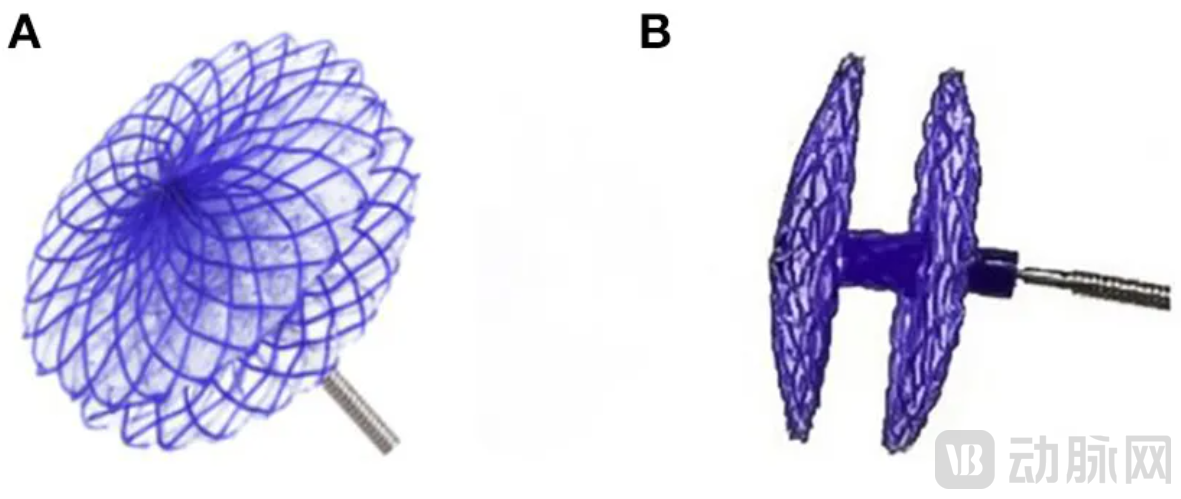
Schematic Diagram of a Biodegradable Occluder
The core challenge lies in inherent material defects: flexible biodegradable materials fail to deliver high resilience and shape recovery. Nickel-titanium alloy boasts shape memory properties to ensure stable delivery and occlusion, whereas biodegradable polymer materials offer insufficient support and often result in poor tissue adhesion and device displacement.
This intrinsic conflict makes it difficult to achieve satisfactory degradation effects and reliable occlusion stability at the same time. Although several biodegradable products have hit the market, they have not replaced metal occluders. The industry has long been trapped in homogeneous competition centered merely on basic biodegradation.
2Single-Rivet+Self-Expanding+Biodegradable: Three Key Terms Drive a Hardcore Breakthrough
Founded in 2003, Jinkui Medical has built robust research and development capabilities with over 20 years of experience in interventional consumables for congenital heart diseases.
The company has long focused on the development of biodegradable occluders and stuck to industry-university-research collaborative innovation. Its core technological system won the Second Class Prize of the National Award for Progress in Science and Technology. Its self-developed single-rivet atrial septal defect occluder and single-rivet patent ductus arteriosus occluder are both first-of-their-kind products in China.
The newly approved device earns its title as a global innovation not merely because it is biodegradable. With exclusive proprietary technologies, it achieves a perfect combination of metal-grade occlusion stability and complete biodegradability.
It is the world’s only product that integrates biodegradability and self-recovering expansion. By virtue of exclusive material formulas and structural design, Jinkui Medical enables biodegradable polymers to realize steady and controllable self-expansion and shape recovery. The device can be compressed for delivery during surgery and fits tissues automatically after release. Surgeons can operate it following the same routines as metal occluders with no extra training required.
The optimized single-rivet structure further elevates clinical safety. Different from mainstream dual-rivet products, the single-rivet design substantially reduces mechanical compression on fragile atrial septal tissues, cutting the risks of postoperative complications from the design perspective. It is especially applicable to pediatric patients and complex cases with thin tissue defects.
Extensive clinical verification has proven its long-term reliability. The world’s first human implantation of Jinkui Medical’s biodegradable occluder was completed back in 2021, followed by multi-center follow-ups for years. Its sound performance in degradation rate, histocompatibility and structural stability has formed formidable technological and clinical barriers hard to replicate.
3Biodegradable Occluders Enter the Era of “Performance-Driven Competition”
The market for congenital heart disease intervention in China keeps expanding. According to the 2023 Annual Report on Congenital Heart Disease Intervention, a total of 58,000 ASD occluder implantations were performed in 2023 alone. The huge clinical market has attracted numerous enterprises to step into the biodegradable device track.
Major domestic companies have made steady progress in layout. The MemoSorb® series developed by LEPU ScienTech Medical Technology (Shanghai) Co., Ltd. (ScienTech Medical) rolled out fully degradable ventricular septal defect (VSD) occluders, biodegradable patent foramen ovale (PFO) occluders and biodegradable ASD occluders successively from 2022 to 2024, completing a full pipeline covering all major indications. LifeTech Scientific Corporation (Lifetech) is actively developing absorbable ASD occlusion systems and has achieved phased clinical progress in several indications. Meanwhile, the biodegradable patent foramen ovale occlusion system developed by Wuyou Tiaodong Medical Technology obtained marketing approval in March 2026.
Nevertheless, these existing biodegradable products still cannot address the core drawback of inadequate mechanical properties of biodegradable materials. The newly launched self-expanding biodegradable occluder from Jinkui Medical achieves a breakthrough in this key area. It raises the industry’s core competition standard from a simple focus on biodegradability to a new dimension that values overall clinical performance, long-term safety and long-term patient prognosis.
It means entry-level products that only realize basic biodegradation will gradually be phased out by clinicians and the market. Going forward, medical devices with superior performance, stability and safety will lead the industry’s growth.
A technological breakthrough is just the first step. The large-scale replacement of traditional metal occluders by biodegradable alternatives still relies on the accumulation of long-term real-world clinical data, adaptation of clinical operation systems and cost optimization. This approval delivers a high-performance solution for China’s biodegradable interventional devices for congenital heart diseases, and drives the industry into a new era where product performance becomes the core competitiveness.
References:
[1] van der Linde D, Konings EEM, Slager MA, et al. Birth prevalence of congenital heart disease worldwide: a systematic review and meta-analysis. J Am Coll Cardiol. 2011;58(21):2241-2247.
[2] Zhang L, Wang Y, Li X, et al. Early efficacy analysis and risk factors of transcatheter closure of secundum atrial septal defect in 2253 children and adults[J]. Archives of Cardiovascular Diseases, 2025, 118(5): 321-330. DOI: 10.1016/j.acvd.2025.02.007.