

Yisheng Intelligence Secures Tens of Millions in Pre-A Series Funding to Advance AI-Powered Medical Record Quality Control
VCBeat learned at the earliest opportunity,Beijing Yisheng Intelligent Technology Co., Ltd. (hereinafter referred to as "Yisheng Intelligent")Recently completed a tens-of-millions-yuan Pre-A round of financing,This funding round was led by Meihua Ventures, with existing shareholder Yuanyi Capital continuing to participate. Beituo Capital served as the financial advisor for this round. The funds raised are primarily intended for the continuous upgrade and market promotion of Yisheng Intelligent’s AI-powered medical record quality control product.
As the new healthcare reform deepens, refined hospital management is becoming a key focus for the future development of hospitals. Driven by policy support and a reshaping of hospital management philosophies, the smart healthcare sector, built on medical big data, is on the eve of explosive growth. Over the next five years, it has the potential to evolve into an entirely new market worth hundreds of billions of yuan. In recent years, various innovative enterprises and technology companies have continuously entered this broad sector, pursuing diverse product strategies.
Zhou Yutong, Founder & CEO of Yisheng IntelligenceHe told VCBeat, “Data delivers value to customers only when it is genuinely used for decision-making. AI-driven medical record quality control is precisely such a track.” At every tertiary Grade A hospital where Yisheng’s products have been implemented, the system frequently engages each clinician, performing quality checks on tens of thousands of inpatient and outpatient medical records daily and identifying thousands of cases with severe data deficiencies. Under the DRG payment system, the company’s AI-based medical record quality control system helps hospitals recover tens of millions or even hundreds of millions of yuan in economic losses annually.
“AI-based medical record quality control is a typical serious healthcare product, not an IT project,”“Given hospital clients’ stringent performance requirements for quality control systems—where errors and omissions are unacceptable—the barriers to product R&D are extremely high,” said Zhou Yutong. Yisheng Intelligent targeted the AI-driven medical record quality control sector in early 2018, becoming China’s first healthcare artificial intelligence company specializing in medical record quality control, and secured angel-round financing from Yuanyi Capital that same year.
Over the past three years, the company has been dedicated to developing a “quality-control-grade” NLP engine and refining its quality control products. In 2020, it successfully completed product development, established benchmark hospitals, and achieved a breakthrough in commercialization.
Leveraging excellent product solutions and significant application results in the hospital client base,In mid-2020, Yisheng Intelligent became AstraZeneca’s exclusive partner in the fields of DRG and medical record quality control.The two parties collaborate closely in the commercial promotion of their products.
There is no bigger provider opportunity on the horizon to maximize financial health than to improve the accuracy of provider clinical documentation.”
— Doug Brown, Managing Partner of Black Book™
“For healthcare providers, there is no more effective way to maximize financial statements in the short term than improving the quality of clinical documentation.”
— Doug Brown, Managing Partner, Black Book™
According to the 2019 Black Book survey, 44% of hospitals across the United States have already applied AI technology to improve the quality of medical records. AI-driven medical record quality control can bring multi-dimensional value to hospital operations, one of which is revenue enhancement.
Zhou Yutong pointed out, “If we look at the application results in the European and American markets, the ROI (return on investment) of AI medical record systems is highly attractive to hospitals. An annual investment of millions of dollars can lead to a revenue increase of tens of millions of dollars, meaning that the initial cost can be recouped within just one month.”
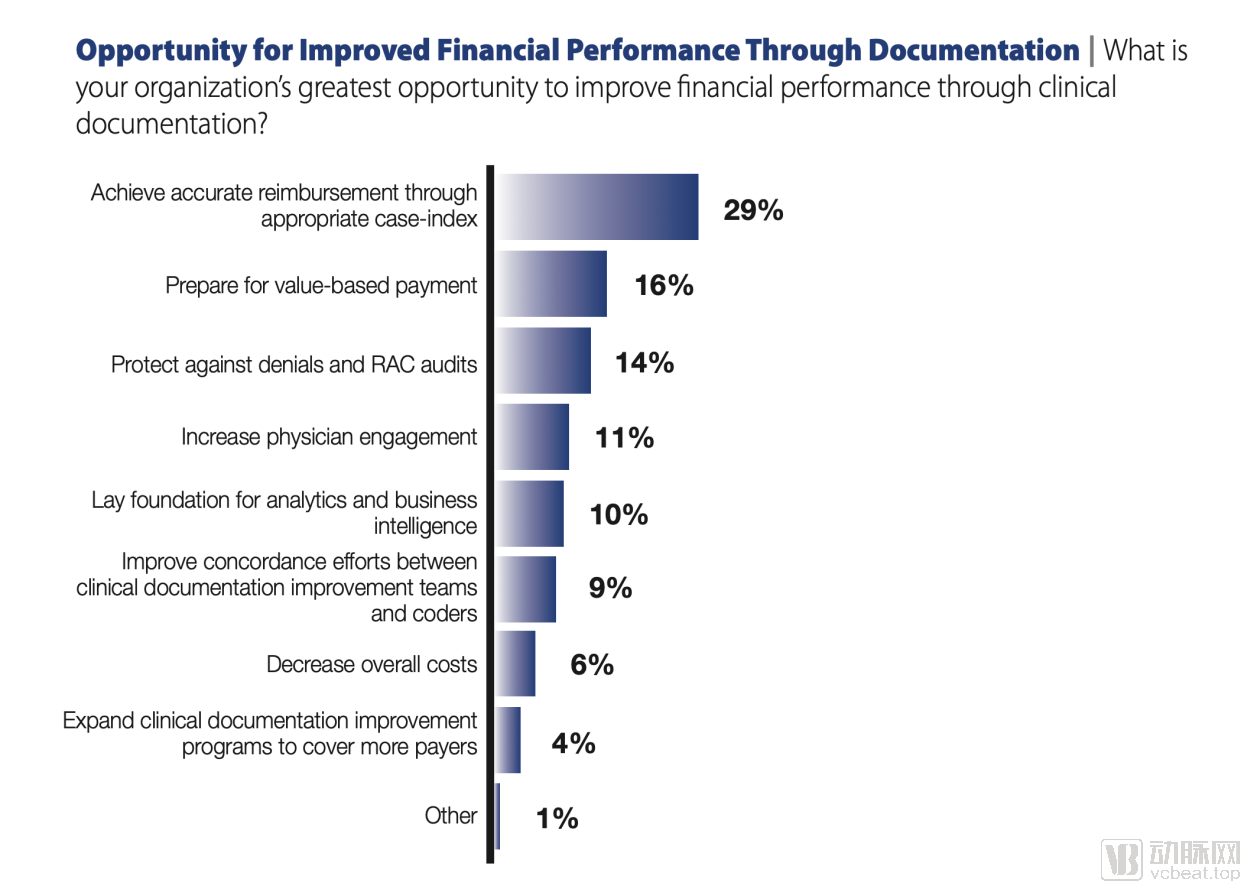
In the United States, AI-powered clinical documentation improvement (CDI) and computer-assisted coding (CAC) constitute a $6 billion market, characterized by extremely high industry concentration, with the two leading companies, 3M and Optum, accounting for more than 70% of the market share.
“The market landscape of the industry is closely tied to the technological and product characteristics of this field. Unlike the broader medical informatics sector, AI-based medical record quality control features a high degree of product standardization. Moreover, AI algorithms can self-iterate during application; the wider the adoption, the more accurate the results, creating a significant data flywheel effect. Most importantly, this system safeguards hospitals’ core operations in medical staff management and health insurance management. Every $1 invested can generate $10 in returns, so hospitals will always procure only the best products,” added Zhou Yutong.
“The DRG era has arrived, but what exactly is driving the transformation of hospital management in this new landscape? The answer lies in medical records,” Zhou Yutong told VCBeat. He explained that hospitals’ most immediate experience with Diagnosis-Related Groups (DRGs) is their impact on performance rankings and health insurance reimbursements, both of which are determined by the front page of the medical record and the health insurance settlement list.
Under the new DRG/DIP payment system,Medical record data serves as the bridge linking clinical systems and payment systems.However, regrettably,Domestic medical record quality generally fails to reflect high-level healthcare quality.
The underlying reason is that clinical quality in hospitals is overseen by senior physicians and department heads, whereas medical records are often documented by junior doctors, such as medical students, residents in standardized training, and visiting scholars. There is a significant gap in clinical reasoning between these junior doctors and senior specialists. Consequently, many clinical analyses and evidentiary findings that impact patient management are omitted during record-keeping by junior staff, leading to data distortion and failure to adequately reflect the specialists’ clinical reasoning and analytical processes. When this information is abstracted for the medical record face sheet and coded according to the International Classification of Diseases (ICD), the absence of these diagnostic and therapeutic analyses and their supporting evidence chains results in undercoding, miscoding, and omitted codes.
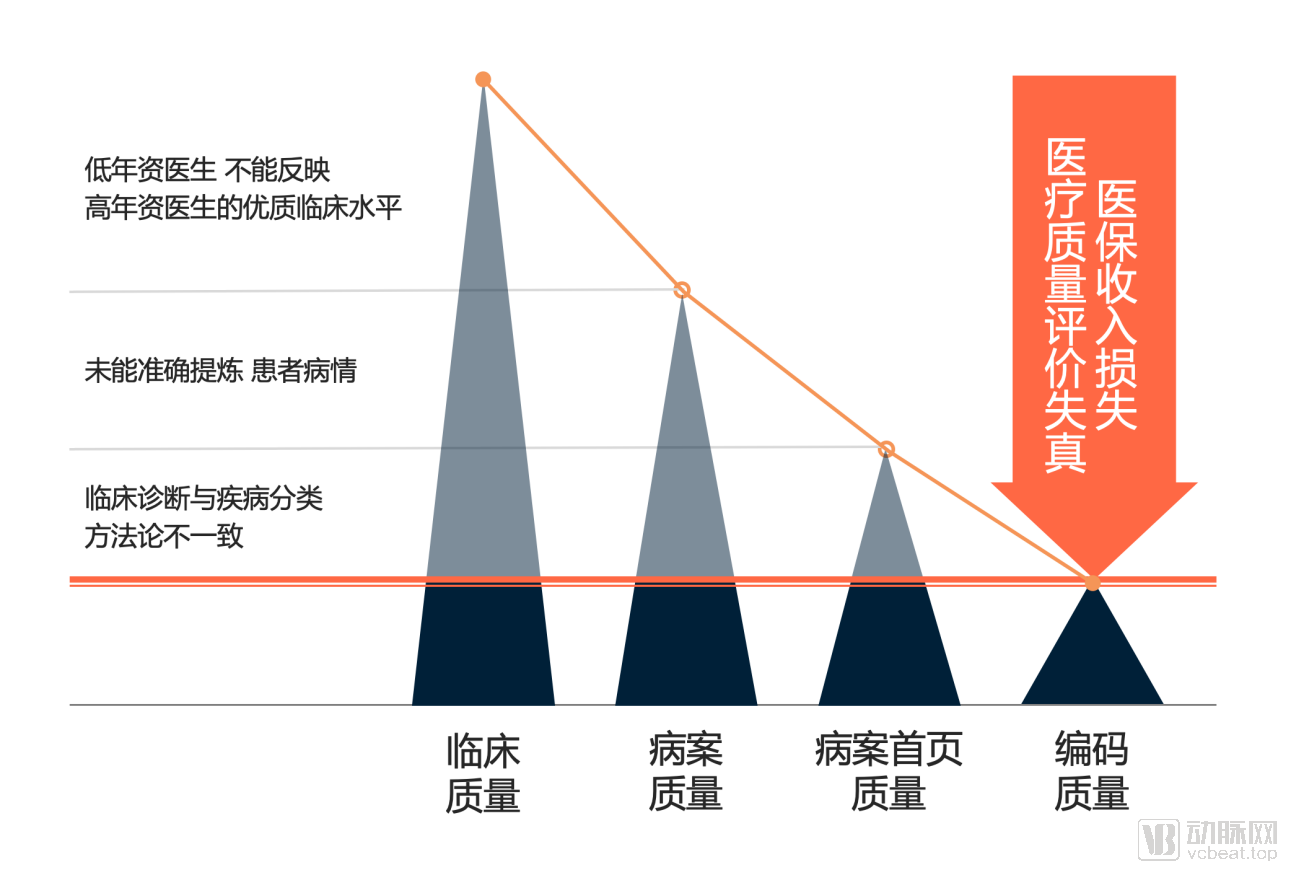
This gives rise to two issues:One issue is the underestimation of medical quality, and the other is the inability to guarantee the accuracy of DRG grouping, ultimately resulting in insufficient reimbursement from medical insurance and causing financial losses for hospitals.Therefore, from the perspectives of both medical quality evaluation and health insurance, improving data quality is of paramount importance.
However, China faces a shortage of medical resources, and graduates with relevant medical backgrounds are still unable to meet the demand for clinical positions. There is an even more significant talent gap in qualified and excellent medical record quality control personnel. In 2019, the number of hospitalized patients in China reached 211.83 million, meaning that over 200 million inpatient medical records require quality control annually. Currently, among more than 12,000 tertiary and secondary hospitals nationwide, only a few thousand certified quality control specialists and coders are available, resulting in an extreme imbalance between supply and demand.
The development of AI technology has provided a brand-new solution to the predicament facing this industry.
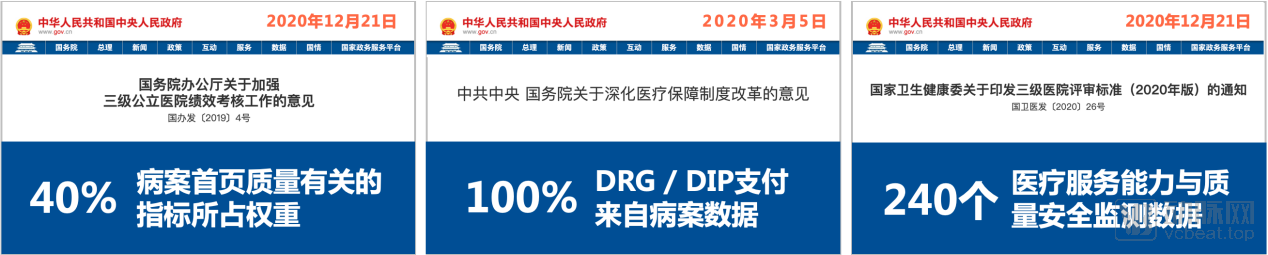
Over the past two years, with the intensive rollout of a series of policy documents related to the transformation towards refined hospital management—including the State Council’s January 2019 “Opinions on Performance Appraisal for Public Hospitals,” its March 2020 “Opinions on Deepening the Reform of the Healthcare Security System,” and the newly released December 2020 “Accreditation Standards for Tertiary Hospitals”—medical record data has begun to tangibly influence all aspects of hospital operations and management, determining both hospitals’ external reputation (rankings) and internal financial performance (revenue).
The Era of Data-Driven Refined Hospital Management Has Arrived.As the most critical infrastructure in the smart healthcare sector, AI-driven medical record quality control will see a rapid surge in hospital procurement demand over the coming years.
As a company with mature, commercially deployed products, Yisheng Intelligence has entered the blue-ocean market of AI-powered medical record quality control with speed, precision, and stability, striving to establish the most comprehensive and tightly integrated ecosystem to seize first-mover advantage. Zhou Yutong told VCBeat, “Through our daily communications with hospital clients, we have tangibly felt their urgent demand for improving medical record quality. Consequently, the pricing of our company’s products has also grown rapidly over the past six months.”
Zhou Yutong shared with VCBeat operational performance data on the application of Yisheng Intelligent’s AI-powered medical record quality control system at a top-tier hospital: Yisheng Intelligent’s product helps hospitals achieve a 94% coverage rate for substantive quality control, identifies coding defects in 46.2% of medical records before archiving, attains a near-100% defect correction rate within three days, and leverages AI technology to enable routine monitoring of more than ten core healthcare compliance protocols.
In Zhou Yutong's view,Clinical adoption rate can serve as a gold standard for evaluating medical record quality control systems:The system highlights errors to the physician; correcting them indicates acceptance of the recommendations, while leaving them uncorrected or filing an appeal signifies non-acceptance of the algorithm’s results.Currently, the clinical adoption rate of Yisheng Intelligent’s products in hospitals has reached 98%.All modifications made by physicians after receiving quality control results—including amendments to medical record content upon accepting the quality control findings, as well as appeals filed when rejecting the system’s quality control outcomes—serve as labels that drive continuous algorithmic iteration, thereby creating a data flywheel.
“Deeply uncover the real needs of hospitals, drive technology with these needs, and use technology to truly solve problems existing in the real world.” Zhou Yutong believes that AI-based medical record quality control is a typical serious medical product, not an informationalized product. To develop products that meet clinical needs, it is essential to deeply understand the task objectives of application scenarios in medical quality control, so as to build all underlying algorithms and product architectures.
Throughout the entire product development process, Yisheng Intelligent not only built a quality-control-grade specialized corpus for training and iterating NLP algorithms but also refined the product through multiple rounds in real-world hospital application scenarios. “Not a single step can be skipped,” stated Zhou Yutong.“For medical quality control products, quality is always the prerequisite and foundation of speed.”
Based on years of application practice data from the U.S. market, AI-powered medical record quality control systems can help hospitals recover approximately 5% of their annual revenue losses. In 2019, China’s medical insurance expenditures totaled RMB 2.1 trillion, with over 70% allocated to reimbursement for inpatient care.Given the poor foundational quality of medical records in China, there is substantial room for improvement, far exceeding the 5% level seen in the United States.Yisheng Intelligence conservatively estimates that if AI technology can help hospitals recover approximately 5% of their lost revenue, it will generate over RMB 100 billion in industry value for end-user hospital clients.
Currently, Yisheng’s intelligent medical record quality control product has been deployed in multiple Grade 3A hospitals, with several procurement contracts exceeding one million yuan each, marking the full entry of its business into an accelerated commercialization phase.