

INTAS Pharmaceuticals IPO Prospectus: A Testament to India's Pharmaceutical Rise and INTAS's Global Ascent
INTAS
Pharmaceutical Development and Manufacturing, Generic Drug Marketer
Two years ago, the Chinese film *Dying to Survive*, adapted from a true story, brought audiences closer to India’s pharmaceutical industry. In the film, the protagonist Cheng Yong purchases large quantities of low-cost generic versions of the targeted drug “Glenin” from India to make medication affordable for leukemia patients suffering greatly. He quickly becomes a domestic distributor by reselling these drugs but is later arrested and prosecuted for “selling counterfeit medicines.” After more than a thousand leukemia patients jointly sign a letter pleading on his behalf, the public security and judicial authorities ultimately withdraw the charges.
The film moved audiences to tears upon its release, yet the underlying social phenomena it portrays have also sparked public reflection. On one hand,How Can India, a Country with an Extremely Backward Military Industry, Achieve Global Leadership in Pharmaceuticals and Attract Buyers Like Cheng Yong?On the other hand,In this fiercely competitive pharmaceutical landscape, which companies have managed to stand out, and what product portfolios and market strategies have propelled them to the forefront of the industry?Many questions remain to be answered.
What comes to mind when you think of India? The Ganges River, touted as a “cure-all,” or the Taj Mahal, named one of the “New Seven Wonders of the World”? Or perhaps the aroma of curry that permeates the entire country? These are all stereotypes we hold about India. But beyond these,India remains a genuine powerhouse in generic drugs, with its annual production accounting for over 20% of the global total. It even holds a market share of approximately 40% in the United States, where pharmaceutical technology is highly advanced., which indeed came as a surprise to many.
But all developments follow their own inevitable laws. What specific confluence of circumstances led India to become the “World’s Pharmacy”?
Prior to 1970, stringent protection for compounds under the Patents and Designs Act resulted in multinational pharmaceutical companies controlling over 99% of drug patents and nearly 90% of the drug supply in India. This monopoly granted these firms absolute pricing power, keeping domestic drug prices in India persistently high.
However, as a country with a large population, India incurs substantial annual pharmaceutical expenditures. Over time, it has become increasingly untenable for the nation to tolerate a pharmaceutical market dominated by foreign capital. Therefore,In 1970, the Indian government enacted a new Patents Act, stipulating that only process patents, not product patents, would be granted for pharmaceutical products.This means that the deeply entrenched system of “pharmaceutical patent protection” has been completely abolished in India, with low prices becoming the “main theme” of the pharmaceutical market.
On the other hand, to rapidly dislodge multinational pharmaceutical companies that had long held monopolistic positions, the Indian government also enacted the Drug Price Control Order (DPCO) in the same year. By imposing strict controls on domestic drug prices, the policy significantly reduced manufacturers’ profit margins, leaving multinational pharmaceutical firms with a negligible market share. It was precisely during this period that indigenous Indian pharmaceutical companies emerged in large numbers, gradually gaining traction by leveraging their substantial cost advantages.
Bolstered by strong policy support, India’s pharmaceutical market has undergone a significant transformation. However, to meet market demand, domestic pharmaceutical companies must rapidly advance their technological capabilities to produce medicines that can rival those of multinational pharmaceutical corporations.
A God-given opportunity. In 1995, the World Trade Organization (WTO) was formally established, replacing the General Agreement on Tariffs and Trade (GATT). As a founding member of GATT, India naturally became a key member of the WTO. At its inception, all WTO members uniformly signed the Agreement on Trade-Related Aspects of Intellectual Property Rights (TRIPS), further strengthening the global intellectual property framework. However, as a developing country, India was granted a ten-year transition period for implementing the TRIPS Agreement, allowing it to defer enforcement until January 1, 2005.
It is precisely based on this “buffer period,”The Indian government amended its patent laws multiple times between 1995 and 2005, ultimately changing the previous regime that recognized only process patents to one that recognizes both process and product (compound) patents., the enactment of this favorable legislation has prompted Indian pharmaceutical companies to increase their R&D investment, leading to a rapid improvement in the overall level of the pharmaceutical industry. In the critical area of drug quality testing, the Indian government has imposed extremely high standards, with Good Manufacturing Practices (GMP) directly aligned with U.S. FDA (Food and Drug Administration) certification requirements, which has further accelerated the advancement of India’s pharmaceutical capabilities.
After the sweet “grace period” ended, the Indian government was required to implement the TRIPS Agreement, a change that exposed India’s generic drug industry to significant infringement risks. However, India exploited loopholes within the TRIPS framework by imposing restrictions on pharmaceutical patent protection, namely“Only new drugs invented after 1995 or those with significantly improved efficacy through enhancement are protected; derivative drug patents are not supported.”. This move not only skillfully defused the imminent infringement crisis but also reopened the back door for the domestic generic drug industry.
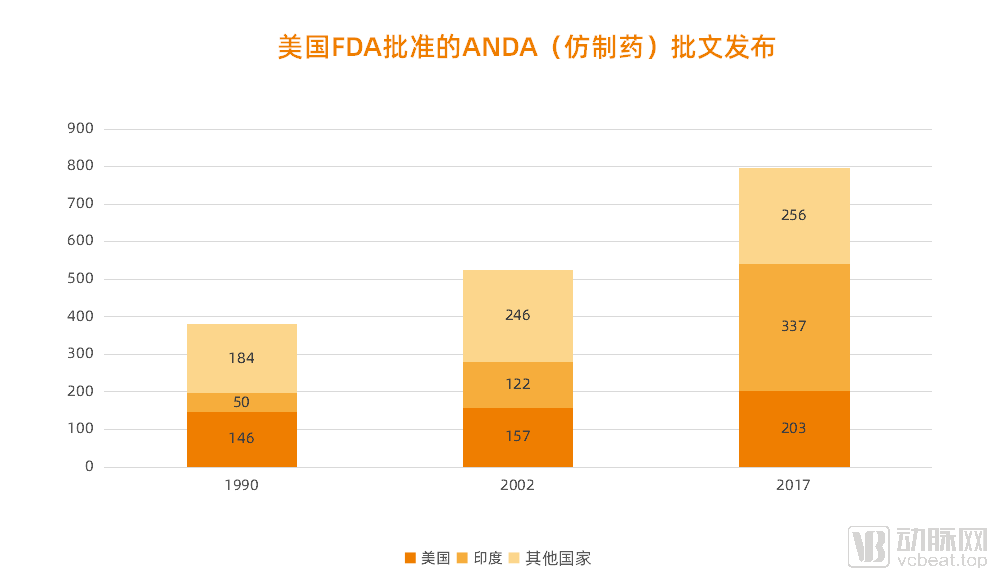
Data sources: Newport, Premium, Clarivate
Furthermore, India has also exploited another loophole in the TRIPS Agreement, namely“WTO member states may use patented technologies without the patent holder’s authorization, provided that such use is authorized by the state in accordance with the law and that adequate remuneration is paid to the patent holder.”Under these regulations, India has issued compulsory licenses for numerous drug patents on grounds of public interest, Indian tradition, and public health. Furthermore, the 2004 Patent Amendments further expanded the scope of “compulsory licensing” to include areas such as cancer and chronic diseases, thereby broadening the coverage of the Indian pharmaceutical market.
After nearly half a century of “struggling and striving,” India’s pharmaceutical industry has made remarkable progress.According to the data, as of 2005, India had more than 23,000 pharmaceutical companies, which could meet over 95% of the domestic drug demand, with output increasing at a compound annual growth rate of 13.7%.
However, they were not content with this and instead set their sights on the broader overseas market. Indian pharmaceutical manufacturers used the World Trade Organization as a springboard to actively integrate into new rules and penetrate new markets. The alignment of India’s patent system with international standards has facilitated the expansion of Indian pharmaceutical companies into more new markets. On the other hand, Indian pharmaceutical companies have established strategic alliances with research institutions and foreign companies possessing R&D capabilities, while also engaging in frequent mergers and acquisitions in regions with advanced pharmaceutical technologies such as the United States, Europe, and Japan, thereby laying a solid foundation for a comprehensive global market presence.
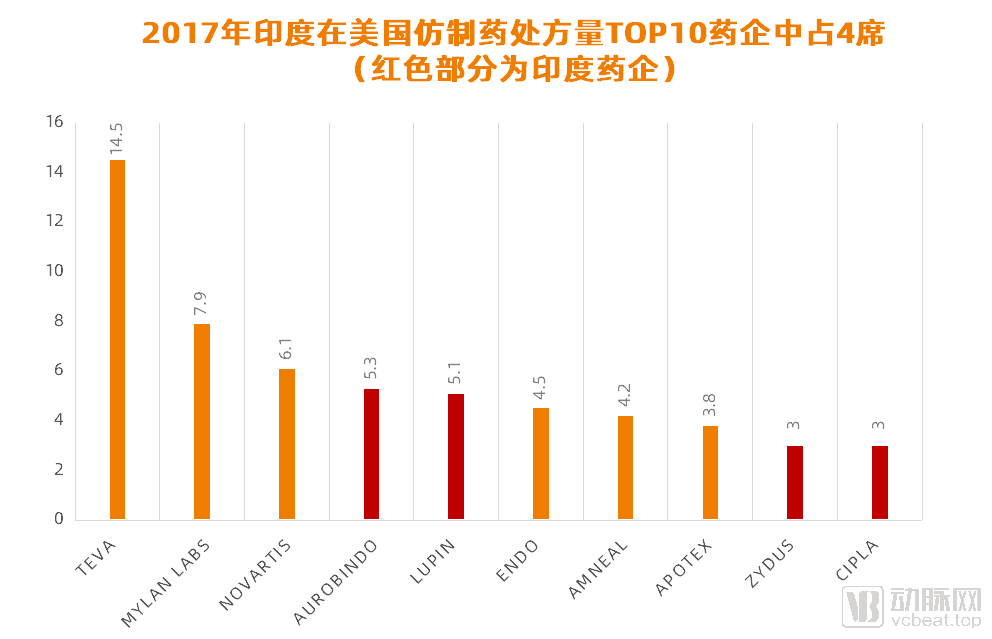
Data sources: Nesta, PharmaCube
Through the “trilogy” of patent law reform, integration with international markets, and increased R&D investment, India has gradually established its competitive advantage in generic drugs and become a major global producer of generics.Intuitive data shows that India’s generic drug exports reached $19.1 billion (approximately RMB 148 billion) in fiscal year 2019, and India supplies more than 50% of the world’s various vaccines., generic drugs supplied to the United States account for more than 40% of its annual demand; in particular, a significant portion of the 29 million doses of hydroxychloroquine recently purchased by the U.S. for pandemic response came from India.
It is undeniable that Indian generic drugs have achieved remarkable success in overseas markets by leveraging their price advantage over originator drugs. Their ability to capture significant market share in Europe and the United States—regions characterized by advanced pharmaceutical technologies and stringent regulatory oversight—also demonstrates the meticulous attention to quality evident in Indian generic medications.
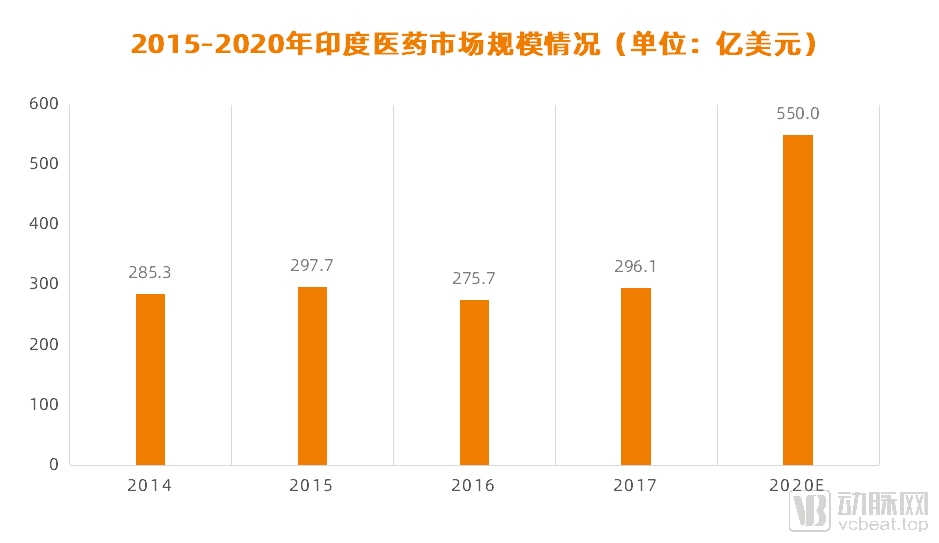
Data Source: TechSci Research; Compiled by Qianzhan Industry Research Institute
According to data from the India Brand Equity Foundation (IBEF), the Indian pharmaceutical industry achieved a compound annual growth rate (CAGR) of 17.46% over the past decade, with its market size expanding from $6 billion in 2005 to $36.7 billion in 2016. It is projected to reach $55 billion by 2020, growing at a CAGR of 15.92%.
Source: Indian Pharmaceutical Association Research Institute
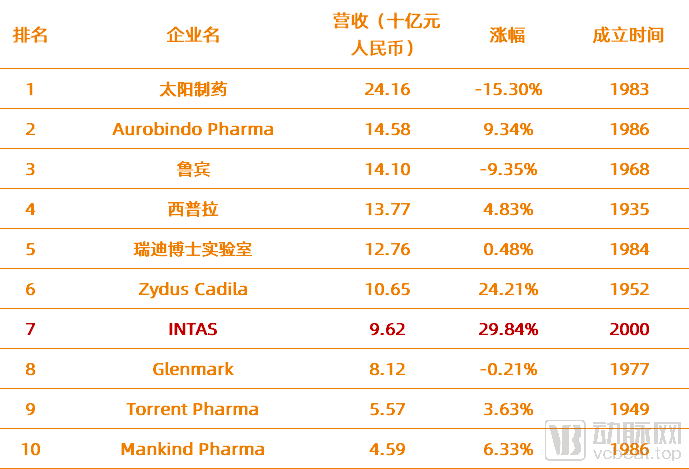
The vast market system has also intensified competition in India’s domestic pharmaceutical market. In a “Ranking of Indian Pharmaceutical Companies” based on revenue data, five of the fifteen companies experienced a decline in 2020, including Sun Pharma, ranked first, and Lupin, ranked third.
Among these industry giants, INTAS has drawn particular attention. As an emerging force in India’s pharmaceutical sector,In recent years, INTAS has demonstrated strong momentum, with its corporate revenue continuously climbing. Its annual growth rate reached 29.84% in 2020, ranking first among all companies and establishing it as India’s most promising pharmaceutical company at present.
INTAS, founded in 2000, is a leading, vertically integrated global company specializing in the development, manufacturing, and marketing of pharmaceutical formulations. It is also India’s largest privately held pharmaceutical company. Over the past five years, the company has achieved a compound annual growth rate (CAGR) of approximately 26%, surpassing the $2 billion mark in the previous fiscal year.
Like most Indian pharmaceutical companies, INTAS has devoted the vast majority of its efforts to overseas markets, with international revenue accounting for as much as 70% of its total. It is also the first Indian pharmaceutical company to launch biosimilars in the European Union. To date, INTAS operates in more than 85 countries and regions worldwide, with a primary focus on the large-scale, technologically advanced markets of the EU and the United States.
To build an efficient production chain, INTAS operates 13 manufacturing facilities worldwide, with 10 located in India and the remainder in the United Kingdom and Mexico. These facilities are meticulously designed, equipped, and operated to deliver high-quality products within specified cost and delivery timelines.
The company also operates an advanced analytical laboratory and a state-of-the-art distribution center in the United Kingdom, along with two independently operated API and intermediate manufacturing facilities. Each facility complies with the regulatory requirements of its respective jurisdiction and has obtained approvals from various prestigious international regulatory agencies, including the U.S. Food and Drug Administration (FDA).
In addition, to further expand its market coverage, INTAS has established a network of subsidiaries under the name Accord Healthcare for marketing and sales in highly regulated markets across the European Union, the United States, Canada, South Africa, Australia, the Asia-Pacific region, as well as the Commonwealth of Independent States (CIS) and the Middle East and North Africa (MENA), with the aim of building a global operational ecosystem.
To date, INTAS has secured over 10,000 product registrations globally and strategically launched more than 300 high-value products, including FTF/FTM generics, biosimilars, and NDDS formulations.
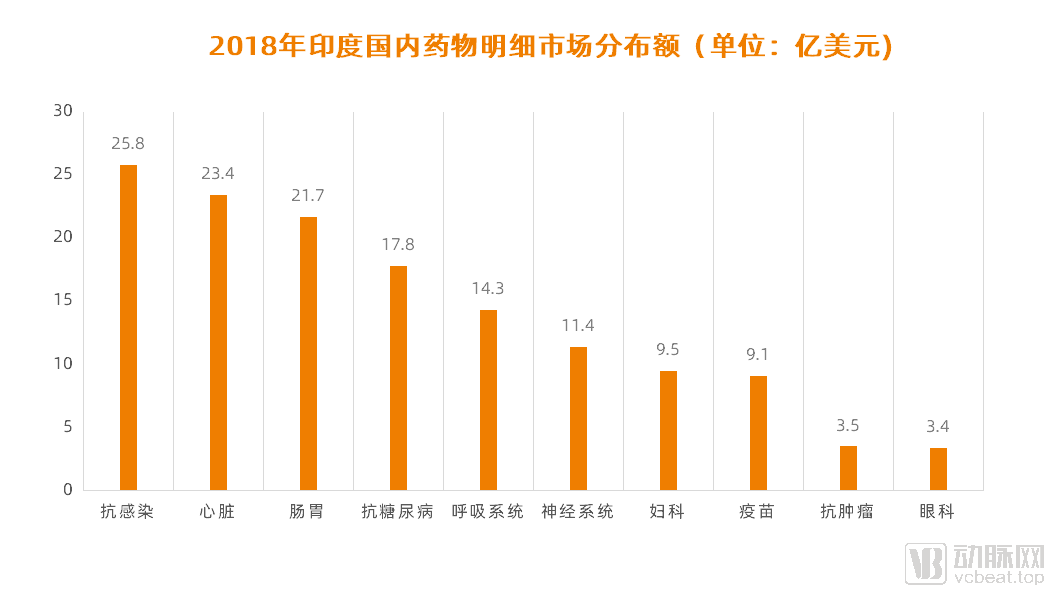
In specialized segments, INTAS has established a leading position in key therapeutic areas such as CNS, cardiovascular diseases, diabetes, gastroenterology, and urology. However, what has truly garnered the company global renown is its portfolio of pharmaceutical products in oncology and other hospital-based therapeutic areas within the European Union and the United States.
INTAS’s pharmaceutical products have continuously achieved breakthroughs in multiple complex therapeutic areas and gained strong market preference. This success is attributed not only to its precise market positioning but also to its relentless pursuit of drug quality, which is underpinned by a cutting-edge R&D team and stringent quality control measures.
In R&D, INTAS invests hundreds of millions of dollars annually and has built a specialized talent team. Currently, INTAS employs 12,000 people worldwide, with over 400 based in Europe and more than 800 scientists.
Led by a robust team of scientists and researchers, INTAS has pursued excellence in developing new products and optimizing technologies, achieving breakthrough innovations across a broad spectrum of fields, including oncology, hormones, and novel drug delivery systems (NDDS).To date, INTAS has secured more than 50 national patents in novel formulations, API polymorphs, processes, and analytical methods.
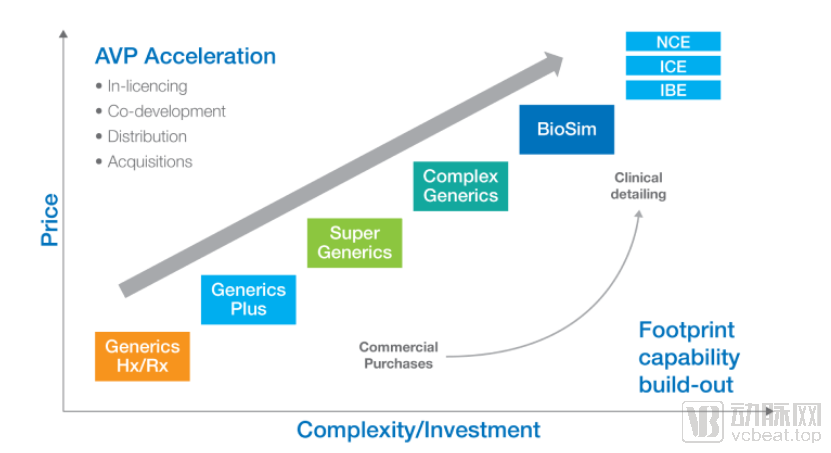
Image source: INTAS official website
In the critical area of product quality, INTAS has established a rigorous control system, with every INTAS product and service demonstrating its uncompromising quality standards. All products are manufactured in facilities approved by major global regulatory agencies, including the USFDA, MHRA, EMA, TGA, MCC, and ANVISA. Today, INTAS boasts leading niche channels and robust in-house development capabilities, enabling it to compete with some of the largest portfolios in the industry.
Currently, INTAS’s R&D team has shifted its business focus to pandemic therapeutic drugs and has developed a COVID-19-specific hyperimmune globulin for the treatment of patients with moderate to severe COVID-19 infection. It is understood that this hyperimmune globulin also holds the potential to protect all high-risk individuals exposed to COVID-19 patients, effectively helping to combat the disease until a vaccine becomes available.
As the world’s first company to adopt this approach for treating COVID-19 patients, INTAS has obtained approval from the Drugs Controller General of India (DCGI) to conduct clinical trials using its newly developed COVID-19-specific hyperimmune globulin.Following confirmation of its efficacy in clinical trials, the product will be available for the treatment of patients with COVID-19. Commenting on this development, Dr. Alok Chaturvedi, Head of Medical and Regulatory Affairs at INTAS, stated, “This endeavor underscores INTAS’s commitment to addressing unmet medical needs through research-driven solutions.”
INTAS is forming alliances with medical and research institutions, as well as blood donation organizations, to collect plasma from recovered COVID-19 patients. INTAS will soon launch a website to help recovered COVID-19 patients locate the nearest blood banks where they can safely donate plasma. The company is seeking government support to boost the supply of convalescent plasma for the production of enriched hyperimmune globulins, thereby helping more patients overcome COVID-19.
Looking to the future, INTAS plans to enhance its product portfolio by offering niche and complex products, actively expanding into the European and American markets, and engaging in the development and commercialization of biologics. In addition, INTAS will invest in areas with higher barriers to entry, such as biosimilars and new chemical entities, and continue to elevate global standards of healthcare excellence in the near future. By doing so, it aims to truly contribute to better healthcare through innovation, while maximizing value for stakeholders and customers.
Undoubtedly, after nearly a century of arduous “struggle,” India’s pharmaceutical industry has emerged as a global leader. First and foremost, India’s legal institutionalization and internationalization have not deviated from its own stage of development and needs; rather, it has sought approaches best suited to its current circumstances.
Secondly, India has demonstrated considerable skill in leveraging and engaging with international rules to secure outcomes most favorable to its interests. Through repeated “struggles,” India has effectively employed various strategies, including appealing to humanitarian values, capitalizing on the transition periods afforded to developing countries, utilizing domestic legal procedures, and engaging in protracted WTO appellate battles. Its approach is neither one of outright “confrontation” nor complete “acceptance”; rather, it is clearly purpose-driven, striving to maximize time and strategic space to achieve its objectives.
Ultimately, the key remains that market forces should govern the market, and enterprises should focus on their core business. During this valuable transitional period and under the protective umbrella, Indian companies have proactively strived to integrate with international rules, enhance modern corporate governance standards, achieve better alignment with the market, industry, and industrial sectors, and pursue self-improvement to embrace transformation and upgrading—this is the correct and sustainable approach.
So, in light of the success achieved by India’s pharmaceutical industry, what lessons can be drawn for the development of China’s pharmaceutical sector?
In terms of production, the scale of China’s pharmaceutical industry is significantly larger than that of India. Since 1991, China’s pharmaceutical industry has grown at an average annual rate of 19.5%, compared with 17.5% in India, both outpacing the GDP growth rates of their respective countries.
However, India clearly holds the upper hand in terms of internationalization. Compared with Chinese enterprises, India focused on registration and sales in high-end markets at a much earlier stage. When China began pursuing FDA and CEP certifications in the late 1990s, Indian companies had already secured a considerable number of market access approvals. Due to lower labor costs, the Indian generic drug industry benefits from low investment and rapid returns, giving it a significant advantage that has, to some extent, underpinned its leading position in the pharmaceutical sector.
As the world’s largest exporter of generic drugs, India’s pharmaceutical industry exhibits a high degree of internationalization, notably demonstrated by its adept navigation of international capital markets. For instance, Sun Pharmaceuticals successfully acquired the U.S.-based Caraco Pharmaceutical Laboratories in 1996 to enter the American market; subsequently, Ranbaxy acquired Bayer Basics, the off-patent drug subsidiary of Bayer, thereby gaining access to the German market and establishing manufacturing facilities in six countries overseas.
It is worth noting that India once had four joint ventures in the Chinese market. Its increasingly smooth path of internationalization also signifies the growing influence of Indian pharmaceuticals in the global pharmaceutical market.
Industry insiders have noted that, by comparison, China’s pharmaceutical industry has long exported low-value-added active pharmaceutical ingredients (APIs), while its finished dosage forms have struggled to enter international markets. Moreover, Chinese enterprises have lagged somewhat in their operations within international capital markets. Relevant Chinese authorities stationed in India previously published an article pointing out that although Chinese companies have established a small number of joint-venture pharmaceutical manufacturers in developing countries such as those in Africa, they have rarely acquired or merged with pharmaceutical firms in developed countries through capital market transactions, and have seldom made direct investments in Western nations. Indeed, China has not even established any pharmaceutical manufacturing or commercial operations in India.
From this perspective, analyzing how to accelerate in-depth globalization may well be a key factor for the Chinese pharmaceutical industry to establish its foothold in the world.