

AI-Powered Ultrasound Company ShenZhi Technology Secures Nearly RMB 100 Million in Series B+ Funding Led by M31 Capital
Recently, VCBeat learned that AI ultrasound company Shenzhi Technology has completed a B+ round of financing worth nearly 100 million yuan. This round was invested by Wuyuan Capital (formerly Morningside Venture Capital), less than a month after its B round. It is reported that the funds raised in this round will be used for the development of new R&D pipelines.
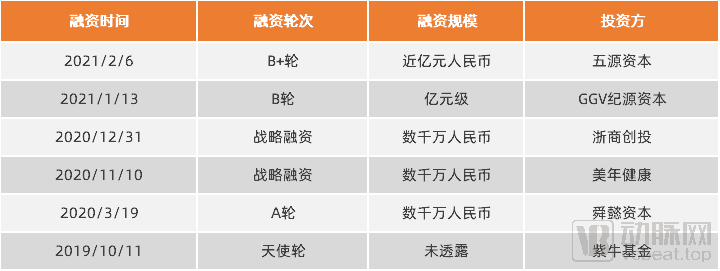
Shenzhi Technology's Financing Path
Shenzhen Shenzhi Technology was established in December 2018. Since securing its initial round of financing from Ziniu Fund in 2019, the company has maintained an uninterrupted pace of expansion. In less than a year and a half, Shenzhi Technology completed six rounds of financing—a rate of growth rarely matched by other enterprises.
Jing Xutian, Managing Director at Wuyuan Capital, stated, “We are highly optimistic about the opportunities arising from the integration of AI software with mobile ultrasound. This convergence will bring about significant changes to the healthcare services industry and represents a typical scenario where medical AI can be directly implemented to achieve a closed-loop business model. The combination of AI and portable ultrasound devices not only creates entirely new mobile diagnostic and treatment scenarios but also enhances the diagnostic efficiency and convenience for medical professionals. From a commercial perspective, it enables a transition from traditional medical device sales to a new business model. We believe that Shanghai Shenzhi Information Technology Co., Ltd. (Shenzhi) will continue to provide more convenient medical imaging diagnostic services to its broad customer base through sustained R&D investment in the integrated hardware and software of medical devices.”
When Shenzhi Technology was founded, the land-grab phase of the AI medical imaging industry had already entered its second half. Since 2019, emerging imaging companies had become scarce in the market. Therefore, instead of entering the radiology AI market, which was saturated with competitors, Shenzhi Technology chose to focus on the AI ultrasound market—a sector characterized by higher technical barriers and fewer participants. As of 2021, the number of companies in China dedicated to the development of AI ultrasound applications remained very limited.
Another temporal advantage stemmed from national policy recognition of AI. Chronologically, in the same month that Shenzhi Technology was founded, the National Medical Products Administration (NMPA) released the application process for Class III AI medical devices. Six months later, the Artificial Intelligence Medical Device Innovation Cooperation Platform was established. By 2020, the first Class III certification for an AI medical device had been issued. At this point, Shenzhi Technology’s ultrasound AI had already achieved notable results, reaching parity with other AI enterprises.
Beyond policy support, Shenzhi Technology also needs a thorough understanding of its sector. Zhu Ruixing, CEO of Shenzhi Technology, once stated, “AI ultrasound is a systematic engineering endeavor. It is not simply a matter of developing diagnostic recognition capabilities once a company has an algorithm. For instance, if the carrier is a handheld ultrasound device, onboard chips and GPUs are required to assist with computation, and factors such as algorithm design, IC design, chip selection, and power consumption must all be taken into account.” As a company built on an artificial intelligence algorithm-based technological platform, Shenzhi Technology possesses in-depth knowledge of hardware platforms. This enables the AI company to gain a more comprehensive mastery of the imaging process, usage patterns, and user needs, allowing it to develop products that best meet market demands.
Based on current application scenarios of AI in ultrasound, handheld ultrasound devices at the primary care level and hospital ultrasound departments represent the initial areas where AI can deliver value; however, the actual clinical applications of ultrasound extend far beyond these settings.
Taking anesthesiology as an example, the application of point-of-care (POC) ultrasound in this specialty primarily focuses on ultrasound-guided vascular access, nerve blocks, and intraoperative transesophageal echocardiography (TEE), with the aim of enhancing the safety of anesthetic procedures and the accuracy of organ function assessment. This differs from diagnostic ultrasound examinations used for disease diagnosis. The role of artificial intelligence (AI) in this context includes enabling trauma assessment, image registration/fusion, system quality assurance, scanning assistance, and Doppler noise suppression.
When supplemented with other equipment support and used for multimodal imaging-based patient diagnosis, ultrasound plays an important role in assessing the morphology and size of masses, evaluating cerebrovascular functional status, and determining the benign or malignant nature of nodules.
With this round of financing, Shenzhi Technology will not only enhance the performance of its existing pipeline but also develop new products beyond the clinical applications of ultrasound, thereby more effectively meeting clinicians’ needs and enabling more patients to benefit from the efficiency gains brought by AI.