

Beckman Medical Lists on HKEX, Pioneering China's Regulated Third-Generation IVF Genetic Testing Market
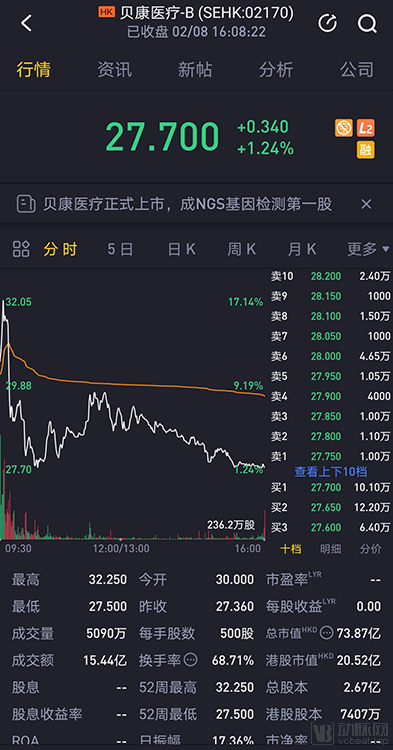
On February 8, Berry Genomics, a company specializing in genetic testing kits for third-generation in vitro fertilization (IVF), listed on the Hong Kong Stock Exchange. Its issue price was HK$27.36, with an intraday high of HK$32.05. At closing, the stock stood at HK$27.70, up 1.24%, bringing its market capitalization to HK$7.387 billion and making it the first publicly traded company in China focused on genetic testing for assisted reproduction.
BeKang Medical was founded in Suzhou in 2010 by Dr. Liang Bo. In February 2020, BeKang Medical’s PGT-A kit completed large-scale clinical trials on embryos and received market approval from the National Medical Products Administration (NMPA), marking the entry of China’s third-generation IVF genetic testing kits into the “certified” era.
Since the invention of in vitro fertilization (IVF) treatment in 1978, improvements in laboratory techniques and clinical practices have evolved IVF into an effective, safe, accessible, and relatively affordable medical intervention. Over years of development, IVF has progressed through three generations based on the technologies applied: first-generation IVF, the conventional approach involving co-incubation of sperm and eggs in the laboratory to produce embryos; second-generation IVF, which utilizes intracytoplasmic sperm injection (ICSI); and third-generation IVF, which incorporates preimplantation genetic testing (PGT).
In this process, the term “test-tube baby” has long become inextricably linked with addressing infertility. However, third-generation IVF technology does not represent a linear progression where each successive generation is superior to the previous one in treating infertility; notably, third-generation IVF is not exclusively indicated for patients with infertility.
Let us go back 21 years. In April 2000, at the First Affiliated Hospital of Sun Yat-sen University, a mother carrying the hemophilia gene (hereinafter referred to as “Ms. Zhong”) successfully gave birth to a healthy baby girl. However, for this mother, the childbirth process was not smooth.
In 1993, Ms. Zhong became pregnant and gave birth to a baby boy. When the child was one year old, he developed cyanosis and frequent subcutaneous and joint bleeding, and unfortunately died in infancy due to intracranial hemorrhage. Five years later, Ms. Zhong became pregnant again. Prenatal diagnosis revealed that the fetus, like his older brother, suffered from Factor VIII deficiency, also known as “hemophilia.” Consequently, Ms. Zhong had no choice but to terminate the pregnancy again. According to genetic principles, there is a 50% chance of having a son with hemophilia; for daughters, there is a 50% chance of being a carrier and a 50% chance of being unaffected.
Subsequently, Ms. Zhong went to the Reproductive Medicine Center of the First Affiliated Hospital of Sun Yat-sen University to undergo third-generation in vitro fertilization (IVF) technology. The hospital retrieved seven oocytes from Ms. Zhong and used fluorescence in situ hybridization (FISH) technology to screen out two healthy embryos. After the first embryo transfer, the embryo failed to survive; however, the second embryo was successfully implanted and survived. In 2000, Ms. Zhong gave birth to China’s first “third-generation” IVF baby. According to media reports, the baby girl is now a university student, in good health, and no different from ordinary girls.
In the aforementioned case, Ms. Zhong did not undergo third-generation in vitro fertilization (IVF) treatment due to infertility. This demonstrates that while third-generation IVF is related to first- and second-generation IVF, there are also significant differences between them.
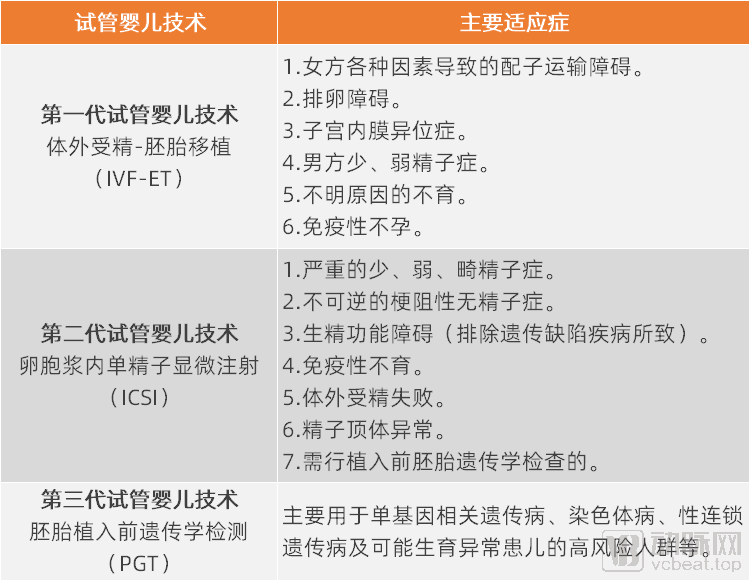
Differences Among the Three Generations of IVF, Source: National Health Commission, Graphic by VCBeat
As can be seen from the figure above, the primary difference among the three generations of in vitro fertilization (IVF) technology lies in their respective indications.
First-generation in vitro fertilization (IVF) involves retrieving sperm and oocytes, facilitating their fertilization and culture in vitro, and transferring the resulting embryos into the maternal uterine cavity for continued development into a fetus. This technique primarily addresses infertility caused by female tubal factor obstruction.
Second-generation in vitro fertilization (IVF) involves retrieving oocytes and sperm, selecting a single sperm for intracytoplasmic injection into the oocyte to achieve fertilization, culturing the embryo in vitro, and then transferring it back into the mother’s uterus. This technique is primarily indicated for infertility caused by male factors such as asthenozoospermia and oligozoospermia.
Third-generation in vitro fertilization (IVF) technology involves extracting one or several cells from well-developed embryos cultured in vitro for genetic testing, while maintaining the integrity of the embryos. If the embryos are confirmed to be free of genetic disorders, they are then transferred into the uterus to continue development and growth. This approach helps prevent miscarriages caused by chromosomal abnormalities in embryos and avoids the birth of children with hereditary genetic diseases, thereby offering prospective parents at high risk of having children with genetic defects the opportunity to have healthy offspring.
Meanwhile, the three are also interconnected, primarily at the technical level. Specifically, third-generation IVF technology is performed on the premise that in vitro fertilization has been completed using either first- or second-generation IVF techniques.
In summary, when discussing third-generation in vitro fertilization (IVF), it is essential to address both the need of infertile couples to improve treatment success rates and the need of individuals at high risk for genetic disorders to have healthy children.
In recent years, the demand for in vitro fertilization (IVF) treatment has grown significantly due to rising purchasing power, increasing health awareness, a stronger desire to reduce miscarriage rates, and the escalating incidence of infertility.
According to statistics, the number of abortions in China gradually increased from 1.36 million in 2015 to 1.46 million in 2019; the infertility rate (calculated as the number of infertile couples of childbearing age divided by the number of married couples of childbearing age) rose from 3.5% in 1997 to 16.4% in 2019. Meanwhile, the number of infertile couples in China increased from 44.1 million in 2015 to 49.9 million in 2019, and is expected to reach 52.6 million in 2024.
These factors have driven growing patient demand for third-generation IVF services, which include medical consultation, IVF treatment (i.e., oocyte retrieval, fertilization, and embryo transfer), pharmacological therapy, and preimplantation genetic testing (PGT). The market size of third-generation IVF services, measured by total patient expenditures (including registration fees, consultation fees, examination fees, medication costs, and PGT service fees), increased from RMB 300 million in 2015 to RMB 2.5 billion in 2019, and is projected to reach RMB 25.5 billion in 2024.
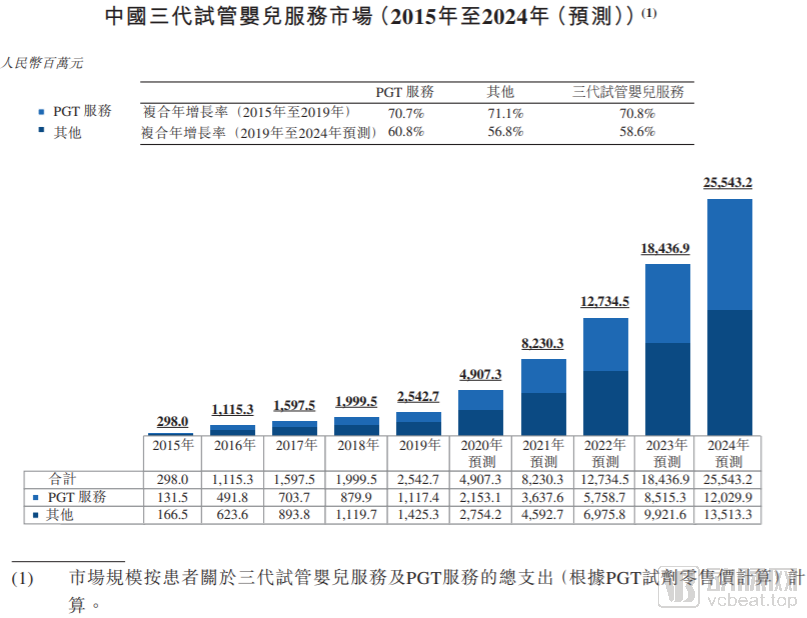
Market Size of Third-Generation IVF Services, Source: Frost & Sullivan
A key feature of third-generation in vitro fertilization (IVF) is the incorporation of preimplantation genetic testing (PGT) prior to embryo transfer. Consequently, a significant portion of patients’ expenditures on third-generation IVF services is allocated to the PGT process. PGT is generally categorized into three types: preimplantation genetic testing for aneuploidies (PGT-A), preimplantation genetic testing for monogenic disorders (PGT-M), and preimplantation genetic testing for structural rearrangements (PGT-SR). PGT-A is typically the initial genetic test performed by couples undergoing IVF treatment and is generally recommended before proceeding with PGT-M or PGT-SR.
Reagents are a critical component of PGT services and are supplied as test kits, serving as consumable products for preimplantation embryos. In 2020, BeiKang Medical’s PGT-A kit was approved by the National Medical Products Administration (NMPA) as a Class III medical device. This genetic testing kit is used during assisted reproduction to detect aneuploidy (i.e., abnormal chromosome numbers) in preimplantation embryos. The approval of this product marked the emergence of a commercial market for PGT reagents in China.
Currently, apart from the approval of Berry Genomics’ PGT-A kit, other PGT kit products are still in clinical trials or registration stages. In China, several companies also sell PGT reagents for limited scientific research purposes.
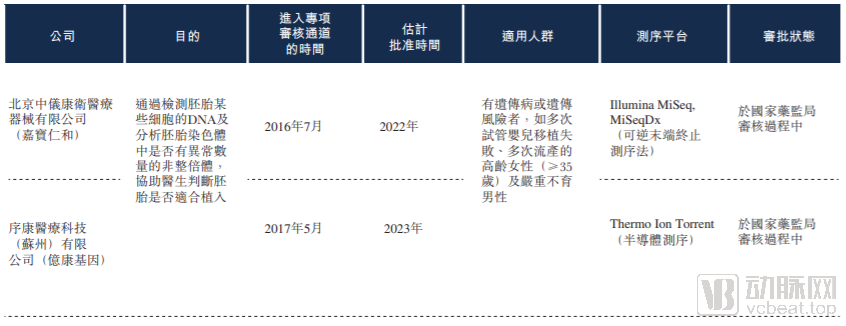 PGT-A Kits in Clinical Trials or Registration Phase, Source: Frost & Sullivan
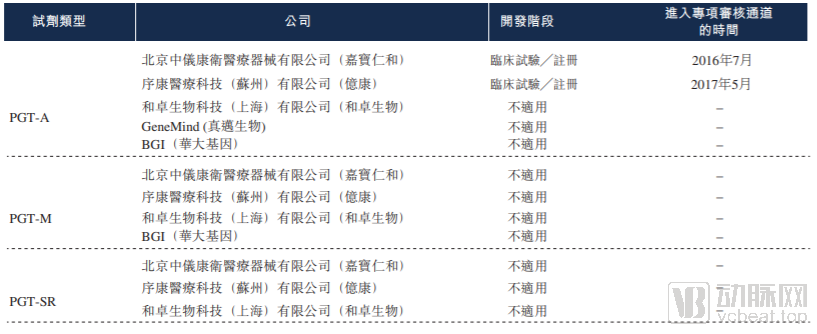 Chinese Suppliers of PGT Reagents Sold for Limited Scientific Research Purposes, Source: Frost & Sullivan
With the launch of PGT kits approved by the National Medical Products Administration (NMPA), hospitals can purchase PGT reagents at standardized prices through public tendering and centralized procurement. Their capacity for bulk purchasing of PGT kits helps reduce costs, enabling them to provide patients with more efficient PGT services at more affordable prices.
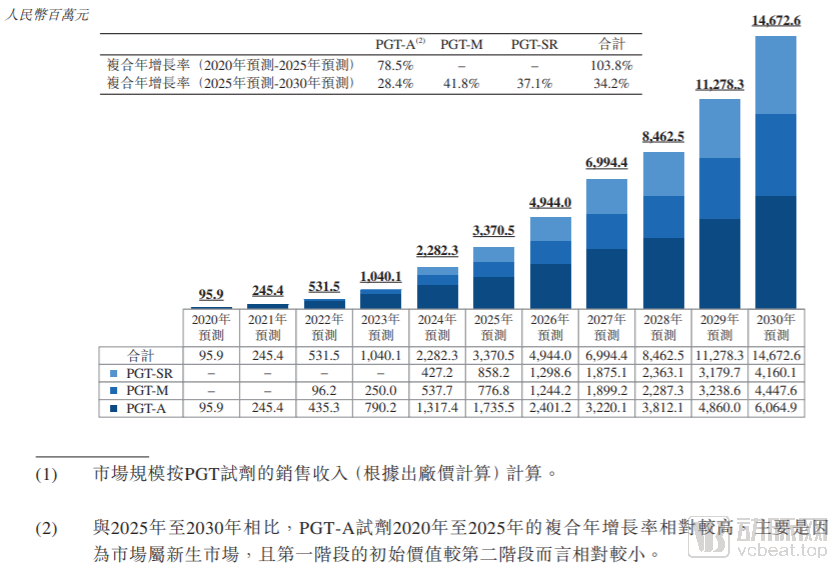 PGT Reagent Market Size, Source: Frost & Sullivan
Driven by the commercial launch of PGT reagents, the Chinese PGT reagent market is expected to grow rapidly in the coming years, with its market size (measured by sales revenue based on ex-factory prices) increasing from RMB 96 million in 2020 to RMB 3.4 billion in 2025, and further projected to reach RMB 14.7 billion by 2030.
The entry barriers to the PGT reagent market are relatively high.
First, the technical barriers are high. Developing PGT kits requires deep technical expertise and knowledge in biology, chemistry, and genetics. First-generation PGT technology uses FISH, which can provide results in a short time but with low accuracy. Due to continuous investment in research and development, new technologies such as CGH, SNP-array, and NGS have been applied in PGT. Currently, the most advanced PGT technologies feature higher resolution, whole-genome coverage, and shorter detection times. New entrants typically face significant challenges in establishing competitive advantages in PGT technology.
Second, clinical trials present significant challenges. In accordance with laws and regulations, the development of PGT kits requires more than 10,000 test samples, necessitating substantial investment of time and cost.
Third, regulatory oversight is stringent. As Class III medical devices, PGT kits must comply with a series of regulations issued by the National Medical Products Administration (NMPA), and commercial sales of PGT kits require NMPA approval. In recent years, the Chinese government has continuously emphasized the importance and necessity of quality control for assisted reproductive technology service providers, signaling that even stricter regulatory measures will be implemented in the future.
So, how did BeiKang Medical build its competitive moat and successfully launch the first and only PGT reagent product approved for commercial sale?
Large-scale study with a sample size of over 30,000
Beacon Medical began developing PGT-A kits in 2014.
The development of genetic screening reagent products is extremely complex and challenging, requiring research on tens of thousands of samples. During over four years of preclinical studies and multicenter clinical trials conducted by BeiKang Medical, more than 30,000 embryo samples were tested. Ultimately, the product demonstrated its ability to significantly improve the success rate of in vitro fertilization (IVF) and reduce the miscarriage rate, thereby addressing long-standing limitations in IVF treatment.
Compared with other PGT-A products based on fluorescence in situ hybridization (FISH) and quantitative polymerase chain reaction (qPCR) technologies, Berry Genomics’ PGT-A kit can screen for aneuploidy in embryos prior to implantation—a chromosomal abnormality frequently associated with IVF implantation failure.
In 2020, BeiKang Medical’s PGT-A kit was approved for use in women aged 35 or older; couples who had previously experienced three or more failed IVF implantations; those with a history of three or more spontaneous abortions or abnormal pregnancies; couples who had previously given birth to children with chromosomal abnormalities; and couples carrying chromosomal abnormalities. This product is the only one in the field of assisted reproduction to have passed the National Medical Products Administration’s Special Approval Procedure for Innovative Medical Devices, marking the birth of China’s regulated market for third-generation IVF.
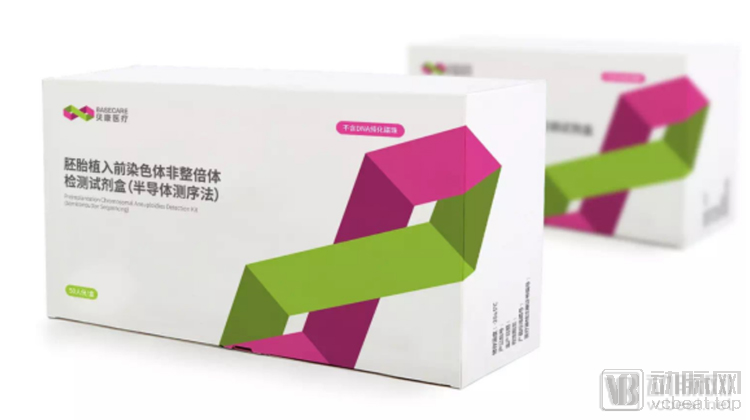
Berry Genomics PGT-A Kit
To monitor the accuracy and effectiveness of the PGT-A kit, Berry Genomics will need to collect additional clinical data from at least ten reproductive institutions and submit these data to the National Medical Products Administration (NMPA) when renewing its registration certificate in 2025.
Product Portfolio Covering the Entire Reproductive Lifecycle
Facing the vast PGT reagent market and the third-generation IVF market, Berry Genomics has built a product portfolio covering the entire reproductive cycle—pre-implantation, prenatal, and postnatal—and is developing one test kit for each stage.
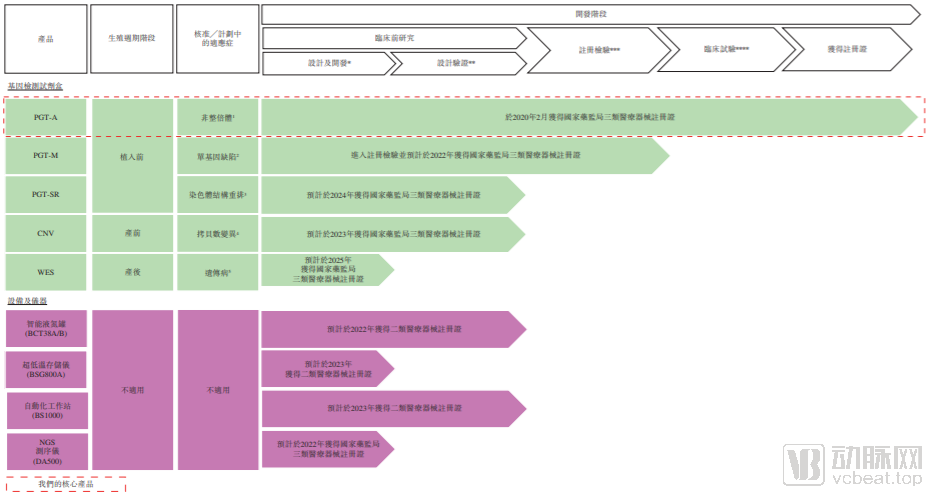
Beacon Medical’s Product Portfolio, Source: Prospectus
Among these products, the PGT-A kit is intended for women aged 35 or older undergoing in vitro fertilization (IVF) treatment; couples who have experienced three or more failed IVF cycles; couples with a history of three or more spontaneous abortions or abnormal pregnancies; couples who have previously given birth to a child with chromosomal abnormalities; and couples with chromosomal numerical mosaicism. The PGT-M kit is designed for carriers of thalassemia. The PGT-SR kit targets carriers of reciprocal translocations, Robertsonian translocations, or inversions. The CNV kit is indicated for patients with a history of miscarriage. The WES kit is aimed at carriers of over 200 genetic disorders.
A comprehensive product portfolio will enable Berry Genomics to secure continuous approvals for its test kits over the coming years, facilitating gradual commercialization and broader patient coverage, thereby strengthening the company’s overall market position. It is reported that Berry Genomics’ PGT-M test kit is expected to obtain a Class III medical device registration certificate in 2020, while clinical trials for its PGT-SR test kit are scheduled to commence in early 2022, with regulatory approval anticipated by 2024.
Next, BeiKang Medical will rapidly commercialize its product portfolio to cover the entire reproductive cycle; develop next-generation automated and intelligent hardware to upgrade industry infrastructure; and maintain its technological leadership through continuous innovation.
Commercialization Prospects After Sustained Losses
As the company’s products had not yet been commercialized prior to 2020, BeiKang Medical remained in a state of continuous losses. The net losses for 2018 and 2019 were RMB 158 million and RMB 534 million, respectively. For the first nine months of 2020, the loss amounted to RMB 852 million, compared with a loss of RMB 373 million in the same period of 2019.
Prior to this, Beikang Medical recorded the sales volume of its PGT-A kits as being for research use only. The average selling price of the PGT-A kits was RMB 1,233, with a total of 32,388 units sold.
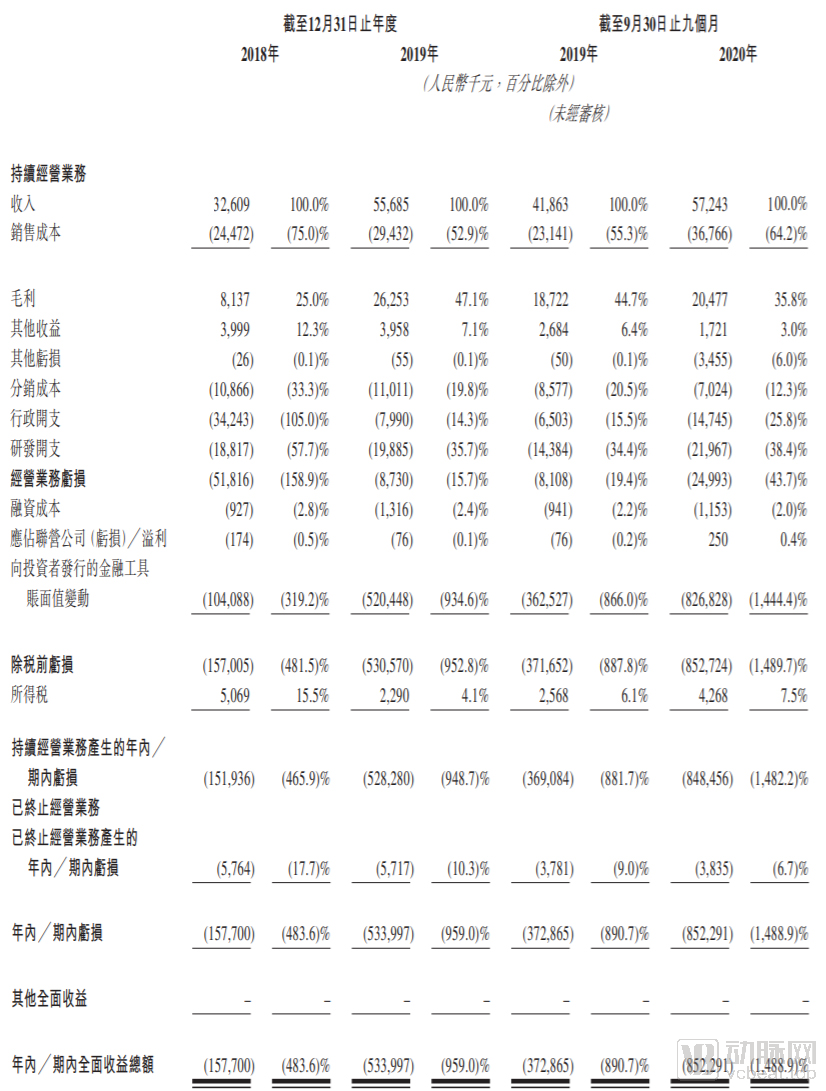 Beikang Medical Financial Data, Source: Prospectus
Following the approval of its PGT-A kit, Berry Genomics will focus its marketing and sales efforts on major hospitals and fertility clinics in China licensed to provide IVF treatment, and will also collaborate with marketing service providers to expand product sales to additional fertility clinics.
BeKang Medical will expand its coverage and penetration among key customers, including hospitals and fertility clinics licensed to conduct PGT services, and build stronger relationships with them to enhance customer stickiness and lay the foundation for offering additional products in the future; it also plans to collaborate with licensed third-party medical testing laboratories to broaden its customer base.
The prospectus indicates that its strategy for expanding coverage primarily includes: strengthening the PGT capabilities of key clients, enhancing the visibility of key clients through academic promotion, and increasing the penetration rate of PGT-A.
Benefiting from the substantial market potential of third-generation in vitro fertilization (IVF) and Berry Genomics’ technological barriers, the company has gained recognition in the capital markets despite its ongoing losses. With the commercialization of its PGT-A kits, its development prospects are promising.
What Changes Will the Future Third-Generation IVF and PGT Markets Face? An Analysis from the Perspectives of Technology, Service, and Demand.
From a technical perspective, innovation and iteration will continue.First-generation PGT technology utilizes FISH, which can provide results in a short time but with limited accuracy. Due to continuous investment in research and development, new technologies such as CGH, SNP array, and NGS have been applied in PGT. Currently, the most advanced PGT technologies feature higher resolution, whole-genome coverage, and shorter detection times. In the future, PGT technology will continue to evolve, with market participants investing substantial resources in R&D to leverage cutting-edge technologies for competitive advantage.
From the demand side, patient demand for third-generation IVF and PGT is continuously growing.As individuals increasingly prioritize improving the success rates of in vitro fertilization (IVF) and reducing the risks of miscarriage and birth defects, more couples are expected to opt for third-generation IVF and preimplantation genetic testing (PGT). Compared with traditional preventive measures for genetic disorders that require intervention through prenatal diagnosis, PGT enables embryo screening prior to implantation, thereby reducing the need for interventions during the second trimester of pregnancy. Consequently, demand for PGT reagents is anticipated to be substantial in the future.
According to a report by Frost & Sullivan, in 2018, the penetration rate of PGT in IVF treatments in China was only 3.5%, compared to approximately 35.2% in the United States. In the same year, among the ten most prominent service providers, the penetration rate in China was around 10%, whereas it reached 60% in the United States. This comparison highlights significant growth potential for PGT services in China.
From the supply side, the growing number of medical institutions qualified to provide third-generation in vitro fertilization (IVF) services will drive the development of the corresponding market.According to data from the National Health Commission, as of June 2020, a total of 71 medical institutions in China were qualified to provide third-generation in vitro fertilization (IVF) treatment, specifically preimplantation genetic diagnosis (PGD).
Meanwhile, in 2021, the National Health Commission formulated the Guiding Principles for the Planning of Human Assisted Reproductive Technology Applications (2021 Edition), which adjusted the requirements for offering preimplantation genetic diagnosis technology on the basis of the 2015 edition and removed the restriction limiting such services to tertiary medical institutions.
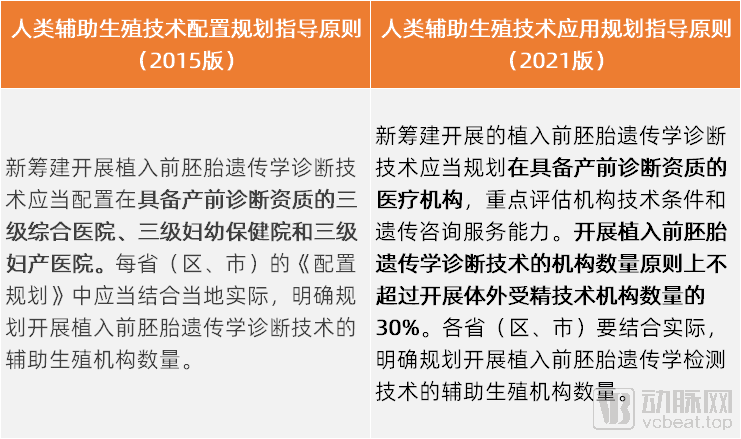 Policy Comparison of Preimplantation Genetic Diagnosis (PGD) Technologies; Source: National Health Commission; Graphic by VCBeat
In the past, due to the inconsistent quality of PGT reagents not approved by the National Medical Products Administration (NMPA), a lack of understanding of genetic testing or PGT, and the limitations of other genetic testing methods (such as PCR and FISH), physicians generally underestimated the clinical value of PGT. Consequently, only a small fraction of patients with relevant needs underwent PGT.
With the National Medical Products Administration’s approval and commercial launch of PGT-A products, along with compelling clinical data demonstrating improved IVF success rates and reduced miscarriage rates, it is anticipated that more physicians will recommend PGT to patients. In tandem with advancements in PGT-A technology, ongoing market promotion, patient education, and physician training are driving steadily growing awareness of PGT among both patients and healthcare providers.
Therefore, catalyzed by the factors in the three aforementioned aspects, the market for third-generation IVF and PGT is poised to enter a golden age.