

From Inception to Trillion-Won Milestone: Samsung Biologics’ Decade of Rapid Ascent
Samsung Biologics
Biopharmaceutical R&D and Manufacturer
Recently, Samsung Biologics released its fourth-quarter financial report. According to the data,In 2020, Samsung Biologics recorded total sales of KRW 1.1648 trillion (approximately RMB 6.7 billion), representing a 66% year-on-year increase.. This marks the first time its annual sales have surpassed KRW 1 trillion since its official market entry in 2015, representing a more than 12-fold increase from 2015 levels, with a compound annual growth rate (CAGR) of 66.4% over the five-year period.In terms of actual revenue, according to preliminary statistics,In 2020, Samsung Biologics reported an operating profit of KRW 292.8 billion (approximately RMB 1.7 billion), a year-on-year increase of 219.14%; its net profit stood at KRW 241.0 billion (approximately RMB 1.4 billion), representing a year-on-year growth of 18.76%.
The string of figures all point to one fact: In 2020, under the shadow of the pandemic, Samsung Biologics achieved a qualitative leap and, leveraging its extensive industrial chain, successfully joined the “first tier” of the global pharmaceutical industry.
What is even more astonishing is that, unlike century-old pharmaceutical giants such as Johnson & Johnson, Roche, and Pfizer, Samsung Biologics rose from its inception to the ranks of global leaders in just ten years, demonstrating a meteoric ascent that rivals the “emerging forces” of the pharmaceutical industry.
Tracing the origins, why did the Samsung Group, renowned worldwide for its electronics industry, choose to enter the biopharmaceutical sector, and what changes will its establishment bring to the entire pharmaceutical field? On the other hand, what precise strategic layout and development strategies enabled Samsung Biologics to achieve remarkable accomplishments in a short period, becoming a crucial link in the global industrial chain? Looking to the future, in which key areas will this highly anticipated pharmaceutical company focus its efforts to support its continuous ascent to greater heights? All these questions await answers.
In South Korea, there is a joking remark that goes,“There are three things in life that Koreans cannot avoid: death, taxes, and Samsung.”, there is some merit to this statement.
As the “synonym” for South Korea’s global presence, the Samsung Group has long been a source of national pride for Koreans, primarily manifested in three aspects: first,Samsung Group’s total output accounts for more than 20% of South Korea’s national GDP., serves as the "lifeline" of South Korea's economic support chain; second, the Samsung Group wields immense global influence,With 429 locations and 230,000 employees across 68 countries worldwide, the group has three companies ranked among the Fortune Global 500, with its flagship, Samsung Electronics, consistently holding a position within the top 15.; third, the Samsung Group has extensive business operations,It has a total of 85 subsidiaries., covering multiple sectors including electronics, finance, machinery, and chemistry, with each segment performing remarkably well and capturing a certain market share.
It is precisely for this reason that the Samsung Group has been quite cautious in exploring new business areas and would not act rashly. So, what kind of fortuitous circumstances led the Samsung Group to resolutely choose the biopharmaceutical field? What value orientation of the Samsung Group is hidden behind this?
First, it is an inevitable trend.In recent years, with the continuous improvement of living standards, people have placed increasing emphasis on their personal health. The broad health industry is emerging as a new economic growth hotspot, attracting global giants to enter the market.
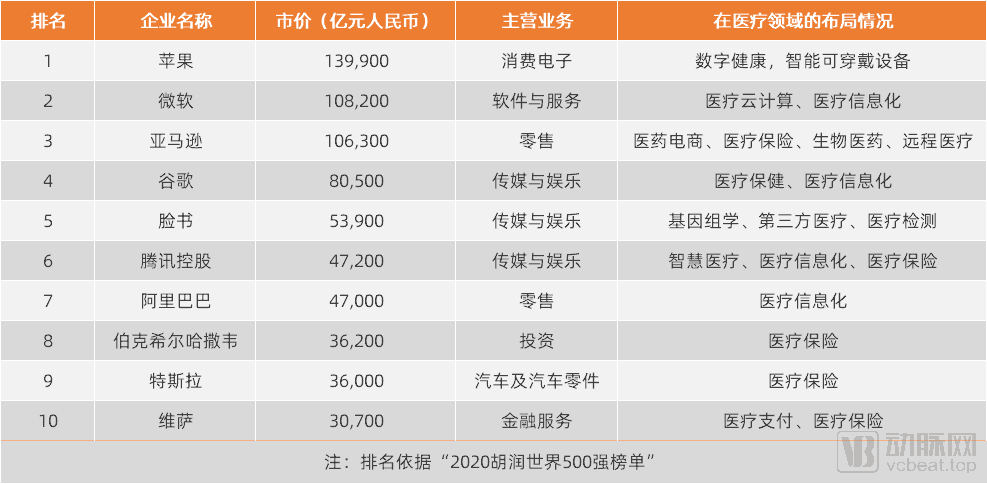
In this broader context, the “regulars” among the Fortune Global 500 have long been unable to hold back and have already begun to “forge ahead and capture territory” across various medical sectors. Ranked number one worldwide,AppleFocusing on digital health, with smart wearable devices as the primary breakthrough direction; ranked second in the worldMicrosoftIn 2018, it established a new division, “Microsoft Healthcare,” focusing on expanding new businesses in the field of medical cloud computing; ranking thirdAmazonIt has further extended its “tentacles” into the broader healthcare market, with involvement in core segments such as pharmaceutical e-commerce, health insurance, biopharmaceuticals, and telemedicine. In the face of direct challenges from potential competitors, Samsung Group’s entry into the pharmaceutical sector is an inevitable choice.
Second, business transformation.South Korea’s business community widely believes that although the chip industry remains prominent, it has exhausted its growth potential; therefore, whoever identifies new business breakthroughs will gain a competitive edge in the future. Currently, based on investment volume and development progress, biopharmaceuticals and artificial intelligence are leading the way.
According to data released by the London-based research firm Evaluate, global demand for biopharmaceutical manufacturing will triple by 2020, and the market size of the biotechnology sector will exceed $278 billion over the next five years.Faced with such a massive market size, Samsung Group, which is in urgent need of finding new business growth points, will certainly not hand over this “prize” to others.
Third, an innovative DNA.Samsung Group’s successful entry into the biopharmaceutical sector was made possible by the persistent efforts of Lee Jae-yong, Samsung’s “crown prince.” As the de facto controller of Samsung Group, Lee Jae-yong possesses a global perspective, emphasizing technological innovation and globalization strategies. He places significant importance on maintaining strong relationships with key partners such as Lenovo, aiming to transform Samsung from the world’s largest technology company into the most innovative one globally.
It is precisely on this basis that Lee Jae-yong sawIntegrating Information Technology, Pharmaceuticals, and Biologicsthe opportunities it holds. He has always firmly believed that biotechnology is an innovative sector capable of driving rapid profit growth for the Samsung Group, and he aspires to carve out a new business frontier in biopharmaceuticals, much like his father, Lee Kun-hee, who once led Samsung’s bold entry into the semiconductor and mobile phone industries.
In April 2011, Samsung Biologics was officially established amid great anticipation. Headquartered in Incheon, South Korea, the company is dedicated to unlocking the potential of biosimilars by providing high-quality, clinically validated biosimilar medicines to patients in need, thereby accelerating access to alternative biologic therapies and enabling more people to benefit from equitable biologic treatment.
Unlike other giants that have left a “messy ledger” in the biopharmaceutical sector, Samsung Biologics has a very clear position in the industry chain, namely“Refraining from competing with the US, Europe, and Japan in new drug R&D, and avoiding competition with China and India in clinical trials, while focusing on off-patent biosimilars and similar biologics, as well as contract design and contract manufacturing for patented products.”
To rapidly respond to the diverse demands of the market, Samsung Biologics pioneered its entry into the “CMO (global biopharmaceutical contract manufacturing)” sector, primarily accepting commissions from pharmaceutical companies to provide services such as process development, formulation development, clinical trial material supply, production of chemically or biologically synthesized active pharmaceutical ingredients (APIs), intermediate manufacturing, drug product manufacturing (e.g., powders and injections), and packaging.
Leveraging its refined management capabilities, cutting-edge core technologies, and customer-centric core values, Samsung Biologics provides customers and partners with end-to-end supply chain capabilities, ranging from drug manufacturing approval to packaging.Named Top CMO for Three Consecutive Years, and has successively partnered with leading global pharmaceutical manufacturersBristol Myers SquibbandRoche PharmaceuticalsEstablished cooperative partnerships and secured a substantial volume of business orders.
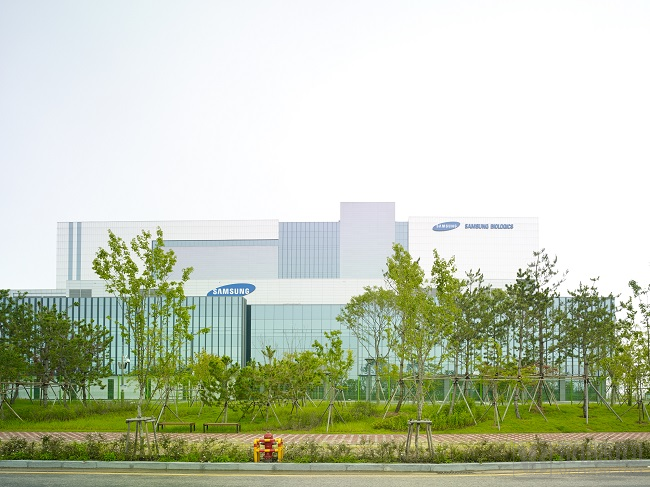
Image source: Samsung Biologics official website
To better serve its partners, Samsung BiologicsInvested $1 billion over four yearsEstablished two biologics manufacturing facilities for pharmaceutical companies, extensively introducing advanced infrastructure fully compliant with global healthcare regulations and cGMP (Current Good Manufacturing Practice) standards, with the aim of comprehensively developing, improving, and distributing biopharmaceutical products worldwide, thereby reshaping the new landscape of the global pharmaceutical industry.
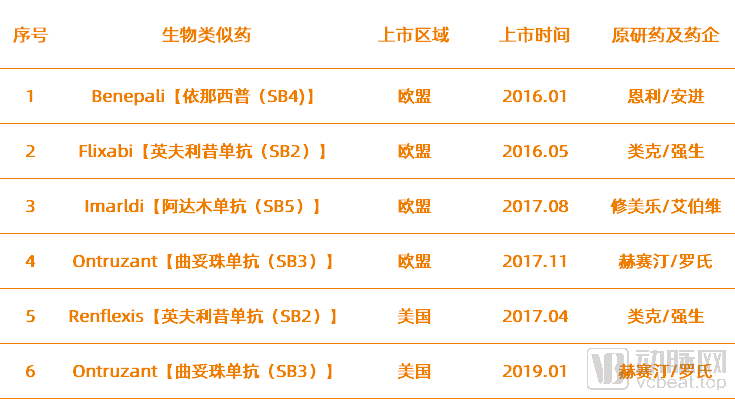
Overview of Samsung Biologics’ Biosimilars Listed in Europe and the United States
Leveraging its CMO business as a “springboard,” Samsung Biologics rapidly entered the biosimilars market, targeting several of the world’s best-selling biopharmaceuticals right from the outset. To keep pace with this rapid expansion, Samsung Biologics partnered with globally renowned pharmaceutical companiesMerck & Co.reached a cooperation agreement, in which Samsung Biologics, with its focus on pharmaceutical technology, is responsible for preclinical and clinical research, process development and manufacturing, clinical trials, and regulatory registration, while Merck & Co., with its market-oriented perspective and extensive experience in the pharmaceutical industry, handles commercialization. By fully leveraging their respective strengths, the two parties jointly developed products includingImmunology, Oncology, and Diabetesbiosimilars in the medical field, currently co-developed by both partiesSB2、SB3、SB4、SB5It has been marketed and sold in multiple regions worldwide.
The Journey of Innovation Is Inevitably Accompanied by Hardships and Obstacles: Samsung Group, with Its Strong Capabilities Across All Sectors, Also Faces Various Challenges as It Deepens Its Foray into the Pharmaceutical Industry. Unlike traditional chemical drugs, biosimilars are derived from living cells and cannot be 100% replicated from the original reference products, making it significantly more difficult to demonstrate their efficacy compared to chemical drugs. Although biosimilars currently offer greater development prospects and profit margins than traditional chemical drugs, regulatory and approval authorities in various countries still adopt a more prudent approach toward biosimilars, resulting in considerable challenges in obtaining approval.
For the Samsung Group, pharmaceutical manufacturing is far more complex and demanding than semiconductor production; indeed, even a single speck of dust can disrupt the production process. Furthermore, as Samsung Group aggressively expands into the biosimilars sector, it still faces challenges from competition with major pharmaceutical companies such as Pfizer and Amgen, as well as an immature market landscape. Although countries in Europe and Japan permit the sale of biosimilars, the United States has yet to issue specific regulations or approve any such biosimilar products for commercial sale.
But this has not dampened Samsung Group’s resolve to enter the biopharmaceutical sector. Over the past five years, Samsung GroupTotal investment reached $2.74 billion, established high-specification production facilities and R&D laboratories with diverse application values, and has spared no effort in attracting top-tier talent from around the globe.
All these meticulous efforts clearly demonstrate that this large corporation is not content with the title of “the world’s largest consumer electronics manufacturer.” Instead, it is channeling the same vigor once devoted to manufacturing chips and smartphones into producing biopharmaceuticals for the most renowned companies in the global pharmaceutical industry. As Lee Jae-yong stated when establishing Samsung Biologics,“Samsung’s goal is to become the world’s largest contract manufacturer of biopharmaceuticals.”
On November 10, 2016, Samsung Biologics conducted its initial public offering (IPO) on the KOSPI (Korea Composite Stock Price Index), marking the entry of this high-potential pharmaceutical company into a new stage of development.
Through precise market positioning and an unwavering commitment to high product standards, Samsung Biologics, established just five years ago, has become one of the most extensive and fastest-growing biosimilar manufacturers in the industry since its inception.
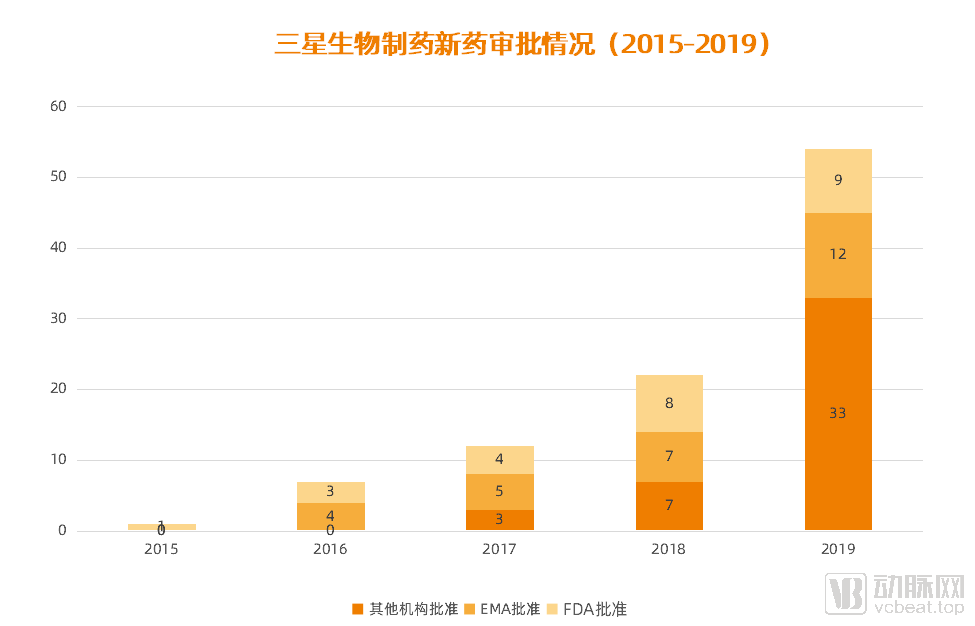
In terms of specific business areas, Samsung Biologics has alreadyImmunology and OncologyIt has developed life-changing and life-saving drugs, securing approvals multiple times from regulatory authorities in pharmaceutically advanced countries and regions such as the United States and Europe. It is the first Asian pharmaceutical company to launch a trastuzumab biosimilar for certain types of breast cancer and metastatic gastric cancer. In addition, Samsung Biologics has obtained European approval for its bevacizumab biosimilar for the treatment of certain types of metastatic colorectal cancer (mCRC) and non-small cell lung cancer (NSCLC), and has initiated efforts to seek approval from the U.S. Food and Drug Administration (FDA).
As an innovative enterprise in the pharmaceutical sector, Samsung Biologics has always been committed to continuous innovation and breakthroughs in therapeutic areas with the greatest unmet patient needs. In addition to its existing R&D technologies, Samsung Biologics isBusiness Scope Gradually Expands to Ophthalmology, Hematology, and GastroenterologyTarget emerging fields where the market is not yet saturated and demand remains substantial, and plan to leverage an intelligent biosimilar development process to create next-generation novel biologics.
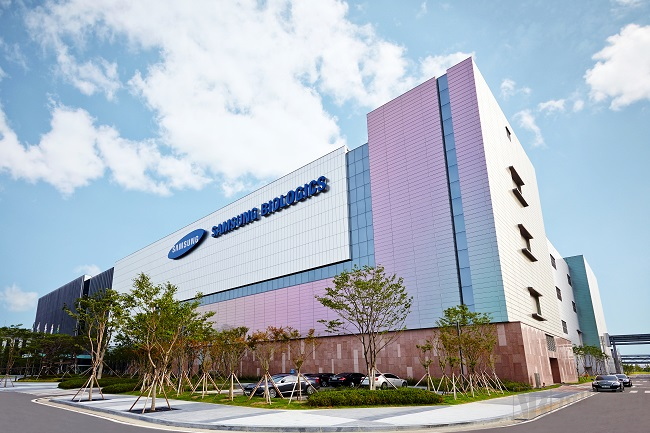
Image source: Samsung Biologics official website
In October 2018, Samsung Biologics' third manufacturing plant was completed.Total investment reached $740 million, upon completion, the pharmaceutical plant's production capacity will more than double, complementing the two existing manufacturing facilities,Samsung Biologics has become the world's largest pharmaceutical manufacturer.
With its stunning manufacturing capabilities and relentless pursuit of excellence in pharmaceutical technology, Samsung Biologics has continuously enhanced its global influence. The company has successively achieved dual certification for ISO 27001 (Information Security Management Requirements) and AEO (Authorized Economic Operator), and has finalized major cooperation agreements with global leading pharmaceutical enterprises, including India’s largest pharmaceutical company, Sun Pharmaceutical, and the U.S. biotech giant, CytoDyn.
When discussing the success of Samsung Biologics, one cannot overlook the emerging concept of CDMO. At the 2019 China International Bio-Medical Materials (BIO) Conference, Dr. Kim Tae-han, former CEO of Samsung Biologics, stated that“Samsung Biologics is an innovative pharmaceutical company. We are not content with mere manufacturing; instead, we aim to delve into core R&D areas that demand higher technical expertise.”
So, what exactly is a CDMO?
CDMO, short for “Contract Development and Manufacturing Organization,” is an emerging outsourced research and development (R&D) and manufacturing entity. CDMOs deeply integrate with enterprises’ entire supply chain systems—including R&D, procurement, and production—across all stages from preclinical research and clinical trials to commercial-scale manufacturing. They provide innovative process development and large-scale production services, replacing simple capacity output with higher value-added technological expertise.
Building on its prior R&D experience in the CMO sector, Samsung Biologics’ expansion into the CDMO field appears more measured and confident. Dr. Tae-Han Kim publicly stated, “It is projected that by 2025, there will be more than 180 biopharmaceutical products globally, indicating a further increase in future manufacturing demand. However, uncertainties surrounding product requirements, timelines, and production volumes among biotech R&D firms and biopharmaceutical companies have led to a significant mismatch between manufacturing capacity and growing demand. This discrepancy has severely hindered the development of the global pharmaceutical industry and diminished the contribution of generic drugs to therapeutic treatment. For Samsung Biologics, which is currently in a phase of upward growth,The massive supply-demand gap in biopharmaceuticals is both a challenge and an excellent opportunity to expand biopharmaceutical manufacturing operations.”
As a “rising star” in the global CDMO industry, Samsung Biologics has achieved remarkably rapid growth.By the end of 2018, the newly constructed Plant 3 had officially commenced operations, with an annual average output of 364,000 liters, becoming the largest and highest-capacity pharmaceutical manufacturing facility in the global biopharmaceutical industry.
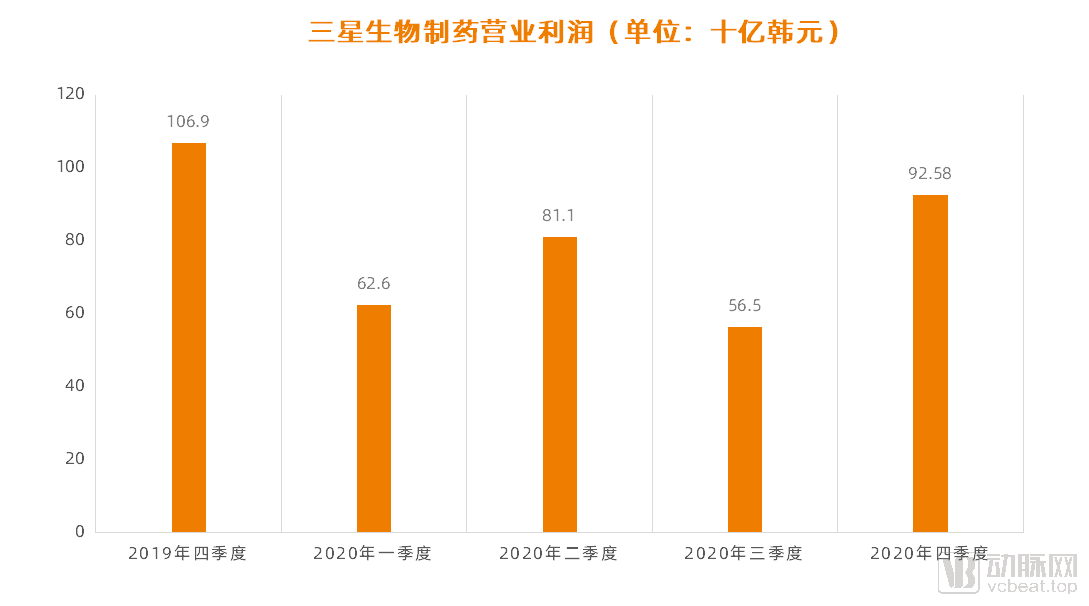
According to the annual report,Samsung Biologics achieved remarkable success in 2020, with annual sales surpassing the KRW 1 trillion mark for the first time, reaching a total of KRW 1.1648 trillion (approximately RMB 6.7 billion). This represents a more than 12-fold increase compared to 2015, with a compound annual growth rate (CAGR) of 66.4% over the five-year period. In terms of actual revenue, preliminary statistics indicate that Samsung Biologics’ operating profit in 2020 was KRW 292.8 billion (approximately RMB 1.7 billion), a year-on-year increase of 219.14%; net profit amounted to KRW 241.0 billion (approximately RMB 1.4 billion), representing a year-on-year growth of 18.76%.
John Rim, the new CEO of Samsung Biologics, emphasized that the substantial growth in sales was primarily attributable to its rapid response capability in crisis situations. For instance, in the face of the adverse conditions caused by the Covid-19 pandemic, Samsung Biologics implemented a “Real-Time Virtual Execution Plan” at its facilities to help global partners better advance drug production schedules. On the regulatory front, Samsung Biologics overcame numerous challenges to support global regulatory authorities in conducting due diligence and inspections through non-face-to-face, real-time virtual tours.
To sustain its strong growth momentum, Samsung Biologics has already begun preparing for the future.
First, accelerate the pace of factory operational improvements and optimize the product chain.John Rim stated, “Samsung Biologics will further enhance the operational capabilities of its existing facilities, continue to boost profitability and expand production volume, thereby solidifying its position as one of the world’s leading contract development and manufacturing organizations. The new CDO R&D center will better meet customer needs and improve customer satisfaction.” Currently, Samsung Biologics primarily provides CMO, CRO, and CDO services. In addition to its CMO services, which command a significant market share and have reached maturity,It plans to launch comprehensive CRO services with DRS in 2021 and become a leader in the CDO field by 2025.
Second, further expand production capacity by constructing a new fourth factory.To meet the growing global demand, Samsung Biologics plans to build a$2 Billion “Super Factory”, with a footprint as large as the combined area of the other three facilities. According to public information, this “super factory” will become the company’s center for developing next-generation biopharmaceuticals,Spanning 2.56 million square feet and boasting a capacity of 256,000 liters—nearly doubling the CDMO’s total capacity—the facility was scheduled to officially commence operations in 2022.
John Rim stated that the company is currently one of the world’s largest contract development and manufacturing organizations (CDMOs), with a total production capacity of 364,000 liters across its three plants. However, its current order backlog has nearly reached full capacity. Therefore, looking ahead, Samsung Biologics will accelerate the construction of Plant 4 and secure early contract commitments for the facility.It is reported that, as of January 2021, Samsung Biologics had secured 47 manufacturing contracts and 63 contract development projects from pharmaceutical developers.
Third, expand the investment portfolio in the pharmaceutical sector to lay a solid foundation for new drug development.At the JP Morgan Annual Healthcare Conference held earlier this year, John Rim stated, “Samsung Biologics will pursue multidimensional growth over the next decade, expand its portfolio in contract development and manufacturing services (CDMO), and lay the foundation for new drug development. Furthermore, to further solidify its position as a key player in the biopharmaceutical industry, Samsung Biologics will rapidly expand the global reach of its CDMO business, drive the continued growth of its biosimilars subsidiary, and ultimately achieve the ambitious goal of developing novel therapeutics.”
To support the company’s long-term vision, Samsung Biologics has announced plans to establish production facilities overseas and outlined its global CDO R&D centers across multiple locations. John Rim noted that product diversification in the field of fusion protein production is also under study, aiming to cover future modalities such as vaccines and cell and gene therapies, while the company is further exploring new business models for its development roadmap.
Ten years is typically the time it takes for a drug to go from research and development to market launch. Yet, in just this short span, Samsung Biologics has achieved the remarkable feat of growing from its inception to annual sales exceeding KRW 1 trillion, a trajectory that stands as a miracle and a model of growth in the pharmaceutical industry.
Due to the specialized nature of its industrial ecosystem, establishing a foothold in the biopharmaceutical sector is no easy feat for any company, with numerous cases of failure abound. Nevertheless, it is undeniable that despite the myriad challenges along the path, the lucrative returns have been sufficient to attract global giants to enter the arena, sparing no expense in expanding their presence across various segments of the biopharmaceutical industry. As for Samsung Biologics, its remarkable achievements can be attributed to two key factors: on one hand, its precise market positioning and steady, strategic steps have carved out a development path tailored to its own growth; on the other hand, it stems from the robust corporate strength of the Samsung Group, its unwavering commitment to high product standards, and its refined management systems.
With the continuous advancement of pharmaceutical technologies and the increasing entry and collaboration among industry giants, the pharmaceutical sector is poised for rapid development and will face intense competition in the coming years. Nevertheless, Samsung Biologics, as an “emerging force,” is absolutely not to be underestimated.