

Exclusive Interview with Jiang Yingshuang, CEO of Da Mi He Xiao Mi: How a 3-Year, 3-Round Funding Journey Earned Orbimed's Trust in the Autism Intervention Sector | GBA Biotech Top 50
Autism, also known as autism spectrum disorder (ASD), is a pervasive developmental disorder. Individuals with autism typically exhibit impairments in social communication, restricted interests or activities, and repetitive, stereotyped behaviors. Currently, there are no effective medications or treatments that can cure autism. However, early detection and early behavioral intervention can significantly improve behavioral symptoms in children with autism and facilitate their integration into normal social life.
The prevalence of autism spectrum disorder (ASD) in China is on the rise, with the total number of patients exceeding 10 million. Optimism about this sector has drawn institutions such as Dami and Xiaomi into the ASD rehabilitation industry. Over the past four years, Dami and Xiaomi has secured three rounds of financing, totaling hundreds of millions of yuan. What has earned this company the favor of investors?
VCBeat interviewed Jiang Yingshuang, CEO of Dami and Xiaomi, and has compiled the interview content as follows: (The content has been slightly edited for brevity without altering the original meaning.)
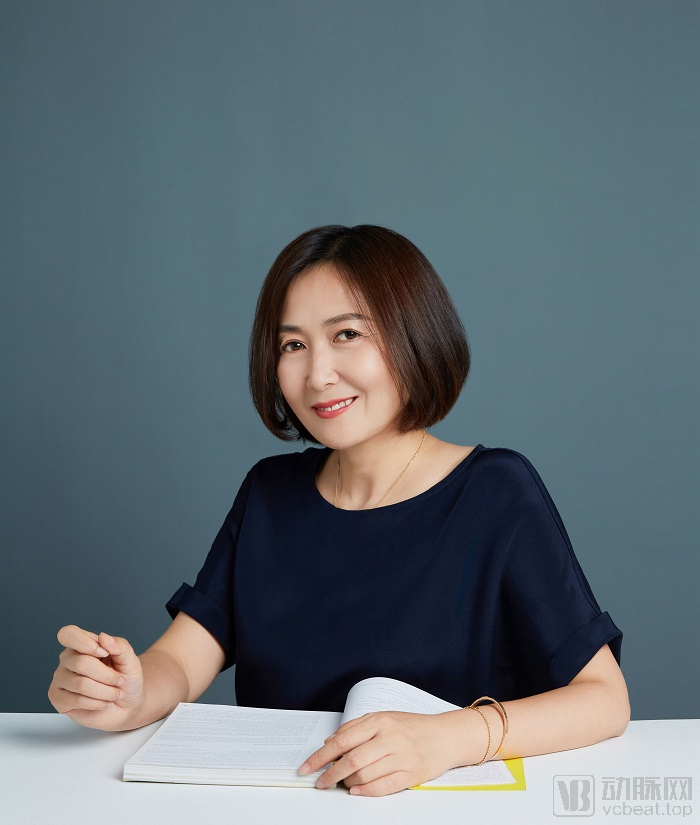
Jiang Yingshuang, Founder and CEO of Dami and Xiaomi
Why Enter the Field of Autism Rehabilitation?
VCBeat: In 2008, you entered the field of autism intervention after your daughter, Xiaomi, was misdiagnosed. Most people would likely focus on “seeking medical care”—that is, finding the best medical and rehabilitation resources for their child—rather than “practicing medicine.” What were your thoughts at the time? What motivated you to take this path?
Jiang Yingshuang: In 2008, China still lacked autism rehabilitation institutions. The well-known organizations we are familiar with today were in a phase of unregulated, rapid growth at that time. My mindset then was, “If I can’t rely on anyone else, I’ll do it myself!” I began gathering all available resources to study autism and developed an intervention plan for Xiaomi that remains relevant even by today’s standards. One key component was hiring a nanny whose sole responsibility was to engage Xiaomi in constant conversation, keeping his mind actively occupied so that he would have no idle time to develop stereotypical behaviors. Although it was later proven that Xiaomi had been misdiagnosed, many children with autism and their parents were still left with no viable options. At that time, I felt compelled to take action to help this community.
Given my background in media, my initial thought was to launch a WeChat Official Account to popularize knowledge about autism spectrum disorder (ASD) for this community and to raise societal awareness of individuals with ASD. This led to the creation of the “Dami and Xiaomi” WeChat Official Account. However, raising awareness alone is far from sufficient. For children with ASD, early evidence-based intervention is the only pathway to help them approximate the developmental trajectory of neurotypical peers, integrate into society, and achieve independent living skills.
The golden window for autism intervention, widely recognized by the scientific community, is before age three, and no later than age six. At that time, domestic autism service providers were scarce and unregulated, failing to meet the needs of families affected by autism. Therefore, starting in 2016, Dami and Xiaomi expanded into offline services, opening its first intervention and rehabilitation center in Shenzhen to provide rehabilitative training for children with autism through the RICE rehabilitation system.
Currently, Dami and Xiaomi has assembled a team of more than 20 academic advisors, including Zou Xiaobing, Guo Yanqing, and Fan Yuebo, along with over 20 board-certified behavior analysts, more than 10 registered speech and occupational therapists, and over 800 outstanding frontline rehabilitation therapists. We share a common goal: to enable children to communicate freely with the world.
VCBeat: What left the deepest impression on you during your entrepreneurial journey into the autism intervention industry?
Jiang Yingshuang: In early 2017, a parent of a child with autism approached us, claiming that their child had gone missing and was found dead six months later at a residential care facility in another city, and requested our coverage. We discovered that the child with autism was able to write down their own name and their parents’ names, yet the care facility had failed to register this information in the online system. Starting from this loophole, we uncovered systemic negligence and indifference throughout the entire chain. After Dami and Xiaomi published the initial report, it quickly drew widespread public attention and spurred reforms in residential care facilities under China’s civil affairs system, as well as enhanced interoperability between the public security system and the national missing persons and family reunification database.
I often reflect that if we remain silent in the face of truth out of cowardice, what we lose is far more than a viral article; we lose respect for life and demonstrate indifference toward our living environment. Last January, Yan Cheng, a 17-year-old boy with cerebral palsy from Hong’an County, Hubei Province, passed away. Dami and Xiaomi followed up with in-depth reporting, sparking widespread attention and discussion across China. Dami and Xiaomi also joined forces with relevant lawyers to support Yan’s father. I hope that Dami and Xiaomi will be not merely a commercial entity, but a compassionate and socially valuable enterprise dedicated to safeguarding the rights of individuals with autism and protecting vulnerable groups.
How Did Dami and Xiaomi Develop?
VCBeat: From the trial operation of the first Dami and Xiaomi Children’s Center in 2016 to the present, what do you consider to be the most significant change for Dami and Xiaomi?
Jiang Yingshuang: The most significant change is that we are no longer a company “going it alone” with just one offline facility. We now have a professional team and more partners, enabling us to scale up while becoming more systematic in our operations.
We have assembled a multidisciplinary collaborative team spanning autism rehabilitation, internet technology, artificial intelligence, and machine learning to develop an intervention and rehabilitation system tailored for children with autism and developmental disorders. In October 2019, we launched the RICE rehabilitation system, a proprietary framework centered on improving core deficits—specifically social skills—in affected children. This integrated system combines assessment, intervention, rehabilitation, and training, and is currently implemented across all Dami and Xiaomi centers.
We also collaborate with numerous experts and research institutions in countries such as the United States and Japan, as well as in regions including Hong Kong, China and Taiwan, China, and have initiated joint efforts with multiple domestic universities to cultivate standardized talent.
In 2018 and 2019, we successively secured investments from Fortune Capital (Dachen Venture Capital), YuanSheng Venture Capital, Wanwu Capital, and Qianshi Venture Capital. In 2020, we closed a Series C financing round worth tens of millions of US dollars, led by OrbiMed. This year, we will launch a new strategic initiative titled “Serving One Million Families of Children with Autism,” integrating advanced domestic and international intervention and rehabilitation theories and methods. Leveraging big data and machine learning, we aim to deliver high-quality products and services to support children’s growth and development.
VCBeat: In June 2019, Dami and Xiaomi partnered with Duke Kunshan University to collaborate on AI-assisted early intervention for autism. How do you view the application of artificial intelligence technology in the field of autism?
Jiang Yingshuang: Artificial intelligence technology is an “accelerator” in the field of autism. Offline interactions involve only direct person-to-person communication, leading to merely additive improvements in the number of individuals benefited. However, by leveraging various AI technologies and algorithms, we can achieve fission-like growth and exponential increases, thereby benefiting more people and bringing revolutionary changes to the industry.
Artificial intelligence plays a significant role in early intervention, an area that warrants further in-depth research. When the timing is right, it will significantly promote the developmental outcomes of children with autism spectrum disorder (ASD) in China. We also hope that advanced technologies will benefit more Chinese children with ASD and their families in the future.
VCBeat: Dami and Xiaomi’s rehabilitation intervention centers are primarily located in first-tier and coastal cities such as Beijing, Shanghai, Guangzhou, and Shenzhen. What expansion plans do you have for the future establishment of these centers?
Jiang Yingshuang: We will take into account local policies and market demand. We are currently preparing to establish rehabilitation intervention centers in Wuhan and Chengdu. In 2021, Dami and Xiaomi Rehabilitation Centers in these central cities as well as other small and medium-sized cities will open for business.
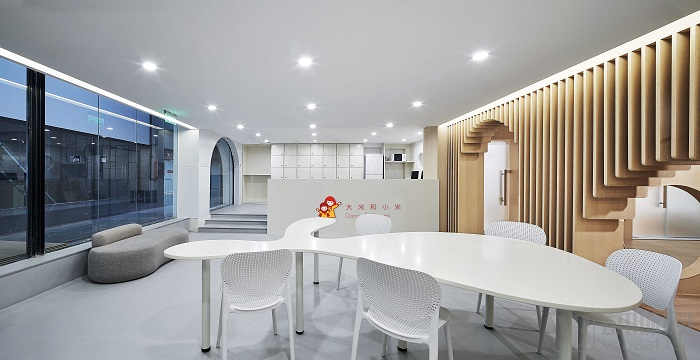
Dami and Xiaomi Beijing (Shuangqiao) Intervention and Rehabilitation Center
VCBeat: Dami and Xiaomi are collaborating with mainstream kindergartens to provide inclusive support. What is the biggest challenge faced in this process?
Jiang Yingshuang: For us, the scarcity of teachers specializing in inclusive education support is the greatest challenge we face. Additionally, the limited energy and capacity of teachers during collective instruction in inclusive schools present another significant difficulty.
Whether children with autism can adapt to the academic and social environment of mainstream schools depends on their functional capabilities. Even if some children successfully enroll in mainstream schools, they may encounter new challenges. For instance, some schools do not permit parents to accompany their children during classes, yet these children are unable to independently adjust to the classroom setting. Non-compliance and emotional outbursts can disrupt other students. Under current conditions, schools are often unable to assign special education teachers to provide individualized support. If certain children fail to “integrate,” they face a high risk of being “encouraged to withdraw.” Dissatisfaction among parents of neurotypical children may lead them to pressure the school, prompting administrators or teachers to hold discussions with the parents of children with autism. Frequent meetings with teachers impose significant psychological stress on these parents, who may find the situation unacceptable and feel that their child is being marginalized at school.
To address this issue, we have developed a kindergarten-to-primary school transition program to help children move from rehabilitation settings into mainstream primary schools. We also organize summer camp activities during the summer vacation to enhance children’s ability to integrate into group living.
VCBeat: What is the current number of individuals with autism spectrum disorder served by Dami and Xiaomi? How many therapists are on staff? How is the organization enhancing therapist competencies?
Jiang Yingshuang: Dami and Xiaomi serves tens of thousands of clients annually through its online and offline channels. Currently, the company employs over 800 therapists, including more than 30 doctors and master’s degree holders who have returned from overseas studies, as well as dozens of Board Certified Behavior Analysts (BCBAs) and Board Certified Assistant Behavior Analysts (BCaBAs).
Dami and Xiaomi boasts a robust faculty hierarchy. At the top tier are experts from the Academic Committee, spanning multiple disciplines including healthcare, special education, and artificial intelligence, with a primary mandate to evaluate the construction of intervention systems and talent development. The lower tier comprises internal core specialists who implement expert guidance, serving as supervisors with extensive experience in various intervention domains. This “Super Supervision System” assists frontline rehabilitation therapists in continuously standardizing and optimizing intervention practices and strategies tailored to each child’s needs, while also driving new product research and development, establishing teacher training frameworks, and cultivating high-level professionals.
We also provide theoretical and practical training for new therapists through the “Jingmi Training” or “Direct Express Training” programs, with formal appointment contingent upon successful completion of assessments. Furthermore, we offer a series of online and offline training opportunities to help therapists continuously “recharge” and enhance their professional competencies. We also encourage and support qualified therapists in obtaining BCBA and BCaBA certifications. Our goal is to create more favorable conditions to accelerate the professional growth of our therapists.
What Are the Key Pain Points and Challenges Facing the Autism Rehabilitation Industry?
VCBeat: How do you view the current growth in the number of autism rehabilitation institutions? Are there still areas for improvement in terms of the quantity and quality of practitioners?
Jiang Yingshuang: In recent years, autism rehabilitation institutions in China, particularly private ones, have experienced rapid growth. The number of such institutions has increased, and their distribution has gradually expanded from being concentrated in developed large cities to various regions across the country. For the industry as a whole, this is an encouraging and positive trend; however, there is an urgent need for relevant government agencies to increase resource investment, strengthen industry regulation, and promote optimization.
While institutional practices remain to be standardized, the more pressing challenge lies in the quality of teaching staff, with current practitioners exhibiting significant disparities in professional competence. This necessitates collaborative efforts among the government, universities, and rehabilitation institutions to strengthen the training and development of professionals. In recent years, many regions have intensified their efforts in cultivating and training special education teachers, incorporating them into provincial programs for tuition-free normal students, and actively encouraging eligible universities to establish new special education majors. Currently, many higher normal universities have sequentially launched special education programs, which is highly beneficial for talent development.
Last year, Dami and Xiaomi also initiated industry-academia-research collaboration with Nanjing Normal University of Special Education, making substantial progress in talent development, research projects, and collaborative education. Recently, Dami and Xiaomi launched the “Honghu Initiative,” selecting 100 high-caliber professionals from both domestic and international markets and providing them with customized training and assessment programs to support the implementation of intervention and rehabilitation services, management, and practical supervision across its centers.
VCBeat: What changes do parents of children with autism need to make in collaboration with rehabilitation institutions? Is there still a gap in current parent training programs?
Jiang Yingshuang: For the most part, children with autism spend their lives at home. If families cooperate with rehabilitation institutions to provide a playful, hands-on training environment, it can accelerate the child’s progress. On one hand, parents can apply and reinforce the training principles and methods taught by rehabilitation institutions in daily life scenarios. On the other hand, through interactions with family members, relatives, friends, and neighbors, children can access fundamental social information and learn basic social interaction skills, thereby enriching their lives. Furthermore, since many children with autism do not naturally consider others’ emotions, it is essential for their closest family members to facilitate effective parent-child interactions, such as through play, to gradually help them experience the joy of emotional exchange.
Currently, parent training programs in China are inadequate. To address the pain points in parent training and help Chinese parents and practitioners gain a more scientific and systematic understanding of intervention and inclusion strategies for children with autism, Dami and Xiaomi established the Parents’ Growth Academy one year ago. This academy provides a platform for learning and personal growth for parents of children with special needs, empowering each parent to become an expert in home-based intervention and family rehabilitation.
VCBeat: What are the current pain points and challenges in the field of autism rehabilitation and intervention? What corresponding changes are needed to further advance this field in the future?
Jiang Yingshuang: Currently, in China’s autism rehabilitation sector, first-tier cities are relatively developed, while third- and fourth-tier cities and remote areas suffer from extreme resource scarcity. There is a shortage of professional medical personnel, with most resources concentrated in national or provincial specialized hospitals; primary-care medical resources are virtually nonexistent. We also lack qualified rehabilitation specialists and therapists, which constitutes a major bottleneck in autism intervention and rehabilitation.
Viewed across the lifespan of individuals with autism, early childhood is often marked by missed opportunities for critical early intervention due to shortages in specialized hospitals, rehabilitation institutions, and qualified professionals, as well as a lack of appropriate therapeutic approaches. During school age, they are frequently rejected or persuaded to withdraw from schools owing to the scarcity of inclusive education settings. In adulthood, they face even greater challenges. Due to the lack of adult rehabilitation services, supported employment, and sheltered employment options, many are forced to remain at home, leading to worsening emotional and behavioral issues. Many mothers are compelled to resign or become unemployed as they must care for their children.
Encouragingly, various sectors of society are engaging in diverse forms of participation—such as residential care, inclusive support services, and the development of accessible environments—thereby taking concrete actions to foster an inclusive and friendly social environment. I am confident that, with concerted efforts from all parties, conditions will continue to improve.
On the Selection of the Top 50 Biotech Innovation Enterprises in the Guangdong-Hong Kong-Macao Greater Bay Area (3rd Edition)
The Top 50 Biotech Innovation Enterprises in the Guangdong-Hong Kong-Macao Greater Bay Area, organized by Zhongchuang Industry Research Institute and KPMG China and undertaken by Guangdong Medical Valley, covers three sectors: medical devices, biopharmaceuticals and technology, and healthcare services. The evaluation comprehensively assesses participating companies’ technological innovation and future development prospects from three dimensions: innovative technology, market application, and capital. An expert panel comprising representatives from government agencies, third-party research firms, professional investment institutions, and medical organizations conducted in-depth company visits and investigations to select the authoritative list of innovative enterprises. Launched in July 2020 and spanning four months, the selection process attracted keen attention from both government and industry stakeholders, with active participation from biotech enterprises within and outside the Greater Bay Area.