

Amid Surge in Internet Hospital Development, Akang Health Offers Efficient Solutions for Rapid and Compliant Deployment

AKangHealth
Prescription Drug Operation Service Provider
In late October 2020, the National Health Commission reported that the number of internet hospitals established had exceeded 900. In contrast, when VCBeat analyzed data up to April 30, 2020, the number of internet hospitals stood at only 497.
Clearly, the development of internet hospitals has sparked a new wave. This trend is, to some extent, linked to the COVID-19 pandemic in 2020 and the policies implemented to respond to it.
Since February of last year, the National Health Commission has successively issued the “Notice on Strengthening Informatics Support for the Prevention and Control of Novel Coronavirus Pneumonia” and the “Notice on Conducting Internet-Based Diagnosis, Treatment, and Consultation Services During Epidemic Prevention and Control.” Both documents mandate the vigorous promotion of internet-based diagnosis and treatment services and require provincial-level health administrative departments to establish unified provincial internet healthcare service platforms and novel coronavirus pneumonia prevention and control service management platforms.
In this process, the high efficiency and low risk of internet hospitals have been demonstrated. Offline physical institutions and internet healthcare platforms are actively deploying online diagnosis and treatment services and accelerating the development of internet hospitals.
Meanwhile, the pandemic has further accelerated the integration of internet-based medical services into the national health insurance payment system. Last March, the National Healthcare Security Administration and the National Health Commission issued the "Guiding Opinions on Promoting 'Internet+' Medical Insurance Services During the Prevention and Control of COVID-19," explicitly stating that expenses for eligible "Internet+" medical services would be covered by health insurance. Furthermore, last November, the "Guiding Opinions on Actively Advancing Health Insurance Payment for 'Internet+' Medical Services" clarified that qualified internet hospitals could enroll in the health insurance program.
On the other hand, although the epidemic has been effectively controlled in China, the normalization of epidemic prevention and control measures, coupled with a shift in public awareness, has led to a sustained growth in demand for internet-based medical services cultivated during the pandemic. The need to reduce the risk of clustered infections associated with hospital visits, along with the rising demand for online medical services among a large number of patients, particularly those with chronic diseases, is further driving the boom in the development of internet hospitals.
But how should internet hospitals be developed? This is a question that both hospitals and enterprises themselves must face.
For hospitals and enterprises that lack inherent expertise in this area, it is undoubtedly necessary to involve third-party providers with a solid foundation in the development of internet hospitals.AKangHealth is dedicated to this mission, providing support for the development of internet hospitals. It helps hospitals and enterprises build internet hospitals with greater efficiency and ensures their healthy, sustainable operation.
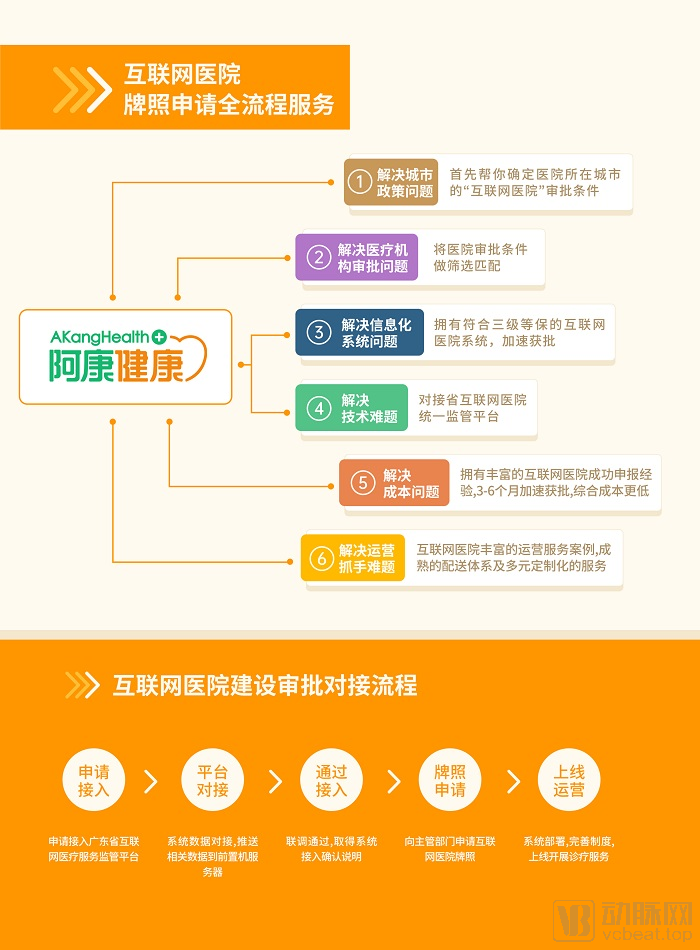
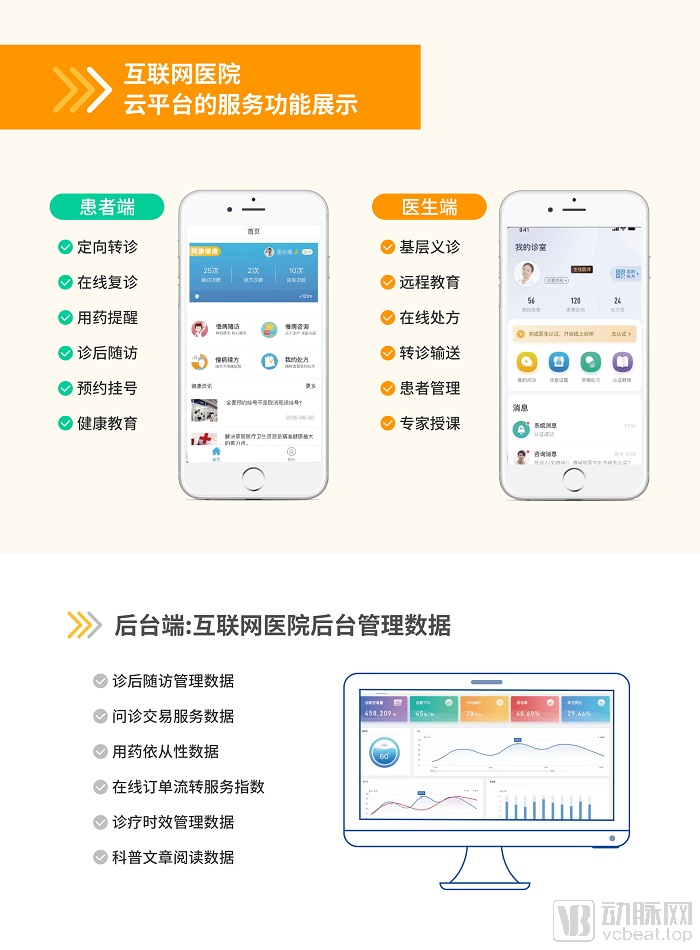
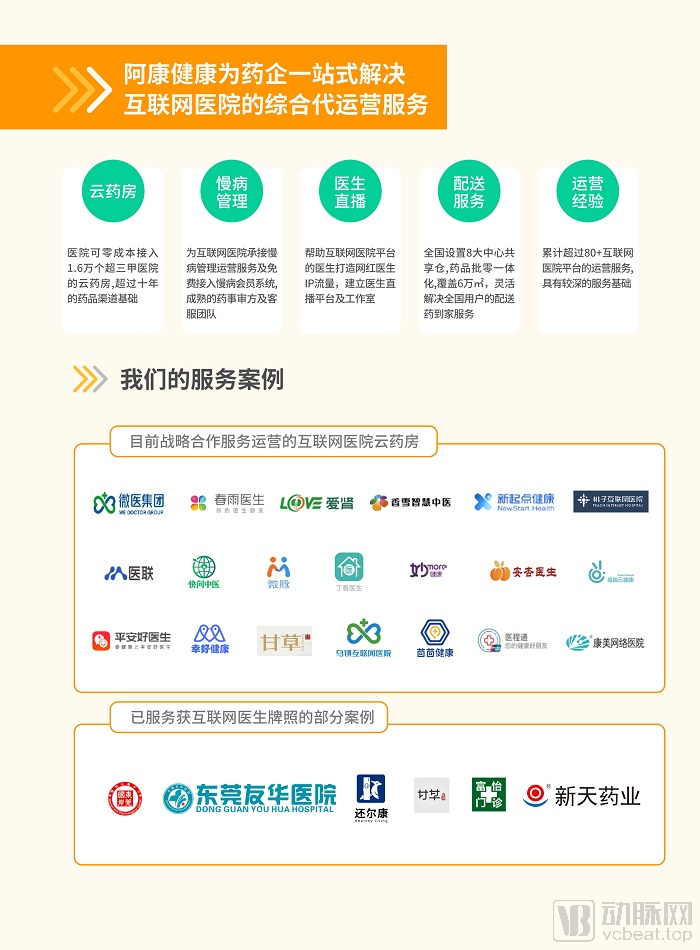
AKangHealth’s Internet Hospital Construction Services are designed for medical institutions, pharmaceutical companies, chain pharmacies, online healthcare platforms, and chronic disease management organizations that require online diagnosis and treatment as well as patient disease management capabilities. Partners interested in building their own internet hospitals are welcome to contact us. For business inquiries, please call Ms. Deng at 18696792035.