

Jianyi Bio Files for IPO: Pioneering Domestic Innovation in Automated High-End Biomedical Equipment
High-end general-purpose biomedical equipment lies at the intersection of life and health, high-end equipment, and intelligent manufacturing, and is classified as a key industry supported by the state. However, for a long time, China has lagged in the research and development of such equipment, with mid-to-high-end products relying heavily on imports, which has severely hindered the sound development of the industry.
KeyOne Bio focuses on biomedical fields such as cell therapy and medical aesthetics, specializing in the innovative upgrading of pharmaceutical equipment and the import substitution of medical devices. It is one of the few domestic enterprises engaged in the R&D and industrialization of high-end automated equipment. Recently, VCBeat conducted an exclusive interview with Professor He Jiaming, founder of KeyOne Bio, to discuss the future development of China’s high-end biomedical equipment manufacturing industry and explore how KeyOne Bio has broken foreign monopolies to achieve import substitution and innovative upgrading of high-end biomedical equipment.
Following the advent of small-molecule drugs and large-molecule antibody therapies, cell therapy has gained significant momentum in recent years, demonstrating substantial potential in areas such as advanced cancer treatment and medical aesthetics. Internationally, cell therapy has already evolved into a large-scale market, while the domestic market in China is rapidly maturing under supportive policy frameworks.
As the market size of cell therapy continues to expand and industry interest grows, there is a surging demand for high-end intelligent and automated biomedical equipment, such as large-scale cell banking culture systems and cell preparation platforms for cosmetic anti-aging applications. However, according to Professor He Jiaming, China’s high-end general-purpose biomedical equipment remains heavily reliant on imports, with its overall technological level lagging behind that of developed countries by ten years, which significantly constrains the robust development of China’s biomedical industry.
Taking high-end equipment for cell therapy as an example, although there are many enterprises in China engaged in the production of cell therapy-related equipment, they mainly focus on simple manually operated devices such as biosafety cabinets, centrifuges, and CO2 incubators. Few companies are involved in the research and development (R&D) of automated equipment, and even fewer can cover the entire cell culture process with automated solutions. As a result, cell preparation in China still relies primarily on manual culture, leading to pain points such as the lack of unified quality standards for final products and significant variations in product phenotype, quantity, and activity. Furthermore, the promotion of high-end biomedical equipment from abroad lags behind in China. Even though some manufacturers have introduced foreign high-end equipment and technologies, issues such as exorbitant prices for equipment and consumables, weak technical support, and poor service levels persist.
He Jiaming holds a Ph.D. and completed postdoctoral research at Zhejiang University. He is a Professor at Ningbo University, where he serves as Director of the Institute of Communication Technology and as the academic discipline leader. He has presided over numerous major national-level scientific research projects, including key special projects funded by the State Council, international cooperation programs under the Ministry of Science and Technology, industrial upgrading initiatives for enterprises supported by the National Development and Reform Commission, grants from the National Natural Science Foundation of China, and projects under the National High-Tech Research and Development Program (863 Program). A recipient of the Second Prize of the National Award for Progress in Science and Technology, he also leads the Zhejiang Provincial Key Scientific and Technological Innovation Team focused on next-generation mobile internet client-side software. With over a decade of entrepreneurial experience encompassing scientific research, technological development, project management, and team organization, he possesses extensive expertise in internet technologies, mobile terminal technologies, and the research, development, and industrialization of high-end automated equipment.
Years of industry experience have led Professor He Jiaming to recognize that the independent research and development of high-end general-purpose biomedical equipment is central to enhancing China’s international competitiveness. To this end, Professor He founded Jianyi Bio, which independently develops advanced automated equipment for the biomedical, pharmaceutical, and life health sectors, thereby breaking foreign technological monopolies.
Currently, Jianyi Biotech has assembled an R&D team with professional backgrounds in precision mechanical design, industrial control development, system and human-computer interaction software development, and biotechnology. The company holds 38 patents, and its independently developed products—including fully automated cell workstations, fully automated cell expansion systems, fully automated cell sorters, pharmaceutical-grade high-throughput cell incubators, and high-efficiency access cell incubators—have been launched and are commercially available. Products under development include handheld nucleic acid amplification analyzers, automated sample storage systems, live-cell drug screening and identification sample preparation systems, and novel drying systems, among others.
Professor He Jiaming stated that, compared with similar foreign products, the company’s complete systems offer a higher cost-performance ratio, demonstrate significant advantages in digital technology and software, and provide after-sales service support that is markedly superior to that of foreign enterprises.
Among these, the fully automated cell workstation is Jianyi Bio’s flagship product. By leveraging technologies such as automation, intelligence, informatization, artificial intelligence, and image processing, this product achieves fully automated machine control over existing standard operating procedures (SOPs) for cell culture—including access, medium exchange, passaging, observation, digestion, centrifugation, resuspension, shaking, pipetting, and aliquoting—as well as cultivation and harvest processes. It completely replaces traditional manual cell preparation and culture methods, addressing drawbacks associated with manual culture such as susceptibility to contamination, batch-to-batch quality inconsistency, and low production efficiency. This enables the upgrade of cell culture from traditional manual operations to standardized production. As the only domestic product benchmarked against Sartorius Germany’s SELECT COMPACT Cell Expansion System, it fills a gap in the Chinese market.
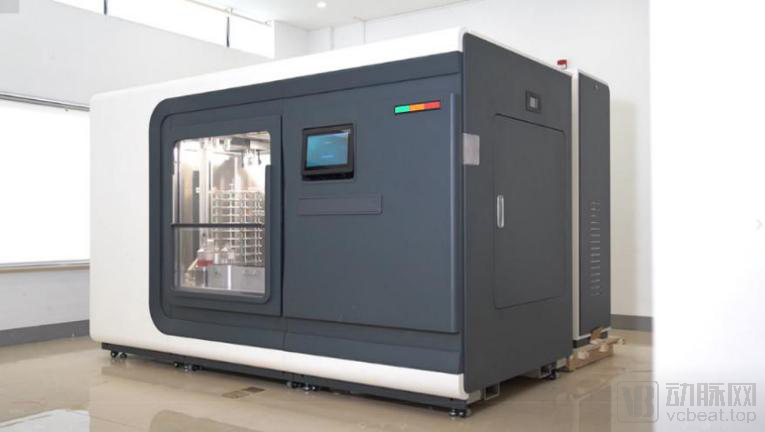
Jianyi Biotech's Fully Automated Cell Workstation
Furthermore, Jianyi Bio’s automated cell sorter has added a “mononuclear cell” separation function based on similar products, making it suitable for immune cell preparation and meeting the technical demands of the booming biomedical cell therapy sector. The pharmaceutical-grade high-throughput cell incubator is a key component of the “Cell Preparation Station,” an upgraded product from a leading listed company in the industry, which has designated Jianyi Bio as the exclusive supplier for this finalized product. The high-efficiency access cell incubator improves space utilization by more than threefold compared to ordinary incubators of the same volume, enabling one-click fully automated intelligent access to culture flasks. This significantly reduces manual handling time and lowers the risk of cross-contamination between different batches of cultures.
Undoubtedly, the biomedical industry, including cell therapy, has become a key area of breakthrough in the global health sector in the 21st century. According to data from the “Research and Consulting Report on the Development Status and Investment Potential of the Biopharmaceutical Market (2019–2023)” by Zhongyan Puhua, the global biomedical market size is projected to reach $1,005.3 billion in 2023, and the global biomedical equipment market size is expected to reach $201.1 billion in 2023.
China is the world’s second-largest market for high-end medical equipment, and the independent research and development of advanced biomedical devices is a key factor in shaping China’s core competitiveness and enhancing its international influence. In the future, demand for high-end equipment is expected to rise rapidly across sectors such as scientific research, pharmaceuticals, healthcare, aesthetics, and anti-aging, driving robust growth in the advanced biomedical equipment industry.
Professor He Jiaming predicts that mechanization, automation, and intelligence will become the main themes of China’s high-end biomedical equipment industry. As a domestic leader in this sector, Jianyi Bio will continue to monitor developments in the manufacturing of high-end biomedical equipment, intensify its efforts in new product R&D and industrialization, and promote the healthy development of the industry.