

Nanit Files for IPO Following $25M Series C Funding Round Led by GV

Nanit
Intelligent Medical and Health Product Developer
Recently, smart device manufacturer Nanit announced the completion of a $25 million Series C financing round. As a provider of infant sleep monitoring solutions, Nanit has largely addressed the challenges faced by parents of newborns: helping infants sleep more safely and soundly.
Perhaps also recognizing the vast future potential of the sleep sector, Nanit, while continuously launching monitoring devices and accessories for infants and toddlers, has also indicated that it does not rule out introducing smart monitoring solutions for adult sleep in the future.
What Kind of Company Is Nanit Exactly? What Are the Features of Their Products?
Who Is Betting on Nanit After Its Nearly $100 Million Funding Round?
In fact, contrary to the public information on Crunchbase, the company was established as early as 2014. Headquartered in New York, Nanit, a company dedicated to creating innovative infant sleep monitoring devices, secured funding at an early stage.
To date, it has completed a total of four funding rounds, raising nearly $75 million.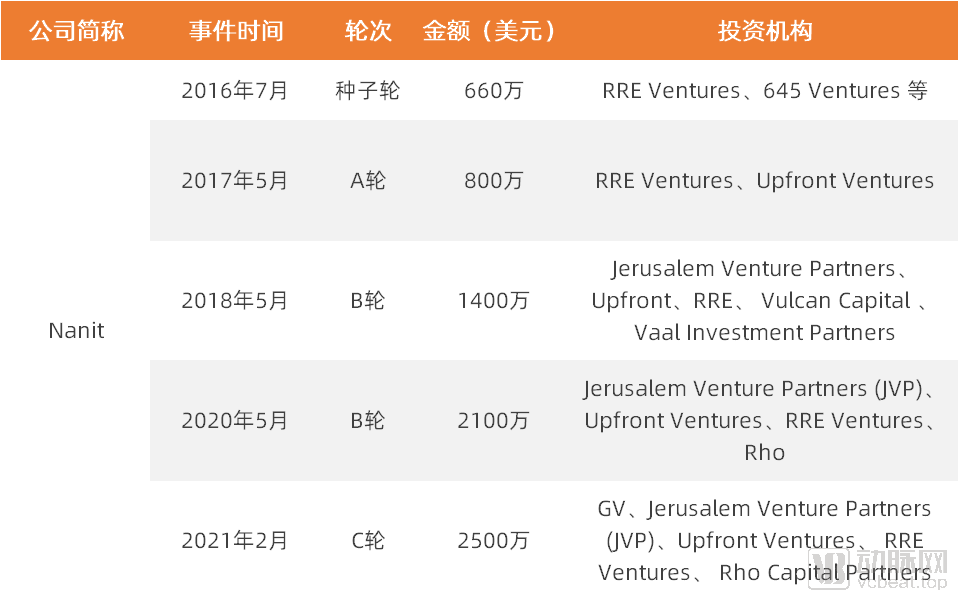
Compiled from Crunchbase and media news sources. Additionally, Crunchbase lists two seed funding rounds: one in 2015 for $4.6 million and another in 2016 for $6.6 million. However, these figures lack verification from relevant sources. According to reports from multiple other media outlets, the company’s cumulative funding reached $49.6 million at the time of its $21 million Series B financing. Other media indicated that its cumulative funding approached $75 million upon the completion of its Series C round. Back-calculating from these figures, it is likely more accurate that the seed round amounted to $6.6 million. Nevertheless, the possibility of misinterpretation by the author cannot be ruled out.
From a financing perspective, we can see news of its completion of a new round of funding almost every first half of the year. Although the total amount of $75 million is not high for some companies, as a startup, it somewhat proves its strength as an intelligent device manufacturer itself.
Among its investors, the repeated participation of firms such as PRE, JVP, and RHO serves as a testament to their confidence in the company. In the most recent Series C funding round, the lead investor was GV (formerly Google Ventures). The involvement of this prominent investment firm further underscores the strong market confidence in its technology.
The completion of the Series C financing was also set against a unique backdrop. Despite the COVID-19 pandemic in 2020, Nanit doubled its user base and achieved year-over-year revenue growth of more than 130% by the time it closed its Series C round.
Why Has Infant and Toddler Sleep Monitoring Become So Popular?
Nanit’s market success is largely attributable to its chosen niche, as it provides parents of infants and young children with personalized health data, such as real-time sleep monitoring.
Regarding infant and toddler sleep, most new parents seek out relevant information, including sleep duration, patterns, and methods for falling asleep; however, they often lack professional knowledge. Furthermore, new parents frequently overlook sleep safety.
According to a 2017 report from the U.S. Centers for Disease Control and Prevention (CDC), approximately 3,500 infants die annually in the United States from sleep-related causes. Infant accidental deaths primarily occur in three scenarios:
1. Sudden Infant Death Syndrome (SIDS) refers to the sudden and unexplained death of an infant under one year of age, which often occurs during sleep. The cause of death remains undetermined even after a complete autopsy, a thorough investigation of the death scene, and a review of the clinical history.
2. Accidental Suffocation and Strangulation in Bed (ASSB). This refers to suffocation caused by a complex sleep environment with bedding items or by co-sleeping with others. It also includes cases of suffocation due to being trapped between two objects. For instance, the case described in "The Garden of No Myrrh," where a four-year-old girl vanished from a mansion and was found ten days later in her own bed after a citywide search, illustrates a death caused by such an accident.
3. Deaths of undetermined cause. This category primarily refers to pediatric deaths suspected but not confirmed to be caused by infection, metabolic disorders, asphyxia, child abuse, and other factors.
In addition to these potential accidents that may occur during sleep, infants and toddlers actually have certain environmental requirements for sleep. For instance, the optimal indoor temperature for their sleep is 18–20°C. Furthermore, whether they co-sleep with their parents also impacts infants and toddlers.
Some new parents choose to co-sleep so they can immediately detect their child’s movements and facilitate breastfeeding. However, some new parents also recognize that infants and toddlers should not share the same bedroom with them, as mutual disturbances can prevent both parties from obtaining quality sleep.
Statistics show that before their infants turn one year old, parents lose an average of 44 nights’ worth of sleep, and three out of every ten babies experience sleep problems. These needs have spurred a vast market: with approximately 4 million babies born annually in the United States, plus additional overseas markets, Nanit’s addressable infant population reaches 30 million.
Nanit’s decision to enter this field was driven not merely by market research, but by personal experience. Assaf Glazer, former CEO and co-founder of Nanit, recognized this urgent unmet need the moment he became a first-time parent: leveraging technology to monitor infant sleep and provide feedback for scientifically grounded interventions would not only improve babies’ sleep quality but also significantly enhance parents’ sleep.
“Becoming a father for the first time, I was always eager to keep track of my child’s every move, ensuring my son’s safety and health, while striving to be the best father in his eyes. But achieving this is not easy. It is even more challenging to secure both sufficient duration and quality of sleep. This led me to develop Nanit, freeing myself from daily struggles and offering other young parents the world’s first baby monitor that truly understands infants. As a parent myself, I deeply understand what families expect from such a product. Only when children sleep soundly can adults get a good night’s rest,” said Assaf Glazer.
What Devices Does Nanit Offer for Infant Sleep Monitoring?
Nanit’s initial concept was straightforward: to monitor infants’ sleep without causing any disturbance, allowing them to sleep naturally. To achieve this, Nanit employed computer vision technology to track infant sleep, providing parents with monitoring data without the need for any wearable devices. This approach was one of the key features that initially differentiated its product from those of other manufacturers.
At the time, there were many companies and products dedicated to this field on the market, including Samsung’s SEW-3043 BrightView HD Baby Video Monitoring System, the iBaby Monitor, and smart baby care products launched by Motorola Mobility in partnership with Binatone. Relatively speaking, competing products at that time were primarily based on infant image monitoring and would issue alerts when the baby woke up. Nanit, however, delivered a disruptive advantage through its more comprehensive feature set.
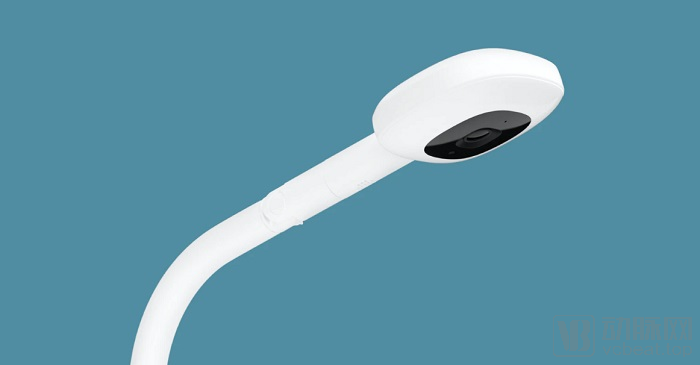
The Nanit sleep monitoring system is equipped with a high-definition night-vision camera, allowing parents to observe their toddler’s sleep status via a mobile app. The system also features a built-in night light and can monitor indoor temperature and humidity in real time. Additionally, the device can emit soothing sounds or white noise to help toddlers fall asleep. An alert is triggered when the child cries or moves.
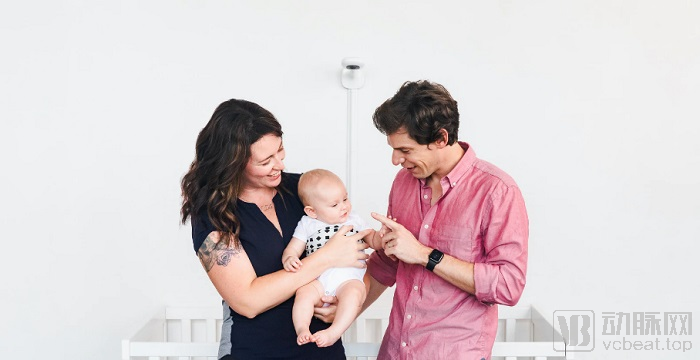
At the same time, we must not lose sight of its original purpose: to better monitor infant sleep. Leveraging intelligent computer vision capabilities via its camera, the Nanit system effectively records and analyzes the frequency and patterns of infants’ movements during the night, thereby assessing their nighttime sleep quality.
Parents only need to open the app on their phones in the morning to view their child’s sleep report from the previous night. The report includes sleep patterns, parental interventions, sleep onset and offset times, and total sleep duration. The system also supports monitoring of daytime sleep for infants and toddlers.
Nanit even takes into account parents’ need to record footage. Parents can retrieve past videos to review the content. Furthermore, once connected to Wi-Fi, the system allows parents to view live video feeds.
Public concerns about privacy leaks from smart devices have always existed. To minimize the risk of such leaks as much as possible, Nanit also provides safeguards in this area, including symmetric key encryption technology, Virtual Private Cloud (VPC) computing technology, and HTTPS, a secure network protocol based on TLS/SSL encryption. When users share infant-related content with other family members, they need not worry about the risk of privacy breaches.
Nanit has not remained static; its products have undergone continuous updates and upgrades. The Nanit Plus was even named to TIME magazine’s list of Best Inventions of 2018. Globally renowned FAST COMPANY also recognized it as one of the Most Innovative Companies of 2019.
Upgrades to smart devices can be broadly categorized into two segments:
One approach involves upgrading existing monitoring devices and cameras by continuously enhancing camera precision and computer vision algorithms to more accurately depict infant sleep patterns; the other type of upgrade entails adding accessories to provide additional functionalities.
Nanit has pursued a dual-track strategy. In February of this year, media reports indicated that the company was rolling out the Pro version of its third-generation product. This generation features higher-quality cameras with a slimmer design and 1080p imaging resolution compared to earlier models. The breathing band—a fabric strip with an irregular pattern that enables the camera to monitor infants’ breathing—which had previously been sold separately (though often provided free of charge), is now included as a standard accessory.
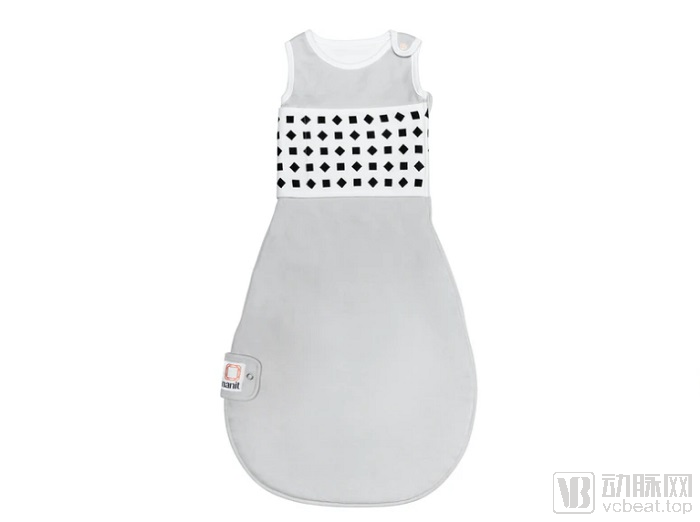
Nanit Sleep Sack: The black striped area at the top serves as the breathing band, working in conjunction with the camera to monitor infant respiration.
Additionally, the new Smart Sheet (smart mattress) features a standard size of 27.5 x 52 inches, with custom-designed corners. This design enables the camera to accurately measure a child’s growth. Made from pure cotton fabric and priced at $35, it is compatible with all three versions of Nanit cameras.
Throughout its development, Nanit has also integrated with Amazon Alexa, allowing users to interact via voice commands.
In fact, in addition to purchasing devices from the official Nanit website, Nanit-related products are also available through retailers such as Amazon and Best Buy. Besides acquiring the hardware, users are required to subscribe to the software service and pay the associated fees.
Revolutionizing Sleep Monitoring
As Nanit has continued to evolve, its management team has undergone new changes. The current CEO is Sarah Dorsett, who previously held positions at Coty, Bed Bath & Beyond, and Bloomingdale’s, bringing over 20 years of experience in expanding retail operations and building brands.

Its Chief Technology Officer and co-founder, Tor Ivry, holds master’s degrees in computer science and bioinformatics, and has previously worked at organizations including Served as software architect, R&D engineer, and other roles at companies including Conduit, Philips, and Applied Materials.
Chief Marketing Officer Aaron Pollack, who joined Nanit in 2017, previously held marketing positions at Canary, BlackBerry, GreatCall, and SiriusXM. With over 20 years of experience in brand development and promotion across industries such as consumer electronics and consumer packaged goods (CPG), he currently oversees the company’s marketing operations.
Thanks to such a team, the company continues to generate fresh inspiration. For its CEO, Sarah Dorsett, just as with the launch of their infant breathing monitoring device, parental needs are driving the company to roll out new products and move forward step by step. She firmly believes that “there are countless opportunities, both now and in the future, to provide parents with unprecedented personalized insights into their children’s health and development.”
As for GV partners, the Series C investors For Frederique Dame, the matter is perhaps much simpler: “Through its proprietary artificial intelligence and computer vision technologies, Nanit is driving innovative developments in connected health for parents and infants.”
Erel Margalit, Founder and Chairman of JVP, was even more forthright, stating, “Nanit is on the path to tremendous success, bringing revolutionary sleep solutions to parents and infants in the United States and beyond.”