

How ORPEA Built Europe’s Largest Elderly Care Empire: Over 100,000 Beds and Nearly €4 Billion in Annual Revenue

ORPEA
Elderly Care Service Provider
ORPEA is the largest elderly care company in Europe. Founded in 1989, it is headquartered in Paris, the romantic capital of France. Through its own network of care facilities, ORPEA aims to provide nursing and elderly care services to vulnerable populations. Its offerings include nursing homes, suite-based care and rehabilitation clinics, psychiatric clinics, senior housing, and home assistance services.
ORPEA’s official website shows that as of the second half of 2020, the number of nursing homes and rehabilitation hospitals under ORPEA GROUPE had increased to 1,014, with a total bed capacity exceeding 100,000.
In addition to its headquarters in France, ORPEA’s business operations span 22 countries, including Germany, Belgium, Italy, Spain, Sweden, and China.
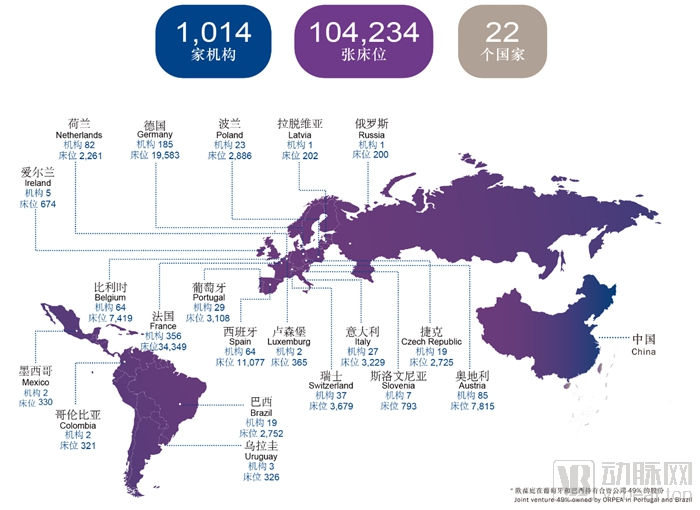
ORPEA's Business and Asset Layout
This article will address the following issues concerning ORPEA:
What is the development history of ORPEA?
What is ORPEA’s business model, and how has each of its business segments developed?
What is the financial status of ORPEA?
How is ORPEA developing in the Chinese market?
What Insights and Reflections Does ORPEA Offer for China’s Elderly Care Industry?
Since its establishment in 1989, ORPEA took 13 years to go public and over 30 years to grow into a leading enterprise in the elderly care industry in Europe and worldwide. In addition to its self-built elderly care facilities, more than 20 domestic and international mergers and acquisitions of varying scales have been the primary means of building its business empire.
In 1989, Dr. Jean Claude Marian, a French neuropsychiatrist, founded ORPEA. With the mission to “provide essential nursing, care, and services to individuals with varying degrees of physical and mental disability, uphold the principle of respecting each person’s dignity and individualized needs, and maintain and restore their quality of life,” ORPEA embarked on its journey in the elderly care sector.
In its early stages, ORPEA’s business was primarily focused on elderly care services. Between 1989 and 1995, ORPEA opened 46 nursing homes in mainland France, providing a total of 4,600 beds.
In 1999, to develop its intermediate care business, ORPEA established a specialized subsidiary in France named CLINEA, which primarily operates several rehabilitation hospitals and psychiatric hospitals.
In April 2002, ORPEA was successfully listed on the Euronext Paris stock exchange under the ticker symbol ORPEF. This IPO enhanced ORPEA’s profile in France and Europe, providing the financial resources to accelerate its expansion.
Following its IPO, ORPEA shifted its focus to markets outside France, particularly European countries grappling with severe population aging and a supply-demand imbalance in nursing home care. Leveraging its established experience in France, ORPEA initiated and continuously pursued acquisitions of nursing home operators in other European countries, thereby securing nursing home facilities and bed capacity.
In 2006, ORPEA opened its first two care facilities in Italy. Meanwhile, it also embarked on an ambitious expansion into Switzerland, Belgium, and Spain. By acquiring a psychiatric hospital in Nyon on the shores of Lake Geneva, a geriatric general hospital in central Brussels, and a Spanish care provider with 15 facilities and 1,504 beds, ORPEA established a firm foothold in these three countries.
2010 was another milestone year for ORPEA. In that year, ORPEA strategically acquired Mediter (including a majority stake in the Mieux Vivre Group). Mediter operated 57 care facilities with 4,866 beds. This acquisition was the largest in ORPEA’s history.
In 2012, ORPEA continued its aggressive expansion by acquiring the Spanish care provider Artevida, which operated 1,162 beds in Madrid and 1,915 beds in Belgium.
In 2013, ORPEA officially entered the Chinese market and established its China subsidiary, Orpea China, in Shanghai.
In 2014, to accelerate its expansion outside France, ORPEA acquired Switzerland’s Senevita (2,293 beds) and Germany’s Silver Care Group (61 nursing homes, 5,963 beds).
In 2015, ORPEA acquired 12,331 new beds outside France: SeneCura in Austria (3,936 beds), Celenus Kliniken in Germany (2,602 beds), Residenz Gruppe Bremen (3,006 beds), and Vitalis (2,487 beds).
In 2016, ORPEA further expanded its international presence by acquiring Poland’s Medi-System Group (7 facilities, 704 beds) and Spain’s Sanyres (18 nursing homes, 3,300 beds), thereby doubling its scale in Spain.
In 2017, ORPEA added 2,000 beds in Brazil and 1,000 beds in Portugal. Meanwhile, its expansion in the Netherlands and Germany continued with the acquisitions of September and Allerzorg (home care services) and the elderly care provider Axion (985 beds).
At present, ORPEA has grown into an elderly care service provider spanning Asia and Europe. By examining ORPEA’s growth trajectory, it becomes evident that relying solely on the continuous construction of self-owned facilities to expand operational scale is far from sufficient. Instead, ORPEA places greater emphasis on rapidly entering new markets through sustained acquisitions.
It is worth noting that each of ORPEA’s acquisitions was not a case of indiscriminate buying driven by financial muscle, but rather the result of careful deliberation based on specific criteria.ORPEA’s publicly disclosed M&A cases share the following common characteristics among the acquired entities:
1. The operator’s own business and service offerings are highly aligned with those of ORPEA. They either provide similar elderly care and nursing services or complement ORPEA’s next-step business development strategy. For example, in 2006, seeking to expand its psychiatric care service line, ORPEA acquired a psychiatric hospital on the shores of Lake Geneva.
2. The operators themselves are industry leaders, holding substantial assets such as nursing homes, rehabilitation centers, beds, and facilities/equipment. Furthermore, these operators possess in-depth knowledge of local policies and regulatory barriers, along with a mature business operational model. These advantages can reduce costs for ORPEA’s adaptation and expansion in new markets.
3. The regions where the operators are located are mostly countries and areas with serious aging populations, huge market potential, and purchasing power. Among them, European countries such as France, Germany, Switzerland, the Netherlands, Austria, Spain, and the Netherlands, as well as China, are the main markets for expansion.
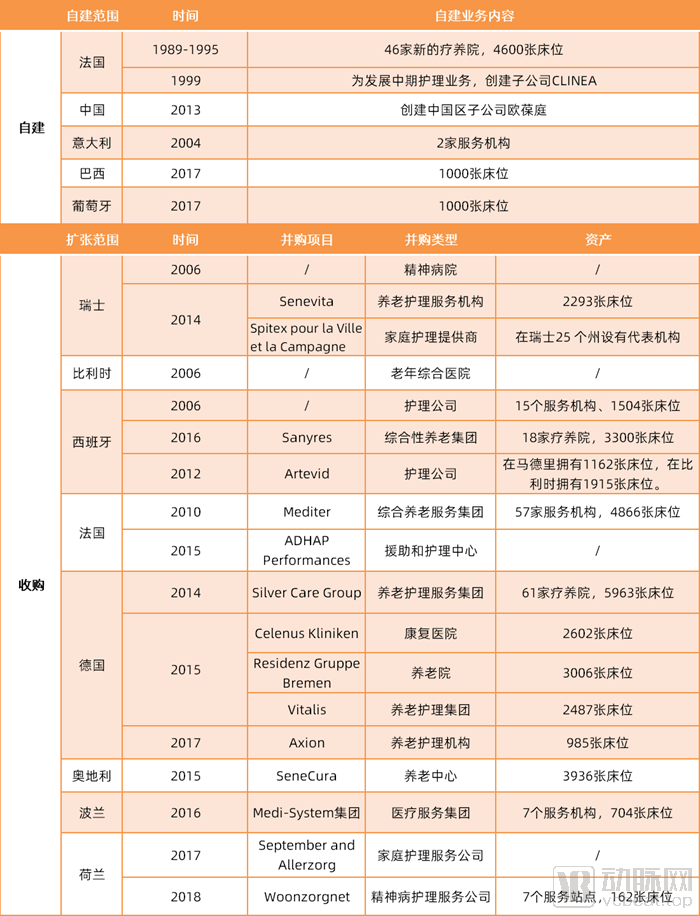
ORPEA’s Self-Built/Acquired Businesses (Incomplete Statistics by VCBeat Based on ORPEA’s Public Information)
With “quality care” as its fundamental objective, ORPEA has gradually expanded its business from elderly care services alone to include psychiatric nursing services.
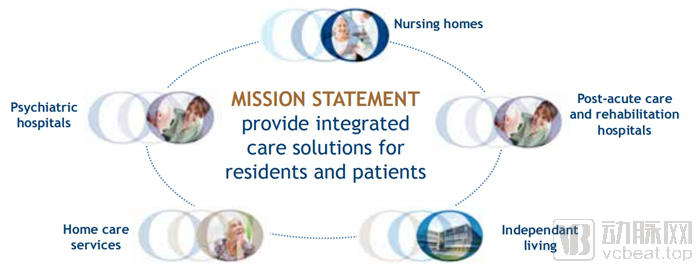
Currently, ORPEA primarily offers four core business segments: nursing homes, post-acute and rehabilitation hospitals, psychiatric hospitals, and home care services.
In addition, ORPEA also provides Independent Living services, which are integrated throughout all stages of its service delivery.
Physiotherapy Sanatorium
Therapeutic nursing homes primarily cater to elderly individuals who require home care or have recently been discharged from the hospital. ORPEA nursing homes develop and implement personalized care plans tailored to the unique needs of each resident. These services include specialized care for patients with Alzheimer’s disease or similar conditions, as well as hospice care for those approaching the end of life. Meanwhile, the nursing homes provide 24/7 services covering daily accommodation, dining, housekeeping, and recreational activities.
Acute Care Rehabilitation Hospital
ORPEA’s acute care rehabilitation hospitals primarily provide rehabilitative nursing and therapeutic services to patients with hematological disorders, oncological conditions, cardiovascular or respiratory diseases, and metabolic disturbances. ORPEA’s acute care rehabilitation hospitals are mainly located in France, Switzerland, Italy, Germany, and Austria. They are overseen by medical teams and technical units to ensure professionalism, thereby maximizing patients’ chances of recovery and restoring their ability to live independently.
Psychiatric Hospital
ORPEA’s psychiatric hospitals are primarily located in France, Switzerland, Germany, and Italy. They mainly provide treatment and supportive care for patients with mood disorders (depression, bipolar disorder), anxiety disorders (obsessive-compulsive disorder, panic disorder, social phobia), sleep disorders, and anorexia nervosa. The nursing teams at these psychiatric hospitals develop individualized care plans for patients, with physicians collaborating to facilitate implementation. The care process involves a multidisciplinary team including psychotherapists, occupational therapists, art therapists, and physical therapists specializing in exercise therapy.
Home Care Services
ORPEA’s home care services are designed for individuals who are temporarily or permanently unable to live independently due to health conditions or disabilities. Its operations are primarily located in France, Austria, Switzerland, and Germany. ORPEA provides three main categories of home care services: first, domestic housekeeping services, such as cleaning, meal preparation, ironing, and gardening; second, assistance with activities of daily living, including daytime or nighttime caregiving, hygiene support, and feeding assistance; and third, mobility assistance, such as aiding with walking and pushing wheelchairs.
Since its listing in 2002, ORPEA’s revenue has shown a consistent year-on-year growth trend.
According to ORPEA’s Q4 2020 financial report, the company overcame the impact of the black swan event posed by the COVID-19 pandemic in 2020, achieving a year-on-year revenue growth of nearly 5% and reaching a record high of €3.922 billion.
The largest share of revenue comes from the region comprising France, Belgium, the Netherlands, and Luxembourg. The acquisitions in 2020 of nursing homes in Ireland and mental health rehabilitation facilities in France were also major drivers of revenue growth.
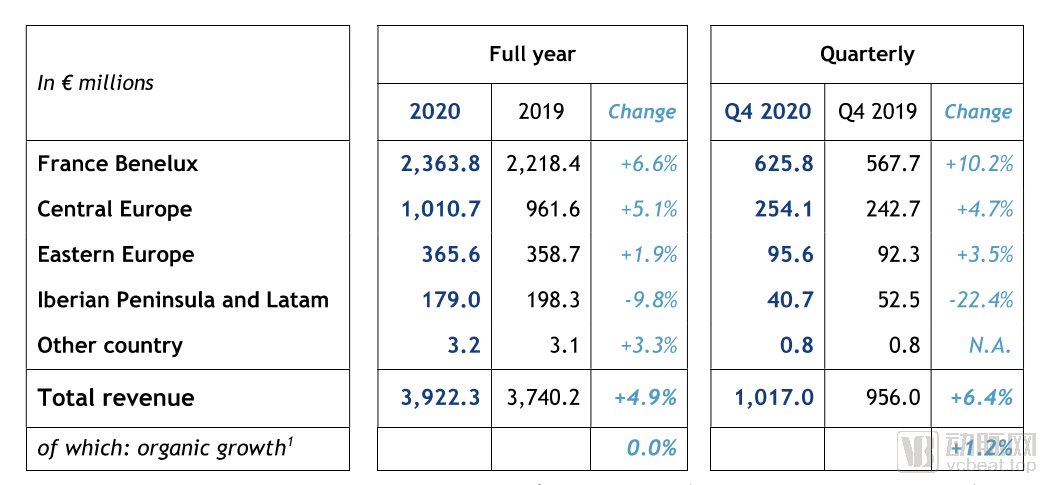
ORPEA Q4 2020 Financial Report
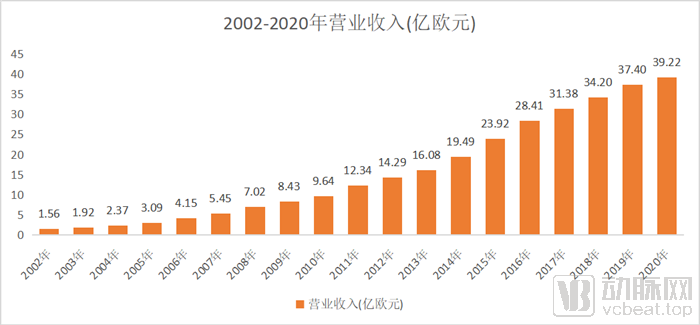
ORPEA’s Operating Revenue Since Its IPO (Chart by VCBeat Based on ORPEA’s Public Data)
ORPEA has consistently adhered to a business model of scaled expansion, rapidly achieving economies of scale through property acquisitions and new constructions, thereby securing high profits.
In recent years, ORPEA’s profits have shown a year-on-year growth trend. In 2019, ORPEA’s annual net profit reached €24.6 billion, an 11.8% increase from 2018.
In 2013, ORPEA officially entered the Chinese market, with its Chinese entity named Orpea China.
ORPEA selected the Xianlin University Town in Nanjing to establish its first high-end elderly care facility in China—the Nanjing ORPEA Xianlin International Senior Care Center. The location boasts scenic beauty and convenient transportation. The Xianlin International Senior Care Center is a long-term care institution designed for seniors who are independent, disabled, or living with cognitive disorders. Spanning an area of 17,000 square meters, the center features a total of 111 rooms.
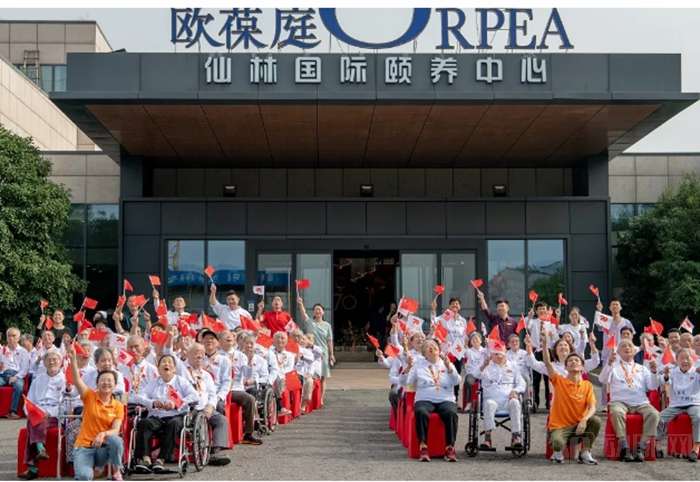
Nanjing Orpea Xianlin International Senior Care Center
Like ORPEA’s expansion strategy, in addition to Nanjing, Orpea is also continuously expanding into new markets in China.
In January 2018, ORPEA announced a partnership with Beichen Group to support the development of the Changsha Beichen Delta International Health and Elderly Care Complex. Through this collaboration, ORPEA provides clients with personalized, specialized, and internationally standardized elderly care and rehabilitation services.
In November 2018, ORPEA Group entered into a strategic partnership with CPIC Life Insurance to jointly establish Pacific ORPEA (Shanghai) Elderly Care Enterprise Management Co., Ltd. Leveraging ORPEA’s professional expertise in elderly health and personal care, along with CPIC Life Insurance’s local resource advantages in China’s elderly care market, the newly formed joint venture is committed to building a professional operational management platform for the elderly care industry in China.
In December of the same year, the Changsha Beichen Orpea International Senior Care Center officially opened, committed to creating an international elderly care service project in Central China. The senior care center has a construction area of 25,000 square meters and features a total of 224 rooms.
As a result, after nearly a decade of growth, Orpea has established service bases in Nanjing, Changsha, and Shanghai. Compared with other elderly care institutions, Orpea boasts four distinctive advantages:
Long-Term Care Originating from Europe
As ORPEA’s foothold for market expansion in China, Orpea China is backed by the ORPEA Group’s elderly care experts, its senior care service framework, and its quality control system.
Orpea has always adhered to ORPEA’s quality standards in providing long-term care for the elderly. Taking individual differences into account, each resident undergoes a comprehensive admission assessment upon entry. By integrating feedback from the facility, the residents, and their families, Orpea develops personalized care plans based on each resident’s lifestyle, health status, life experiences, preferences, dietary tastes, and ability to perform activities of daily living, thereby facilitating their swift integration into facility life.
Elegant Age-Friendly Environmental Facilities
ORPEA provides warm and comfortable rooms for the elderly. The communal areas feature karaoke, a SPA pool, a cinema, calligraphy and painting studios, reading rooms, and billiard halls. The facility is also equipped with digital gait training systems, 3D balance training devices, and other digital rehabilitation equipment such as digital occupational therapy (OT) tools.
Balanced Healthy Diet for the Elderly
ORPEA tailors nutritional meal plans to the physical conditions of elderly residents and strictly controls food safety. Meanwhile, it encourages communal dining to create a warm and welcoming mealtime atmosphere.
Rich Community Activities
ORPEA’s communities regularly organize cultural and recreational activities tailored to seniors’ interests and physical conditions, such as calligraphy and painting classes, social ballroom dancing for the elderly, and Tai Chi and Baduanjin competitions, as well as large-scale gala events.
ORPEA implements an all-inclusive service model for the elderly population. Its care plans comprehensively cover psychological, physical, dietary, recreational, and medical aspects, with each component supported by professional healthcare personnel and specialized facilities.
Currently, there are two primary models for elderly care institutions in China: one is nursing homes supported by local governments; the other is for-profit elderly care service companies entering the market from a business perspective.
The former adheres to a strict, standardized system, making it difficult to provide personalized care services for each elderly individual. The latter, while equipped with specific facilities such as nursing homes and beds, may lack sufficient professionalism in medical and nursing care, and is also prone to the phenomenon of “exorbitantly priced elderly care.”
For elderly care companies, the most critical challenge is to establish a rigorous management system that delivers personalized, highly professional nursing services to seniors in need, while simultaneously reducing their care costs within a reasonable range.
Furthermore, like ORPEA, most elderly care enterprises are driven by commercial market value and tend to locate their service facilities in cities with sufficient purchasing power for elderly care services. For these companies, this is a necessary step to monetize their services. However, for the nation’s elderly care industry as a whole, this practice is also a significant contributor to regional imbalances in the distribution of elderly care resources.
In cities with strong policy support and relatively abundant elderly care resources, bed vacancy rates may be high. Conversely, in grassroots areas with substantial demand for elderly care but limited purchasing power, there are few elderly care institutions.
From the perspective of the entire elderly care industry, to address this issue, the government should not only facilitate the establishment of elderly care institutions at the grassroots level but also provide certain policy incentives in terms of medical insurance approval and policy support.Only in this way can we adequately address the needs of the grassroots elderly care population whose purchasing power is obscured.