

Complete Omics Files IPO Prospectus Following Landmark Publications in Science and Science Immunology

Complete Omics
Molecular Diagnostics Technology Developer
On March 1, 2021, Science and Science Immunology published online two groundbreaking studies co-authored by Professor Bert Vogelstein of Johns Hopkins Medicine and Complete Omics, Inc., a U.S.-based clinical multi-omics molecular diagnostics company. The articles describe a novel approach to personalized cancer diagnosis and treatment, targeting individual mutations in the tumor suppressor gene TP53 and the oncogene K-Ras. After years of research, personalized therapies targeting these two critical cancer genes have recently achieved significant breakthroughs.
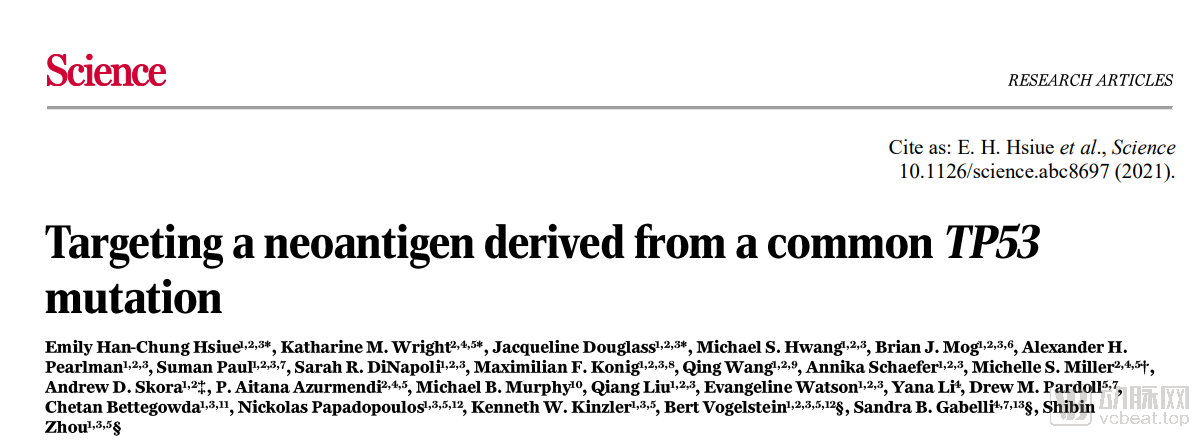
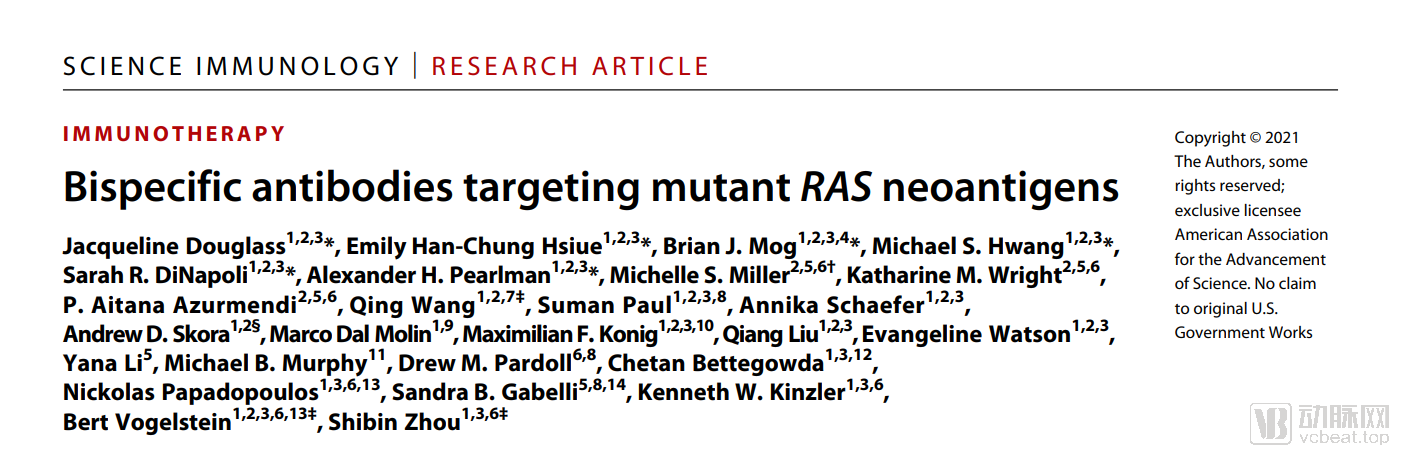
In their experiments, Professor Bert Vogelstein and Complete Omics, Inc. first identified tumor-associated gene mutations through genetic testing. Subsequently, Complete Omics employed its patented clinical proteomics diagnostic platform to identify and quantify personalized therapeutic targets for cancer, pinpointing the neoantigen targets with the greatest potential therapeutic value. Finally, guided by the corresponding multi-omics molecular diagnostic results, the treatment team administered bispecific antibodies targeting specific mutant sites of the TP53 and K-Ras proteins.
As one of the world’s most renowned cancer medical scientists, Professor Bert Vogelstein needs no introduction. It is well known that his high-impact papers are largely authored independently, with minimal collaboration with commercial companies. What is the background of the startup Complete Omics, and how does it aim to transform the current landscape of early disease screening?
“Multi-omics is not merely the superposition and comprehensive analysis of several types of data, as each omics discipline varies in depth, breadth, application scenarios, and the advantages and limitations of its data. The clinical application of multi-omics is established and formed on the basis of a profound understanding of clinical needs and the inherent properties of various omics data, genuine original research and development of clinical omics technologies, and an in-depth comprehension of the molecular biological background of diseases. Since 2008, we have been dedicated to this field, accumulating extensive cross-omics clinical data and R&D experience. Complete Omics, Inc. is committed to sparing no effort in developing more advanced and superior technologies for patients and physicians worldwide,” said Dr. Wang Qing, Founder of Complete Omics, Inc.
Wang Qing earned his bachelor’s and master’s degrees in molecular biology from Nankai University. In 2007, he went to the United States to pursue his doctoral studies at the Johns Hopkins University School of Medicine, where he studied under Professor Bert Vogelstein, a leading authority in the global oncology community and one of the primary authors of the two papers recently published. He obtained his Ph.D. in Pharmacology. During his doctoral studies, Wang also earned a master’s degree in biostatistics from the Johns Hopkins Bloomberg School of Public Health. After completing his Ph.D., Wang remained at the Johns Hopkins University School of Medicine for postdoctoral research and subsequently joined the faculty. Currently, in addition to managing his company, Wang is pursuing an MBA at the world-renowned Wharton School.
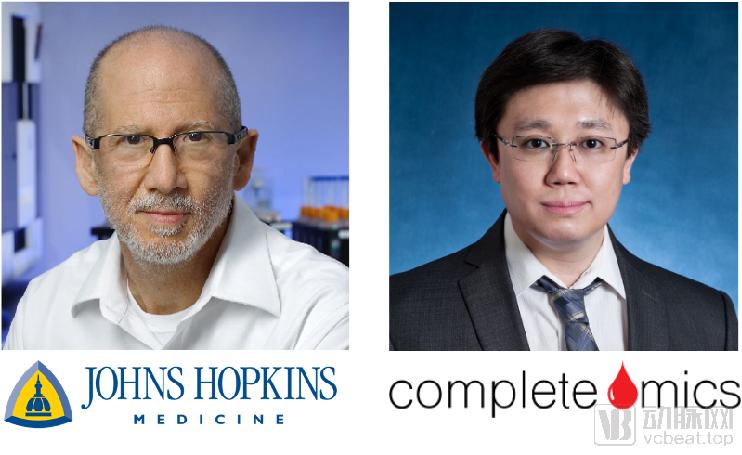
Left: Professor Bert Vogelstein; Right: Dr. Qing Wang, Founder of Complete Omics
Professor Bert Vogelstein is a world-renowned cancer geneticist who, as early as the 1980s, systematically elucidated the general principles by which gene mutations drive cancer. He is a key pioneer in research on numerous cancer-related genes, including TP53, APC, and IDH1, and his publications have accumulated more than 430,000 citations.
Recalling his doctoral studies, Wang Qing once wrote, “I still remember that during my second meeting with Bert, when he asked me what project I wanted to work on, I replied, ‘Anything hard.’ Looking back, I truly want to applaud my own courage at that time.” It was precisely this courage that led Wang Qing onto the path of researching multi-omics diagnostic methods, yielding repeated breakthroughs in the fields of clinical genomics and clinical proteomics-based diagnostics.
In 2019, Wang Qing resigned from his faculty position in the Department of Oncology at Johns Hopkins University School of Medicine and founded Complete Omics, securing millions of dollars in angel investment at the outset. Bert Vogelstein also strongly supported his former student’s entrepreneurial venture, serving as Scientific Advisor to Complete Omics.
To date, although the targets for early screening technologies continue to evolve—particularly in the field of cancer, where breakthroughs have been made in research on various targets such as tumor gene-related mutations, microsatellite instability (MSI), tumor mutational burden (TMB), specific protein markers, and metabolic markers—most advances in recent years have remained confined to single-omics approaches, especially at the genomic data level, without expanding outward to integrate with multi-omics technologies. Meanwhile, some “multi-omics” technologies available in domestic and international markets often merely collect several types of data from long-commercialized and standardized platforms for multivariate analysis, sometimes even adding the label of artificial intelligence. These approaches involve low technical barriers, lack substantive original breakthroughs in underlying laboratory technologies, and fail to demonstrate a profound understanding of multi-dimensional omics data and diverse clinical applicability.
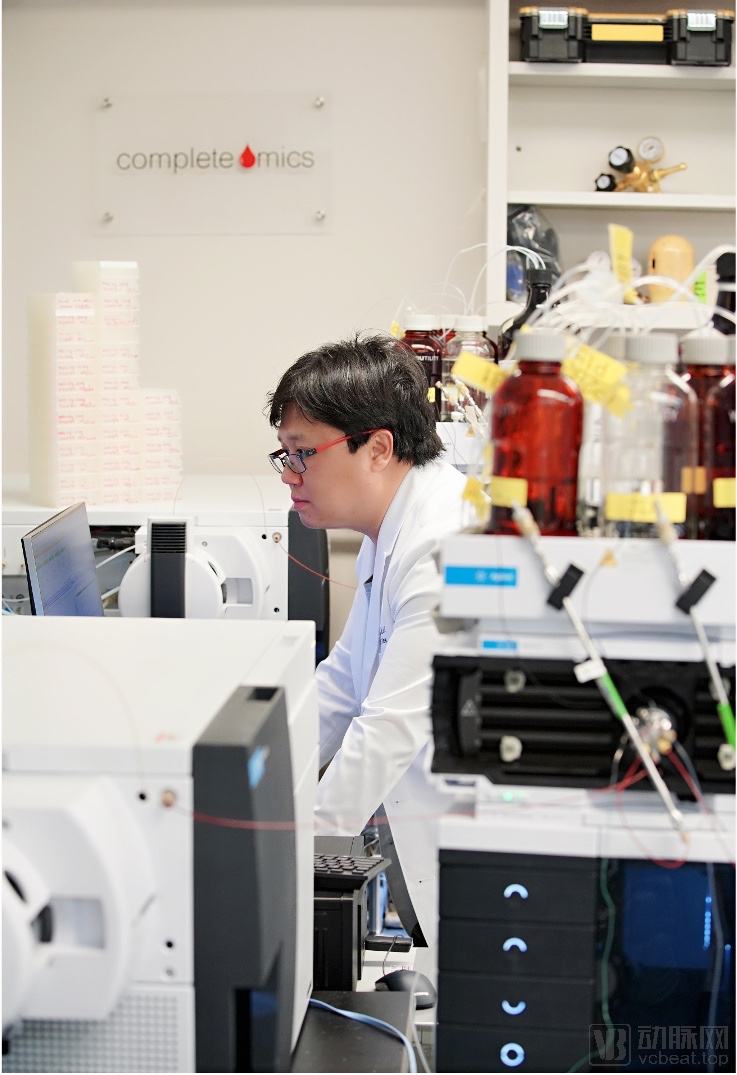
Wang Qing works in the laboratory of Complete Omics.
Complete Omics is dedicated to breaking the boundaries of molecular diagnostics. By driving foundational innovations in three core areas of hard technology—laboratory techniques, instrumental hardware platforms, and data statistical analysis methods—the company integrates the strengths of multiple data types. This approach has enabled the development of a series of multi-omics technology platforms, including clinical proteomic molecular diagnostics, thereby elevating the sensitivity and accuracy of human disease diagnosis and health screening to new heights.
Professor Bert Vogelstein founded Thrive Earlier Detection, a liquid biopsy company that performs early cancer screening by detecting gene mutations and protein changes, several years ago. In a paper published in 2018, Thrive Earlier Detection’s CancerSEEK demonstrated a median sensitivity of 70% and specificity exceeding 99% for certain cancer types. Due to its outstanding R&D progress, Thrive Earlier Detection was acquired in October 2020 by Exact Sciences, a leader in early cancer screening, for $2.15 billion.
From a technical standpoint, Complete Omics bears some similarities to Thrive Earlier Detection, with both primarily targeting early screening scenarios. However, Complete Omics appears to have more ambitious aspirations, expanding its scope from pan-cancer early detection to early screening across a broader spectrum of diseases.
This expands the market prospects for Complete Omics and raises the bar for development complexity, while also allowing the company to draw on the experience of its predecessors. Over the past two years, Complete Omics has concentrated its efforts on developing a clinical multi-omics platform centered on “Complete360,” achieving breakthrough progress particularly in the field of clinical proteomics.
Currently, “Complete360” has initially established patient-facing testing capabilities and launched two core Laboratory Developed Tests (LDTs). One test covers 194 biomarkers approved by the FDA for 13 different diseases; the other comprehensively detects 4,550 proteins in blood that have been found to be associated with human diseases, while concurrently detecting disease-related gene mutations, thereby aiding in the diagnosis of over 300 common diseases.
This approach enables Complete Omics to generate relatively stable operating revenue from its existing products while simultaneously collecting clinical data; the resulting revenue can then be reinvested into the continuous R&D of new products, allowing the company to establish a complete commercial loop at an early stage of development.
The two articles published this time further consolidate Complete Omics’ global leadership in clinical multi-omics platforms, while attracting several renowned healthcare service providers and research institutions in the United States and Europe to collaborate with them on clinical and research services. These collaborations will help Complete Omics refine its clinical multi-omics molecular diagnostic platform under development, enabling the company to further highlight its advantages and provide better molecular diagnostic services for patients and scientists.
The two landmark articles published this time were both supported by Complete Omics’ technology platform for tumor multi-omics molecular diagnostics. This indirectly demonstrates the company’s world-leading capabilities in molecular diagnostics and its ability to provide scientific research support for academic papers in top-tier journals. Dr. Wang Qing is a co-corresponding author of one paper and a co-author of the other. Furthermore, Complete Omics’ clinical proteomics technical team participated in the publication of these two papers and the related patent applications, paving the way for smoother subsequent translation of these achievements into practical applications.