

Healthcare Digital Alliance: Microsoft's Strategic Vision for Collaborative Innovation in Medical Digital Transformation
“Since the pandemic, medical digitalization has witnessed a surge in activation trends, with enterprises increasingly requiring cross-industry connectivity and ecosystem coexistence. Collaborative innovation involves linking the health industry, think tanks, and digital platforms to form the ‘Healthcare Digital Alliance.’ The Healthcare Digital Alliance will also become one of the most significant incubation achievements of Microsoft’s AI Transformation Division this year. We welcome upstream and downstream ecosystem partners in the healthcare sector to join our Digital Alliance.”
This passage is fromZhao Zhizhong, Chief Transformation Officer, Microsoft Greater China, representing Microsoft’s insights and vision for digital transformation in healthcare, and further embodying the current industry trend of collaborative innovation.
This is an era of collaborative innovation. IT giants have recognized the immense potential of the healthcare industry and are actively strategizing their entry into this sector. Microsoft is one such player, demonstrating clear objectives and a proactive stance. The best testament to this is the Microsoft Cloud for Healthcare, which was officially launched globally on October 28, 2020.

“This year, we have all witnessed the impact of the pandemic, felt the critical importance of healthcare, and recognized the significance of digital transformation. At Microsoft, our responsibility is to support the comprehensive digital transformation of the healthcare industry. Therefore, we warmly welcome you all to participate in this year’s Pharmaceutical Company Digital Solutions Innovation Competition, and we hope to forge strong connections with each of you through Microsoft.”Kang Rong, Vice President of Microsoft Greater China and General Manager of Marketing and OperationsSpeaking of.
Lacking a medical DNA, Microsoft has struggled in the healthcare industry, though it does have some partners in the sector.
Thus, on November 30, 2020,Co-hosted by Microsoft, Zhangjiang Group, and VCBeat, the 2020–2021 Pharmaceutical Enterprise Digital Solutions Innovation Competition was held in collaboration with ecosystem partners including AstraZeneca, Johnson & Johnson, Sanofi, Merck KGaA, MSD, and Roche., the competition features five key themes: digital empowerment of patients and the public by pharmaceutical companies, acceleration of medical R&D innovation, protection of healthcare information security, optimization of professional experience for healthcare practitioners, and establishment of agile operational processes. The call for entries has been launched nationwide. Within three months of the competition’s launch, over one hundred innovative enterprises have enthusiastically registered.After rigorous evaluation and multi-tiered selection by dozens of top experts, ten companies emerged as finalists to advance to the in-person final round held on the afternoon of March 2.
On the afternoon of March 2, the grand finals of the 2020–2021 Pharmaceutical Enterprise Digital Solutions Innovation Competition, themed “Empowering Pharmaceutical Companies through Digitalization: Infusing Technology with Warmth,” kicked off in style at the PwC Innovation Center. In addition to compelling project presentations by the ten finalist companies, attendees and judges from Microsoft, Zhangjiang Hi-Tech Park, and major pharmaceutical companies delivered insightful speeches and participated in panel discussions, bringing greater intellectual exchange and digital perspectives to what was originally a stage dedicated exclusively to startups.

Wang Kairong, Deputy General Manager of Shanghai Zhangjiang (Group) Co., Ltd. and Deputy Head of the Life and Health Industry Leadership GroupIn his address, he stated, “After more than 20 years of development, Zhangjiang has established a comprehensive life and health industry chain characterized by the ‘Five-Medical Integration’—spanning medicine, pharmaceuticals, medical devices, healthcare services, and medical care combined with elderly care. Through this innovation competition, we aim to connect large pharmaceutical companies seeking transformation with innovative enterprises capable of providing solutions, thereby jointly building an innovative healthcare ecosystem.”
The success of the industrial park is inseparable from the support of its partners. Zhangjiang is well aware of this and has therefore continuously strengthened its ability to connect with innovative enterprises. As a key component of Zhangjiang, the healthcare industry benefits from this strategic focus. The competition co-hosted with Microsoft not only demonstrates Zhangjiang’s commitment to supporting the healthcare sector but also reflects its understanding of the broader trend toward digitalization in healthcare.
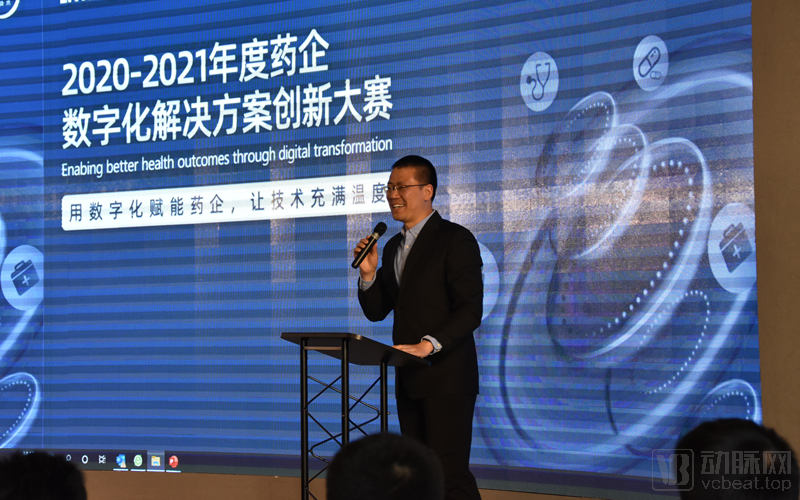
Cai Jingyu, Partner in the Healthcare Industry at PwCGaining a deeper insight into the healthcare industry: “This sector is being driven toward transformation by three major forces. The first is policy; as a highly regulated industry, healthcare is profoundly impacted by policy changes. The second is new technologies; for instance, genomic sequencing can now be completed in just a few days. The third is digital talent; big data–based solutions will significantly reshape how we manage health.”
Medical big data is the foundation of healthcare digitalization. Without the intervention of digital technologies, it is difficult to fully unlock the value embedded in medical big data through manual methods alone.
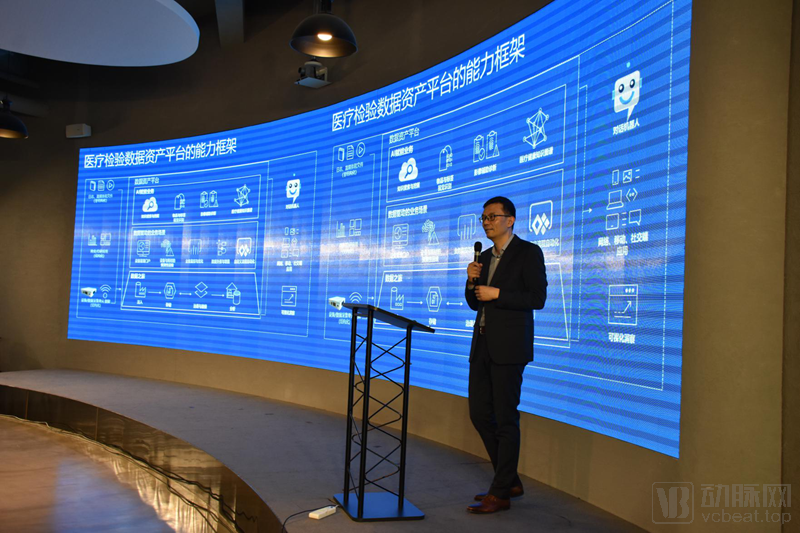
Xu Mingqiang, CTO of Microsoft China’s Omnichannel Business UnitHere is a vivid example: “Data is akin to evidence collected at a crime scene, with source data being particularly valuable. Some may argue that source data is dirty, messy, and riddled with missing values, preferring cleaned data instead. Isn’t that better? We once had a client conducting predictive analytics. After comparing digitally driven analysis with their company’s manual analysis, they found that the models generated by digital technologies completely outperformed the manual approach. However, some prudent data scientists raised concerns because the digital model appeared excessively perfect. During troubleshooting, they discovered that the data used for analysis had been cleaned, and certain timestamps had been altered during report generation. Consequently, they rebuilt the predictive model using raw source data. While the digital method still significantly outperformed the manual approach, the resulting model proved more adaptable to real-world conditions.”
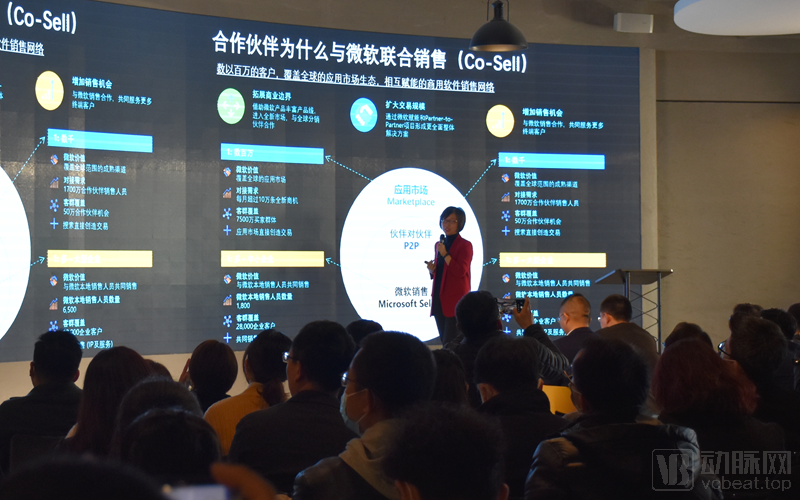
Although Microsoft possesses the most powerful foundational technologies, it lacks a degree of specialized expertise required to enter the healthcare sector. Therefore, Microsoft needs partners with professional capabilities to jointly build digital solutions.Wang Lijia, General Manager of Partner Strategy Development, Omnichannel Business Unit, Microsoft ChinaMicrosoft’s Perspective on Partnerships: “In China, we currently have more than 1,300 cloud partners, with annual growth exceeding 30%. We expect our partners to leverage their industry expertise and speak the language of their respective sectors, thereby enabling customers to achieve genuine digital transformation. According to a McKinsey survey, for every dollar Microsoft earns, our partners generate nine dollars in revenue. Over 95% of Microsoft’s revenue is directly or indirectly tied to our partner ecosystem. Therefore, ‘Partner First’ is a core principle at Microsoft.”
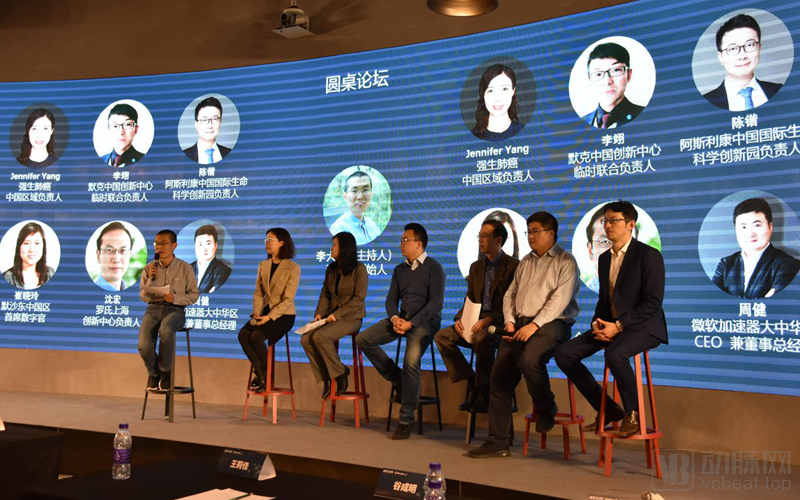
From left to right: Li Datao, Founder of VCBeat; Jennifer Yang, Head of Lung Cancer China Region at Johnson & Johnson; Cui Xiaoling, Chief Digital Officer for MSD China; Chen Kai, Head of AstraZeneca China International Life Science Innovation Park; Shen Hong, Head of Roche Shanghai Innovation Center; Zhou Jian, CEO and Managing Director of Microsoft Accelerator Greater China; Li Yi, Director of Cross-Field Investment and Innovation Collaboration at Merck.
Several pharmaceutical companies that co-hosted the competition also shared their insights at the finals.Li Datao, Founder of VCBeatAs the roundtable moderator, I kicked off the discussion with a series of questions: “As Microsoft’s CEO once said, all future enterprises may well become software companies. Others have posited that future businesses will fall into just two categories: data-native enterprises and data-transforming enterprises. What we are particularly concerned about now is: what challenges will arise during the digital transformation process? How will strategic planning and organizational structures evolve? How will digital practices change across the entire R&D and sales lifecycle? How should ecosystem frameworks be built? And can China’s business practices be rapidly scaled globally?”
In response to these issues, several pharmaceutical giants have offered their respective perspectives.
Jennifer Yang, Head of Johnson & Johnson’s Lung Cancer Division, China Region“He stated, ‘Since its inception, digital solutions have remained a key focus of the Johnson & Johnson Lung Cancer Innovation Center. In the field of lung cancer, Johnson & Johnson has its own surgical robotics platform; therefore, we require numerous digital products to empower this platform. As a company rooted in the traditional healthcare sector, digital products are not among Johnson & Johnson’s core strengths. This is why we collaborate with many of the world’s leading ecosystem partners.’”
Cui Xiaoling, Chief Digital Officer of MSD ChinaHe stated, “From the perspective of traditional pharmaceutical companies, the primary customer base has largely been physicians, with patient empowerment achieved indirectly by empowering doctors. However, as the broader environment shifts toward a patient-centric model, we are now actively seeking collaboration opportunities with promising startups to co-create innovative solutions for patient care.”
Chen Kai, Head of AstraZeneca China International Life Sciences Innovation ParkHe highlighted an intriguing development trend: “We now have colleagues from AstraZeneca who, upon identifying promising projects, have chosen to launch startups and establish their companies within the iCampus Innovation Park. This year, we already have one such case that secured a substantial angel investment round from a well-known US dollar-denominated fund. Therefore, we believe that innovative thinking truly requires greater openness. As a result, this year we will more systematically manage external collaborations and incubation projects, striving to connect with a broader range of partners.”
Shen Hong, Head of Roche Shanghai Innovation CenterAn analysis of current pain points from a data perspective: “First, there is an abundance of data with varying quality; how to utilize such data may require industry-wide standards. Second, regarding the vast amounts of data collected through digital platforms, we are still in an exploratory phase as to how best to leverage this data to generate value and establish a virtuous cycle. Third, talent: implementing a digitalization strategy requires cross-disciplinary collaboration, and talent shortage remains a key pain point.”
Zhou Jian, CEO and Managing Director of Microsoft Accelerator for Greater ChinaDiscussing new trends in the global expansion of China’s healthcare sector: “One emerging trend I am currently observing is the surge in domestic innovation. In the past, multinational corporations typically developed products overseas and then introduced them to the Chinese market. However, an increasing number of innovative products are now originating locally. Therefore, I believe that innovation centers like ours are well-positioned to facilitate the internationalization of these domestic innovations, helping Chinese companies expand globally. In this process, Microsoft can play a pivotal digital role, supporting the global development of digital health products from both China and abroad.”
Li Yi, Director of Cross-Disciplinary Investment and Innovation Collaboration at MerckLooking further ahead: “From a long-term perspective, I am highly optimistic about the digitalization of healthcare, which encompasses applications such as internet hospitals, pharmaceutical e-commerce, healthcare big data, and AI. Ultimately, healthcare digitalization has the potential to realize a vision where patients’ medical needs can be met without leaving home. If the entire chain of internet-based healthcare services can be fully integrated and implemented, I believe this vision will certainly be achieved.”
Beijing Yisheng Intelligent Technology Co., Ltd.
Yisheng Intelligence is a medical artificial intelligence technology service provider dedicated to delivering comprehensive, implementable solutions to healthcare industry clients through advanced AI technologies. The company’s patented medical natural language processing engine addresses the challenges of accumulating unstructured data and underutilized information in hospitals, thereby restoring the intrinsic value of data. Yisheng Intelligence innovatively applies artificial intelligence technologies to provide intelligent, efficient, and standardized solutions for medical record quality control to healthcare institutions.
Diannei (Shanghai) Biotechnology Co., Ltd.
Diannei Technology is an AI-driven high-tech innovation enterprise focused on the oncology field, dedicated to building a globally leading integrated platform for precise diagnosis and treatment of lung cancer, empowering clinicians and benefiting patients with lung diseases. Leveraging deep machine learning, Diannei Technology has independently developed multiple proprietary technologies, including "non-invasive prediction of pathological invasion subtypes," and has collaborated with top-tier experts and hospitals in China for clinical validation. ScrynProTMLung Nodule Auxiliary Diagnosis System, SurgiProTMIntelligent Decision Support System for Early-Stage Lung Cancer Surgery, TheraProTMFei Anhao, built upon four major functional modules: the Intelligent Auxiliary Decision-Making System for Precision Treatment of Lung Cancer and the NoduleCare Intelligent Follow-up System for Individuals with Small Pulmonary NodulesTMSaaS platform that enables clinicians to deliver end-to-end services for lung cancer patients, covering early screening, diagnosis, treatment, and follow-up management. It currently serves more than 100 medical institutions in China and abroad, benefiting millions of individuals.
Hunan Weishi Cloud Medical Information Co., Ltd.
Hunan Weishi Cloud Medical Information Co., Ltd. has independently developed Wetrial, an intelligent cloud collaboration platform for clinical research, representing new infrastructure for the clinical trial industry. Centered on clinical trial project management, the platform connects clinical trial sites (hospitals) with sponsors (pharmaceutical companies), CROs, and other stakeholders. It enables cross-organizational online collaboration based on clinical trial projects, achieving end-to-end digital management of complex clinical trial execution through standardized and visualized process control, thereby providing a digital platform and tools to facilitate the effective conduct of clinical trials.
Tianjin Enen Technology Co., Ltd.
NNIT specializes in the life sciences sector, providing IT consulting, system implementation, and operations and maintenance services that cover the entire pharmaceutical value chain. The company holds dual ISO 9001 and ISO 27001 certifications. Headquartered in Denmark, NNIT employs over 3,200 people globally and has subsidiaries in Norway, China, the Philippines, the Czech Republic, Switzerland, Germany, Ireland, the United Kingdom, the United States, Singapore, and Poland. Its client base spans Europe, the United States, and China. In China, the regional headquarters is located in Tianjin, with branch offices in Beijing and Shanghai.
Shanghai Pailan Data Technology Co., Ltd.
Shanghai Pailan Data Technology Co., Ltd., established in 2015, boasts an experienced, interdisciplinary, and medicine-driven professional team. Dedicated to the development and innovative application of medical big data, the company employs novel data collection methods and AI-driven research methodologies and analytical techniques tailored to the needs of healthcare and pharmaceutical clients, providing robust clinical, economic, and quality-of-life evidence and insights.

Hangzhou Kangsheng Health Management Consulting Co., Ltd.
Founded in December 2014, Zhiyun Health is China’s leading one-stop platform for chronic disease management and smart healthcare. Currently, through its independently developed Hospital SaaS system, Pharmacy SaaS system, and advanced Internet hospital platform, Zhiyun Health serves nearly 2,000 hospitals and 110,000 pharmacies across China, reaching 500 million patients with chronic diseases and potential patients. In 2020, Zhiyun Health signed a cooperation agreement with the National Chronic Disease Management Center to drive the advancement of smart healthcare through technology, empower the medical and health industry, and bring digital health into millions of households!
Beijing Zuoyi Technology Co., Ltd.
Beijing Zuoyi Technology Co., Ltd., established in 2015, specializes in the field of medical artificial intelligence. By leveraging proprietary advanced algorithms to learn from vast amounts of medical knowledge, clinical data, and expert experience, the company has developed “Left Hand Doctor,” an AI-powered general practitioner capable of natural language dialogue. This system covers over 6,000 diseases and more than 30 medical skills, providing services across the entire healthcare journey, including pre-diagnosis, during diagnosis, and post-diagnosis stages. Currently, it offers a variety of AI-driven medical services to numerous medical institutions, pharmaceutical companies, retail enterprises, and insurance providers.
Beijing Jiahe Haisen Health Technology Co., Ltd.
A subsidiary of Beijing Jiahe Meikang, specializing in artificial intelligence, healthcare big data, and internet healthcare. Incubated within the group for five years, it became an independent legal entity in 2019.
Hefei Woshi Technology Co., Ltd.
Woshi Technology is an AI-powered decision-making solutions provider that applies intelligent decision technologies to drug process R&D, offering an AI-driven platform for drug process development. Leveraging world-leading capabilities in large-scale optimization and complex decision modeling, the company integrates machine learning, neural network models, mathematical programming models, and multi-stage stochastic programming algorithms to build a comprehensive decision-support system covering the entire workflow of drug process development and synthesis. This empowers pharmaceutical R&D enterprises by enhancing development efficiency and reducing research risks.
Hangzhou Lianzhong Medical Technology Co., Ltd.
Hangzhou Lianzhong Medical Technology Co., Ltd. (Lianzhong Medical) is a national high-tech enterprise dedicated to the interconnectivity of medical data. The company has independently developed a cloud-based medical service platform that leverages emerging technologies such as big data, cloud computing, and AI, along with modern service concepts, to explore their in-depth applications in the “Internet + Healthcare” sector, thereby contributing to the Healthy China initiative. Through multi-channel collaboration, the company breaks down industry barriers, achieves cross-boundary integration and interconnectivity of medical resources, and promotes the development of smart medical services featuring mobile-enabled end-to-end processes across healthcare, pharmaceuticals, and insurance. It precisely addresses the public’s diverse, multi-level health service needs and aligns with the requirements of the new healthcare reform, serving as a trusted partner for internet hospitals.