

National AI Medical Imaging Platform Accelerates Industry Development: Tencent-Led Initiative Addresses Key Bottlenecks
Cast back to late 2017, when the Ministry of Science and Technology issued the Implementation Plan for Major Science and Technology Projects on New-Generation Artificial Intelligence and announced the first batch of national open innovation platforms for new-generation artificial intelligence:Among these, it was explicitly stated that the National New Generation Artificial Intelligence Open Innovation Platform for Medical Imaging would be established in reliance on Tencent.
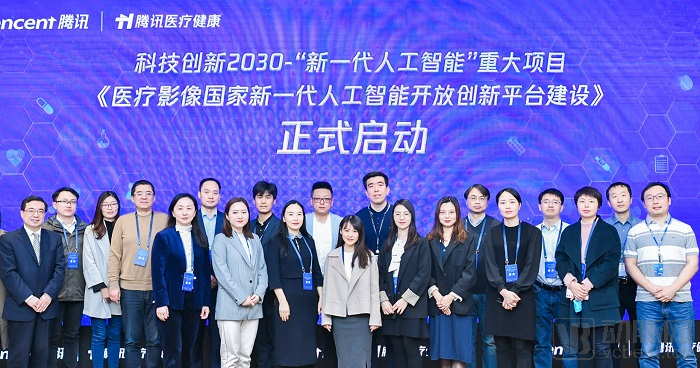
On March 3, following a period of preliminary exploration and practice, the major project under the “Science and Technology Innovation 2030—New Generation Artificial Intelligence” program, titled “Construction of the National New-Generation AI Open Innovation Platform for Medical Imaging,” was launched in Shenzhen, accompanied by a demonstration meeting for its implementation plan.
In the future, the development of the National New Generation Artificial Intelligence Open Innovation Platform for Medical Imaging will center onHigh Initial Industry Costs, Non-Standardized Product R&D, and Challenges in the Clinical Deployment of Medical AILaunching a Critical Campaign to Tackle the Three Major Bottlenecks Constraining the Medical Imaging AI Industry
Promoting the Healthy Operation of Innovation Platforms to Accelerate Industry Development
Currently, some AI imaging products are enjoying critical acclaim but struggling with market adoption. Will this situation hinder the industry’s further development? In an interview, Dr. Qian Tianyi, Project Leader and General Manager of Tencent Miying, stated that there are multiple reasons why certain companies’ AI imaging products have not been well received during their implementation in hospitals:
On the one hand, early product definitions were not derived from genuine clinical needs. Some companies developed their AI imaging products using competition datasets. While competition-driven R&D is useful for studying computer science principles, it fails to adequately meet clinical demands, resulting in low willingness among hospitals to pay for such solutions.
On the other hand, hospitals have inherent clinical needs, but their willingness to pay stems from the significant clinical pressures faced by physicians. Typically, hospitals allocate radiologists based on the number of clinical imaging devices installed, and these physicians are responsible for generating corresponding examination reports. When the staffing level is adequately balanced with the workload, the efficiency advantages of AI as a tool are difficult to realize.
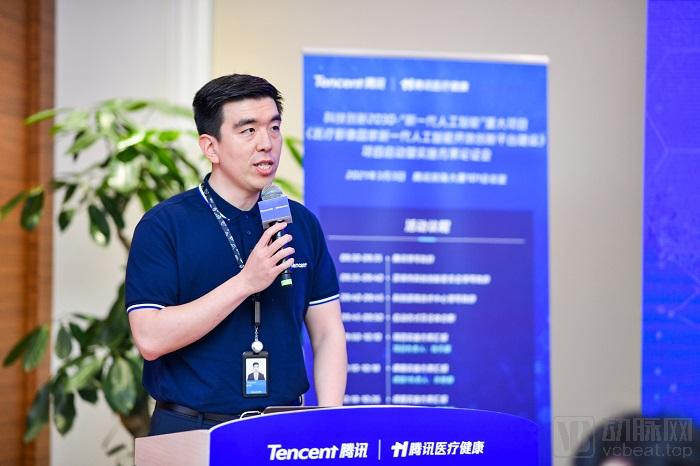
Qian Tianyi, General Manager of Tencent Miying
However, at present, large hospitals are overcrowded, while a significant amount of imaging equipment in primary care facilities remains underutilized. Primary care physicians face various constraints in producing high-quality diagnostic reports. With the development of medical consortia, physicians at tertiary hospitals are also required to prepare medical imaging reports for lower-tier hospitals. In this context, medical AI, as an efficiency tool, can effectively assist physicians in their work.
Alongside the genuine demand, since the second half of last year, a large number of partner hospitals and manufacturers have proactively reached out to Tencent, seeking platform collaborations. Tencent also plans to host an AI algorithm competition this year to attract more professionals to its platform. At this conference, Tencent is exploring collaboration with the Chinese Medical Association through Director Zhang Huimao, Head of the Medical Big Data and Artificial Intelligence Group under the Radiology Branch, to raise broader awareness of the National Next-Generation Artificial Intelligence Open Innovation Platform for Medical Imaging.
In accordance with the “Plan for the Construction of a National New-Generation Artificial Intelligence Open Innovation Platform for Medical Imaging,” all participating entities will achieve a series of objectives aimed at advancing the development of medical imaging AI in China, encompassing five major components: standard systems, data resources, platform support, industry applications, and fundamental research.
It is expected that by the end of 2021, the platform developer will complete the pilot deployment of the open innovation platform, enabling annotation support for five imaging data modalities and ten labeled disease categories. By June 2022, key initiatives such as a shared foundational repository for medical data and a platform for querying and overseeing de-identified medical records will be established, and a preliminary draft of standards for artificial intelligence technologies in medical imaging will be formulated.
The ultimate goal is to generate original innovations with independent intellectual property rights, thereby enhancing the international competitiveness of China’s high-end medical imaging technology.
How Is Tencent Accelerating the Development of Innovation Platforms?
The advancement of the “Construction of a National New-Generation Artificial Intelligence Open Innovation Platform for Medical Imaging” project relies heavily on collaboration among all stakeholders across the industry chain. As the project lead, Tencent will join forces with ten partner institutions—including the China Academy of Information and Communications Technology, the Shenzhen Institutes of Advanced Technology of the Chinese Academy of Sciences, MinFound Medical Systems, Guangzhou Huyun, Yidu Cloud, the First Affiliated Hospital of Zhengzhou University, Nanfang Hospital of Southern Medical University, Shanghai Panacea Medical Imaging Diagnostic Center, and Haina Yixin—to achieve the overarching goals of sustaining technological innovation in artificial intelligence for medical imaging and establishing a robust industry ecosystem.
At the meeting, addressing the three major “chokepoint” issues hindering industry development, member units proposed five key research directions from perspectives including the integrated openness of common technologies, open-source code sharing, establishment of technical standards, translation of software and hardware achievements, construction of foundational medical data resource repositories, and industry–academia–research collaboration models. Professor Wang Yanfeng, Vice Dean of the Artificial Intelligence Institute at Shanghai Jiao Tong University and a member of the expert group for the Ministry of Science and Technology’s “Science and Technology Innovation 2030—New Generation Artificial Intelligence” Major Project Guidelines, organized a demonstration and evaluation of the project implementation plan to address industry challenges.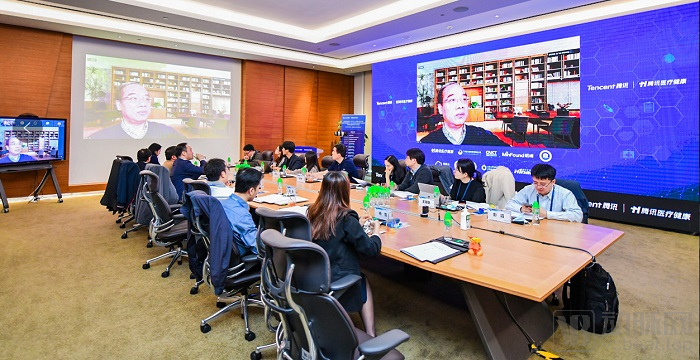
The experience accumulated in the early stages has also made Tencent realize that the “pitfalls” it has encountered can help the industry avoid similar predicaments. At the conference, Dr. Qian Tianyi pointed out, “Quality control and supervision of annotation during the medical data labeling process are key areas of inspection by the National Medical Products Administration (NMPA). The review of annotations for standard datasets and training data during the R&D phase is equivalent to the audit of raw material sources in the traditional medical device manufacturing industry.”
Should Manually Annotated Data or Machine-Annotated Data Be Trusted? In an interview, Dr. Qian Tianyi stated, “First, the annotated data currently used for product development is ultimately determined by medical experts. The assisted annotation feature we offer on our platform is primarily designed to accelerate the annotation rate during the R&D process. For example, if the final model requires 10,000 annotated cases, we can develop an initial model after annotating 500 cases, which can, to some extent, speed up the annotation of subsequent data.”
The model derived from 500 annotated cases may not be entirely accurate, but it can assist physicians by accelerating the annotation process and reducing annotation time. Ultimately, an accurate model can be developed through training on 10,000 annotated cases. This pre-annotation process, when supported by appropriate tools, is also recognized by the National Medical Products Administration (NMPA).
“This is, in essence, a human-computer interaction process, with the ultimate goal still being accurate annotation results. During this process, physician annotations may contain errors; however, such errors can be minimized through multi-annotator consensus or computer-assisted annotation, thereby enabling the final model to demonstrate its true performance,” said Dr. Qian Tianyi.
What Pitfalls Has the AI Medical Imaging Industry Encountered Over the Past Three Years?
As early as November 2017, the Ministry of Science and Technology convened a launch meeting for the Development Plan for New-Generation Artificial Intelligence and major science and technology projects, at which it was clarified that Tencent would be relied upon to build the National New-Generation Artificial Intelligence Open Innovation Platform for Medical Imaging.
In August of that year, Tencent released its first AI medical imaging product—Tencent Miying. At the time, as the first AI-based esophageal cancer screening system, it achieved an accuracy rate exceeding 90%. For pulmonary nodules, Tencent Miying could detect minute nodules measuring 3 millimeters or larger, with a detection accuracy rate surpassing 95%.
The decision to rely on Tencent to build the National New Generation Artificial Intelligence Open Innovation Platform for Medical Imaging was, to a significant extent, based on recognition of the strength of Tencent’s team. So, what has Tencent learned over the three years since the development of the AI medical imaging industry began?
Dr. Qian Tianyi stated in the interview, “At the end of 2017, the artificial intelligence industry had not yet been implemented; even large companies had just begun to enter this field, and the industry was developing through trial and error.”
In this process, Tencent identified numerous pain points and challenges through its own hands-on practice, including determining the clinical needs of hospitals for AI products, understanding the certification procedures of the National Medical Products Administration (NMPA), and identifying the tools requiring custom development as well as the necessary support in terms of standards and policies for building an AI imaging platform.
Over the past three years, Tencent Miying has also achieved breakthrough development. In addition to enabling AI-based medical image analysis to assist physicians in screening for colorectal tumors, pulmonary nodules, diabetic retinopathy, breast cancer, fundus lesions, and cervical cancer, it has also leveraged an AI-assisted engine to help physicians identify and predict the risks of more than 700 diseases.
More importantly, from an industrialization perspective, regulatory frameworks—such as the NMPA’s guidelines on overseeing AI products—have been further refined. Building on accumulated prior experience, certain universal technologies and solutions have now been distilled, thereby accelerating subsequent product development and exploration.
Tencent has also incubated multiple AI-powered medical imaging products during this process, participated in or initiated the formulation of more than 10 relevant industry standards, obtained over 300 invention patents, and accumulated substantial capabilities and tools for the industrialization of AI in medical imaging. During the pandemic response, Tencent leveraged its Tencent Miying platform to rapidly develop an auxiliary CT diagnostic system for COVID-19, utilizing its technological advantages to support frontline epidemic control efforts.
From the four dimensions of innovation and entrepreneurship, full-industry-chain collaboration, academic research, and HP public welfare, Tencent is continuously promoting the development of the National New Generation Artificial Intelligence Open Innovation Platform for Medical Imaging, entering a new phase of accelerated platform development.