

MaiLing Medical Files for IPO: Pioneering Domestic Dialysis Water Treatment Systems and Expanding into Smart Dialysis Devices
In the early 1990s, Tong Kai gave up the “iron rice bowl” job that most people dreamed of and chose to venture into business, entering China’s dialysis industry. He has been in this field for 30 years, and as one of the most senior practitioners in the industry today, he has witnessed and participated in the entire process of China’s dialysis market from its infancy to gradual maturity. Over these 30 years, China’s dialysis market has experienced rapid growth. According to official data released by the Chinese National Renal Data System (CNRDS), there were approximately 280,000 hemodialysis and peritoneal dialysis patients in China in 2012, and this number had risen to over 730,000 by 2019, with a compound annual growth rate of about 15%, far exceeding the global average growth rate of around 5%.
In March 2020, the prestigious medical journal The Lancet published a study titled “Global, regional, and national burden of chronic kidney disease, 1990–2017: a systematic analysis for the Global Burden of Disease Study 2017.” The study reported that there were 697.5 million patients with chronic kidney disease (CKD) worldwide in 2017, including 132 million in China. The prevalence of CKD in China is 10.8%. Based on epidemiological data, it is estimated that approximately 2 million patients in China have end-stage renal disease (ESRD) requiring dialysis treatment, yet the current penetration rate of dialysis therapy stands at only 36.5%. In this market with substantial potential and sustained rapid growth, dialysis-related medical devices currently used in clinical practice in China still rely heavily on imported products. Against the backdrop of the domestic economic dual-circulation strategy, the greatest opportunity for Chinese brands lies in achieving import substitution.
Leveraging the extensive experience accumulated over many years in China’s dialysis industry, Tong Kai founded Mailing Medical, a well-known brand in the hemodialysis sector, in 2004. The company initially engaged in the distribution of hemodialysis medical devices and later gradually transformed into a leading domestic innovative platform for intelligent hemodialysis medical devices and services. Its independently developed hemodialysis-related medical equipment includes intelligent whole-machine heat-disinfection water treatment systems, intelligent hemodialysis machines, and intelligent home dialysis machines. Since 2018, the company has entered a period of rapid growth. Meanwhile, the revenue of the two nephrology specialty hospitals under Mailing Medical has also risen year by year.Over the past three years, the company's overall revenue has achieved a compound annual growth rate (CAGR) of over 35%, with its 2020 revenue reaching nearly RMB 100 million.。
VCBeat conducted an exclusive interview with Tong Bohong, Executive President of Mailing Medical, to gain insights into the company’s development in recent years. “We have consistently benchmarked our growth trajectory against that of Fresenius. Acting merely as a channel distributor is not a sustainable long-term strategy; enterprises must possess core technologies and proprietary products to build enduring viability,” said Mr. Tong. He holds bachelor’s and master’s degrees from The Chinese University of Hong Kong and Imperial College London, respectively. Since joining the Mailing Medical team in 2012, he has been responsible for executing corporate strategy, overseeing daily operational management and product R&D, establishing the company’s current organizational structure and core team, and securing Series A financing from Lilly Asia Ventures in 2016.
After deciding to enter the hemodialysis medical device market, Mailing Medical began seeking suitable opportunities for market entry. Leveraging the keen insights honed by its team through years of deep engagement in the hemodialysis medical device industry, the company first targeted a segment with a relative scarcity of high-quality domestically produced products—Dialysis Water Treatment. Dialysis water treatment equipment is primarily used to remove chemical and microbial contaminants from raw water, producing product water that meets dialysis water standards through reverse osmosis, and it features regular disinfection capabilities. The quality of dialysis water is the most critical factor affecting dialysis outcomes. Tong Bohong recalled, “At that time, the price gap between imported and domestic brands of dialysis water treatment equipment was as high as tenfold. Domestic brands lacked water treatment products capable of competing at the same level as imported brands, which presented the opportunity we identified.”
Dialysis water is subject to stringent clinical standards. To ensure that the quality of the produced water consistently meets these standards over the long term, comprehensive disinfection of the water treatment equipment must be performed regularly. The traditional approach is chemical disinfection, which involves adding specific chemical agents to disinfect the water treatment system and its piping. Although this method can meet clinical requirements in terms of single-session disinfection efficacy, its cumbersome and time-consuming operation, the need for personnel supervision, and the risk of chemical residue have led to a common practice in clinical settings where disinfection is performed only every few months or even once every six months. Such infrequent disinfection clearly fails to guarantee the long-term stability of the produced water quality.
The more advanced international disinfection method is whole-machine thermal disinfection, which uses heating elements to raise water temperature to between 80 and 90 degrees Celsius. The water is then circulated through the equipment and piping for a specified duration, achieving sterilization by coagulating bacterial proteins through high heat. Compared with chemical disinfection, thermal disinfection offers the advantages of fully automated control, typically allowing unattended operation overnight, and eliminating concerns about chemical residues. Consequently, in clinical practice, it enables high-frequency disinfection, which is critical for ensuring water quality.
However, core components such as reverse osmosis membranes are highly sensitive to temperature fluctuations (with heating and cooling rates not exceeding 3°C per minute). Given that water treatment pipelines often extend for hundreds of meters, ensuring that every point within the entire system remains within the required temperature range presents a significant challenge. This imposes stringent requirements on equipment temperature control technology. Furthermore, fully automated control necessitates the replacement of traditional mechanical components with electronic ones. Consequently, thermal disinfection equipment entails substantially higher technical complexity and component costs compared to chemical disinfection equipment. For this reason, imported brands have not introduced products with whole-unit thermal disinfection capabilities to the Chinese market due to cost considerations, while other domestic brands have struggled to overcome the associated technical barriers. Beijing Mailing Medical Technology Development Co., Ltd. seized this opportunity, becoming the first mover in this field.
In 2014, the first-generation complete thermal disinfection water treatment system independently developed by Mailing Medical was approved for market launch, filling a gap in the domestic market. As a pioneer in promoting the concept of thermal disinfection in China, the product has been widely recognized by customers since its launch.Currently, Mailing Medical’s various dialysis water treatment systems have been deployed in over 800 healthcare institutions across China. The company boasts numerous benchmark clients, with nearly 70 hospital customers in Beijing alone, achieving a regional market share of more than 50%.。
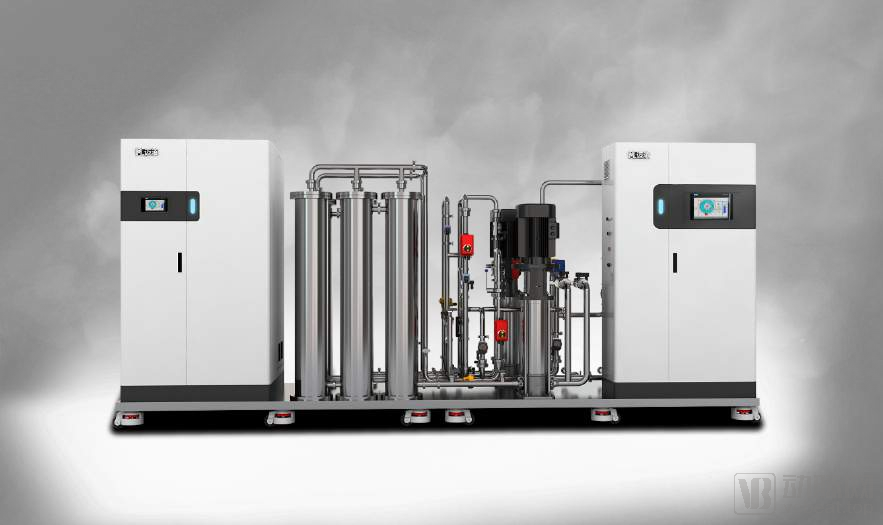
Mailing S9 Intelligent Integrated Thermal Disinfection Water Treatment System
After several iterations and upgrades, Mailing has launched the new-generation Mailing S9 intelligent whole-unit thermal disinfection water treatment system. Leveraging the superiority of thermal disinfection technology and supported by multiple patented technologies, the S9 achieves core performance indicators, such as product water quality, that are more than 10 times higher than the current industry standards.
Furthermore, recognizing that water treatment systems are critical infrastructure for dialysis centers—where any failure can bring the entire facility to a halt—Beijing Mailing Medical Technology Development Co., Ltd. has fully digitized the core components of its S9 system. This enables the device to capture 413 operational parameters. Each unit is also equipped with an IoT module, allowing operational data to be uploaded to cloud servers for automatic comparison and analysis against Mailing’s “Lingyun” data model, which was developed based on years of accumulated equipment usage data. This facilitates predictive maintenance and early warnings, allowing potential issues to be resolved before they result in actual failures. Following its pioneering whole-machine thermal disinfection technology, Mailing once again leads industry technological trends by being the first to integrate intelligence and IoT applications based on cutting-edge information technology into the S9 system, thereby minimizing failure rates and preventing customer losses.
The market share of hemodialysis medical devices in China has long been dominated by imported products from Germany and Japan, with domestically branded hemodialysis machines holding a negligible market share of less than 5%. In the face of substantial and rapidly growing market demand, as well as the current economic landscape centered on domestic circulation, dialysis equipment has been explicitly highlighted in both the “13th Five-Year Plan” and the “14th Five-Year Plan” issued by the Ministry of Science and Technology and the Ministry of Industry and Information Technology as a key area for the development of domestic medical devices. Governments at all levels have also introduced multiple policies mandating public hospitals nationwide to prioritize the procurement of domestically produced medical equipment, reflecting the urgent market demand for high-quality domestic hemodialysis devices.
Tong Bohong told VCBeat that Beijing Mailing Medical Technology Development Co., Ltd. had already initiated the research and development of hemodialysis machines several years ago. Addressing the issue that the pace of import substitution in the hemodialysis machine category has fallen short of expectations, Tong Bohong offered his insights: “In the past, product developers tended to focus heavily on the process from zero to one—obtaining regulatory approval—with the aim of rapid market entry, often overlooking the quality and technical standards of first-generation products as well as the competitive landscape they would face post-launch. In reality, as a Class III therapeutic device, the safety and stability of hemodialysis machines during clinical use are paramount. Customers have become accustomed to the quality and performance standards of imported products and do not solely pursue low-priced alternatives. If domestically produced products fail to meet clinical requirements at launch, it will be difficult for them to gain market traction.”
Guided by this understanding, Mailing has positioned its hemodialysis machine to compete head-on with imported products, while also dedicating substantial time and resources to iterative internal refinement. As a result, the Mailing M1-X matches the core performance indicators and clinical functionalities of the flagship models currently marketed by international brands, and further features a domestically pioneering pre- and post-dilution mixed hemodiafiltration (Mixed-HDF) technology, which has been granted an invention patent.The Mailing M1-X is currently in the clinical trial phase and is expected to be launched for sale in 2022.。
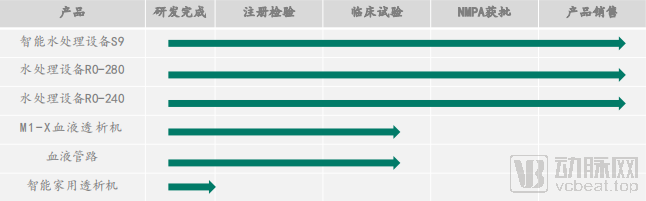
R&D Progress of Mailing Medical's Hemodialysis Machines, Blood Circuits, and Smart Home Dialysis Machines
In addition to hemodialysis machines, Mailing Medical has aligned with industry development trends and established a more forward-looking R&D pipeline layout. “In recent years, we have observed certain changes in the dialysis industry, which I summarize as follows:Three “New”s: New Demands, New Technologies, and New Scenarios.” said Tong Bohong, “The demographic composition of dialysis patients has shifted from the former ‘disease of the poor’ caused by primary kidney diseases to a ‘disease of the affluent’ driven by diabetes and nephropathy. Meanwhile, the patient population is becoming younger and increasingly focused on treatment quality. This shift toward a patient group with better economic conditions and stronger self-management awareness and capabilities will inevitably give rise to needs different from those in the past. Secondly, the vigorous development of new-generation information technologies is extensively and profoundly influencing technological directions in the medical device field, with numerous cases integrating internet, Internet of Things (IoT), artificial intelligence, and big data into medical devices. Thirdly, driven by changes in the patient population and technological advancements, the application scenarios for hemodialysis are transitioning from hospitals to home settings.”
Home Hemodialysis (HHD) refers to dialysis treatment conducted by patients in a home setting under the guidance of professional medical personnel, allowing for flexible and reasonable scheduling of treatment plans based on individual patient needs. Numerous studies have demonstrated that, compared with other dialysis modalities, home hemodialysis effectively reduces cross-infection, extends survival time, decreases complications, and improves quality of life. Currently, approximately 10% of patients in Europe and the United States receive home dialysis. In April 2020, Renji Hospital Affiliated to Shanghai Jiao Tong University School of Medicine performed the first case of home dialysis in China, reflecting the gradual implementation of the home dialysis model.
Given the shift in care settings, product solutions for home dialysis differ significantly from those used in traditional center-based dialysis. For dialysis water treatment, due to limitations in household water supply, drainage, and electrical infrastructure, home dialysis water purification systems must employ different methods and principles compared to hospital-grade water treatment systems. Regarding hemodialysis machines, as patients are required to operate the equipment themselves, home hemodialysis machines demand higher standards in terms of ease of use, intelligence level, remote guidance, and monitoring capabilities. Beijing Mailing Medical Technology Development Co., Ltd., a company with substantial technical expertise in both dialysis water treatment and hemodialysis machines, has already begun proactively developing comprehensive intelligent solutions for home dialysis. It is reported that the company’s smart home hemodialysis machine is expected to complete its prototype by the end of 2021, with the integrated solution—including products and services—planned for market launch in 2024.
In the future, with the development of the domestic dialysis market, China is expected to see the emergence of innovative medical companies capable of rivaling Fresenius. Mailing Medical will follow its strategic planning and development roadmap, first expanding its market share in the medical device sector and developing a broader product pipeline, before gradually entering the healthcare services sector to provide high-quality, comprehensive services for dialysis patients in China.