

Qiyun Nuode Focuses on Multi-Omics-Driven Cancer Early Screening for Whole-Life Health Management
In recent years, the accelerating aging of the population has led to an increased cancer burden and changes in the characteristics of cancer diseases in China. The latest global cancer statistics for 2020 show that there were 19.29 million new cancer cases worldwide, with 4.57 million new cases in China, accounting for 23.7% of the global total. In 2020, there were 9.96 million cancer deaths globally, including 3 million in China, which represents 30% of the total number of cancer deaths.
Amid the increasingly severe health landscape, a key focus of discussion across the precision medicine industry is how to leverage the power of scientific research translation and effectively convert products into solutions that bridge gaps in disease prevention and treatment.
The deep integration of mobile internet and genomics has brought about revolutionary changes in medical models, creating new opportunities for the development of the healthcare industry. The concept of 5P Medicine—Predictive, Preventive, Personalized, Participatory, and Precision Medicine—along with the philosophy of “whole-lifecycle health management,” is gradually gaining recognition.
Luo Qibin, founder of QiYunNuoDe, holds a Ph.D. in Bioinformatics from the Technical University of Munich in Germany. With over a decade of deep expertise in the genomics industry, he is dedicated to multi-omics intelligent life sciences powered by bioinformatics technologies. He previously led collaborative research with Huazhong University of Science and Technology on multi-omics-based non-invasive screening for rectal cancer. Luo Qibin stated, “Full-lifecycle health management will replace traditional disease diagnosis and treatment models. A new patient-centered, personalized, and precision medicine paradigm is imminent. To facilitate this transformation, it is imperative that more researchers join the industry to drive the translation of scientific advancements into industrial momentum.”
Therefore, Luo Qibin founded QiYunNuoDe, leveraging next-generation bioinformatics technology to develop multi-dimensional, multi-omics detection models and devices, thereby enabling intelligent diagnostics and precision medicine.
Extensive research has demonstrated that the onset and progression of diseases are associated with multiple factors. Complex diseases, such as cancer, involve pathological processes across multiple levels and dimensions, including the genome, transcriptome, proteome, microbiome, and metabolome.
In disease screening and companion diagnostics, analyzing only single-omics data imposes significant limitations on target selection. Achieving precision medicine for complex diseases relies on the accumulation of multi-dimensional data. Once multi-dimensional patient data become sufficiently rich, multi-level and multi-dimensional comprehensive analysis of multi-omics data can help researchers gain a more comprehensive and systematic understanding of disease onset and progression, thereby providing more usable and effective information for early disease screening, clinical diagnosis, and subsequent drug development and precision medicine.
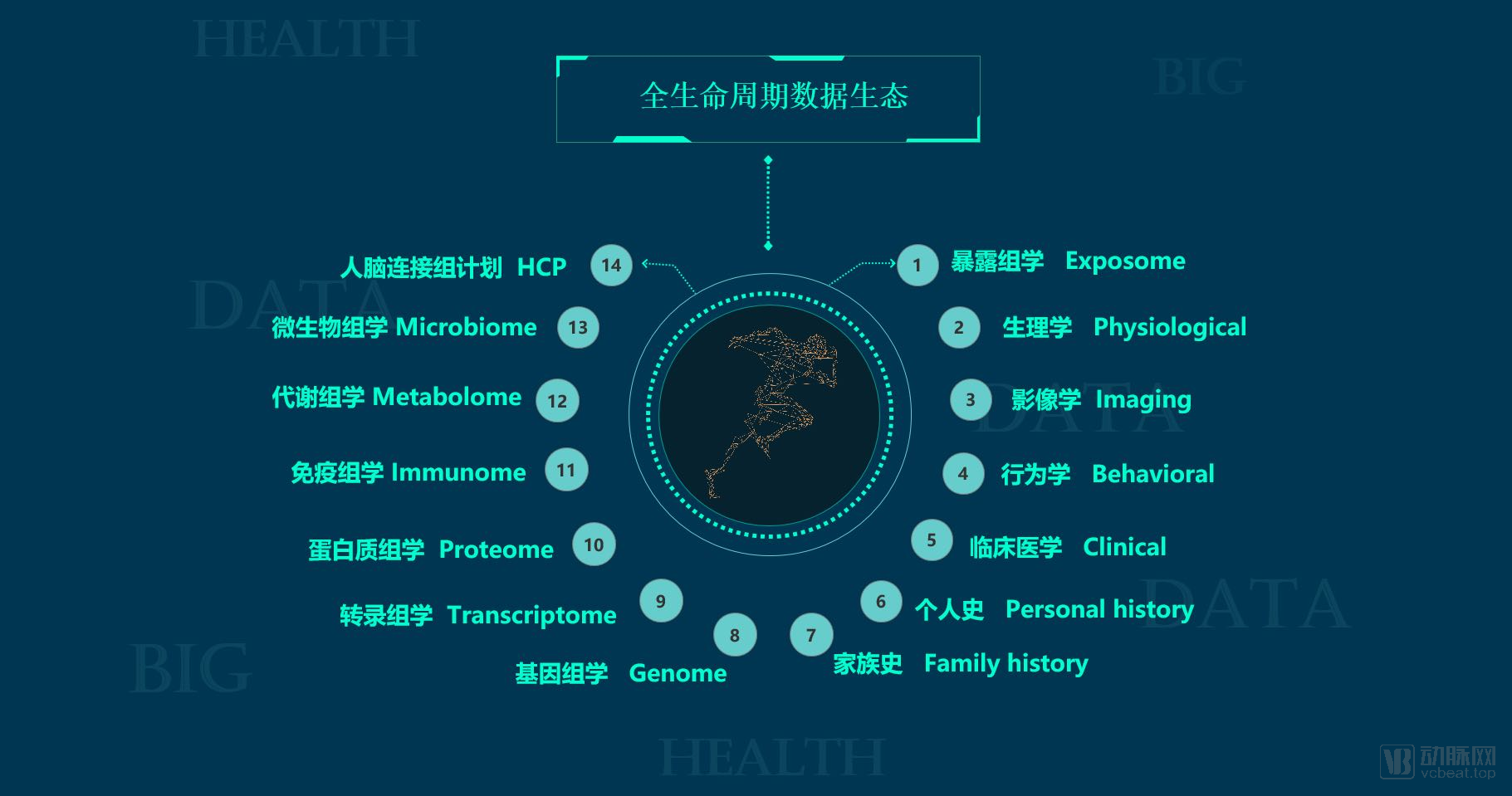
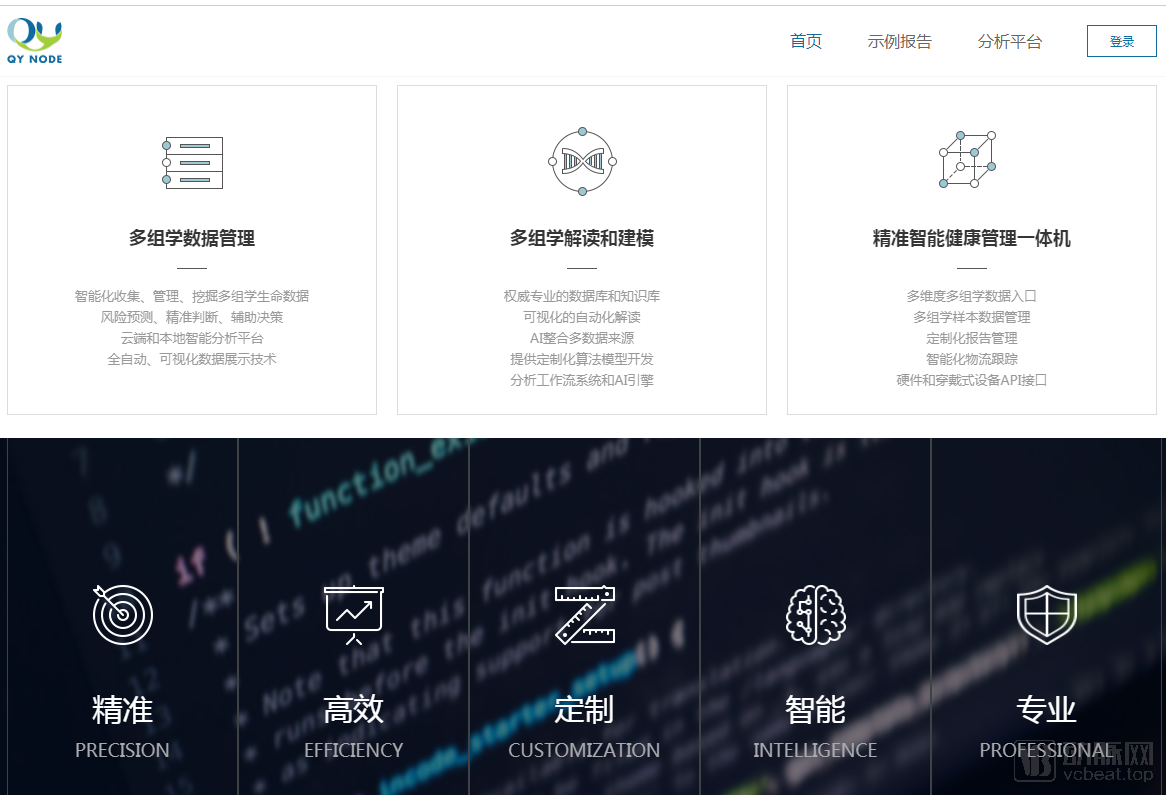
Driven by multi-omics, QiYunNuo’s core team hails from prestigious institutions such as the Chinese Academy of Sciences, Huazhong University of Science and Technology, and the Medical School of Tongji University. The team encompasses cross-disciplinary expertise in genomics, transcriptomics, microbiomics, and proteomics. Its products and technological roadmap are structured around the logical framework of “storage,” “measurement,” “computation,” and “application” of multi-omics data, ensuring effective data analysis and processing to transform information into actionable knowledge and drive product development.
QiYunNuoDe has established one of the earliest multi-omics and bioinformatics analysis service systems in China and has conducted large-scale multi-omics cohort research projects, with nearly RMB 100 million invested in scientific research. The company is primarily engaged in the development of intelligent testing and precision medicine-related products, artificial intelligence systems for multi-omics, and bioinformatics cloud applications, having built a comprehensive intelligent life data testing and analysis system.
Leveraging multi-omics non-invasive detection technologies, QiYunNuoDe has established three core business lines: public health, scientific research services, and early cancer screening. The company has launched a range of products, including the Multi-Omics Intelligent System, the Precision Health Management AI System, the Visualized Report Management System, and the All-in-One Data Management Appliance. Additionally, it provides services such as non-invasive rectal cancer testing, susceptibility gene testing, and gut microbiota assessment.
Luo Qibin believes that the major future trend in the precision medicine industry is to achieve the goal of “preventing disease before it occurs and preventing progression once disease has developed.” “Prevention is the most effective measure for disease control and prevention. For example, early cancer screening products can buy valuable time for the early detection, early treatment, and early recovery from malignant tumors. There are hundreds of types of malignant tumors; the top 10 most prevalent cancers in China account for more than 76% of all malignant tumor incidences, including lung cancer, breast cancer, colorectal cancer, liver cancer, esophageal cancer, and bladder cancer. Conducting early or even ultra-early cancer screening for high-risk populations can effectively prevent cancer from progressing to intermediate or advanced stages, thereby reducing cancer-specific mortality rates.”
However, current cancer early screening methods on the market all have certain drawbacks and cannot balance accuracy, simplicity, and low cost. The emergence of numerous new technologies in the field of precision medicine has provided more cost-effective solutions for cancer early screening.
In the field of early cancer screening, QiYunNuoD has initially focused on colorectal cancer. Its multi-omics non-invasive colorectal cancer detection product integrates multidimensional information from microbiomics, metabolomics, and genomics, comprehensively considering both genetic and environmental factors. Through meta-analysis, the product identifies relatively stable disease-associated gut microbiota common to various intestinal disorders and assesses the distribution of human DNA content in fecal samples, thereby detecting whether the individual has colorectal cancer or other intestinal diseases such as Crohn's disease and inflammatory bowel disease.
It is reported that the product's specificity and sensitivity for detecting colorectal cancer are both expected to exceed 95%.
Cancer early screening is a crucial component of Qi Yunnuo’s strategic goal to achieve “full-lifecycle health management.” Luo Qibin stated, “Qi Yunnuo will prioritize the cancer early screening sector over the next three years, advancing the research and development as well as commercialization of early cancer screening products. The company’s colorectal cancer detection product is about to enter the regulatory approval process, while early screening solutions for liver cancer, lung cancer, and breast cancer are poised to move out of the laboratory phase. Additionally, multi-omics cancer early screening bases in Tianjin and Jiangxi are scheduled to be completed and become operational in 2021.”
The value of multi-omics testing in the precision medicine industry has been gradually recognized and appreciated. Omics disciplines, including genomics, transcriptomics, proteomics, and metabolomics, have emerged as new avenues for uncovering the biochemical foundations of life and gaining deeper insights into molecular mechanisms.
Integrative analysis of multi-omics data facilitates systematic investigation of clinical pathogenesis, identification of disease targets, discovery of biomarkers, and early disease diagnosis, thereby promoting a more significant role for multi-omics data in personalized therapy and medication guidance.
Luo Qibin predicts that multi-omics will inevitably evolve further in the direction of “multi-omics+,” continuously expanding in both depth and breadth. “For instance, in the fields of infectious diseases and critical care, rapid identification of pathogens can help reduce infection rates in ICUs; in the realm of genetic disorders, multi-omics research can facilitate the diagnosis and treatment of genetic conditions, particularly rare diseases.”
In the future, QiYunNuo will also keep pace with the booming development of multi-omics testing. Focusing on the core aspects of “storage,” “measurement,” “computation,” and “application” of multi-omics data, the company will continuously explore the potential of multi-omics, develop more products for precision diagnosis and treatment, and achieve “whole-lifecycle health management.”