

WeDoctor's Digital Healthcare Platform Triples Revenue: How It Breaks Through the Market
“The development of internet hospitals in China has undergone three stages. Stage 1.0 featured internet services provided by individual hospitals; Stage 2.0 saw the emergence of platform-based internet hospitals;3.0 Phase: A Health Responsibility Consortium Led by Platform-Based Internet Hospitals.“Recently, Liao Jieyuan, Chairman and CEO of WeDoctor Group, made this industry assessment in an exclusive interview with People’s Daily on the Two Sessions.”
Not long ago, according to Bloomberg and Reuters, WeDoctor Holdings (hereinafter referred to as “WeDoctor”), a digital healthcare platform spun off from the WeDoctor Group, will submit an IPO application to the Hong Kong Stock Exchange in the near future.
The aforementioned report, citing sources, stated that WeDoctor’s digital healthcare business experienced explosive growth in 2020, with its performance for the year reaching three times that of 2019. The core businesses of the entity being spun off for listing are primarily medical services and health maintenance services, among which revenue from membership-based health maintenance services accounted for more than 50%. Through deep integration with the medical service system via digital means,WeDoctor’s digital healthcare platform is being rapidly deployed across multiple cities in China, thereby promoting the establishment of an accountable care system centered on user health.
For companies already listed in the same sector, current profit models and revenue structures have stabilized and taken shape: pharmaceutical e-commerce and health consumer goods account for the majority of revenue for Alibaba Health and JD Health. Ping An Good Doctor’s financial reports indicate that collaborations with commercial insurance providers and sales of membership-based products are among the primary revenue sources for its core online medical services segment. The business characteristics of these listed companies are closely tied to their parent companies’ foundational strengths.
As WeDoctor is currently the largest unlisted platform-based enterprise in China’s internet healthcare industry by scale, it is inevitable that the market will discuss what kind of “answer sheet” WeDoctor will present when it submits its IPO application.
Looking back on WeDoctor’s development path over the past decade: after establishing China’s largest online appointment and consultation platform, it launched the country’s first internet hospital, marking a new starting point for the development of China’s digital healthcare industry. Building on this foundation, WeDoctor facilitated China’s first online medical insurance settlement through an internet hospital in Shandong Province and introduced the nation’s first digital chronic disease management service model with direct medical insurance reimbursement.
Throughout its journey, WeDoctor has led the digital transformation of China’s healthcare services industry, and its “report card” is naturally the culmination of these efforts.
Whether it was the initial Guahao.com or the current WeDoctor, the ultimate service recipients are end-users (C-side). Therefore, personal services are inevitably the most fundamental component of WeDoctor. The original purpose of digital healthcare was to alleviate information asymmetry between doctors and patients as well as the mismatch of medical resources, thereby improving patients’ efficiency in seeking medical care and their access to high-quality medical resources.
After years of accumulation, WeDoctor has established 28 internet hospitals across China since launching its first one in 2015, connecting nearly 300,000 doctors from more than 7,600 hospitals. To meet the dual demands of online and offline medical services, it has also opened general practice centers in multiple first-tier cities as offline service bases for its internet hospitals.
These online and offline entities can provide users with a complete, closed-loop diagnosis, treatment, and consultation service, encompassing multiple stages such as online appointment scheduling, initial in-person consultations, medical record sharing, online follow-up visits, electronic prescriptions, online payment, and medication delivery.
Meanwhile, these services span multiple settings—including homes, communities, rural areas, pharmacies, and hospitals—breaking through the temporal and spatial constraints of traditional healthcare delivery. This approach can effectively alleviate imbalances in the allocation of medical resources and enhance the accessibility of healthcare services.
Building on its individual services, WeDoctor has partnered with high-quality corporate clients to launch comprehensive employee healthcare services and customer health management programs. These initiatives help enterprises improve employee health, reduce related costs, and enhance user service experience, while also establishing a stable user base. To date, WeDoctor has established long-term partnerships with 200 leading enterprises across various sectors, including banking, insurance, technology, aerospace, and real estate.
As the largest single payer in China’s healthcare service system, the national health insurance fund has long been regarded as a lucrative market by the internet healthcare industry, which eagerly anticipates policies that would open it up to greater access.
In the initial years of the internet healthcare sector, there were no national policies serving as basic standards, making it difficult for medical insurance to get involved. Only limited explorations of medical insurance payments were conducted in certain regions and by individual hospitals; at that time, Wuzhen Internet Hospital, under WeDoctor, was among the first batch of pioneers.
After the policy setting the tone for internet healthcare was introduced in 2018, the opening of medical insurance coverage progressed very slowly. With cost containment becoming a prevailing trend, there remained uncertainty as to whether internet healthcare, as an emerging business model, would increase the financial burden on the medical insurance fund. It was not until the outbreak of the pandemic in 2020, when physical distancing led to inefficient operations of the healthcare system outside the frontline of epidemic control, that the integration of internet healthcare into the medical insurance system accelerated.
However, as China’s primary medical resources are concentrated in public hospitals, which have accumulated years of experience in ensuring medical safety and supervising the security of health insurance funds, designated providers for basic medical insurance were historically limited to brick-and-mortar institutions, particularly public hospitals. Only a few internet hospitals affiliated with major platforms were integrated into the medical insurance payment system. Notably, during the 2020 pandemic, WeDoctor pioneered the nationwide implementation of online medical insurance payments for internet hospitals, causing significant ripples within the industry.
It is evident that medical insurance authorities exercise extreme caution in safeguarding fund security. This also suggests that, rather than anticipating and waiting for further opening-up of medical insurance policies to support the development of internet healthcare, the industry should first consider how to empower medical insurance.
Given the stringent management of medical insurance funds and the high demands for healthcare service quality, it is particularly challenging for internet hospitals to become designated providers under the national medical insurance scheme. From establishing an internet hospital and obtaining designated status, to patient identity verification and confirmation of follow-up visits, and finally to online medical insurance settlement, this process essentially constitutes a reengineering of internet-based medical procedures, thereby creating a complete closed loop for online payment and settlement through medical insurance in internet hospitals. The pathway pioneered by WeDoctor has become the industry’s “Golden Five Steps” for determining whether an internet hospital has truly enabled online medical insurance payments.
In this regard, WeDoctor leverages regional internet hospitals to establish internet-based medical consortia at the prefecture-level city level. These internet hospitals have been designated as local providers under the basic medical insurance scheme, with the medical insurance fund covering the costs of WeDoctor’s digital chronic disease management services in accordance with regulations. By utilizing medical insurance payments as a strategic lever, WeDoctor optimizes the supply chain for chronic disease medications, thereby not only conserving medical insurance funds but also enhancing the operational efficiency of the local healthcare delivery system.
Specifically, WeDoctor provides standardized and intelligent management services for patients with chronic diseases in cooperative regions, covering online and offline follow-up consultations, electronic prescriptions, online medical insurance settlement, medication delivery, and comprehensive chronic disease management. Meanwhile, this model enables medical insurance payment by designating regional internet hospitals as accredited medical insurance providers, and assists medical insurance authorities in improving the efficiency of fund disbursement through intelligent monitoring systems.
Supporting the rollout of digital chronic disease management in Shandong, Tianjin, and other regions, with rapid market replication
Currently, WeDoctor is accelerating the adoption of end-to-end digital chronic disease management services in Shandong, Tianjin, and other regions.
In Tai’an, Shandong Province, WeDoctor, through the Taishan Internet Hospital for Chronic Diseases, has engaged all 16 hospitals at the secondary level and above across the city to digitally reengineer chronic disease management processes. Covering follow-up consultations and medication purchases, medical insurance settlement, drug delivery, and chronic disease management, this initiative delivers continuous care that integrates in-hospital and out-of-hospital settings as well as online and offline services, thereby enhancing the quality and efficiency of local chronic disease management.
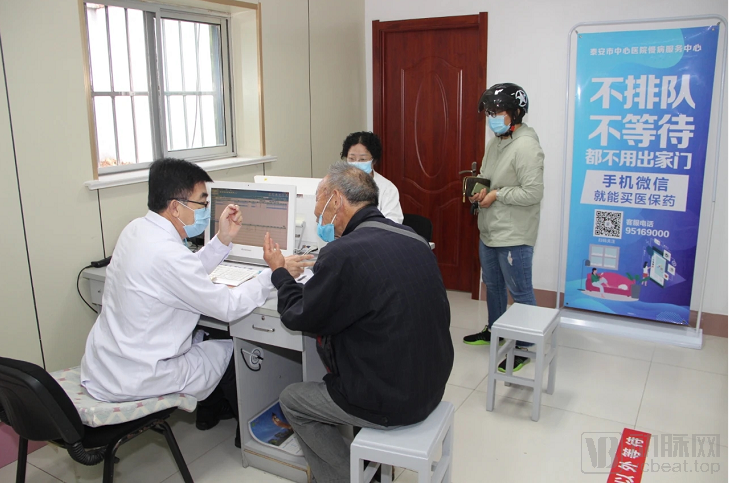
WeDoctor's Chronic Disease Management Center in Shandong
"Last year, media outlets publicly reported that digital chronic disease management services reduced the average consultation time for chronic disease patients in Tai'an from 2–3 hours to 30 minutes, decreased the average medication cost per visit by 12.7%, and achieved a savings of over 10% in chronic disease-related medical insurance expenditures in 2020 compared to 2019."This has become the first digital chronic disease management service model in China to offer direct reimbursement through medical insurance.
Meanwhile, WeDoctor has built China's first provincial-level Internet-based medical insurance and healthcare platform in Shandong., facilitating the rapid replication and regional penetration of these services across all 16 prefecture-level cities in Shandong Province. The Shandong Medical Insurance Health Big Data Platform has attracted medical institutions, pharmaceutical companies, elder care providers, insurance firms, and financial service providers to join its ecosystem. By enabling online payment integration and achieving data interoperability among different institutions, the platform has established intelligent, end-to-end monitoring of medical insurance processes—covering pre-event alerts, in-process controls, and post-event audits—in Shandong. This enhances the efficiency of medical insurance fund utilization and accelerates the reform toward diagnosis-related group (DRG) payment systems.
In Tianjin, WeDoctor Internet Hospital has taken the lead in collaborating with all 267 primary healthcare institutions across the city to establish a closely integrated medical consortium—the Primary Digital Health Community. Built upon the coordinated reform of medical care, health insurance, and pharmaceuticals (the “Three-Medical Linkage”), the Tianjin Primary Digital Health Community implements digital empowerment through cloud-based management, cloud services, cloud pharmacies, and cloud diagnostics. It provides patients with comprehensive healthcare services spanning pre-diagnosis, during-diagnosis, and post-diagnosis stages, seamlessly integrating in-hospital and out-of-hospital scenarios and effectively implementing the family doctor system as “health gatekeepers.”
Tianjin’s grassroots digital health community has also integrated various information systems across medical institutions at all levels, achieving data interconnectivity and promoting the sharing of healthcare information. This has facilitated the creation of lifelong electronic health records and fostered vertical integration and coordination of diverse medical services within the health community. It is expected to enable the tracking of insured individuals’ healthcare-seeking and medication utilization patterns among member entities, allowing for the pooling and adjustment of medical insurance payments under a single insurance scheme, thereby exploring the participation of tightly-knit medical consortia as a whole in reforms of medical insurance payment methods.
Low customer acquisition costs and high scalability of the business model
Notably, 17 of the 28 internet hospitals under WeDoctor have integrated medical insurance payment systems, establishing this as one of WeDoctor’s core competitive advantages that will be difficult for rivals to surpass in the short term.Deep integration with medical insurance has also enabled WeDoctor to seize growth opportunities and drive a systemic upgrade of its business operations.
On the one hand, the pandemic has increased the penetration of digital healthcare services among the general public, while reimbursement through medical insurance has further boosted their willingness to adopt these services. In addition, WeDoctor’s regional development model enables it to reach local users at scale.
On the other hand, since WeDoctor’s overall strategy for improving efficiency and controlling costs is clear and applicable to all medical insurance pooling regions, it can be rapidly replicated.
For example, the WeDoctor chronic disease management model was implemented in Tai’an, Shandong Province, for 15 months, delivering tangible benefits to local healthcare security administrations, health commissions, public hospitals, practicing physicians, and patients with chronic diseases, thereby establishing a mature business model. It is reported that this model has been incorporated into Shandong Province’s 14th Five-Year Plan and is being rolled out across all prefecture-level cities in the province, while other regions, including Tianjin, Fujian, and Jiangxi, are also gradually replicating it.
The range of conditions covered by WeDoctor’s digital chronic disease management services is continuously expanding. Currently, WeDoctor’s digital chronic disease management model primarily focuses on common chronic diseases such as hypertension, diabetes, coronary heart disease, and stroke. It has established an intelligent clinical decision support platform that integrates prevention, diagnosis, treatment, management, and health promotion for 26 specific chronic conditions.
In the future, as management protocols for more disease types are established, regions that have already implemented chronic disease management models can further expand their service scope.
Within China’s healthcare service system, there remains a critical weak link that cannot be overlooked: primary care.
Since 2017, to rectify the irrational allocation of medical resources, China has proposed nationwide initiatives including the establishment of close-knit medical consortia, the promotion of family doctor services, tilting medical insurance reimbursement ratios toward primary care institutions, accelerating the construction of standardized village clinics, and implementing special post programs for general practitioners, with a key focus on advancing tiered diagnosis and treatment.
However, insufficient capacity in primary healthcare services remains the greatest obstacle to the effective implementation of tiered diagnosis and treatment. This is particularly evident in underdeveloped and remote areas, where the quality and efficiency of basic medical care, essential public health services, and family doctor services provided by primary healthcare institutions urgently need improvement.
Since 2009, the National Basic Public Health Services Program has been implemented, with special funds jointly allocated by the central and local governments. The program provides free basic public health services to all residents, focusing on key populations such as children, pregnant and postpartum women, the elderly, and patients with chronic diseases. Over the past 12 years, the number of services included in the program has increased from an initial 10 to more than 30, the per capita financial subsidy standard has risen annually, and the scope of targeted key populations has continued to expand.
This sufficiently demonstrates that there is demand and paying capacity in the primary healthcare market; what is lacking are high-quality solutions.
In response to market demands at the primary care level, WeDoctor has established digital platforms and hardware-software infrastructure, such as mobile hospitals, with internet hospitals as the core. Through an internet-based medical consortium model, it provides primary care institutions with digitally enabled pharmaceutical, diagnostic, and laboratory testing services.
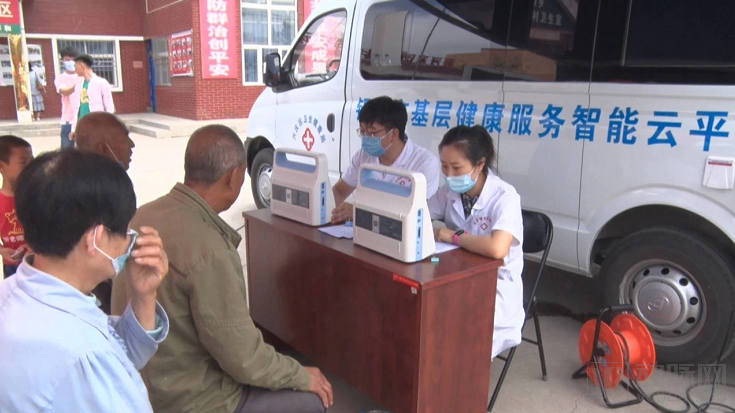 WeDoctor's "Mobile Hospital"
WeDoctor collaborates with local county-level governments and health commissions to deploy “Mobile Hospitals” in various regions. Equipped with automated biochemical analyzers, B-ultrasound machines, electrocardiographs, and all-in-one health kiosks, these Mobile Hospitals can perform 53 specific tests across seven major categories. They also feature intelligent medical devices such as smart cloud-based diagnostic kits and remote all-in-one terminals, which assist primary healthcare workers in conducting standardized diagnoses of common diseases.
Currently, WeDoctor has established a basic medical security network spanning the “county-township-village” three-tier system in multiple regions, including Gansu, Tibet, Xinjiang, Qinghai, Henan, Shaanxi, and Hebei, serving a population of over 28 million.
Although more detailed business data from WeDoctor is not currently available, the above deconstruction suggests that pharmaceutical retail will certainly not account for a significant proportion of its overall revenue, marking a high degree of differentiation between WeDoctor and the previously mentioned listed companies.
WeDoctor’s strategic core focuses on digital healthcare services, leveraging its data-driven medical and health service platform to create value propositions for multiple stakeholders, including individual users, hospitals and physicians, health insurance authorities, and local governments. In fact, the key to digitizing healthcare services lies in implementing patient-centric, full-lifecycle health management, thereby promoting the establishment of accountability for health outcomes. Only by genuinely improving users’ health indices can there be greater potential to attract additional payers into the ecosystem.
The “3.0-stage health responsibility community” described by Liao Jieyuan represents the promising vision of implementing a user-health-centered accountable care system in China. WeDoctor’s diversified business layout may help it achieve this goal ahead of schedule.
As a result, WeDoctor is poised to become the first company focused on digital healthcare services to list on the Hong Kong Stock Exchange.
“The pandemic has driven the digital migration of healthcare services and accelerated the digital transformation of the healthcare delivery system,” Liao Jieyuan once stated.
Indeed, after digitalization opened the door to a new world in the consumer sector, it has ushered in new opportunities for penetration into the healthcare field. Under the wave of digitalization, the healthcare services industry will undergo fundamental restructuring; medical services will also extend across both ends of the care continuum, covering multiple stages such as prevention and rehabilitation.
In this process, WeDoctor has made solid strides by leveraging its diversified business layout, including digital healthcare services and health maintenance services. A review of key milestones in WeDoctor’s development reveals that it has secured a first-mover advantage across various stages of the digital transformation of China’s healthcare industry, which will serve as a powerful driver for its sustained business growth in the future.