

Champion Bio Announces Landing of Medical and Health Industrial Park, Accelerating Industrial Expansion
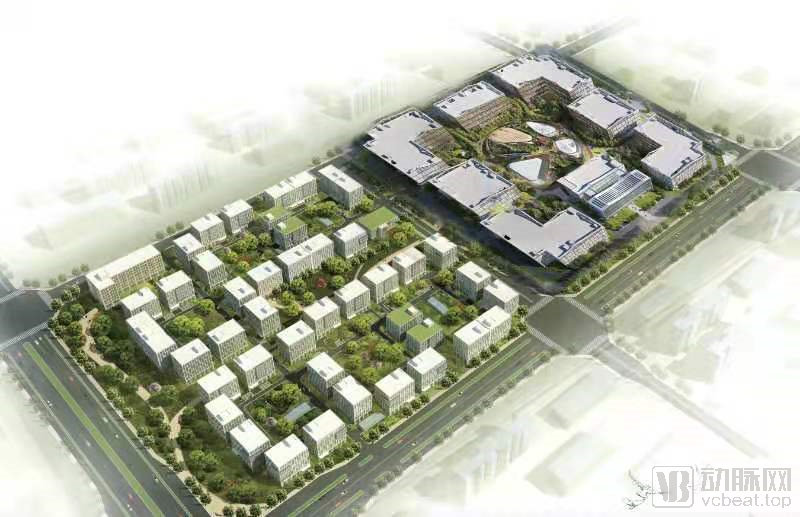
According to the latest news, a 430,000-square-meter industrial park in northern Beijing has completed its merger and acquisition. The project, executed by Changfa Development, will be developed into an internationally benchmarked pharmaceutical and healthcare industrial park. VCBeat has learned that the pace of policy formulation, spatial planning, and platform deployment for the pharmaceutical and healthcare sectors is accelerating across China. By the end of 2020, more than 2,000 industrial parks nationwide were developing life and health industries, with nearly 35% of China’s 169 national-level high-tech zones establishing biopharmaceuticals as their leading industry. In recent years, the medical and healthcare industry has flourished, regarded as the global “fifth wave of wealth” following the information technology sector. Capital allocation continues to tilt toward this sector, industry leaders maintain their dominant positions, and innovative enterprises are seizing opportunities to overtake competitors. Transitioning from a major pharmaceutical country to a powerful pharmaceutical nation, and shifting R&D innovation from imitation-based models to independent innovation, are essential imperatives for the development of China’s pharmaceutical and healthcare industry during the 14th Five-Year Plan period.
Beijing has accelerated the adjustment of its industrial structure in recent years, strengthening cross-regional coordinated development of the pharmaceutical and health industries, with Changping District benefiting from numerous favorable policies. Last year, the Changping Cluster of the Science and Technology Innovation Area within the China (Beijing) Pilot Free Trade Zone was officially launched. Recently, the Interim Measures for Supporting the Development of the Pharmaceutical and Health Industry in Changping District were released, providing support across the entire industry chain in the pharmaceutical and health sectors. VCBeat has learned that Changping District’s Life Science Park alone has gathered nearly 500 pharmaceutical and health companies, including BeiGene and InnoCare Pharma, initially forming a cluster of resources spanning the full industry chain from basic research to end-user medical services.
Relevant data indicate that Changping District has indeed established a strong demonstrative effect in the pharmaceutical industry. It is home to listed companies such as Aier Medical, Genetron Health, and Imeik, multinational corporations including Novartis and Novo Nordisk, as well as a cohort of young, innovative small enterprises. The district also hosts a number of top-tier national-level scientific research institutions, such as the National Institute of Biological Sciences (NIBS), the Beijing Institute for Brain Disorders and Brain-like Intelligence, and the National Center for Protein Sciences. Although the pharmaceutical and health industry in Changping District has a relatively short development history, it has progressed rapidly. This rapid growth is closely tied to the “government-led, platform-operated” development model, underpinned by platform companies represented by Changping Development.
Delving deeply into the pharmaceutical and healthcare industry, Changfa Development’s investment strategy combines both spontaneous market-driven initiatives and guided direction. To date, nearly 60% of the capital and 50% of the funds within the Changfa Development fund-of-funds system have been invested in the pharmaceutical and healthcare sector. “It is easier to meet the local reinvestment requirements in this field, as fund institutions find it more convenient to identify high-quality projects in Changping District. Consequently, they are more willing to introduce their outstanding portfolio companies to Changping,” said Wang Ying from Changfa Development.
As a perennial favorite in the venture capital (VC) and private equity (PE) industry, the pharmaceutical and healthcare sector is one of the primary tracks for aggressive investment and strategic layout by VC/PE firms, and it is also a key focus area for government-backed platforms such as Changfa Zhan. It is understood that Changfa Zhan is a one-stop industrial ecosystem platform established by the Changping District Government. Although it has only been in operation for five years, it has become a significant leveraging force in Changping District’s pharmaceutical and healthcare industry that cannot be overlooked. As Wang Ying stated, Changfa Zhan’s entry into the pharmaceutical and healthcare industry began with industrial investments five years ago. Leveraging the region’s strong foundation in the pharmaceutical and healthcare sector, Changfa Zhan has, since its inception, built a clear industrial map and investment framework in the pharmaceutical and healthcare field through collaborations with leading market-oriented funds and investments via its proprietary direct-investment funds. It has strategically targeted frontier global technologies such as gene therapy, cell therapy, innovative drugs, and high-end medical devices. To date, the Changfa Zhan fund-of-funds system has made over 250 investments in pharmaceutical and healthcare companies, with a total investment amount nearing RMB 9 billion. Its pharmaceutical and healthcare direct-investment funds have also invested in companies with proprietary technologies and leading positions in their respective fields. More than ten portfolio companies, including Aier Eye Hospital Group (Note: Correction based on context, likely referring to specific listed entities mentioned), InnoCare Pharma, Genetron Health, Hygeia Healthcare, Kintor Pharmaceutical, and Pumen Technology, have successfully listed on the Hong Kong Stock Exchange, NASDAQ, and the STAR Market.
Once the conditions for industrial investment and policy support are in place, strengthening the industrial chain becomes a critical challenge that demands immediate solutions. Establishing platforms to engage with core segments has emerged as Changfazhan’s second strategic breakthrough, following its initial focus on industrial investment. Across China, there is no shortage of public industrial service platforms with comprehensive hardware investments. These government-funded platforms often incur substantial upfront costs for equipment and facilities; however, due to the lack of professional operators and insufficient software capabilities, their services often lack professionalism. “If such platforms were entirely entrusted to market-oriented third-party operators, they would face the risk of weakened credibility and diminished public attributes,” stated Wang Ying. She noted that balancing public attributes with professional expertise remains a significant challenge for many public industrial service platforms. Therefore, from its inception, Changfazhan has clearly adopted a model of “government leadership with market-oriented operations.” By forming joint ventures or collaborations with professional third parties to establish corporately governed entities—such as shared platforms for instrumentation and testing services, third-party medical laboratories, and contract manufacturing organization (CMO) platforms for medical devices—and by integrating these with its self-operated International Precision Medicine Innovation Center and Acceleration Center, Changfazhan provides enterprises with a comprehensive suite of services spanning incubation, acceleration, and commercialization. This approach ensures both high service standards and the preservation of public attributes.
The International Center for Precision Medicine Innovation focuses on the gene testing and cell therapy industries, providing both scientific research services and medical services. It has attracted internationally leading overseas scientist teams, including Hope Genomics, Huizhen Biology, Monroe Biology, and Kerui Biology. Hope Genomics specializes in third-generation sequencing and is the first company in China to offer third-generation sequencing services. The founding team of Huizhen Biology comes from Harvard University, with a focus on single-cell sequencing. The founding team of Monroe Biology originates from Stanford University, specializing in gene editing technology; it is developing universal CAR-T therapies that significantly reduce CAR-T treatment costs, with clinical approval for related products expected within three to five years. Kerui Biology focuses on TCR-T cell immunotherapy, with multiple TCR products rapidly advancing toward preclinical evaluation.
The International Center for Accelerating Precision Medicine is an acceleration hub for the translation of future life science innovations into tangible outcomes. Scheduled to commence operations in 2021, the center is located in the Zhongguancun Life Science Park. It supports enterprises in rapidly achieving industrialization by covering the entire value chain from source innovation and clinical research to process development and contract research outsourcing (CRO). Currently, it has hosted pilot-scale projects for TCR-T and CAR-T therapies, gene therapy for ophthalmic indications, as well as other leading domestic and international high-quality projects involving iNSCs and iPSCs. The center also serves as a platform to support incubated projects from the International Precision Medicine Innovation Center as they advance to the next stage of development.
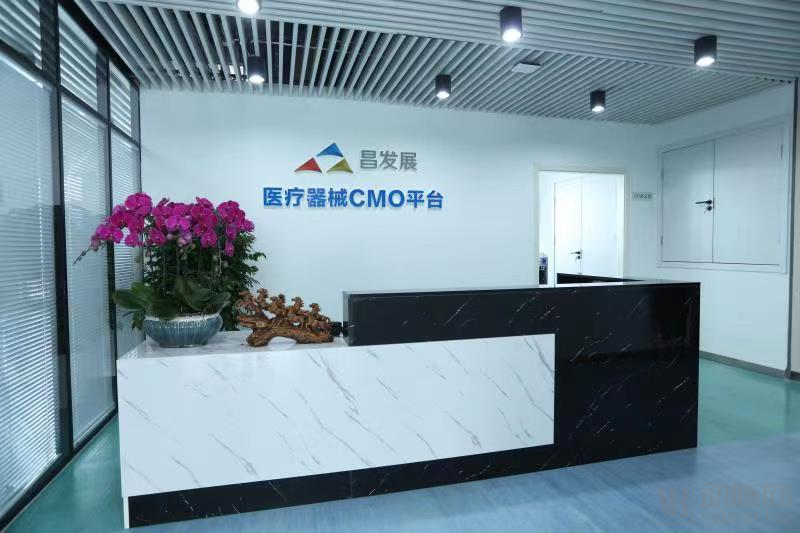
In addition, it is home to the first medical device Contract Manufacturing Organization (CMO) platform in North China, established under the Marketing Authorization Holder (MAH) system and leveraging the pilot initiatives in the Beijing-Tianjin-Hebei region. The platform’s facility spans over 1,400 square meters and features three production lines for active medical devices, sterile consumables, and in vitro diagnostic (IVD) reagents, providing both hardware and software services to MAHs.
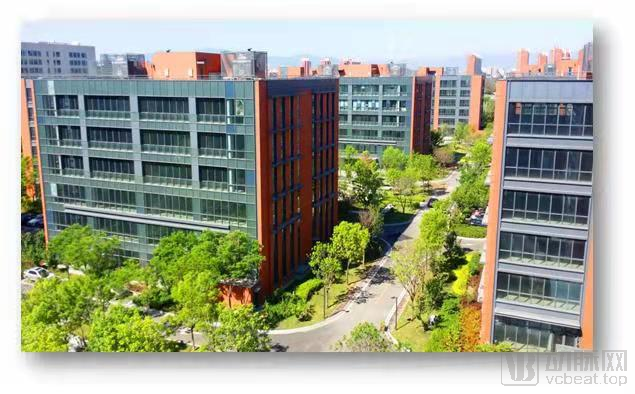
Once the pathway of incubation–acceleration–commercialization is successfully established, industrialization becomes particularly critical. Thus, Champion Bio—the Changping Life Valley Industrial Base—was launched as a one-stop innovative industrial ecosystem for the pharmaceutical and healthcare sectors, spanning from R&D headquarters to industrial production bases. It focuses primarily on “new drug development, biotechnology, precision medicine, and high-end medical devices,” with industrialization as a core function, constructing production facilities that are exceptionally scarce in Beijing according to international standards and cutting-edge concepts. This completes the closed loop across the entire chain from incubation to acceleration to industrialization. Prior to establishing the Changping Life Valley, the Changfa Group team conducted extensive visits to numerous exemplary models both domestically and internationally, ultimately implementing innovations and optimizations tailored to its own characteristics. For instance, although the Life Valley Industrial Base is situated on industrial land, its spaces extend beyond traditional factory buildings, offering comprehensive amenities such as talent apartments, business centers, and leisure facilities. “The park must cultivate its unique image and quality, creating an environment that integrates industry with urban living,” introduced Wang Ying.
Whether in fund investment, platform development, or industrial park layout, Changfa Development has consistently stayed ahead of emerging trends, a advantage attributable to its forward-looking perspective on cutting-edge international technologies. It is reported that three years ago, Changfa Development established subsidiaries in Hong Kong and the United States, and forged partnerships with renowned university innovation centers—such as those at UC Berkeley and Stanford University—technology transfer institutions, and innovation alliances. These collaborations enable the company to monitor real-time advancements in pharmaceuticals and healthcare, as well as innovations led by top scientists, thereby driving the optimization of its industrial strategy and the selection of high-quality partnership targets.
Behind its investments, platform building, alliance formation, and industrial park development, Changfa Zhan is strengthening the foundational logic of incubation. While supporting innovation among small and medium-sized enterprises (SMEs), it integrates resources around leading and flagship companies. Leveraging platforms and clusters as connectors, it facilitates the flow of medical and healthcare resources across the local region, Beijing, and even Northern China, aiming to create a future-oriented, new-type industrial park for pharmaceuticals and healthcare.