

MemVerge and Ablabio Leverage Big Memory Technology to Accelerate Cancer and COVID-19 Research
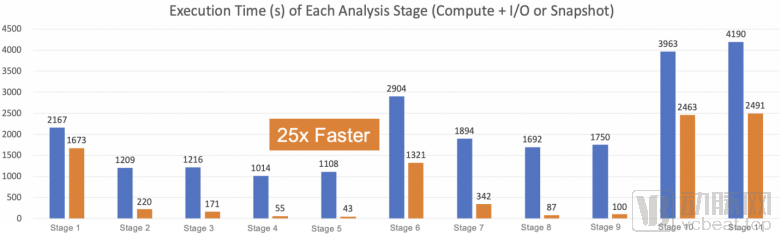
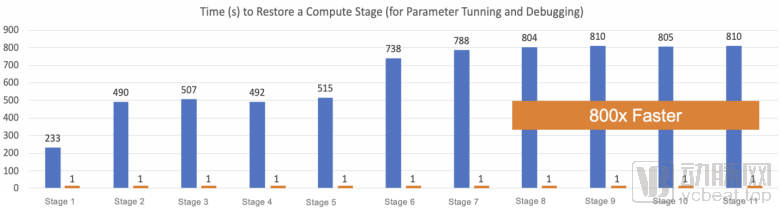
Recently, MemVerge, a pioneer in large-memory software, and BioMap, a leader in single-cell genomics research, jointly announced that they have successfully leveraged large-memory technology to accelerate single-cell RNA sequencing (scRNA-seq) analysis. Compared with traditional DRAM-based solutions, the Intel-powered® Optane™A cutting-edge solution comprising Persistent Memory (PMEM) and MemVerge Memory Machine software accelerates scRNA-seq loading times by 800-fold and boosts execution speed in certain computational phases by 25-fold.
Scientists are relying on genomic sequencing to identify new SARS-CoV-2 variants and understand their impact on health. On February 17, the White House announced that the U.S. Centers for Disease Control and Prevention (CDC) would invest nearly $200 million in genomic sequencing efforts to identify, track, and mitigate emerging SARS-CoV-2 strains.
“Single-cell RNA sequencing is one of the key foundational research methods driving advances in cancer and COVID-19 research. We are proud to lead the world with state-of-the-art single-cell analysis tools,” said Chris Kang, Head of Bioinformatics at BioGenesys. “The large-memory platform developed by MemVerge and Intel has accelerated our workflows, enabling us to generate results more quickly. This will provide more effective approaches for enhancing disease understanding and improving healthcare standards in the future.”
Single-cell RNA sequencing analysis is a process that involves multiple steps of large-scale data processing. Long-running processes are computationally intensive and place high demands on memory resources. Very large matrices are used during computation, which need to be adapted to the capacity of available memory. Additionally, intermediate computational results must be saved and reloaded into subsequent stages, creating bottlenecks in storage and retrieval. Furthermore, many stages of this process require repeated parameter tuning.
Memory Machine software from MemVerge addresses these memory resource challenges. Its ZeroIO™ memory snapshot feature eliminates storage I/O bottlenecks, significantly reducing the total time required to perform complete scRNA-seq analysis. Other bioinformatics analyses involving large matrices derived from next-generation sequencing technologies can also be accelerated using large-memory software.
Dr. Chenggong Fan, CEO of MemVerge, stated, “To date, there has been no viable storage-side alternative to memory infrastructure for genomic sequencing. Large-capacity memory delivers the same high performance as DRAM at a significantly lower cost, while providing the persistence and agility required for complex data delivery pathways.”
Using a complete analysis of R-based tools with pure DRAM as the baseline, the same analysis was repeated using Memory Machine software and a memory pool combining DRAM and PMEM. Tests showed that execution with Memory Machine was 25 times faster, reducing total execution time across all stages by 60%.
Tests also show that using Memory Machine accelerates data loading by 800 times.
Greater memory capacity enables more tasks to run in parallel and facilitates easy rollback of previously executed hypothetical scenarios. These advantages, combined with faster execution times, increase project throughput per server by 10-fold.
Beijing BioAI Technology Co., Ltd. is a biotechnology enterprise with a global perspective. The company possesses cutting-edge international single-cell sequencing technologies, has developed rapid and efficient single-cell omics analysis methods, established the world’s largest single-cell omics database and an interactive single-cell data visualization platform, and holds multiple patents in single-cell bioinformatics. BioAI is dedicated to applying single-cell genomics and bioinformatics to the diagnosis and treatment of human diseases, discovering novel therapeutic and diagnostic targets, innovating treatment strategies, and creating precise atlases of human diseases. By leveraging and mining human single-cell disease atlases, BioAI aims to become the engine driving new drug development in the new era.
The emergence of persistent memory is ushering in a new era of large-memory computing, where applications of any scale can abandon traditional storage in favor of abundant, persistent, and highly available memory pools. MemVerge’s Memory Machine™The software makes this possible by virtualizing DRAM and persistent memory to create an enterprise-grade in-memory data service platform.