

Can Amyris, the Pioneer of Synthetic Biology Famous for Artemisinin, Regain Its Former Glory?

Amyris Biotechnologies
Producer of Renewable Products
Amyris, a former superstar that once stood at the forefront of the global industrial biotechnology revolution.
As the pioneer of the synthetic biology market, Amyris seemed to peak right at its debut:Due to its impressive achievements in leveraging microbes to synthesize artemisinic acid (a key precursor for the synthesis of artemisinin), Amyris rapidly entered the financial markets, becoming the first NASDAQ-listed company in the field of synthetic biology.Wall Street recognized its astonishing growth potential and generously opened its wallets to express strong support for Amyris.
In the months following the company’s IPO in 2010, fueled by investors’ optimistic expectations, Amyris’s stock price once soared to $33 per share, making it a highly anticipated synthetic biology star in the capital markets.However, this proved to be short-lived, as investor enthusiasm was quickly dampened by Amyris’s large-scale production challenges. By 2012, Amyris’s stock price had fallen below $2 per share.
After suffering a devastating loss in the financial markets, Amyris has spent the past decade striving for product breakthroughs to reclaim its former glory.
Given the immense potential of synthetic biology and the heated competition in this sector, several high-performing unicorns have emerged in recent years, such as Zymergen and Ginkgo Bioworks, capturing the majority of investors’ attention. However, a starved camel is still bigger than a horse—Although Amyris no longer commands the same level of hype as in its heyday, it has grown into an influential producer of farnesene and long-chain hydrocarbons in the clean beauty and chemical materials sectors. Its raw material ingredients are used in products from over 3,000 global brands, reaching more than 200 million consumers.
By examining the development trajectory of Amyris, we may be able to view the current surge in synthetic biology with greater rationality and perspective.
The story of Amyris dates back to 2003.
That year, several hard-core scientists at the University of California, Berkeley—Jay Keasling, Vincent Martin, Jack Newman, Neil Renninger, Kinkead Reiling, and others—were conducting researchHow to Produce the Antimalarial Drug Artemisinin and Other Terpenoids Using Synthetic Biology Technologies,To this end, they founded a biotechnology company, which later became Amyris.
If artemisinin can achieve large-scale mass production, it will undoubtedly bring new hope to millions of patients suffering from malaria. Thus, initially as a non-profit company,Amyris has secured a positive investment of $42.6 million over five years from the Gates Foundation.Fortunately, the company achieved its first development milestone in its third year of operation:In 2005, Amyris developed a yeast strain capable of producing artemisinic acid.
Artemisinic acid is a key precursor for the synthesis of artemisinin. Traditional chemical synthesis methods are not only complex and costly but also cause significant pollution. Switching to microbial engineering strains for biosynthesis has significantly reduced production costs and minimized environmental pollution.
The principle underlying this method for synthesizing engineered microbial strains is not complex:Amyris extracted the genes responsible for artemisinin production from plants and inserted them into yeast, enabling the yeast to continuously produce artemisinic acid from simple renewable sugars through large-scale fermentation. The artemisinic acid is then purified and converted into derivatives used in artemisinin-based combination therapies.
It is worth noting that the process used to produce artemisinin also generates many other molecules during yeast engineering. Currently, approximately nine different molecules are being utilized by Amyris in commercial and consumer products available on the market.
By October 2006, with the booming development of clean technologies, three venture capital firms—Kleiner Perkins Caufield & Byers, Khosla Ventures, and TPG Ventures—recognized Amyris’s growth potential, injected $20 million into the company, and appointed former BP executive John Melo as CEO, pinning their hopes on Amyris to develop solutions to major global challenges.
By leveraging this technology, Amyris has achieved the capacity to replace 50,000 mu of agricultural cultivation with 100-cubic-meter industrial fermentation tanks, enabling the annual production of 100–150 million doses of antimalarial medication, which accounts for approximately half of the global demand.
In 2008, the company licensed this technology to the French pharmaceutical giant Sanofi.It has leveraged this momentum to pivot toward the research, development, production, and sale of “sustainable alternatives” targeting broader markets.
Buoyed by its success in the scaled-up production of artemisinin, Wall Street financiers are filled with high expectations for Amyris’s future. Eager to prove itself, Amyris has charged into the financial markets, driven by boundless optimism for a bright future:In 2010, Amyris was listed on the NASDAQ Stock Exchange in the United States.
A Hasty Leap, Yielding Only Amyris’s Fleeting Glory
In the months following its IPO, buoyed by investors’ optimistic expectations and enthusiastic support, Amyris’s stock price once soared to $33 per share, generating significant buzz in the financial markets. However, this investor euphoria was quickly dampened by the company’s large-scale production challenges. Amyris’s stock price plummeted, tracing a trajectory reminiscent of a reciprocal curve in the first quadrant.
In 2012, Amyris's stock price had fallen below $2 per share.
From a highly anticipated market darling to a contentious hot potato, Amyris has endured a precipitous collapse in the financial markets and tasted the pain of falling from grace. To make matters worse, this financial debacle has plunged Amyris into a funding crisis, further exacerbating the challenges on its path to scaled production.
Transitioning from a small-scale laboratory to the commercial market indeed posed a significant challenge for Amyris. As the company’s management at the time failed to properly assess the difficulties of scaling up production, they made erroneous promises that did not align with the company’s actual development trajectory, causing many investors to lose further confidence in the firm.
For over a decade, despite Amyris’s persistent efforts to achieve product breakthroughs and reclaim its former glory, the company has failed to deliver the kind of transformative progress that would captivate investors, constrained by a series of challenges in product portfolio structure and the pace of capacity expansion. Capital shortages have forced Amyris to repeatedly raise funds through convertible notes and debt, resulting in the “side effect” of diluting earnings per share for its investors.
"A starved camel is still bigger than a horse." Objectively speaking,Even if it no longer boasts its former glory, Amyris remains brimming with growth potential and stands as a formidable force in the field of synthetic biology that cannot be overlooked.
Amyris Biotechnologies’ automated strain engineering platform is one of the largest such platforms in the global corporate sector.Functions include DNA design, DNA assembly, DNA quality control, strain transformation, clone picking, strain quality control, phenotypic testing, high-throughput screening, strain preservation, data analysis, and scale-up experiments.
Amyris holds a leading position in the clean, health, and beauty markets. As a key supplier of sustainable and natural ingredients, its raw materials are used in over 3,000 products from global brands, reaching more than 200 million consumers.
Amyris leverages its industrial biosynthetic science and technology platform to engineer microorganisms, primarily yeast, into fermentation-based bio-factories that convert plant-derived sugars into various hydrocarbons. The resulting products have broad applications across multiple sectors, including fuels, lubricants, rubber, plastic additives, cosmetics, fragrances, and pharmaceuticals.
Currently, Amyris has three main business pillars: health, fragrance, and clean beauty. The cannabis market is being explored.
Natural Zero-Calorie Sweetener: FDA-Approved
Stevia leaves contain a component known as Reb M. This compound is intensely sweet, with a taste similar to that of sugar, but it has a complex molecular structure and occurs at very low concentrations in the stevia plant (less than 0.1%), making it difficult to isolate and extract. By applying its innovative bioscience solutions, Amyris converts plant sugars into hydrocarbon molecules, producing a zero-calorie sweetener from sugarcane.
Unlike Reb A, which is found in most stevia products on the market, Reb M offers comparable sweetness intensity without the bitter aftertaste associated with Reb A.
According to Amyris executives,Reb M is the ultimate desired outcome achieved by the company’s scientists after testing thousands of yeast strains and utilizing genetically modified yeast to ferment sugarcane.To secure a steady supply of sugarcane feedstock, the company has established a robust partnership with a large-scale sugarcane plantation in Brazil, laying a solid foundation for the mass production of Reb M. (According to Amyris’s Q4 2020 financial report disclosed in early March, its facility in Brazil is now operating smoothly.)
It is understood that,Reb M, a novel non-GMO natural sweetener, is suitable for table-top sweeteners, the vast majority of food and beverage products, and other applications. It is calorie-free and contains no chemical substances harmful to human health or the environment, making it an excellent choice for individuals with diabetes or other personal health concerns.From coffee and salads to chocolate, this healthy and delicious sweetener can be used in all of them.
When asked about the differences between this product and Cargill’s Eversweet (also produced through fermentation using genetically modified yeast), Amyris CEO Joel Cherry stated,The difference between the two lies in product purity; Amyris’s yeast is more efficient at producing single Reb M molecules.As a result, it has been highly sought after by major food and beverage companies.
In 2018, The Lancet website published a large-scale study report, pointing out thatThe global prevalence of obesity and overweight has risen significantly over the past three decades, affecting 2.1 billion people—nearly one-third of the world’s total population.
Specifically, the global obese population currently stands at nearly 700 million. Among high-income countries, the United States, Australia, and the United Kingdom have the highest prevalence of obesity among adults, with the rate in the U.S. reaching approximately one-third. Undeniably, the pleasure and happiness derived from sugar consumption are driving populations further down the path toward overweight and obesity.
Zero-calorie foods and beverages are in high demand among the general public, presenting significant market opportunities.
To make this new zero-calorie sweetener accessible to everyone who needs it, Amyris has finalized a partnership with American Sugar Refining Group, the world’s largest producer of refined cane sugar and a leading global marketer of sugars and sweeteners. Additionally, Amyris has licensed Reb M to health-conscious food and beverage manufacturers for use in their products, thereby establishing strong collaborations with companies in the beverage, snack, and confectionery sectors.
To generate greater impact and secure higher returns, Amyris expanded its product channels and launched its proprietary sweetener brand, Purecane, in 2019.Featuring a zero-calorie sweetener made from the special ingredient Reb M, it has since entered households everywhere.
Currently,Purecane has obtained FDA GRAS certification,The ingredient’s nomenclature is based on FDA requirements, under which the FDA permits Amyris to commercially manufacture and market it.
High-Gross-Margin Battleground: Fragrance and Clean Beauty
In its fragrance business, Amyris focuses on the production of high-value, high-quality, and low-cost fragrances. Its clean beauty offering is the Biossance product line, a skincare brand powered by squalane technology.
Amyris’s flagship molecular product is a substance called Farnesene, derived through fermentation using yeast strains.Farnesene can be converted into a compound called squalene through a simple transformation; subsequent dehydrogenation of squalene yields a more stableSqualane (Squalene)—This ingredient, hailed as a “panacea for skincare,” has garnered significant acclaim in the skincare industry due to its high skin compatibility and stability, as seen in products such as HABA Squalane Beauty Oil and The Ordinary 100% Squalane.

(Image source: Amyris official website)
Furthermore,Squalane is also widely used in fields such as solvents, polymer materials, and renewable energy, representing one of Amyris’s core competitive advantages.
Traditionally, squalane is extracted from the livers of deep-sea sharks, with only one ton obtainable from 3,000 sharks. Amyris leverages its proprietary engineered yeast strains to synthesize squalane at scale, thereby reducing costs and aligning with ecological conservation efforts. In this business segment, Amyris has established partnerships with major industry players such as L'Oréal, Estée Lauder, and Yifan Pharmaceutical.
In mid-January this year, Amyris announced its entry into the Chinese market through a partnership with Super Ordinary Weiji Media (Shanghai) Trading Co., Ltd., a brand management company focused on introducing and incubating Ins Beauty brands. The collaboration will launch Amyris’s bio-clean beauty skincare brand, Biossance, in China. As one of the largest and fastest-growing beauty markets globally, this partnership will deepen both parties’ strategic presence in the Chinese market.
In mid-July 2020, Amyris also launched a silica product derived from sugarcane bagasse ash.This product can replace traditional mineral-derived silica products and plastic microspheres, and is widely used in the cosmetics industry.Traditional silica production relies on mineral raw materials, a process that entails significant energy consumption and environmental issues. Guided by the principles of the circular economy, Amyris has developed this bio-based silica powder product derived from sugarcane.
On December 21, 2020, Amyris announced a $50 million strategic transaction with DSM Nutritional Products Ltd. (DSM), whereby Amyris licensed to DSM the rights to produce and supply farnesene to fragrance giant Givaudan.
For Amyris, DSM’s market channels and its valuable experience in the animal nutrition, human nutrition, and health markets provided strategic value. However, the two companies had already established a strategic partnership. In May 2017, DSM made an initial equity investment of $25 million in Amyris, converting it into approximately 12% equity stake, and acquired Amyris’s farnesene fermentation production facility in Brazil in the same year, becoming one of Amyris’s major shareholders.
Furthermore, squalene is an important adjuvant for vaccines, capable of promoting vaccine absorption and enhancing vaccine efficacy.Squalene plays a significant role in the development of both seasonal influenza vaccines and COVID-19 vaccines.
In August 2020, Amyris partnered with the Infectious Disease Research Institute (IDRI) to leverage Amyris’s fermentation platform for the large-scale production of semi-synthetic squalene-based adjuvants, aiming to enhance the efficacy of IDRI’s RNA vaccine against SARS-CoV-2.
Unlocking the Commercial Value of Cannabis: Producing Cannabinoids with Higher Potency and Superior Flavor
Currently, although the exploration of the commercial value of legal cannabis worldwide is still in its nascent stage, it is developing rapidly and is becoming a new industrial hotspot.According to market research firm Arcview, the sales volume of legal cannabis in North America reached $9.2 billion in 2017, and this figure is projected to exceed $47 billion by 2027, ten years later. Amyris is actively making strategic deployments in this area.
In March 2019, Amyris announced a collaboration with Lavvan, a new startup, to leverage the same synthetic biology approach for the production of cannabidiol (CBD), in a deal valued at up to $255 million.
In September 2020, Amyris announced that it had expanded the commercial production of cannabigerol (CBG) using industrial fermentation processes.Through its fermentation process, Amyris aims to deliver approximately one metric ton of high-purity CBG, with product margins expected to exceed the industry average for current publicly traded CBD (cannabidiol) suppliers.
Cannabinoids are derived from the cannabis plant, but extracting cannabinoids from the cannabis plant is difficult.If produced via chemical synthesis, the cost would reach $40,000–$70,000 per kilogram. THC (Tetrahydrocannabinol) and CBD (Cannabidiol) are two of the most widely recognized cannabinoids.
CBG (Cannabigerol) is the chemical precursor to THC and CBD, often referred to as the "stem cell" of cannabinoids. This compound is a non-psychoactive cannabinoid with significant therapeutic potential.Preliminary testing based on skin models indicates that CBG demonstrates superior efficacy to CBD in various topical indications.Pharmacological effects of CBG described in the scientific literature include: antifungal, insecticidal, and anti-inflammatory activities; neuroprotective effects; appetite stimulation; and enhancement of cancer cell death processes. Additional therapeutic indications are still under exploration.
Beverages infused with CBD are reported to face a common problem unique to this niche segment: they taste terrible. Some describe the flavor as resembling “unripe millet,” while others liken it to the taste of dishwashing liquid or even urine.
“The long-standing issue of poor taste in CBD beverages may be resolved by our company.” Melo, CEO of Amyris, believes that for his company, CBD holds a directly exploitable potential: leveraging Amyris’s expertise in synthetic sweeteners to produce CBD beverages with appealing synthetic flavors.
Compared to more eye-catching newcomers like Zymergen and Ginkgo Bioworks, Amyris resembles a calm and composed chess player. The turbulence of the stock market no longer seems to stir its emotions; steady growth is a more reliable path.
In fact, Amyris’s product revenue has been maintaining substantial growth in recent years.
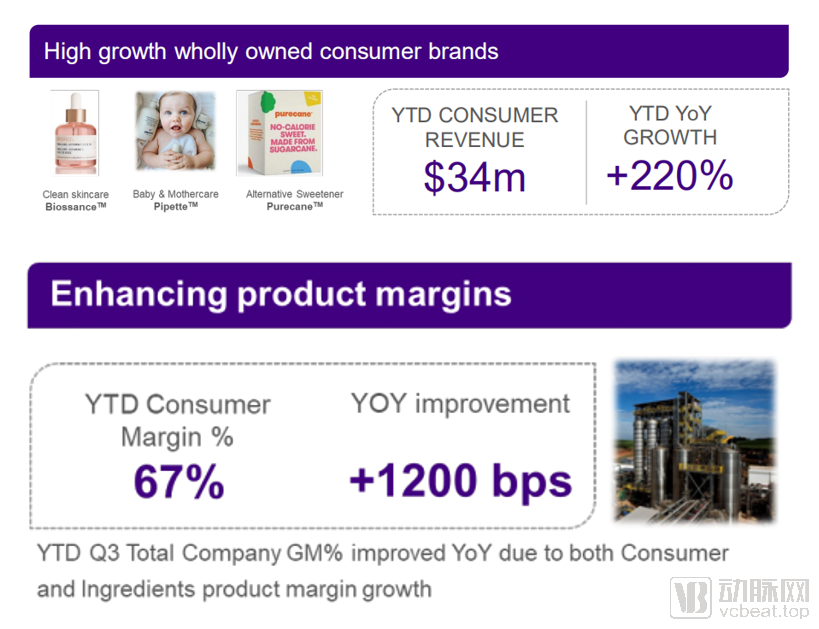
As can be seen from its disclosed financial data for the third quarter of 2020,In consumer sectors such as clean beauty, Amyris has achieved a gross profit margin of 67%, with its product revenue for the quarter surging by 220% year over year.
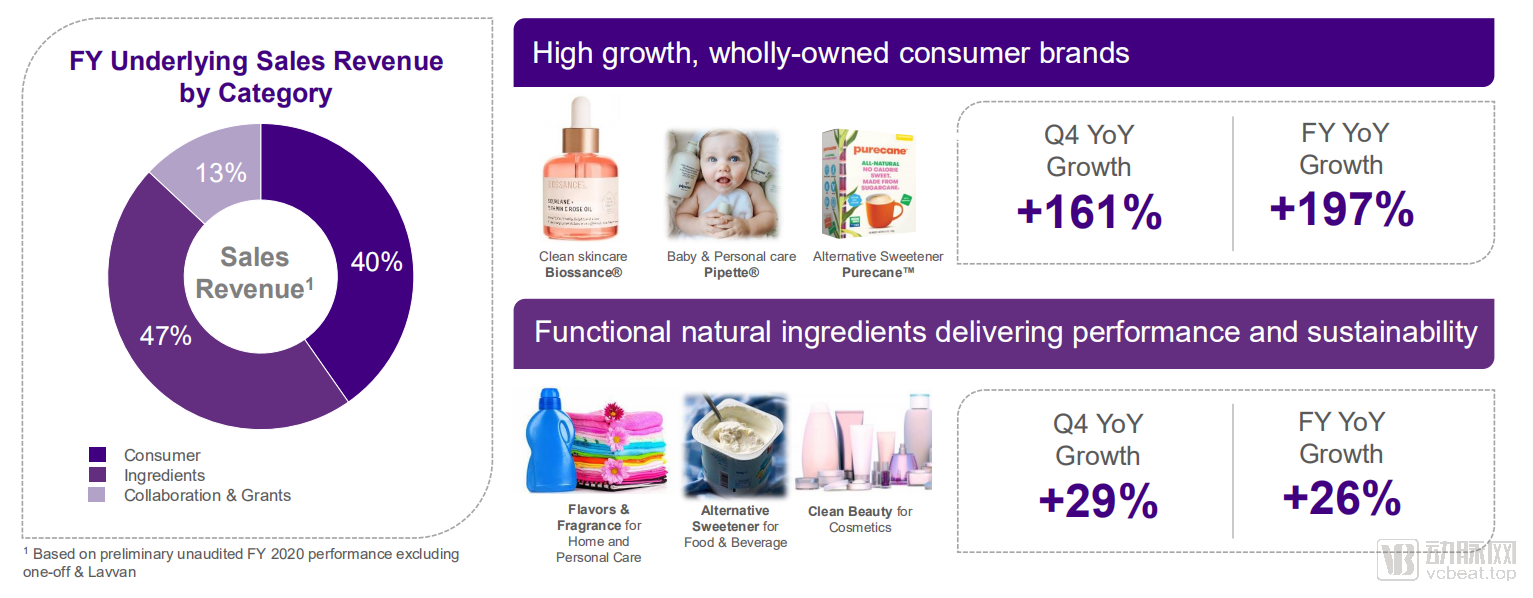
Amyris has fully reaped the benefits in the consumer products (clean beauty) sector. On March 2, 2021, Amyris released its Q4 2020 financial report, which, based on the full-year revenue breakdown,The company’s revenue in the consumer products segment is rapidly approaching that of its high-volume chemical raw materials. Growth in the raw materials segment has been relatively sluggish, lagging far behind the consumer products division.
Capitalizing on this momentum, Amyris outlined a series of 2021 “Brand-Building” initiatives:Launched Terasana, a skincare brand specifically targeting facial acne, in Q2 2021; launched the makeup brand Rose and the hair care and cleansing brand Jyn in Q3 2021.
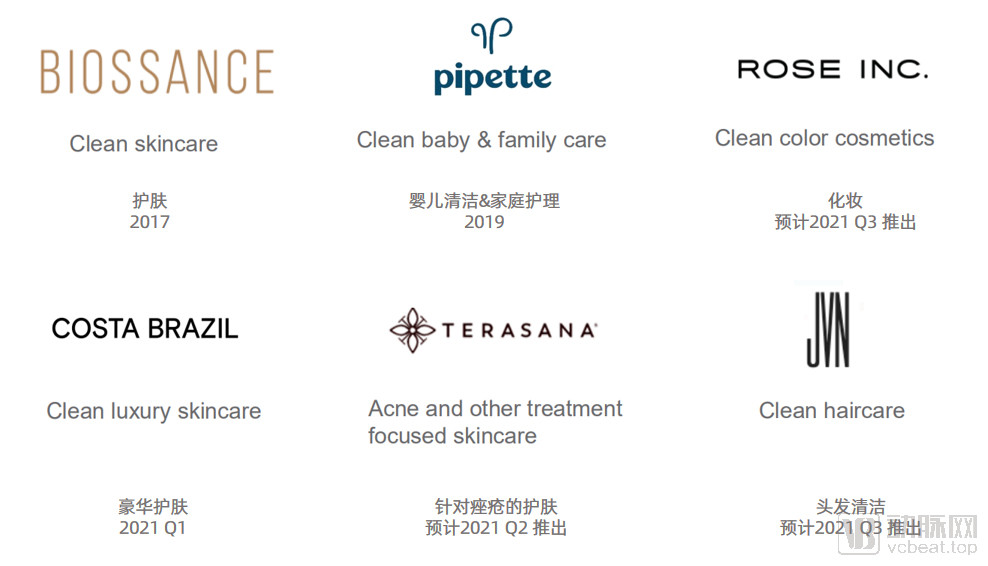
Amyris 2021 “Brand Building” Plan (Chart compiled by VCBeat based on financial report disclosures)
Amyris aims to capture 80% of the global beauty and personal care market.
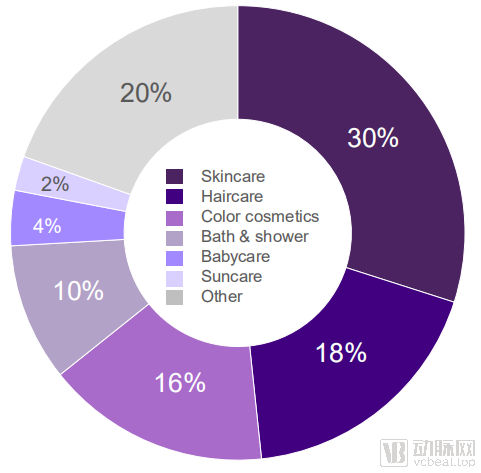
Global Market Share Chart of Beauty and Personal Care Categories
(The market shares in descending order are: skincare (30%), hair care (18%), color cosmetics (16%), shower products (10%), baby care (4%), sun protection (2%), and others (20%).)
An Amyris executive previously stated in a public interview that,“We are the sellers of the final product. Amyris will transform the company into a product company, rather than a technology licensing company.”
Whether through the creation of the skincare brand Biossance or the promotion of the zero-calorie sweetener brand Purecane, it is evident that Amyris is focusing its efforts on entering high-margin niche markets, while also generating recurring revenue by selling or licensing specific molecular products developed via its technology platform.
Currently, Amyris has achieved revenue growth of over 50% for three consecutive years.In 2020, Amyris achieved record-breaking revenue for three consecutive quarters, with consumer product revenue growth reaching nearly 200%.
Robust positive revenue growth has led to a continuous reduction in debt. At the beginning of 2020, Amyris had $297 million in debt, which decreased to $171 million by year-end. As of March 1, 2021, Amyris’s debt had fallen below $150 million.
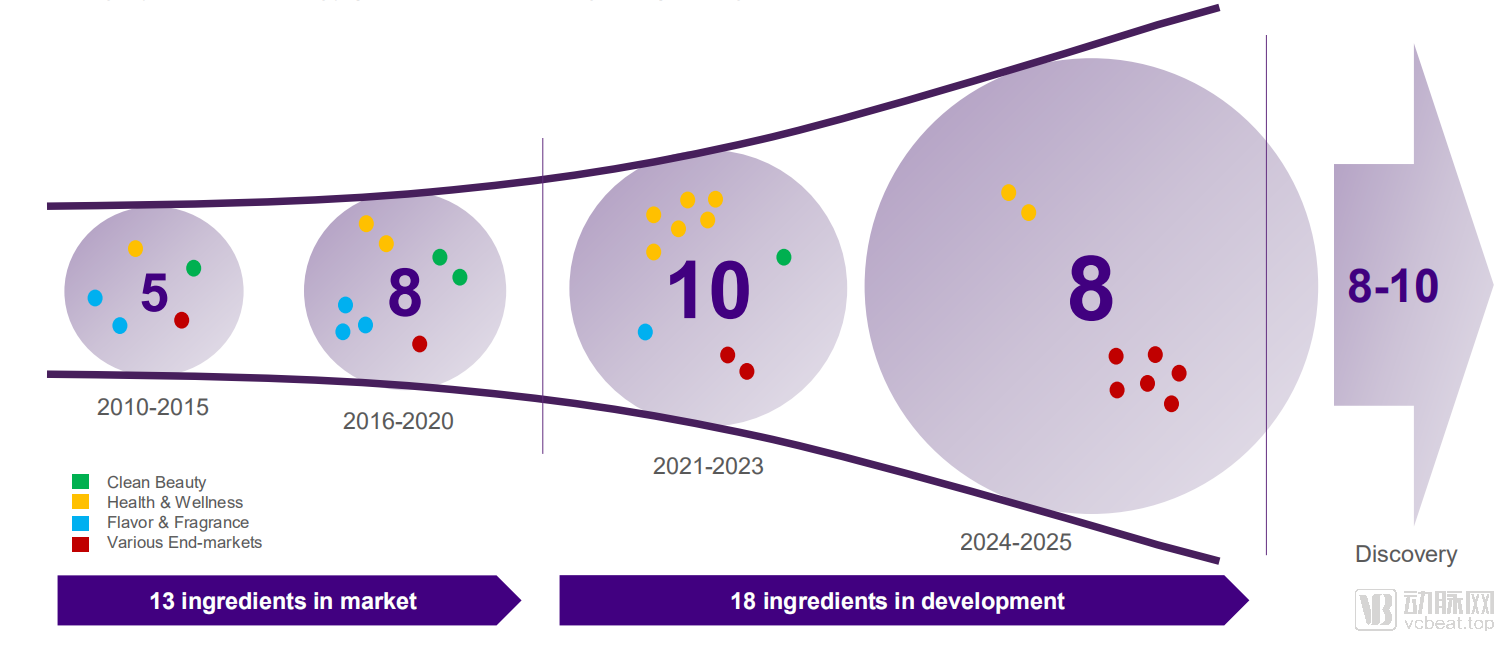
In 2021, Amyris provided guidance on its ongoing debt reduction, targeting a decrease to $100 million by the third quarter of 2021.The 13 ingredients currently available on the market, the 18 ingredients under development, the ingredient components expected to be launched sequentially over the next five years, and the 8–10 new ingredient components planned for development are all Amyris’s future drivers of revenue growth.
On Seeking Alpha, Graham Tanaka, Chairman of Tanaka Capital Management, presented a set of valuation data.Amyris is projected to maintain a stable average annual revenue growth rate of 50% over the next 3–5 years.
Can Amyris Recapture Its Former Glory? While we cannot yet draw a definitive conclusion, it may be prudent to maintain an optimistically watchful stance on its development. Regardless of whether the day of coronation ever arrives, Amyris still has a compelling growth story to tell.
The existence of Amyris is also a microcosm of the development of countless enterprises in the field of synthetic biology:Synthetic biology acts as a master key, adapting to the needs of diverse fields by providing tailored production services. It conceals countless mysteries while harboring infinite possibilities.