

Franka Emika: Pioneering Force-Controlled Collaborative Robots for Medical Applications

Franka Emika
Developer and Seller of Joint Force-Controlled Robots
In 1920, Czechoslovak writer Karel Čapek coined the term “Robot” in his science fiction play R.U.R. (Rossum’s Universal Robots), deriving it from the words “robota” and “robotnik,” to describe fictional robotic characters. Since then, the term “robot” has become widely recognized by the general public.
Since the mid-20th century, the urgent demand for mass production has driven the development of automation technology, giving rise to industrial robots capable of being deployed in manufacturing. In the subsequent decades, robotics has experienced rapid advancement, with increasingly diverse product forms and application scenarios.
Currently, according to the classification by the International Federation of Robotics (IFR), robots can be divided into industrial robots and service robots. Industrial robots are used in manufacturing production environments and mainly include collaborative robots and industrial mobile robots; while service robots are generally used in non-manufacturing environments and mainly include personal/domestic service robots and public service robots.
Compared with traditional industrial robots that emerged in the mid-20th century, collaborative robots can be described as rising stars. Characterized by their lightweight design, user-friendliness, and enhanced sensing capabilities, they are capable of working alongside humans. In certain product domains and production lines, manual operation remains indispensable—such as in the assembly of high-precision components or in labor-intensive tasks requiring high flexibility. In these scenarios, collaborative robots demonstrate more pronounced advantages.
Where there is demand, a market emerges. An increasing number of players are entering this sector, with Franka Emika being one of them.
Franka Emika, founded in 2016 and headquartered in Munich, Germany, was established by Dr. Sami Haddadin, Dean of the Institute for Robotics and Machine Intelligence at the Technical University of Munich, who brings extensive experience in robotics research and development. The company’s primary offerings are joint torque-controlled collaborative robots, which can perform compliant assembly tasks through accompanying applications. Owing to their superior performance, Franka Emika’s robots have been honored with the German Future Prize and the German Innovation Award, and were featured on TIME magazine’s list of the 50 Best Inventions of 2018.
In this instance, VCBeat gained insights into Franka Emika’s strategic layout and market planning in the healthcare sector through an interview with Mr. Wei Buyuan, Business Development Manager at Franka Emika.
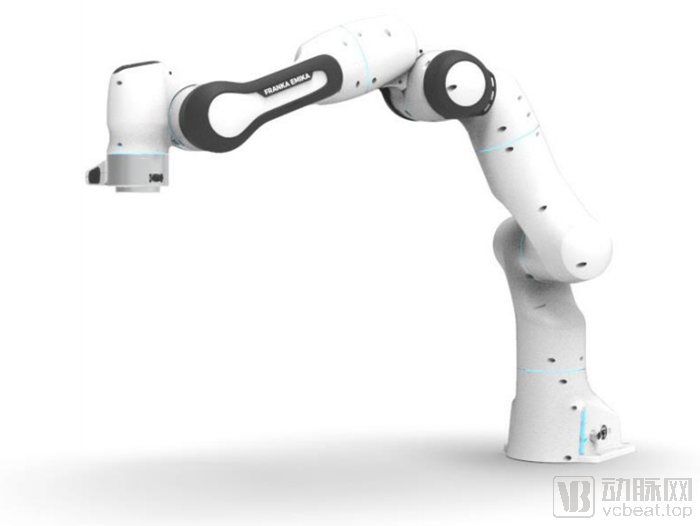
Seven-axis design, enabling a force resolution of <0.05 N
Unlike traditional six-axis industrial robots, the Franka Emika robot is a seven-axis robot featuring redundant joint design and torque sensors on each joint, delivering exceptional force control capabilities.
It is understood that the Franka Emika robot achieves a force resolution of <0.05 N, a torque resolution of <0.02 Nm, a teaching drag force of approximately 2 N, and a collision response time of <2 ms. Its superior force control performance provides a guarantee for the safe application of the Franka Emika robot in the medical field.
Multi-Scenario Applications: Swab Collection Robot Approved in Europe
The onset of the COVID-19 pandemic drove demand across the entire automation market, including collaborative robots. Although Franka Emika was not originally part of the medical sector, it adjusted certain development policies and strategies in response to the pandemic, successfully applying its force-controlled robotic products to multiple niche segments within the healthcare industry.
In response to market demand, Franka Emika has launched a series of collaborative robots through partnerships with medical enterprises, including assistant robots (dental assistants), auxiliary diagnostic robots (intelligent scanning), nursing and rehabilitation robots, swab collection robots, and traditional Chinese medicine robots (Gua Sha robots).
Swab Collection Robot
During the pandemic, Franka Emika collaborated with multiple medical technology companies both in China and abroad to develop robotic swab collection capabilities for nasal and pharyngeal COVID-19 screening. Leveraging the product’s superior force control performance, it ensures safety during the sample collection process. Reportedly, the device has been successfully approved as a Class I medical device in Europe.
Assistant Robot - Dental Assistant
Physicians can control information output through gesture, voice, or foot pedal controls. Upon rapidly recognizing the commands, the robot automatically delivers instruments to the physician. In addition to item delivery, the robot offers functionalities such as assisted positioning and predictive alerting. Since the robot does not directly participate in surgical procedures or treatment, operational risks are significantly reduced, resulting in high feasibility and replicability for the project.
Assistantive Diagnostic Robot - Intelligent Scanning
This robot can mimic the scanning techniques of physicians, supporting fully automated scanning from various angles. Its active compliance technology mitigates the impact of respiration, ensuring safety and enhancing image quality. While the robot itself does not participate in image analysis, it can perform analytical operations when equipped with intelligent analysis software, making it suitable for remote scanning and standardization of scanning procedures. Previously, Deshang Yunxing, a partner of Franka Emika, launched this automated ultrasound scanning robot at the 2020 CMEF (China Medical Equipment Fair).
Nursing and Rehabilitation Robots
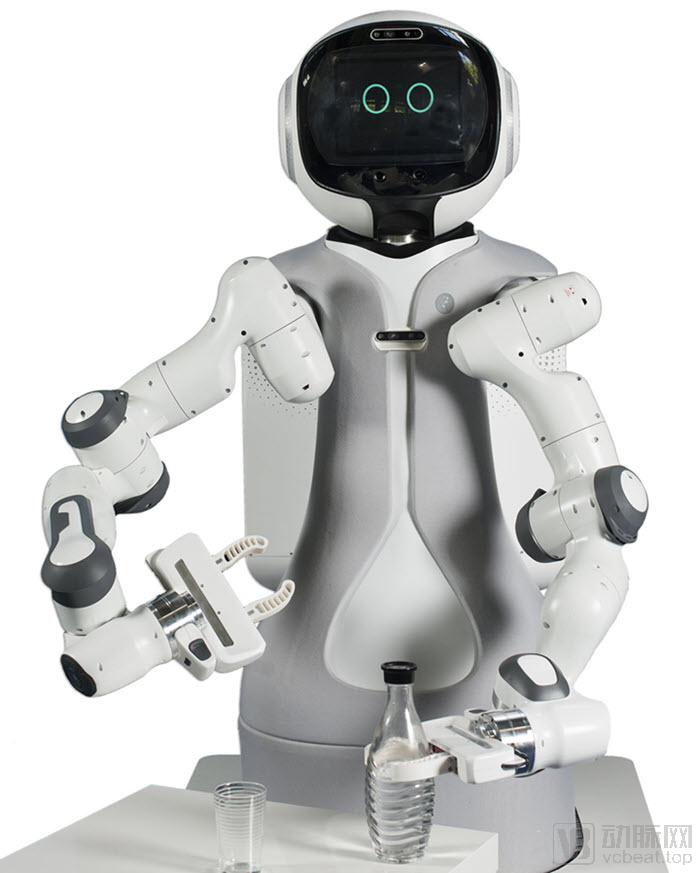
For elderly individuals living alone or patients with limb injuries, the application of smart technology and robotics can effectively enhance their quality of life and accelerate rehabilitation progress. Due to its high force sensitivity, the Franka Emika robot can safely interact with patients to assist with limb movements, enabling them to perform tasks such as retrieving medication and pouring water through robotic assistance.
TCM Robots - Gua Sha Robot
TQ-group, the holding company of Franka Emika, has successfully developed a Gua Sha robot through collaboration with a leading domestic physiotherapy company. With minimal teaching input, the robot can perform back Gua Sha treatments based on force feedback.
In addition to the aforementioned projects, Franka Emika has also deployed its robots in scenarios such as minimally invasive surgery, vision-guided operations, and unmanned laboratories. Over the past year, Franka Emika has completed more than ten distinct medical projects, with some products having successfully obtained medical device certification, while certification for the remaining products is being actively pursued. It is reported that last year alone, Franka Emika successfully delivered over one hundred robots in China.
Deepening Commitment to the Healthcare Sector: Asia-Pacific After-Sales Center Set to Launch
According to the data from the "World Robotics Report 2019," the growth rate of collaborative robot installations reached 23% from 2017 to 2018. As the world's largest industrial robot market, China also holds significant potential for the development of collaborative robots. Therefore, to support the development of its products in the Chinese market, Franka Emika has partnered with its shareholder TQ-group, leveraging TQ-group’s wholly-owned subsidiary, TeKu Electronic Equipment (Shanghai) Co., Ltd., to provide a range of services including marketing promotion, technical support, and after-sales service.
Leveraging the resources of Teeku Electronic Equipment (Shanghai) Co., Ltd., Franka Emika has established a marketing team in China composed of seasoned business professionals and technical experts, which has played a significant role in promoting and applying Franka Emika robots in the Chinese market.
Next, Franka Emika’s Asia-Pacific after-sales service center will also be established in China this year, enabling it to meet the service needs of more customers.
In terms of product development, leveraging the superior force-control performance of its products, Franka Emika will continuously update and iterate its technology in response to market demands, launching newer versions of Franka Emika robots. It is understood that, in addition to the healthcare sector, Franka Emika has also successfully advanced projects in fields such as new retail and smart home solutions.
High-quality products rely on a strong technical team. Therefore, Franka Emika continuously recruits interdisciplinary talent in the fields of robotics and healthcare, while actively establishing deep collaborative partnerships with medical technology companies in the industry.