

Lepu Medical's First Domestic Peripheral Arterial Stent Completes Clinical Enrollment, Achieving a Breakthrough in Localization

LeoMed
Interventional Device R&D and Manufacturer
On March 10, 2021, the randomized controlled clinical trial of peripheral artery stents under LeoMed completed all 384example enrollment, its registration and declaration officially entered a new stage. Data shows that,This product is the first domestically produced peripheral artery stent to enter the clinical stage, with its specification matrix covering 200mm in length; once launched, it will break the monopoly of imported arterial stents and achieve a breakthrough for domestically produced peripheral stents.
LeoMed stated, “This product is indicated for the treatment of stenosis or occlusion of the iliac, femoral, and popliteal arteries, as well as restenosis or occlusion following percutaneous transluminal angioplasty (PTA) of these vessels.” Peripheral artery stents share the same therapeutic principle as other vascular stents: they are implanted at the site of the diseased vessel to support the stenotic or occluded segment, thereby reducing elastic recoil and vascular remodeling, and ensuring unobstructed blood flow.
Data from completed clinical follow-ups show that LeoMed's peripheral artery stents, compared to global benchmark controls, demonstrate long-term stentPatency Rate Approximation, with some evaluation metrics even surpassing those of imported products.
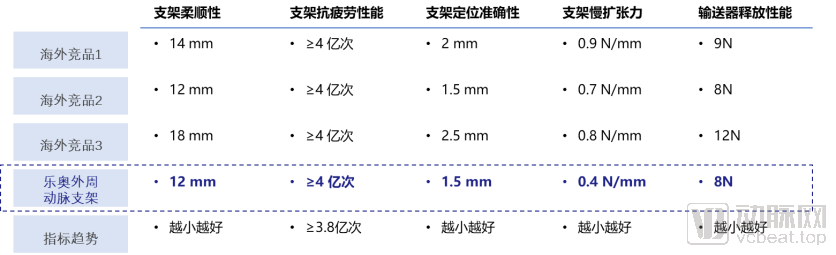
Performance Comparison of LeoMed’s Peripheral Artery Stents with International Competitors (Image provided by the company)
Peripheral artery stents present higher technical barriers and greater R&D challenges compared to other types of stents, which is one of the key reasons why China currently relies entirely on imports for these devices. So, how has LeoMed broken through these technical barriers? How do its peripheral artery stents differ from other arterial stents? What are the advantages or distinctive features of its products? What are the main difficulties in R&D? And what is the market potential? To answer these questions, VCBeat conducted an exclusive interview with LeoMed.
Nowadays, driven by factors such as policy and capital, the market size of coronary intervention stents and neurointerventional stents is growing rapidly. In fact, peripheral vascular intervention stents are equally crucial, and since peripheral vessels are longer than coronary vessels, they are more likely to develop lesions, resulting in a broader market prospect.
Peripheral vessels refer to all blood vessels excluding those of the heart and intracranial region,Peripheral Vascular Disease: The most common manifestations are occlusion and stenosis of the lower extremity vessels, which, if left untreated, can lead to amputation or even sudden cardiac death.Therefore, peripheral vascular stents are essential products for patients with lower extremity arterial disease. The authoritative "Report on Cardiovascular Health and Diseases in China 2019" shows that,There are approximately 45.3 million patients with lower extremity arterial disease in China,Among individuals aged over 60, the incidence of peripheral vascular disease is 10%; among those aged over 65, the incidence of arteriosclerosis obliterans is 20%.
Data from a Grade A tertiary hospital in Shanghai shows that the hospital implants more than 1,000 peripheral stents annually, while the number of patients undergoing lower-limb amputations during the same period is 160. If these patients had received timely treatment, amputations could have been avoided. Due to the high cost of imported stents, some patients were unable to afford the substantial expenses, leading to delays in treatment. As a result, diseased vascular segments exceeded 200 mm, and in some cases reached 500 mm, causing prolonged suffering from lower-limb swelling, pain, and ulceration. Some patients with severe conditions missed the window for endovascular intervention and had no option but to undergo amputation.
LeoMed CEO Zhang Zhongmin stated, “The high cost of surgery not only sets a significant barrier to treatment for patients but also places a substantial burden on the national medical insurance system. Therefore,”One of LeoMed’s goals is to develop high-quality, affordably priced peripheral artery stents. Despite numerous challenges, we remain committed to seeing this through. We are pleased to announce that our independently developed stent has successfully completed clinical enrollment, marking a significant milestone.”
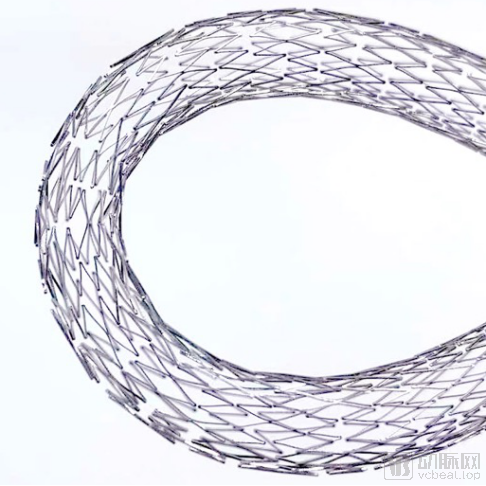
(Schematic diagram of peripheral arterial stent, image provided by the company)
At present, all peripheral artery stents used clinically in China are imported products.There is immense potential for domestic products to replace imported ones.AtAgainst the backdrop of national emphasis on the research, development, and application of high-end medical devices, it is imperative to accelerate the advancement of the peripheral vascular stent sector.
In developed countries in Europe and the United States, the usage ratio of coronary stents to peripheral lower extremity arterial stents is approximately 3:2, whereas in China, this ratio is less than 10:1. Currently, the annual implantation volume of coronary stents in China exceeds 1 million units, while that of peripheral lower extremity arterial stents is less than 100,000 units. This indicates thatChina’s peripheral stent market holds immense potential. Based on a 3:2 ratio, the market volume for peripheral lower-extremity arterial stents in China will exceed60ten thousand.
It should be noted that,Peripheral Artery Stents: An Indispensable Solution for Occlusion and Stenosis of the Lower Extremity Peripheral Arteries. For lower extremity vascular diseases, peripheral balloons can restore blood flow by dilating the diseased vessel segments. However, repeated balloon use predisposes the lesion site to dissection, which can easily lead to severe complications such as vessel rupture; therefore, stent implantation has become an essential and irreplaceable therapeutic approach.
Peripheral artery disease most commonly manifests as lower extremity arterial lesions. Unlike vascular pathologies in the coronary arteries or nervous system, lower extremity arterial lesions are characterized by severe symptoms, long vessel segments, involvement of the hip joint, and complex mechanical stresses. Due to these characteristics, peripheral artery stents face higher performance requirements than coronary or neurointerventional stents, necessitating superior radial strength, minimal chronic outward force, excellent flexibility, and fatigue resistance.
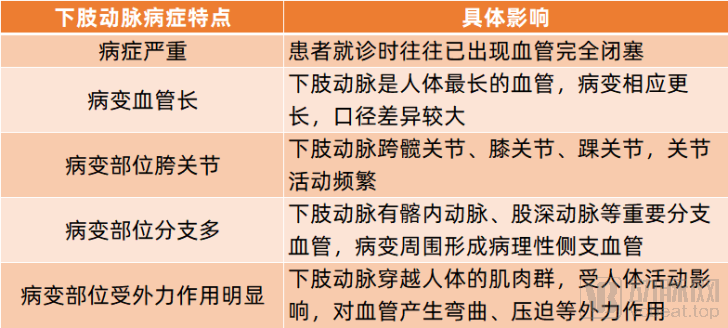
(Features of Lower Extremity Arterial Disease, VCBeat)
The highly complex environmental characteristics of lower extremity arterial lesions and the stringent performance requirements for stents pose significant challenges to research and development. The stent structure design is more intricate, which also determines the difficulty of manufacturing implementation. In particular, as a nitinol shape-memory alloy material, its technical difficulties in processes such as laser cutting and surface treatment far exceed those of other stents.. In addition, the technology for large-sized stents is held by major international companies, and technical barriers must be overcome to achieve product manufacturing.
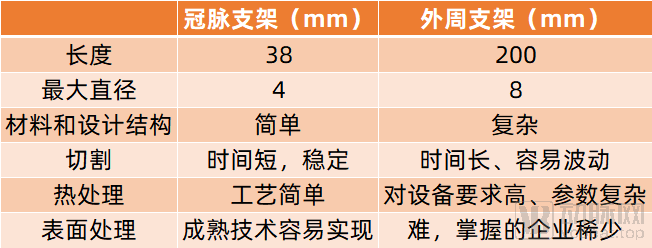
(Comparison of R&D Difficulty Between Peripheral Vascular Stents and Coronary Vascular Stents, Corporate Data)
High technological barriers have deterred many domestic medical device companies.LeoMed’s ability to become the first enterprise in China to develop long-length covered stents for peripheral arteries stems from its exceptional R&D team, innovative technological platform, and clear strategic development path.
Regarding the team, LeoMed’s peripheral interventional R&D department comprises over 60 members, half of whom hold master’s degrees or higher. The project leader possesses nearly 20 years of experience in the research and development of minimally invasive interventional devices.
In terms of technical platforms, LeoMed has innovatively established a metal stent technology platform, a polymer balloon catheter technology platform, an active device platform, and a drug-eluting device platform.Leveraging these technological platforms, LeoMed can independently develop and manufacture all key components of its products. Zhang Zhongmin stated, “Since its inception, LeoMed has been committed to building its own manufacturing capabilities. After years of accumulation, the company has mastered all core technologies for stents and balloons, achieving in-house production of critical components. LeoMed’s manufacturing strength not only ensures the capability to develop new products but also guarantees the ability to supply the market at scale in the future.”
In terms of strategic planning, LeoMed has established a cross-domain and broad-scope strategic development path leveraging its technology platform. Its product R&D is not confined to single products or individual technologies but spans multiple disciplines and technological categories, deploying its product portfolio through concentric and horizontal development strategies.For instance, LeoMed initially entered the digestive endoscopy sector with its ERCP product line, adopted a concentric diversification strategy to expand into ESD and EMR product lines, and pursued a horizontal diversification strategy to enter the peripheral vascular intervention and respiratory intervention fields. Today, LeoMed has grown into a comprehensive platform company spanning three major medical sectors, providing full-suite solutions for the treatment of various diseases.
Given these advantages, it is only natural that LeoMed has developed China’s first domestically produced peripheral artery stent with long-length coverage.It is worth noting that LeoMed’s peripheral artery stents are not only non-inferior to imported products in terms of performance but will also be offered at a reasonable price, thereby benefiting more patients while reducing the burden on the national medical insurance fund. Zhang Zhongmin stated, “This reflects LeoMed’s original aspiration, as well as the value and mission of LeoMed as a domestic manufacturer of high-end medical devices.”
In the future, LeoMed will be committed to replacing imported products with domestically produced ones, adhere to a research and development innovation model that integrates medicine and engineering, continuously enrich its product portfolio, and provide affordable, comprehensive solutions for patients in China.