

Baheal Medical: A New Model of Third-Party Commercialization Platform in China's Evolving Pharmaceutical Industry

Baheal Medical
Health Brand Commercialization Platform
As healthcare reform deepens and policy support strengthens, an increasing number of pharmaceutical and medical device companies are shifting from building large-scale, comprehensive in-house capabilities across the entire value chain to leveraging contract research, manufacturing, and commercialization organizations (CXOs) for service support. The wave of innovative drug development is also accelerating specialized division of labor within the industry, driving CXO platforms to expand their services from upstream R&D and manufacturing into mid- and downstream marketing and commercialization segments.
What Drives the Rise and Growth of Pharmaceutical Contract Outsourcing Service Platforms? Where Do Future Opportunities Lie for the Healthcare Industry Under New Trends?
Frequent Changes: The Rise of Mid- and Downstream Platforms in Pharmaceutical Outsourcing Services Becomes a New Trend
The development of innovative drugs typically involves lengthy stages, including preclinical research, clinical trials, and regulatory approval. Under the traditional model, the R&D process for certain innovative drugs can take up to ten years. In contrast, pharmaceutical contract research outsourcing services offer enterprises a new model that reduces R&D time and costs while enhancing R&D efficiency.
Pharmaceutical contract outsourcing services emphasize specialized division of labor, giving rise to well-known entities within the industry such as Contract Research Organizations (CROs), Contract Manufacturing Organizations (CMOs), and Contract Development and Manufacturing Organizations (CDMOs, which include an additional “development” phase compared to CMOs). These entities typically serve the upstream research and development and manufacturing segments of the industry chain. Collectively, they are referred to as CXO.
In the mid-to-downstream segments of the pharmaceutical value chain, such as marketing and pharmaceutical commerce, specialized Contract Sales Organizations (CSOs) have long been established abroad. With the development of CROs and CMOs, China’s CSO industry has gradually taken shape. However, the Chinese CSO sector is characterized by mixed quality, saturated with pseudo-CSOs operating on low-price bulk distribution or labor outsourcing models, while truly mature and professional commercialization platforms remain few and far between. Baheal Medical may be one of these exceptions.
The Booming CXO Industry Bolstered by Policy and Capital
CXO (contract research and customized manufacturing services) serving innovative pharmaceutical companies constitutes the infrastructure of the innovative drug industry. The market features leading enterprises such as WuXi AppTec and Tigermed. Typically, half of the capital invested in innovative drugs during early-stage R&D flows into the CRO (contract clinical research) sector. The urgent needs of patients with malignant diseases and tumors further drive the R&D of innovative drugs; the greater the R&D investment, the more rapid the market growth in the CXO sector.
Due to China’s early containment of the pandemic, overseas production capacity continued to shift during this period, with a large number of companies seeking service support from domestic CXO providers. This also reflects the capabilities of China’s domestic industry. Policies accelerating the approval of innovative drugs have further driven this trend. For pharmaceutical companies, greater emphasis is placed on reducing time costs and improving the success rate of drug development. CXO companies that possess unique models to deliver value-added services and hold proprietary technologies are viewed more favorably.
In 2020, a significant development in the CXO industry was the nationwide rollout of the contract manufacturing model under the Medical Device Registrant System. Previously, China’s medical device product registration and production licensing were long “bundled” together. Registration applicants were required to independently manage multiple stages, including R&D, clinical trials, and regulatory approval, as well as establish, maintain, and implement GMP-compliant production systems.
In July 2020, the State Council issued the "Notice on Doing a Good Job in Replicating and Promoting the Sixth Batch of Reform Pilot Experiences in Free Trade Zones," encouraging the nationwide promotion of the outsourced production model for medical device registrants. This move further facilitated the rapid market launch of medical devices, thereby spurring the rise of pharmaceutical contract service outsourcing platforms such as CMOs/CDMOs.
For enterprises, capital originally allocated for building in-house factories and assembling related teams can be redirected toward product R&D and market expansion. Moreover, the time previously required for constructing self-owned facilities becomes negligible, as production can commence within one month after obtaining a manufacturing license through a CDMO platform.
The continuous introduction of policies, such as the acceleration of review and approval processes, the implementation of the Marketing Authorization Holder (MAH) system, and the inclusion of innovative drugs in the National Reimbursement Drug List, has propelled the R&D of innovative drugs into a period of rapid growth, thereby driving the forward development of the CXO industry.
Third-Party Commercialization Platforms Emerge as a New Trend in the Downstream Industry
From the perspective of some industry experts, within the pharmaceutical contract outsourcing services sector, companies in the mid-to-downstream segments of the industrial chain that possess specialized commercialization capabilities are poised to succeed CROs and CMOs as the next high-growth segment of the pharmaceutical contract outsourcing industry. Regarding the concept of a “commercialization platform,” media reports have cited Baheal Medical’s viewpoint: “‘Commerce’ refers to transactions; ‘-ization’ distinguishes it from traditional commercial companies by incorporating elements of promotion, academic engagement, and design; while ‘platform’ denotes a replicable model for resource optimization. A commercialization platform facilitates the rapid and effective integration of high-quality products and technologies into practical application scenarios.”
Baheal Medical believes that traditional commercial companies function as distribution and circulation groups, facilitating transactions only when demand exists. In contrast, third-party commercialization companies must not only generate demand and secure market access but also design comprehensive, multi-category solutions tailored to customers’ overall needs.
The development of third-party commercialization platforms is driven not only by industry specialization but also closely linked to the introduction of domestic healthcare policies:
Historically, prescription drug sales relied heavily on physicians’ prescriptions and medical orders, with hospital terminals serving as the primary distribution channel. However, following the 2017 issuance of the “Several Opinions of the General Office of the State Council on Further Reforming and Improving Policies for Drug Production, Circulation, and Use,” which stipulated that “medical institutions shall not restrict outpatients from purchasing medications at retail pharmacies based on prescriptions,” along with the impact of policies such as zero-markup pricing for drugs, separation of prescribing from dispensing, and centralized volume-based procurement, drug prices have plummeted. Consequently, hospital pharmacies have shifted from profit centers to cost centers, leading to a fundamental change in hospitals’ attitude toward restricting the outflow of prescriptions. Retail pharmacies are now presented with greater opportunities to accommodate these outsourced prescriptions, making the retail channel a new competitive frontier for pharmaceutical companies.
In 2018, the National Healthcare Security Administration launched a pilot program for volume-based procurement in “4+7” cities. By specifying procurement volumes and awarding contracts to the lowest bidders, the initiative sought to drive pharmaceutical innovation from the payment side. Winning bidders could exchange lower prices for higher volumes, capturing 60%–70% of the market share, while the remaining manufacturers shared the rest. This dynamic has led many branded pharmaceutical companies not included in the volume-based procurement lists to place greater emphasis on retail terminal channels, making collaboration with third-party commercialization platforms that possess specialized capabilities a new strategic option.
The healthcare reform initiative launched in 2015 initiated the consistency evaluation of generic drugs, requiring that their quality and efficacy reach levels consistent with those of originator drugs; meanwhile, it improved the efficiency of the approval process for innovative drugs. The latter has transformed the landscape of innovative drug development: previously, due to clinical trials lasting 1–3 years plus backlog in review times, the domestic market launch of innovative drugs in China typically lagged behind overseas launches by more than five years. The development timeline for independently researched drugs was even longer, exceeding ten years.
As China aligns with international standards, clinical approval timelines have been reduced to just three months. Notably, roxadustat (brand name: Evrenzo), an innovative drug for the treatment of renal anemia, made its global debut in the Chinese market. With dozens of new drugs submitted for approval annually in China, most innovative pharmaceutical companies have entered the latter stage of development and urgently require third-party commercialization platforms to help them achieve reasonable returns on their commercial value.
Why Do Pharmaceutical Companies Outsource Brand Operations and Product Marketing to Third-Party Commercialization Platforms?
Pharmaceutical companies choose to collaborate with third-party commercialization platforms for the same reasons they partner with CXO firms: to reduce operational costs while enhancing market success rates. Just as manufacturers harbor concerns about the leakage of core technologies when cooperating with CDMOs, pharmaceutical companies also have significant reservations about relinquishing control over their brand operations and marketing channels. Nevertheless, we continue to see a large number of pharmaceutical companies, including those focused on innovative drugs, opting to partner with third-party commercialization platforms that possess specialized capabilities and resources.
Why Do Pharmaceutical Companies Make Such Choices? In Fact, Their Pain Points and Demands Are Clear:
On one hand, some branded products included in the volume-based procurement (VBP) have already established a broad customer base through prior promotion. However, for pharmaceutical companies whose products were not selected in the VBP or who voluntarily withdrew from the process, the key consideration is how to leverage their brand value and serve more patients in the out-of-hospital market. For example, Astellas chose to partner with Baheal Medical to shift its off-patent original prostate drug to the retail market.
On the other hand, favorable policies such as accelerated approval of innovative drugs, along with volume-based procurement measures that drive innovation from the payment side, have led many pharmaceutical companies to invest in new drug R&D, resulting in a surge of innovative drugs. How to better integrate these innovative drugs into clinical practice and provide patients with improved treatment options and services is undoubtedly a challenge that most innovative pharmaceutical companies must address.
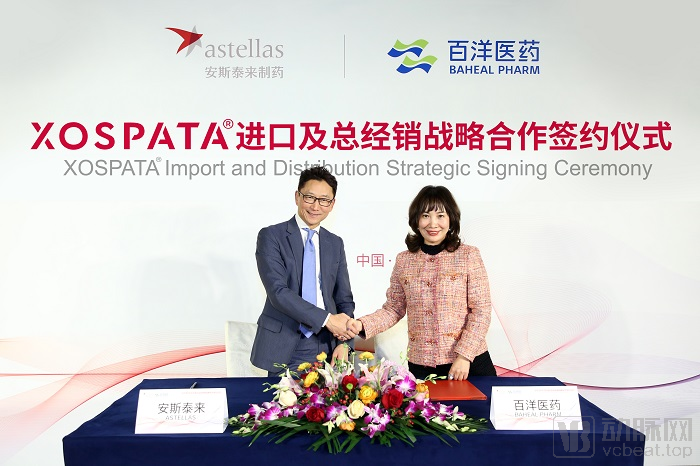
To address the diverse needs of pharmaceutical companies, third-party commercialization platforms like Baheal Medical can provide robust support and compensate for deficiencies arising from insufficient in-house commercial promotion resources. As a professional omnichannel third-party commercialization platform, Baheal Medical’s core businesses include brand operation for OTC and non-pharmaceutical health products, value realization of branded generic drugs in retail channels, and commercialization support services for innovative drugs.
In previous reports, Fu Gang, Chairman of Baheal Medical, stated, “A professional commercialization platform is akin to an expressway, while pharmaceutical companies’ products are like vehicles on the road; the more vehicles there are, the lower the amortized cost per vehicle.” For instance, in the bone health brand segment, Baheal Medical leverages synergy across multiple products to optimize promotional resources and enhance efficiency, delivering high-quality, comprehensive product offerings to consumers. Meanwhile, pharmaceutical companies can achieve efficient operations without incurring substantial costs to “rebuild the expressway,” making it a compelling value proposition.
What Kind of Third-Party Commercialization Platforms Are Trustworthy?
For pharmaceutical companies, only third-party commercialization platforms that can meet their needs and deliver tangible, visible results are trustworthy. In fact, the barrier to entry for pharmaceutical commercialization in developed countries is extremely high, with only a few large pharmaceutical giants possessing true commercialization capabilities. As healthcare reforms deepen and industry specialization becomes increasingly defined, the threshold for commercialization platforms in China will continue to rise.
Based on industry insights, Baheal Medical recognizes that as the sector moves toward standardized development, emerging formats and business models are continuously emerging. Unlike traditional commercial platforms, integrated commercialization platforms that combine “commercial platform + brand operations” will hold a competitive advantage in the future. In practice, Baheal Medical has implemented this philosophy by building three core capabilities—“digital marketing, multi-category synergy, and omni-channel operations”—to establish an “omni-channel third-party commercialization platform model.” This model provides professional omni-channel commercialization solutions to upstream manufacturers, aiming to enhance the efficiency and standards of China’s pharmaceutical industry.
It is worth noting that Baheal Medical has established a strong competitive moat through its digital marketing capabilities. After more than a decade of accumulation, the company now operates a comprehensive data platform covering retail terminals across China, mainstream Grade A tertiary hospitals, and patient prescription information. Of particular significance is the deeper data value underpinning this platform. Leveraging professional data support, Baheal Medical helps formulate clear customer targeting and promotion strategies for different categories and products, thereby enabling data-driven market strategies.
Baheal Medical’s continuous exploration of its business model has garnered increasing recognition from the external community. The company has established partnerships with Astellas, Xian Janssen, CSL Behring, Takeda Pharmaceutical, Merck & Co., and Mylan, among others. In this process, Baheal Medical has been driving accelerated transformation in the healthcare industry by comprehensively supporting pharmaceutical manufacturers and pharmacy chains in their transition and upgrading.
Third-Party Commercialization Platforms: The Next Tipping Point After the CXO Industry?
As healthcare reforms deepen and social division of labor intensifies, pharmaceutical companies will become firmly embedded within systems built around pharmaceutical contract outsourcing service platforms. Currently, while the CXO industry—covering upstream R&D and manufacturing—remains highly vibrant, the importance of third-party commercialization platforms that support mid- and downstream marketing, operations, and commercialization, such as Baheal Medical, has yet to be fully recognized.
In fact, as a critical link in translating pharmaceuticals and medical devices into real-world applications, the importance of companies like Baheal Medical should not be underestimated. For industrial pharmaceutical manufacturers, leveraging third-party commercialization platforms can further reduce costs and create room for profit. Meanwhile, third-party commercialization platforms such as Baheal Medical are gradually evolving toward an ecosystem-based development model. By continuously aggregating resources from upstream pharmaceutical companies, they hold even broader prospects for growth. After all, in 2020, the market capitalizations of CXO-focused companies like WuXi AppTec continued to surge; there is no reason to doubt that third-party commercialization platforms serving the midstream and downstream segments will not generate greater value.