

Mamakang Targets the Billion-Dollar Postpartum Recovery Market, Having Served Over 400,000 Mothers and Partnered with 5,000+ Clinics, Files IPO Prospectus
Childbirth has always been an inescapable topic for women. In many film and television works, the visual portrayal of “labor” often follows a familiar script: distorted expressions and heart-wrenching screams give way to a loud cry from the newborn, shifting attention away from the pain and culminating in universal joy. However, reality is far more harrowing than these dramatized scenes suggest.
Regarding childbirth, there are many unspoken secrets; delivery is merely the first trial. In its aftermath, women face challenges such as pelvic floor damage, uterine prolapse, postpartum urinary incontinence, and breast pain, and may even develop various sequelae due to poor postpartum recovery. In this era of technology, the younger generations born in the 1980s and 1990s—who form the core of the childbearing population—are increasingly recognizing and breaking away from traditional misconceptions about childbirth, pursuing more scientific and systematic postpartum rehabilitation. Consequently, the postpartum rehabilitation market has risen rapidly.
Market Demand Spurs Industry Opportunities. Leveraging its keen industry insights, Mamakang has become the fortunate beneficiary of this opportunity. Founded in Shenzhen in 2015, on the eve of the introduction of the “universal two-child” policy, Mamakang specializes in intelligent postpartum rehabilitation, with a particular focus on the research, development, and service of home-based intelligent postpartum rehabilitation products.
In October 2015, following the introduction of the “universal two-child” policy, the government vigorously promoted the Maternal and Child Health Protection Project and encouraged enterprises to innovate in medical devices. With rising household consumption capacity and the growing普及 of postpartum rehabilitation knowledge and services, demand for postpartum rehabilitation equipment among both postpartum care institutions and family consumers has continued to increase. According to the “2019 Overview of China’s Postpartum Rehabilitation Equipment Industry” by LeadLeo Research Institute, the market size for postpartum rehabilitation grew rapidly from RMB 920 million in 2014 to RMB 3.95 billion in 2018, representing a compound annual growth rate (CAGR) of 43.9%, and is projected to reach RMB 14.48 billion by 2023.
Since entering the field of home-use medical devices for maternal and fetal monitoring in 2009, Fu Bowen, founder of Mamakang, has been deeply committed to women’s prenatal and postpartum health management. In 2015, with the rise of the “Mass Entrepreneurship and Innovation” initiative, Fu Bowen recognized the substantial commercial opportunities and growth potential within postpartum rehabilitation. Leveraging his extensive familiarity with China’s postpartum rehabilitation market, he left his high-paying job to embark on the challenging yet highly rewarding path of entrepreneurship.
Headquartered in Shenzhen, the most advanced hub for China’s medical device industry, Mamakang has assembled a multidisciplinary core team by attracting numerous talents in biomedical engineering. Furthermore, leveraging its strategic location within the Guangdong-Hong Kong-Macao Greater Bay Area, Mamakang enjoys distinct advantages in technological R&D, market expansion, and talent acquisition.
In 2016, Mamakang launched China’s first direct-to-consumer (DTC) online home-use postpartum rehabilitation device, the “Pelvic Floor Muscle Rehabilitator,” filling a gap in the domestic market for home-based postpartum care. In December of the same year, Mamakang secured angel-round funding from Daan Chuanggu, a subsidiary of Daan Gene, an A-share listed company affiliated with Sun Yat-sen University. Leveraging the scientific research platform of Sun Yat-sen University, Mamakang successfully developed China’s first intelligent postpartum rehabilitation system.
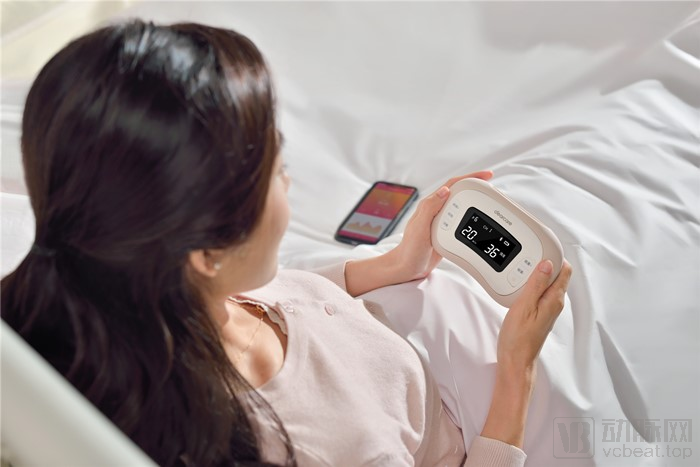
Mamakang Home Products
Since 2017, MamaCare has progressively enhanced the performance specifications of its postpartum rehabilitation devices, continuously reducing the time required for diagnostic screening and treatment, while striving to expand its compact and portable products into home-use scenarios. Subsequently, MamaCare entered a period of rapid growth, maintaining a steady pace of launching new products annually.
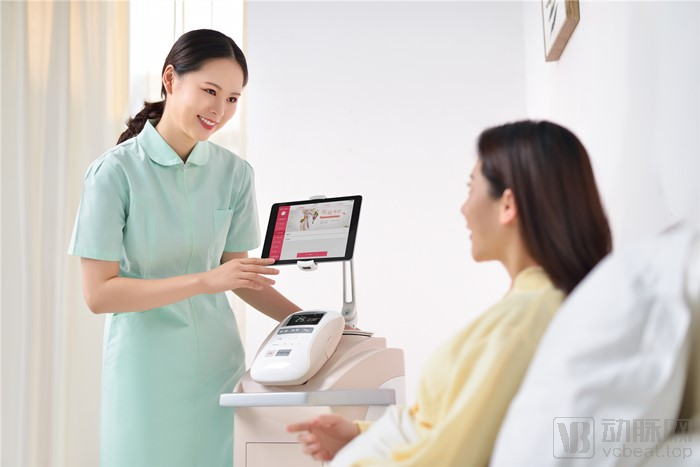
Mamakang Medical/Postpartum Recovery Institution Products
Between 2017 and 2019, Mamakang launched a series of products, including the MMK520i Portable Intelligent Postpartum Rehabilitation Device, the MMK320i Intelligent Lactation Stimulator, the MMK220i Intelligent Home Pelvic Floor Muscle Rehabilitation Device, and the MMK430i Pelvic Floor and Uterine Rehabilitation Device. To enhance user experience and improve interaction efficiency among its products, the Mamakang APP was officially launched in 2017. The app provides real-time dynamic muscle strength data analysis to enable intelligent health management, and incorporates engaging animated voice prompts and multimedia game-based training scenarios, thereby improving therapeutic outcomes.
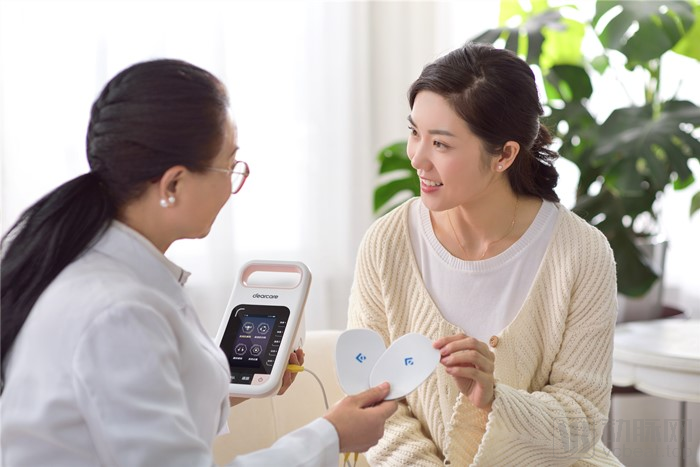
Mamakang Mobile Portable Products
Fu Bowen introduced that in China, due to insufficient medical resources, limited awareness of postpartum rehabilitation, and the inconvenience of traveling with infants, fewer than 20% of mothers complete postpartum screening and a full course of rehabilitation. Mamacare aims to ensure all mothers have access to timely postpartum care services. To this end, it advocates the concept of “universal access, regular monitoring, and lifelong prevention and treatment” for postpartum rehabilitation. Through Mamacare’s products and service solutions, temporal and geographical constraints are overcome, integrating clinical postpartum care with home-based postpartum care and comprehensively covering prevention, treatment, and rehabilitation.
Currently, Mamakang’s suite of intelligent postpartum rehabilitation products covers a wide range of scenarios, including home use, rehabilitation centers, community-based primary healthcare facilities, maternal and child health hospitals, and physician clinics. The company has ranked first in sales volume within its specific subcategory of consumer-facing (C-end) product lines for five consecutive years, serving over 400,000 Chinese mothers. Its business-to-business (B-end) medical devices have been adopted by more than 200 medical institutions, while its B-end postpartum rehabilitation equipment is deployed in over 5,000 postpartum care centers. Fu Bowen revealed that Mamakang has initiated applications for FDA clearance and EU CE marking, with expectations to expand into international markets by the end of the year.
After Mamakang’s operations got on track, Fu Bowen was finally able to put his idea of “doing something for the industry” on the agenda.
In August 2020, Mamakang established the Dejia Education and Training School to provide professional dissemination of maternal health knowledge and vocational skills training. While continuously supplying qualified professionals to the industry, it also offers product-related knowledge and operational guidance to users of Mamakang’s industry products.
In fact, establishing schools was only the first step in Mamakang’s efforts to empower the industry. Subsequently, Fu Bowen launched a larger-scale industry initiative with broader reach. In December 2020, guided by the Maternal and Child Health Service Industry Committee of the China Association of Maternal and Child Health and hosted by Mamakang, the “First China Postpartum Reproductive Health Industry Summit Forum” was successfully held in Shenzhen, alongside the launch of the “Mother’s Fulcrum” Maternal Health Care Program.
Fu Bowen stated candidly that in Chinese families, mothers serve as the pivotal support for both their children and the household, yet their own physical and mental well-being—this critical “pivot”—has received insufficient attention. To address this, Mamakang aims to collaborate with industry associations, non-profit organizations, service providers, and industry practitioners through this initiative to jointly drive the development of the maternal health services sector, promote industrial integration and upgrading, and empower mothers to love themselves more while caring for their children.
Currently, the “Mom’s Pivot” initiative encompasses four major components: salons, public welfare initiatives, summits, and clubs.
In terms of salon events, Mamakang plans to visit 21 cities across China in 2021. By establishing professional service guidance and information exchange platforms, it aims to facilitate close-range knowledge sharing and experience exchange among a broad range of maternal health practitioners and professional instructors. In the realm of public welfare, Mamakang will donate supplies to organizations providing charitable maternal health services and launch nationwide public welfare campaigns for mothers, helping them acquire professional maternal health knowledge and positive, uplifting energy. Regarding summits, the inaugural China Postpartum Reproductive Health Industry Summit hosted by Mamakang has garnered significant influence within the industry. It is reported that the second industry forum is expected to be held in Shenzhen in September 2021. This plan also includes daily club services, providing a platform for sharing health knowledge and offering entrepreneurial support.
Fu Bowen introduced that, as a pioneer and trailblazer in the postpartum recovery industry, Mamakang has also set itself a five-year plan: to serve over 1 million user visits annually by 2025 and secure a foothold in European and American markets. Looking ahead, Mamakang will continue to explore user needs, provide more medical services, reduce healthcare costs for both the nation and individuals, continuously advance its technical capabilities, enhance its competitive edge in the industry, and elevate its level of international development.