

Digital Therapeutics: Is the Industry Ready for Its 'Big Bang' Moment?

LIANREN Digital Health
Medical Big Data Analytics Service Provider
With the advancement of modern internet and communication technologies, along with the widespread adoption of mobile devices, digital products have gradually become integrated into every aspect of daily life. The outbreak of the COVID-19 pandemic in early 2020 accelerated the digital transformation of the healthcare sector, even reshaping its digital development landscape to some extent. The advantages of digital therapeutics—namely remote accessibility, portability, and personalized intervention—were fully demonstrated. Furthermore, the U.S. Food and Drug Administration (FDA) issued emergency authorization guidelines for digital therapeutics, which expedited industry growth in the United States. In November 2020, China approved its first digital therapeutic product; however, the industry remains in its nascent stage, with neither consumers nor healthcare professionals having a clear and unified understanding of it.
What Exactly Are Digital Therapeutics? Are They Mobile Apps?
The United States has long been at the forefront of the digital therapeutics industry. Established in 2017, the Digital Therapeutics Alliance (DTA) categorizes digital health products into three tiers—Digital Health, Digital Medicine, and Digital Therapeutics—based on their functional scope and clinical evidence requirements.[1]
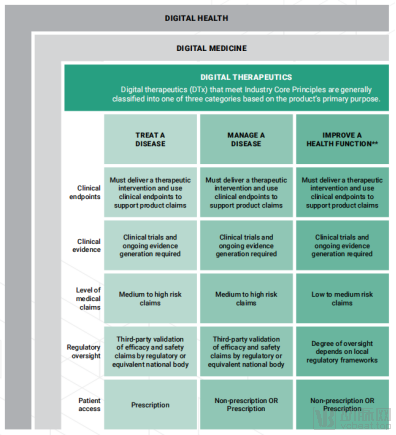
Product Categories Disclosed by DTA
Digital Health, or digital health, is the broadest concept, encompassing all products that help consumers improve their lifestyles and health, such as common general wellness mobile apps and internet hospital platforms. Digital health products that include diagnostic and/or interventional functions are defined as Digital Medicine, or digital diagnostics and treatment; among these, products that include interventional functions are defined as Digital Therapeutics, or digital therapeutics.
This article focuses on the field of digital therapeutics,DTA explicitly defines digital therapeutics as evidence-based, high-quality software-driven interventions designed to prevent, manage, or treat diseases.Digital therapeutics can be used alone, in combination with medications, or alongside other therapies to improve patients' health outcomes.
This can be understood as a product comprising software and hardware, or software alone, whose efficacy and safety have been validated through clinical trials. Among globally approved digital therapeutics, mobile app-based products are the most numerous and demonstrate higher patient reach and conversion rates.
Are mobile app-based products considered digital therapeutics? Clearly, the answer is no. The most critical factor is whether the product has undergone validation of its clinical efficacy and safety.
Note: Existing public sources in China are not entirely consistent in their terminology. Some sources translate “Digital Medicine” as “digital drugs.” However, since drugs themselves constitute a form of therapeutic intervention, this translation conflicts with our established understanding. Moreover, the term “medicine” can refer narrowly to pharmaceuticals or broadly to the field of medical science. Therefore, based on the definition, our team believes that the broader sense should be adopted here rather than the narrow interpretation of “digital drugs.” Additionally, “digital healthcare” is often used interchangeably with “Digital Health.” To avoid ambiguity between this broader translation and “Digital Health,” our team considers it more appropriate to translate “Digital Medicine” as “digital diagnosis and treatment.”
Can Diseases Be Treated Without Medication?
Health is a multidimensional and dynamic concept, serving as a resource that individuals and societies can rely on and actively utilize. Determinants of health include biological factors, lifestyle and behavioral factors, environmental factors (encompassing both physical and social environments), and healthcare service factors. These factors influence the health of individuals and populations through a socio-ecological model characterized by multi-level interactions. Among these, individual lifestyle and behavioral patterns constitute the most significant determinant of health.
Extensive medical research has demonstrated a strong correlation between chronic conditions—such as hypertension, diabetes, fatty liver disease, obesity, and cardiovascular disease—and patients’ lifestyle behaviors. These diseases cannot be controlled by medication alone; optimal therapeutic outcomes are achieved only when pharmacological treatment is implemented on the foundation of modifying and avoiding unhealthy lifestyle behaviors.[2]
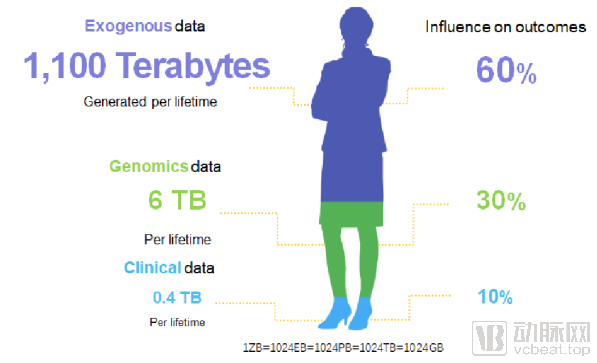
Medications are no longer the sole benchmark or intervention for treating diseases. The medical paradigm has gradually shifted from the biomedical model to a health-oriented medical model, with its core objective transitioning from being “disease-centered” to establishing and improving a comprehensive system of health services, health management, health education, and health promotion across the entire life cycle.
In June 2020, the world’s first “video game prescription drug,” EndeavorRx, received FDA approval for the treatment of pediatric patients aged 8 to 12 years with attention-deficit/hyperactivity disorder (ADHD), marking the first time that“Treating Illnesses Does Not Require Medication”new modalities and prescription scenarios.
Digital Therapeutics Based on Lifestyle Behavioral Interventions: Huge Market Potential in China
Multiple authoritative data sources indicate that China faces significant challenges in disease prevention and control due to its large population of patients with chronic diseases, and there is a serious lack of lifestyle and behavioral intervention recommendations for these patients. Digital therapeutics hold broad prospects in fields such as cardiovascular disease, diabetes, mental health, psychology, and cognition.
Taking a set of cardiovascular disease data as an example, it is estimated that the current number of patients with cardiovascular diseases in China has reached 330 million, including 245 million with hypertension, 13 million with stroke, 11 million with coronary heart disease, 5 million with cor pulmonale, and 8.9 million with heart failure; there are approximately 114 million patients with diabetes. The prevalence of dyslipidemia among individuals aged 18 and above increased from 18.6% in 2002 to 40.0% in 2012, while the obesity rate in the same age group rose from 4.8% in 2002 to 11.9% in 2012. This demonstrates the substantial burden of chronic diseases in China.[3, 4]
Furthermore, there is a severe lack of management for major modifiable cardiovascular risk factors, including hypertension, dyslipidemia, diabetes, obesity, smoking, physical inactivity, and unhealthy dietary habits. An analysis of 16,100 medical records of acute myocardial infarction (AMI) cases in China from 2001 to 2011 revealed that the majority of discharged patients did not receive five key recommendations regarding diet, exercise, weight control, regular lipid monitoring, and smoking cessation. As of 2011, more than half of AMI patients had not received any such advice.[3, 4]
Currently, China has yet to establish out-of-hospital lifestyle interventions that are closely integrated with in-hospital physician prescription practices. However, the country’s vast patient population creates an urgent demand for such lifestyle interventions. Digital therapeutics may offer an effective solution by extending the scope of prescriptions from medications to include lifestyle interventions, thereby achieving seamless integration between in-hospital and out-of-hospital care.
China Has the World’s Most Fertile Ground for Digital Therapeutics Based on Mobile Network-Enabled Smart Devices
From the perspective of mobile networks, the Chinese market boasts natural advantages such as a larger population base and more mature infrastructure than any other market globally. China is a world leader in the two pillars of the mobile internet: network infrastructure (including 5G technology) and smartphone devices.
Research data show that since 2005, smartphone shipments have surpassed those of personal computers (PCs), making smartphones the primary means for people to access the internet. By 2012, global smartphone shipments had reached twice the volume of PC shipments.[5]It can be said that with the development of mobile, portable smart devices, the internet has formally transitioned from the PC era to the mobile internet era. Meanwhile, the continuous rise of domestic brands such as Huawei, Xiaomi, and OV (OPPO and vivo) has significantly challenged the dominance of international giants like Apple and Samsung, ushering in a comprehensive boom in China’s mobile internet sector.
Currently, China firmly holds the world’s leading position in both smartphone penetration and the number of internet users. Therefore, it can be predicted that digital therapeutics based on mobile network-enabled smart devices will find the most fertile ground in China, ready for cultivation.
Digital therapeutics are still in the early stages of development globally, and the number of digital therapeutics that have received regulatory approval remains limited.
In the United States, medical devices are categorized into prescription and over-the-counter (OTC) devices under the FDA’s regulatory classification framework. Prescription medical devices require a prescription issued by a licensed healthcare professional in accordance with federal law; furthermore, patients’ insurance providers typically mandate a valid prescription for reimbursement, meaning that without one, patients must bear the full cost out-of-pocket. Over-the-counter medical devices are analogous to traditional OTC drugs. The FDA regulates digital therapeutics (DTx) as medical devices, similarly classifying them into prescription and OTC categories. Based on risk-based classification criteria, the vast majority of digital therapeutics fall under Class II medical devices.
Selected Prescription Digital Therapeutics Products Approved in 2020
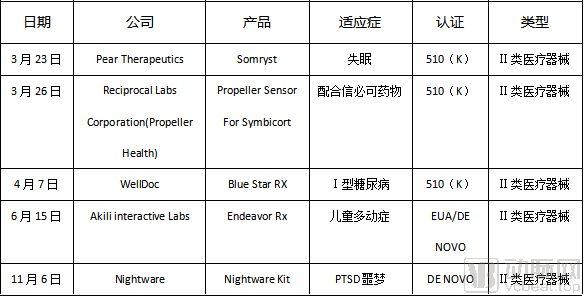
Pear Therapeutics’ ReSET, a treatment for patients with substance use disorder, was approved by the FDA in September 2017, becoming the first prescription digital therapeutic and marking a milestone in the field of digital therapeutics.
The company’s other digital therapeutic for chronic insomnia in adults aged 22 and older, Somryst, received FDA clearance as a Class II medical device in March 2020. When using Somryst, patients may choose to consult licensed healthcare professionals about sleep-related issues based on their individual needs. This process begins with completing a brief medical questionnaire, followed by a short interview. These steps enable healthcare professionals to gain a comprehensive and detailed understanding of the patient’s condition and determine whether Somryst is appropriate for them. If a patient is deemed eligible, Truepill, the pharmacy partner of Pear Therapeutics (referred to as “PearConnect” in the original text), will notify the patient. As a digital therapeutic, Somryst is not a traditional medication; therefore, patients do not need to visit a physical pharmacy to “pick up” their prescription after receiving it from their physician. Once the patient confirms the prescription and completes payment, they will receive an SMS containing download instructions, usage guidelines, and an invitation code. They can then log into the software and begin their digital therapy journey.
In China, medical devices are also classified into Class I, Class II, and Class III based on their risk levels, but there is no distinction between prescription and non-prescription devices.
In November 2020, the National Medical Products Administration (NMPA) of China approved the first Class II medical device for digital therapeutics, ushering in the era of digital therapeutics in China.
Whether it is the U.S. model, which clearly distinguishes between prescription and over-the-counter digital therapeutics at the regulatory level, or China’s current model, in which prescriptions are issued exclusively by physicians through digital therapeutic platforms, “prescription” remains an unavoidable topic for digital therapeutics. This has added a new label and direction to digital therapeutics beyond clear clinical evidence: prescription-like management.
Prescription-like managed digital therapeutics offer two primary advantages: First, they help differentiate these products from other digital health offerings, enhancing their competitive edge through differentiation. Second, the prescription nature of these products brings them closer to physicians, extending physicians’ authority, professionalism, and leading role in the diagnosis and treatment process from traditional pharmaceuticals to this novel therapeutic modality, thereby improving product recognition and adoption rates. The prescription-like management model for digital therapeutics demonstrates greater advantages.
Some may object to the aforementioned viewpoint, asking, “What is the essential difference between digital therapeutics and using apps for chronic disease management? It’s nothing more than a conceptual sleight of hand—old wine in new bottles.” Here, we will temporarily set aside scientific discussions regarding the similarities and differences in the therapies themselves or in achieving therapeutic outcomes. Instead, let us first examine the fundamental distinctions between the two from a business model perspective.
Conventional internet-based chronic disease management products have sought to address unmet needs in traditional healthcare through a “disruptive” approach. As a result, nearly all mainstream chronic disease management solutions on the market operate independently of the public healthcare system. These products maintain a fragmented, and at times even contradictory, relationship with hospitals. By monetizing traffic and sales of pharmaceuticals and medical devices, they have reshaped benefit distribution within the existing healthcare system, leading to conflicts with hospital management and financial interests to some extent.
Digital therapeutics are integrated into traditional healthcare systems through innovative approaches to deliver therapeutic effects. They can be simply analogized to conventional chemical drugs: from basic research through Phase I, II, and III clinical trials, their efficacy and safety are validated using evidence-based medicine prior to market approval. Upon regulatory approval and inclusion in hospital formularies, they are prescribed by attending physicians to eligible patients, thereby delivering clinical benefits. We may even refer to them as “digital drugs,” as they complement unmet needs in conventional treatment without disrupting the existing benefit distribution framework of the public healthcare system.
It is evident that this business model, which is deeply integrated with traditional healthcare systems, differs fundamentally from the so-called chronic disease management app model.
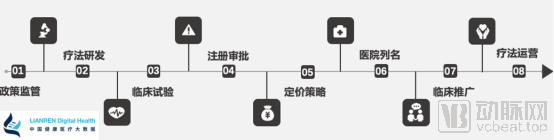
Based on this business model, we have summarized an eight-step approach for the implementation of digital therapeutics in China. We believe that the three key elements for the success of digital therapeutics in the Chinese market are“Approval, Channeland"Operations"。
Approval: Policy and regulatory frameworks are prerequisites for the successful application of digital therapeutics, which present unprecedented challenges to the regulatory authorities responsible for approval.
Although digital therapeutics are classified and regulated as medical devices, their mode of intervention is more akin to that of pharmaceutical drugs. However, traditional quality standards and approval processes for drugs are clearly not applicable to digital therapeutics. What metrics should be used to monitor and evaluate the approval and management of digital therapeutics? Do digital therapeutics require generic names? When designing clinical trials with higher levels of evidence, what should be selected as the placebo control?
The continuously evolving nature of digital therapeutics products is also one of the challenges in approval and regulation. With the development of artificial intelligence and machine learning technologies, product algorithms are bound to change, meaning that iterated products will no longer be the same as those initially approved. Do iterated products require review? How should they be reviewed? What is the review cycle? Furthermore, after significant technological optimization, is re-approval necessary?
In its approval policies for digital therapeutics products, the FDA has retained the relatively traditional 510(k) and De Novo pathways. Meanwhile, to address the regulatory needs of products featuring continuously updated and iterated AI algorithms, and to avoid potential obstacles or delays associated with traditional approval methods, the FDA has introduced a new regulatory framework—the Digital Health Innovation Action Plan.
The FDA outlined the Pre-Cert Pilot Program in this plan, proposing an innovative shift: whereas traditional medical devices primarily focus on the product itself, digital health products should prioritize the software developer. Consequently, the FDA believes that companies granted Pre-Certification can more reliably meet safety and effectiveness standards throughout the development process, allowing subsequent updates and iterations to be regulated through a streamlined review pathway. However, obtaining FDA Pre-Certification is highly challenging; to date, only the nine companies selected by the FDA in September 2017 have been approved to participate in this pilot program.
In China, digital therapeutics are likewise classified as medical devices. The *Guiding Principles for Technical Review of Registration of Mobile Medical Devices*, issued by the National Medical Products Administration (NMPA) in December 2017, stipulates that all standalone mobile medical software or integrated software-hardware products used for patient management fall under the category of medical devices and are regulated as Class II or Class III medical devices based on their risk levels.
Although China’s policies related to digital therapeutics remain to be refined, the initiatives and proactive explorations currently being advanced by the FDA will provide us with valuable references and insights. Therefore, we can maintain an optimistic outlook on the establishment of a comprehensive regulatory and policy framework for digital therapeutics.
Channel: Pharmaceutical companies will be the biggest beneficiaries of the future success of digital therapeutics. Digital therapeutics will also become a new growth driver for pharmaceutical companies over the next 20 years.
In the current market environment for traditional pharmaceuticals and medical devices, regulatory oversight and competitive pressures are both trending toward greater stringency. Both multinational pharmaceutical companies and domestic giants are seeking new growth engines. Fundamentally, the success of pharmaceutical enterprises stems from innovation; it is this inherent drive that compels them to continuously explore and experiment. Some companies have staked their entire fortunes on innovative drugs, while others pin their hopes on innovative digital marketing strategies to reduce costs and enhance efficiency. However, overall, there has been limited innovation in the healthcare industry in recent years, with serious product homogenization. The emergence of a new therapeutic target often leads to the sequential launch of multiple head-to-head competing drugs within the same class, further intensifying “involution” within the same therapeutic areas.
Digital therapeutics, whether viewed from the perspective of “usage efficiency” (enabling more patients to access treatment more easily and at a lower cost) or in terms of improving adherence to traditional pharmacotherapy (while also mitigating switching to competing products), serve as a robust support for what promises to be a highly promising new growth driver.
Leveraging the channel strengths and experience accumulated over a century by traditional pharmaceutical companies—spanning drug R&D, regulatory approval, hospital formulary inclusion, and clinical promotion—and integrating them into the development and promotion of digital therapeutics will deliver multiplicative efficiency gains, promising a bright future.
Operations: Operations are the key factor that distinguishes digital therapeutics from traditional pharmaceuticals.
Regarding the product characteristics of digital therapeutics, the most significant difference from traditional pharmaceuticals is evident: once a traditional drug is successfully developed, its molecular structure, chemical structure, and pharmacokinetic properties remain unchanged, except for the expansion into new indications based on different mechanisms of action or targets. In contrast, “digital drugs” undergo continuous “upgrades, iterations, and evolution.”
Empowered by big data and algorithms, “digital therapeutics” can continuously enhance their “therapeutic efficacy.” Leveraging the accumulation of product-specific data, “digital therapeutics” can upgrade their intervention strategies from the perspective of specific population subgroups, while also matching optimal solutions through individualized customization. Whether at the population or individual level, “digital therapeutics” are capable of improving their own “therapeutic efficacy,” and these continually evolving solutions will lead to better patient outcomes.
On the other hand, by conducting psychological and behavioral studies on patient populations and applying the findings to product-level features such as interaction design and incentive mechanisms, it is possible to continuously enhance patients’ motivation and engagement during the use of digital therapeutics, thereby ultimately improving adherence and therapeutic outcomes. In this regard, reference can be made to the interaction design of “gaming” products, which leverage research and analysis of player behavior, along with data analytics, to gain deeper insights into user psychology and behavior, continuously optimize the product, and thereby achieve higher user engagement.
Traditional medications, beyond physicians’ earnest counseling or admonitions, are largely ineffective in managing medication adherence—a factor strongly correlated with patient prognosis. In contrast, digital therapeutics seamlessly integrate adherence management through operational strategies, delivering an unprecedented “medication experience” to patients.
At the end of 2020, under the existing regulatory framework and healthcare environment, China approved the market launch of its first digital therapeutic product, officially opening the door to the development of digital therapeutics in the country. However, digital therapeutics remains an innovative field globally, with many unknowns and uncertain challenges ahead—realities that we must confront.
Innovative fields entail immature regulatory environments and market education, making participation inherently challenging.
Regulation
Digital therapeutics must be strictly regulated by the state, and their development pace will be significantly influenced by national approval policies. Data generated during the use of digital therapeutic products are also subject to relevant information security regulations, which limits the number of players able to participate in the Chinese market. Multinational digital therapeutics companies with mature implementation experience may find it difficult to operate effectively in China; therefore, we must achieve self-reliance through learning and practice.
Cognition
Based on currently available public information in China, digital therapeutics (DTx) remains a niche yet vibrant field. While current participants are predominantly healthcare professionals, there is still no consensus on fundamental concepts. Continued efforts are required to gain recognition from medical institutions and clinicians, as well as to achieve prescription status.
Talent
As the term “digital therapeutics” itself suggests, this innovative field demands multidisciplinary talent; professionals with combined expertise in digital technologies and pharmaceuticals will become the scarcest resource. Such talent will also be a prerequisite and strong pillar for the long-term development of the digital therapeutics sector.
Innovative fields also harbor boundless opportunities, which will yield substantial returns.
Over the past seven years, investment in digital therapeutics companies in the United States has maintained a high annual growth rate of 40%, with investor enthusiasm reflecting the future development and innovation trends in the healthcare ecosystem.[6]In China, the digital therapeutics sector also requires capital infusion to instill strong confidence among practitioners. Meanwhile, the vast potential of China’s healthcare market promises substantial returns for investors.
Author and Team Introduction
Su Li, Head of the Medical Department at LIANREN Digital Health, Email: suli@lrhealth.com
Team Members: Fan Xiaolei, Ji Xianyue, Liu Tianjiao, Shao Tao

References:
[1] https://dtxalliance.org/2019/11/11/digital-health-digital-medicine-digital-therapeutics-dtx-whats-the-difference/
[2] The 2nd Academic Annual Conference of the Chinese Preventive Medicine Association and the 2nd Annual Meeting of the Global Chinese Public Health Association
[3] Summary of the Report on Cardiovascular Health and Diseases in China 2019
[4] 2020 Practical Guidelines for Comprehensive Management of Cardiovascular Diseases at the Primary Care Level
[5] A series of market data charts titled “The Mobile Future,” released by BI Intelligence, the market research team of the tech website Business Insider
[6] https://www.mckinsey.com/industries/pharmaceuticals-and-medical-products/our-insights/the-promise-of-digital-therapeutics#