

Jianke Doctor Talk Collaborates with Shanghai Medical Association to Promote Chronic Kidney Disease Management Awareness
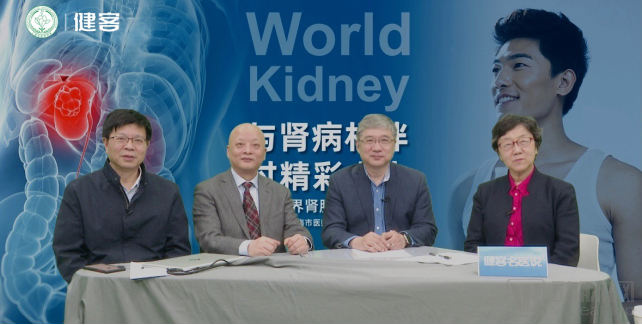
March 11 marked the 16th World Kidney Day, and “Jianke Famous Doctors’ Talk,” China’s first internet healthcare + live streaming IP created by Jianke Health Group, resumed broadcasting. Centered on the theme “Living a Vibrant Life with Kidney Disease,” this live event was jointly planned with the Nephrology Branch of the Shanghai Medical Doctor Association. It specially invited four nephrology experts from Ruijin Hospital Affiliated to Shanghai Jiao Tong University School of Medicine, Huashan Hospital Affiliated to Fudan University, Shanghai General Hospital Affiliated to Shanghai Jiao Tong University, and Changzheng Hospital Affiliated to Naval Medical University to share popular science lectures on chronic kidney disease and provide online Q&A sessions.
The event garnered a strong response, with the live stream attracting nearly 90,000 cumulative online viewers. Many netizens actively engaged with the doctors, raising numerous questions.
Kidney involvement is often insidious and highly prone to misdiagnosis or missed diagnosis; hence, kidney disease has long been referred to as the “invisible killer.” Currently, approximately 850 million people worldwide suffer from kidney disease, with chronic kidney disease (CKD) causing up to 2.4 million deaths annually, making it the sixth fastest-growing cause of death globally. World Kidney Day was established to raise public awareness of chronic kidney disease and to strengthen societal attention and emphasis on this condition.

“Hypertension and kidney disease are inextricably linked.” Professor Chen Nan, Chief Physician of the Department of Nephrology at Ruijin Hospital, Shanghai Jiao Tong University School of Medicine, stated that one in four Chinese people suffers from hypertension, yet only half of these patients are aware of their condition, with a blood pressure control target achievement rate of merely 16%. Professor Chen also shared another statistic: all kidney diseases follow different paths but lead to the same destination, ultimately progressing to chronic renal failure. Although the primary cause of death among patients with kidney disease is often cardiovascular and cerebrovascular complications, hypertension serves as a significant exacerbating factor. Chronic kidney disease (CKD) is closely associated with hypertension. For CKD patients with comorbid hypertension, it is essential to achieve and maintain target blood pressure levels through rigorous monitoring. This approach helps reduce proteinuria, slow the progression of kidney disease, lower the risk of cardiovascular events, and protect target organs such as the heart and kidneys.
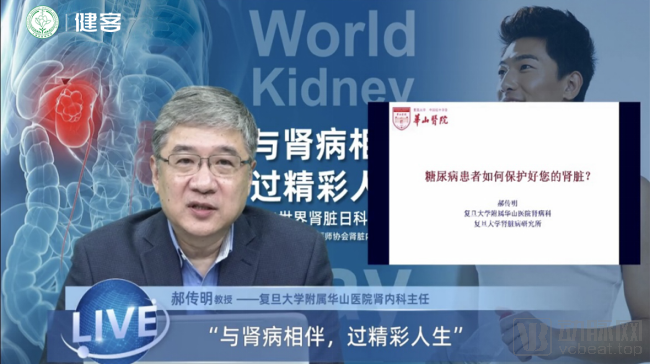
Professor Hao Chuanming, Director of the Department of Nephrology at Huashan Hospital Affiliated to Fudan University, stated that clinical studies have shown diabetes and hypertension are currently significant contributors to chronic kidney disease (CKD). Approximately 30% of patients with diabetes will progress to diabetic kidney disease (DKD). Risk factors for DKD include genetic susceptibility, age, blood pressure, glycemic control, obesity, and smoking. Professor Hao recommends that patients with diabetes or hypertension undergo comprehensive health examinations, including renal assessments, annually or even every six months. Because early clinical symptoms of hypertensive or diabetic nephropathy are often insidious, he advocates for active monitoring of blood pressure, blood glucose, glycated hemoglobin (HbA1c), and microalbuminuria, following a “4B2A” model, along with regular fundus examinations. The emergence of numerous new medications can effectively control blood glucose and blood pressure, thereby delaying disease progression.

In addition to necessary pharmacological treatment, nutritional therapy serves as a fundamental cornerstone in the management of chronic kidney disease (CKD). Professor Yuan Weijie, Director of the Department of Nephrology at Shanghai General Hospital, affiliated with Shanghai Jiao Tong University, shares key insights into dietary therapy for CKD patients with the general public. He emphasizes that dietary management for CKD should revolve around “one core principle and two basic points”: adhering to dietary guidelines, adopting a low-protein diet, and flexibly exchanging and selecting food items. “Treating kidney disease begins with eating correctly. Patients should remember the dietary principle of ‘four lows, one high, and one low’: the ‘four lows’ refer to low protein, low phosphorus, low potassium, and low sodium; the ‘one high and one low’ refer to higher energy intake and lower fluid intake,” explains Professor Yuan. “Reducing protein intake decreases the waste products generated from protein catabolism, thereby alleviating the burden on the kidneys and slowing the progression of renal failure.”

Professor Yu Shengqiang, Chief Physician of the Department of Nephrology at Shanghai Changzheng Hospital (The Second Affiliated Hospital of Naval Medical University), emphasizes that poor lifestyle habits such as obesity, smoking, alcohol consumption, and sleep apnea all contribute to the progression of chronic kidney disease (CKD). In the post-pandemic era, how can patients with CKD maintain healthy lifestyles? Professor Yu recommends lifestyle interventions based on the “BASE” framework: weight control (B), abstaining from or limiting alcohol consumption (A), reducing sodium intake (S), and engaging in appropriate exercise (E). Therefore, patients with kidney disease should engage in physical activities that are compatible with cardiovascular health and personal tolerance (target: at least 30 minutes per session, 5 times per week) to achieve a healthy body weight (BMI 20–25). Patients must quit smoking completely, avoid exposure to secondhand smoke, ensure adequate rest, avoid overexertion, reduce mental stress, maintain psychological balance, and adhere to a regular daily routine.
According to reports, “Jianke Famous Doctors’ Talk,” the first internet healthcare + live streaming IP program in China created by Fangzhou Jianke Group, has completed more than 200 live broadcasts since its debut on last year’s Qixi Festival. The participating physicians come from renowned hospitals across China, and the program has reached an audience of over 3 million viewers.
The Nephrology Branch of the Shanghai Medical Doctor Association stated that the decision to collaborate with Fangzhou Jianke for an online live broadcast on World Kidney Day was based on Fangzhou Jianke’s role as a pioneer in chronic disease management. The company has been committed to reshaping doctor-patient education scenarios and jointly building a new platform for medical science popularization. Through multi-format professional content sharing by physicians, including videos and articles, Fangzhou Jianke Internet Hospital focuses on patient education to enhance the interactive value between doctors and patients. This approach further cultivates patient stickiness to internet healthcare platforms and empowers physicians.