

Clinical Medicine Meets Aerospace Engineering: Academician Hu Shengshou of Fuwai Hospital Breaks Overseas Monopoly on pVAD Technology Through Interdisciplinary Innovation
In January 2021, a landmark event that would significantly impact China’s artificial heart industry took place at the Center for In Vivo Cardiovascular Experiments and Evaluation of the National Center for Cardiovascular Diseases:Academician Hu Shengshou of Fuwai Hospital, Chinese Academy of Medical Sciences, led his team in successfully conducting animal trials of a domestically developed percutaneous ventricular assist device (pVAD), also known as an interventional artificial heart.Experimental data show that the animals recovered well after surgery, with all physiological indicators within normal ranges. This animal study is the first to be publicly reported in China.First Successful Implementation of a Proprietary pVAD, not only breaking the monopoly of foreign technologies and filling the technological gap in this field in China, but also injecting vitality into the independent research and development of high-end cardiovascular medical devices in China.
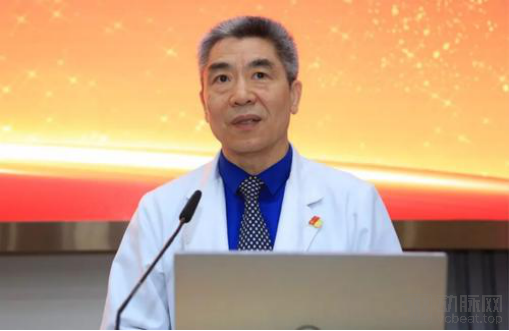
(Academician Hu Shengshou)
According to reports, the pVAD product used in this animal experiment was jointly developed under the leadership of Academician Hu Shengshou, in collaboration with Dr. Gao Qi, Director of the Fluid Mechanics Laboratory at the School of Aeronautics and Astronautics, Zhejiang University, and Dr. Wei Runjie, CTO of Zhejiang Diyuan Medical Device Co., Ltd. (hereinafter referred to as “Diyuan Medical”).
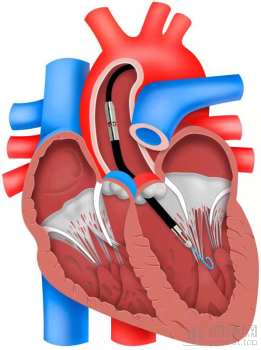
Data indicate that percutaneous ventricular assist device (pVAD) technology involves the percutaneous, interventional placement of a miniature blood pump into the ventricle. The pump draws blood and delivers it into the arterial system, thereby partially or fully substituting for the heart’s pumping function and maintaining systemic circulation. This technology can be applied in clinical scenarios such as the treatment of acute myocardial infarction, protection during high-risk percutaneous coronary intervention (PCI), and critical care for severe COVID-19 cases, helping to improve survival rates in these indications.
The authoritative “Report on Cardiovascular Health and Diseases in China 2019” indicates that cardiovascular diseases in China are on a continuous rise, with an estimated 330 million affected individuals. Among them, 8.9 million patients suffer from heart failure, representing a nearly twofold increase compared to 2018. For heart failure patients, the commonly adopted treatment approach is surgical intervention; however, this option carries high risks, causes significant trauma to patients, and incurs substantial medical costs.The emergence of interventional artificial heart technology has broken this deadlock. pVAD products are safe and easy to operate, and are less likely to cause complications such as embolism and bleeding that adversely affect downstream organs, representing an advanced minimally invasive ventricular assist technology.
The use of pVADs in treating heart failure patients offers numerous advantages, and the development of pVAD products holds significant importance for both the 8.9 million heart failure patients in China and the domestic high-end cardiovascular medical device industry. However, under the monopoly of foreign technologies, Chinese companies face substantial difficulties and obstacles in developing pVAD products. So, how was the pVAD product used in this animal experiment developed? What challenges were encountered during the R&D process? How did top-tier hospitals, renowned universities, and innovative enterprises leverage their complementary strengths?To gain a more detailed understanding, VCBeat conducted an exclusive interview with Dr. Wei Runjie.
Compared with trans-thoracic implantable ventricular assist devices, percutaneous ventricular assist device (pVAD) products are smaller in size and feature higher system integration. However, it is more challenging to optimize hemodynamics to achieve excellent biocompatibility, and monitoring physiological parameters is relatively difficult. Furthermore, pVAD products are subject to extremely high reliability requirements and are classified as Class III medical devices, which undergo the most rigorous and challenging systematic evaluation of safety and effectiveness during medical device registration.
Currently, there are no certified and approved pVAD products in China, while foreign technologies remain in a monopolistic position. Dr. Wei Runjie introduced, “The research and development of pVAD technology requires the integration of multidisciplinary technologies, involving clinical medicine, basic medicine, biology, fluid dynamics, mechanics, electronics, control systems, and materials, among other fields, imposing extremely high demands on the development of related technical details.”
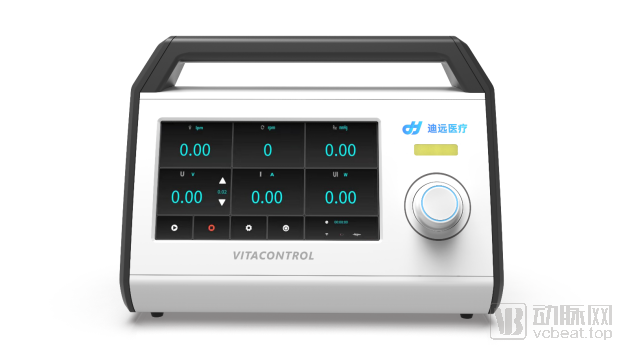
Therefore, to overcome technical challenges and develop the pVAD product, Academician Hu Shengshou from Fuwai Hospital led the initiative as the principal investigator, collaborating with Dr. Gao Qi, a fluid dynamics expert from Zhejiang University, and Dr. Wei Runjie from Diyuan Medical.Among them, Fuwai Hospital is responsible for conducting clinical validation and applied research; Zhejiang University is tasked with key fundamental theoretical research on product development, as well as in vitro model simulation and experimentation; and Diyuan Medical is in charge of production processes, biocompatibility testing, and reliability studies during the product industrialization phase.
As a result, the three parties jointly established the “Medical-Engineering Integration + Industry-Academia-Research Collaboration” model, setting a benchmark for medical device innovation and this collaborative framework.
On the other hand, pVAD products face extremely high technical barriers; there is no relevant domestic data, and foreign countries have imposed technological blockades. Therefore, the pVAD R&D team must possess the determination to burn their bridges and excel in scientific research capabilities.
In terms of scientific research strength,As a leading authority in the field of cardiovascular specialty in China, Fuwai Hospital holds significant advantages in clinical medical technology research. Academician Hu Shoushou is a pioneer and leading figure in the field of artificial hearts both domestically and internationally, having provided guidance on multiple occasions for the research and development as well as regulatory registration of domestic cardiac pumps.
Dr. Gao Qi is a renowned expert in experimental fluid dynamics within the industry. He has long been engaged in technical research on experimental fluid dynamics and fundamental studies in fluid mechanics. His research areas span aerospace engineering and biofluid mechanics. He developed China’s first tomographic particle image velocimetry (Tomo-PIV) system with independent intellectual property rights, which represents the most advanced three-dimensional flow field measurement technology internationally.
Dr. Wei Runjie also possesses over 20 years of experience in the research and application of fluid dynamics. He developed China’s first Particle Image Velocimetry (PIV) system with independent intellectual property rights. His technical services have reached clients across all five continents, with applications spanning biomedicine, aerospace, petrochemicals, shipbuilding, and rail transit, achieving several domestic and international firsts.Notably, Dr. Wei Runjie and Dr. Gao Qi were awarded the Second Prize of the National Technological Invention Award in 2018 for their outstanding contributions to fluid mechanics.
The “integration of medicine and engineering + industry-academia-research collaboration” model, combined with top-tier scientific research talent, has yielded highly significant results.In just one year, Fuwai Hospital, Zhejiang University, and Diyuan Medical transformed their years of technological accumulation into a pVAD product with independent intellectual property rights.During this period, the Haining Municipal Government of Zhejiang Province provided comprehensive support for the implementation of this industrialization project, offering robust policy guarantees particularly in areas such as matching funds, industrial land allocation, talent acquisition, and R&D incentives.
As the first independently conducted pVAD animal experiment reported in China, its complexity is self-evident. In particular, with the shadow of the pandemic still looming in 2020, multiple aspects—including personnel, research and development, procurement, experimentation, and clinical operations—were all adversely affected.
Furthermore, as the first animal study involving a percutaneous ventricular assist device (pVAD), this endeavor was fraught with numerous uncertainties, necessitating continuous exploration and experimentation by both the clinical medical team and the product R&D team. Clearly defined clinical requirements proposed by the clinical team constitute the primary prerequisite for successful product development, while clinical validation of the product serves as a critical safeguard throughout the entire R&D process. In terms of technological development, universities have made outstanding contributions to overcoming interdisciplinary fundamental scientific challenges, such as high-speed hydrodynamic cavitation and hemodynamic hemolysis/thrombosis. Meanwhile, innovative enterprises have played a vital role in addressing issues related to product materials, control systems, system integration, and manufacturing processes.
Notably, Dr. Gao Qi and Dr. Wei Runjie have leveraged their aerospace backgrounds to achieve interdisciplinary applications of aerospace technologies in biomedical engineering and clinical medicine. By conducting extensive numerical simulations and in vitro experimental modeling, they have ensured the quality and efficiency of research and development. Furthermore, by introducing reliability analysis methods and techniques from the aerospace sector into product development, they have elevated the in vitro hemodynamic simulation and reliability studies for this animal experiment to a world-leading level.
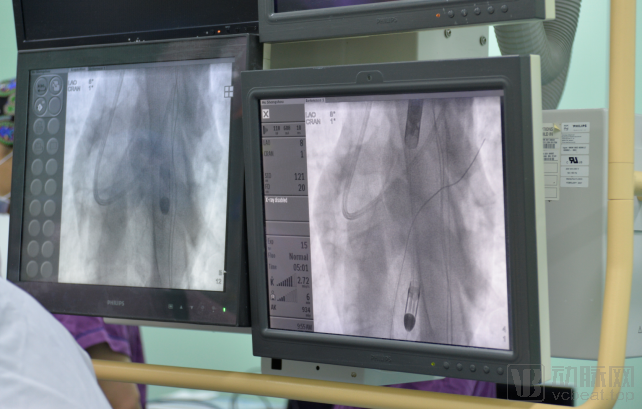
Regarding the issues and challenges encountered in technological R&D, Dr. Wei Runjie shared many interesting details. For instance, as there are currently no reported studies on hemolysis testing for pVADs in China, the team needed to review domestic and international literature, independently design experimental setups, select experimental materials, and establish standard operating procedures (SOPs).
In animal experimentation, all aspects—including animal selection and preparation, surgical protocol development, on-site surgical optimization, postoperative care protocols, management of postoperative complications, and data analysis—were established from the ground up, requiring coordinated efforts by professionals in fluid dynamics, software, mechanical engineering, and experimental sciences, alongside clinical medical teams.
To ensure the smooth completion of this animal study, all participants made thorough preparations. For instance, the Animal Experiment Center of the National Center for Cardiovascular Diseases provided professional technical support across various aspects, including animal management, surgical suites, and postoperative care. The School of Aeronautics and Astronautics at Zhejiang University conducted comprehensive computational fluid dynamics simulations and flow validation experiments. Additionally, Diyuan Medical performed multiple hemolysis and coagulation tests during the early stages of product development, ultimately enabling the product’s performance and experimental metrics to reach an internationally leading level.
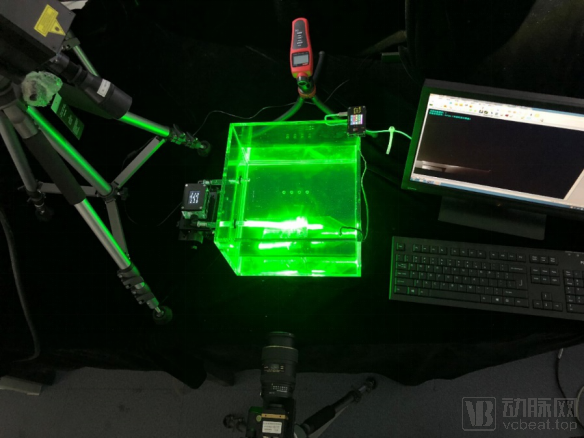
In vitro fluid dynamics experiments refer to in vitro simulations conducted prior to animal studies. For instance, in hemolysis testing, the R&D team introduces animal blood into the experimental apparatus and then places the pVAD within it to simulate the operational processes and environment of the animal heart. During these experiments, the R&D team can utilize various in vitro instruments and equipment to monitor parameters such as blood pressure, blood flow, and hematological indices. Based on this data, they can evaluate and calculate the actual loads, unexpected scenarios, and extreme operating conditions that the pVAD will encounter during animal experiments. Through these calculations, the functionality, safety, and reliability of the pVAD can be assessed to determine whether it is suitable for implantation in animals or humans.
Furthermore, multiple key indicators have been established in industry consensus both domestically and internationally. The R&D team can quantitatively assess whether a pVAD product meets the requirements for entry into animal or human trials based on in vitro fluid dynamics experimental data.Through multiple rounds of in vitro fluid dynamics experiments, the team from Zhejiang University and Diyuan Medical achieved world-leading pVAD experimental data, laying a solid foundation for subsequent animal studies.
Reliability refers to the probability that a product will perform its specified functions under stated conditions for a given period of time. Reliability research involves designing products that meet various performance indicators through scientific theories and experimental techniques, and further validating product reliability based on reliability research and experimental systems, thereby driving product research, development, and upgrades.The teams from Zhejiang University and Diyuan Medical have applied advanced technologies from the aerospace sector to medical research, conducting in-depth reliability studies that have elevated the reliability technology of their pVAD products to a world-leading level.
In summary, the animal experiment was successfully conducted following extensive technical preparations by Fuwai Hospital, the School of Aeronautics and Astronautics at Zhejiang University, and Diyuan Medical. Dr. Wei Runjie stated, “The animal experiments achieved the expected objectives, yielding China’s first comprehensive set of animal experimental data related to pVADs, thereby providing robust data support for subsequent in-depth research. In 2021, Diyuan Medical will conduct comprehensive animal studies and clinical trials to fully validate the safety, reliability, and efficacy required for product registration. We are committed to meticulously developing high-end medical devices independently in China, safeguarding lives through technology!”