

Ohana Biosciences Files for IPO: Pioneering the First Sperm Biology Platform to Enhance Fertility and Reproductive Health

Ohana Biosciences
Provider of Infertility Solutions

Flagship Pioneering
Venture Capital Firms
According to a report by the U.S. Centers for Disease Control and Prevention (CDC), between 2015 and 2017, 13% of the 72 million women aged 15–49 had received infertility services. Furthermore, nearly 9% of married women aged 15–49 were unable to conceive after at least 12 consecutive months of trying.
“Infertility affects 7 million couples in the United States, and approximately 90 percent of these couples do not receive treatment,” said Amber Salzman, President and Chief Executive Officer of Ohana Biosciences.
Currently, the treatment of infertility predominantly relies on assisted reproductive technology (ART), which employs medical interventions to help infertile couples achieve pregnancy. This includes intrauterine insemination, in vitro fertilization-embryo transfer, and various derived techniques. According to a survey by the U.S. Centers for Disease Control and Prevention (CDC), 28% of individuals choose ART due to male infertility factors. However, in the field of reproductive health, nearly all innovations are focused on women.
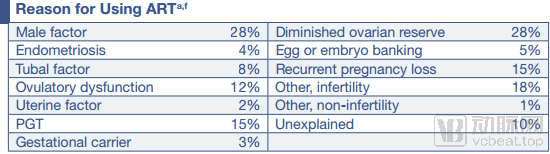
Source: U.S. Centers for Disease Control and Prevention (CDC) Website
Ohana Biosciences hopes that its research on sperm cells will enhance the feasibility of achieving fertility through assisted reproductive technologies.
Ohana Biosciences is a biotechnology company based in Massachusetts, United States. Founded in 2016 and incubated by the biomedical venture capital firm Flagship Pioneering, the company integrates biology and technology to advance reproductive health.
Historically, the reproductive health industry has offered fewer treatment options for male infertility than for female infertility. Sperm preparation techniques have long remained unchanged, primarily relying on density gradient centrifugation and swim-up methods to enhance sperm motility and increase the likelihood of fertilization. Recognizing this gap in the reproductive health sector, Ohana Biosciences developed the industry’s first sperm biology platform. Committed to helping couples with infertility achieve healthy pregnancies, Ohana is shifting the disease management paradigm from “treating disease” to “preventing disease.”
The company primarily focuses on research in three key areas of reproductive health: fertility, disease, and contraception. It is committed to enhancing fertility, reducing pregnancy-related complications, and lowering the risk of genetic disorders in children. Additionally, the company is seeking to develop a non-hormonal, reversible, and long-acting contraceptive method.
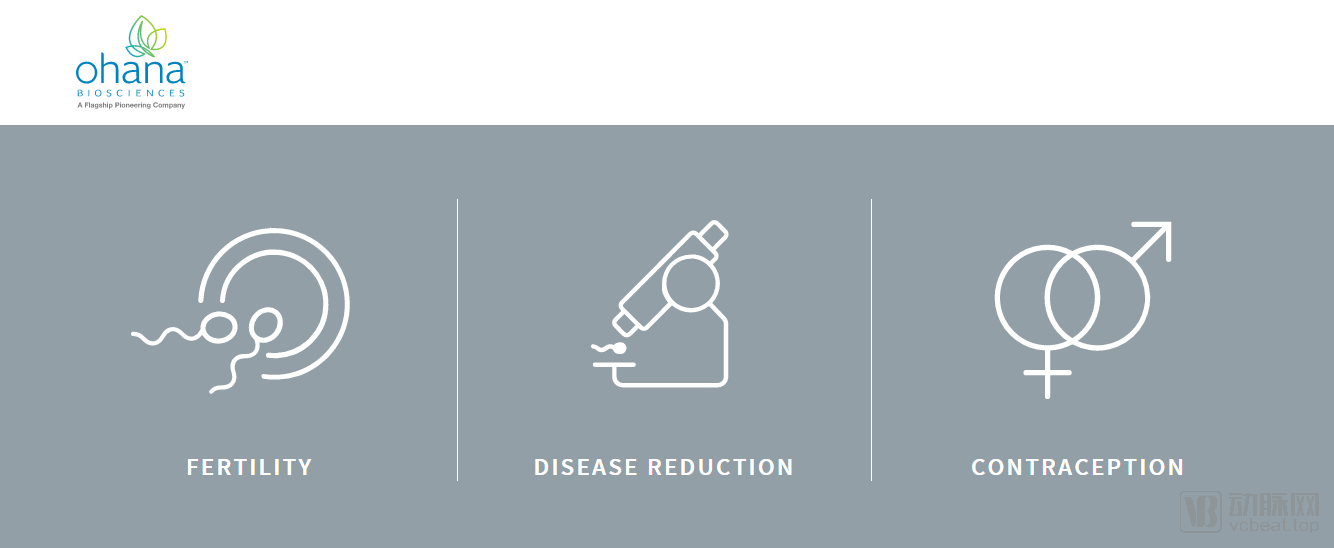
Source: Ohana Biosciences Official Website
Ohana Biosciences boasts a high-caliber team with expertise spanning biology, technology, and business. In terms of R&D, the company’s team includes drug developers, computational biologists, and sperm biologists; its management is led by seasoned business professionals.
The company has two co-founders. One is Noubar Afeyan, a venture capitalist, senior lecturer at the MIT Sloan School of Management, and founder and CEO of Flagship Pioneering, who has participated in the founding and development of more than 100 companies. The other is David Berry, M.D., from Harvard Medical School, an experienced professional in the biotechnology field with over 200 patents and patent applications to his name.
As the current leader of Ohana Biosciences, Amber Salzman previously served as Senior Vice President of Drug Development Operations at GlaxoSmithKline and as President and Chief Executive Officer of Adverum Biotechnologies. She once spearheaded gene therapy initiatives using HIV vectors to treat adrenoleukodystrophy (ALD), a rare pediatric disease.
The company is developing a new technology that separates sperm based on disease-associated alleles, spontaneous mutations, DNA damage, and other variations related to disease risk and maternal safety, thereby distinguishing motile sperm from immotile ones. This sperm separation technique is applied in assisted reproductive technologies to select sperm with uniform morphology and high motility for artificial insemination.
Sperm exhibit significant differences at both the molecular and functional levels. Existing technologies, such as single-cell sequencing, high-throughput imaging, and cell surface analysis, enable us to distinguish molecular variations among sperm. Meanwhile, Ohana Biosciences leverages machine learning and other comprehensive analytical methods to clearly identify functional differences in sperm.
Ohana Biosciences’ first product candidate is SPERTILITY, an ex vivo sperm cell therapy that is currently under development.
Sperm remain quiescent in the testes; during migration through the female reproductive tract, their activity and molecular composition undergo changes that ultimately enable them to fertilize an egg, a process known as sperm capacitation. Ohana Biosciences plans to develop a sperm enhancement therapy that simulates these physiological changes in vitro to induce capacitation, thereby enhancing the sperm’s ability to fertilize an egg.
In 2020, Ohana Biosciences completed a pivotal clinical trial, conducting a randomized controlled study involving patients across six fertility centers in the United States to advance Spertility as a superior assisted reproductive technology.
Clinical data released by Ohana Biosciences show that this novel sperm enhancement therapy significantly increases sperm hyperactivation, potentially improving the likelihood of pregnancy for couples using assisted reproductive technology (ART) and boosting the success rates of in vitro fertilization (IVF) and intrauterine insemination (IUI).
In January 2021, Ohana Biosciences published a foundational study on human sperm heterogeneity in a scientific journal. Researchers Kunal Bhutani et al. inferred that many gene products of sperm cells are not shared across cytoplasmic bridges, thus exhibiting allele-specific biases that reflect the haploid genotype of individual cells.
Researchers sequenced single sperm cells from mice, cattle, rhesus macaques, and humans to quantify allele-specific biases in sperm and developed a novel computational technique to jointly infer genotypes and allele-specific expression biases in individual haploid cells. The study revealed that many mammals exhibit allele-specific biases associated with the haploid genotype of the cell, a phenomenon the researchers termed “Genetic Information Marks” (GIMs). For GIMs linked to protein-coding genes, which cannot be shared via cytoplasmic bridges, sperm function may be influenced by allelic differences, thereby affecting sperm competition and natural selection of sperm.
Research data indicate that at least one-third of sperm cell transcripts serve as “genetic information markers” across various mammalian species, with many corresponding proteins potentially lacking expression from genetic information. However, a subset of these “genetic information markers” exhibits characteristics indicative of natural selection in sperm, highlighting the influence of genetic information at the protein level during mammalian evolution.
Mendel’s First Law stipulates that alleles are evenly distributed among offspring; however, research has demonstrated that not all spermatozoa are equivalent. Variability exists among human sperm cells, and sperm exerts distinct effects on males, pregnant women, and their offspring.
On January 27, 2020, Ohana Biosciences completed a round of financing led by its founding biomedical venture capital firm, Flagship Pioneering. The specific investment amount was not disclosed.
According to the "China Reproductive Health Report," China's maternal mortality rate has decreased from 150 per 100,000 to 17.8 per 100,000, and the infant mortality rate has dropped from 200‰ to 5.6‰. In an era of population aging, reproductive health remains a critical priority; the focus is not only on childbirth but also on ensuring the birth of healthy infants while safeguarding maternal safety. In this regard, Ohana Biosciences’ sperm biotechnology holds significant potential for development.
Ohana is striving to reshape the global landscape of reproductive health, as stated on the homepage of its official website: “Healthier Pregnancies, Healthier Children, Healthier Options.”
About Flagship Pioneering
Flagship is a venture capital firm founded in 2000, with investment focuses primarily in biotechnology, healthcare, and information technology. Since its inception in 2000, the firm has launched and nurtured more than 100 science-based companies. To date, it has secured over $3 billion in total committed capital.