

Grand Pharmaceutical Reports Over 60% CAGR in Net Profit Over Past Five Years and Outlines Innovative Product Pipeline
On March 18, Grand Pharma held an online earnings conference to interpret its 2020 financial performance and engage in direct communication with investors. Grand Pharma’s net profit attributable to shareholders continued to achieve rapid growth in 2020. The company’s total revenue for the full year of 2020 amounted to HK$6.353 billion, representing a slight year-on-year decline of 3.6%. Excluding the impact of fluctuations in the RMB exchange rate, the year-on-year decrease was approximately 2.7%, while the five-year compound annual growth rate (CAGR) reached 14.5%. During the period, profit attributable to owners of the company totaled HK$1.793 billion, a year-on-year increase of 55.8%. Excluding the impact of RMB exchange rate fluctuations, the year-on-year growth was 57.2%, with a five-year CAGR of 60.6%, significantly surpassing the industry average. During the reporting period, the company’s gross profit margin was approximately 63.5%, an increase of about 2.2 percentage points compared to 2019.
In 2020, Grand Pharma’s total assets amounted to approximately HK$16.9 billion, representing a year-on-year increase of about 22.8%, with a five-year compound annual growth rate (CAGR) of 24.1%. Basic earnings per share for the period were approximately HK52 cents, with a five-year CAGR of about 41.3%.
Grand Pharma stated: The decline in revenue was primarily attributable to the impact of the COVID-19 pandemic, where hospital closures and patient flow restrictions in China exerted pressure on prescription drug sales. However, by continuously optimizing its profitability structure, advancing its innovation-driven and high-barrier pharmaceutical development strategy, and focusing on promoting the sales of innovative, high-barrier, and high-margin products, the Group mitigated these challenges. Meanwhile, during the pandemic, the Group actively expanded into out-of-hospital markets and strengthened collaborations with major e-commerce platforms, resulting in rapid growth in over-the-counter (OTC) drug sales through e-commerce channels and retail pharmacies. Additionally, an increase in the fair value of the Group’s portfolio of listed company investments boosted its investment income. Consequently, the Group maintained sustained, stable, and robust growth in its operational performance.
In addition to the aforementioned financial indicators, Grand Pharma’s return on assets (ROA) and return on equity (ROE) maintained an upward trend, reaching 11.6% and 18.3%, respectively, in 2020. The debt-to-asset ratio stood at 20.9%, representing a year-on-year decline attributable to profit contributions in 2020 and capital injections from new shareholders.
Such achievements are particularly remarkable given that global GDP declined by 4.2% in 2020, China’s GDP grew by 1.8%, and Hubei Province’s GDP decreased by 5.0% year-on-year. This strong performance is attributable to Grand Pharma’s precise, robust, and forward-looking project selection capabilities, as well as its rapid, excellent, and powerful commercialization capabilities, following its innovation-driven transformation since 2015.
At the performance briefing, Grand Pharma stated that in 2020, the company continued to expand its pipeline of innovative projects and enhance its overall competitiveness. “Overall, the company has achieved remarkable results over the past few years.”
Despite the impact of the global pandemic in 2020, Grand Pharma stated at its results announcement that the company completed 10 investment and M&A transactions, launched 9 innovative products or platforms, made 2 fund investments, and established 2 strategic partnerships throughout the year. “The investment, M&A, and collaborative activities during the reporting period were strategically focused on four key areas: precision interventional therapy, oncology, antiviral and anti-infective therapy, and respiratory and ENT (ear, nose, and throat) care, thereby continuously expanding the project reserve of the Group’s innovative pipeline.”
Unlike the follower-style innovation adopted by most domestic pharmaceutical companies, which involves repeated investments in drugs with similar mechanisms or the same targets—resulting in a wave of Fast Follow and Me-too drugs—Grand Pharma’s innovative products place greater emphasis on original innovation. Its pipeline has truly achieved First-in-Class status, translating emerging trends in basic research and cutting-edge scientific breakthroughs into key drivers for innovative product development.
The performance report shows that as of the end of 2020, Grand Pharma's total R&D expenses for the year amounted to HK$219 million. If prepayments for new projects and other investments are included, the total R&D expenditure and project-specific investments for 2020 exceeded RMB 1.5 billion. Through a series of expansion initiatives in 2020, Grand Pharma has established a global layout comprising four major technology R&D platforms and five R&D centers. These include: the Radionuclide Drug Conjugate (RDC) technology platform, the DNA R&D technology platform, the mRNA R&D technology platform, and the Glycomics R&D technology platform; as well as the San Diego R&D Center in the United States focusing on immunotherapy (DNA technology) for oncology, the Boston R&D Center in the United States specializing in precision interventional oncology, the Belgium center covering respiratory diseases, ophthalmology, and mRNA technologies, and the Australian R&D Center dedicated to antiviral and anti-infective therapies.
The Company currently maintains a reserve of over 30 internationally renowned scientists. The Group and its associates employ a total of 526 R&D personnel (including overseas R&D teams from associates such as Sirtex and OncoSec), representing a substantial increase of more than 70% compared to 2019. Among these, 258 hold master’s or doctoral degrees, accounting for nearly 50%. During the reporting period, Grand Pharma established and implemented one quality management system, formed two committees (the Scientific Committee and the Professional Technical Committee), and built three functional systems, namely the patent system, the pharmacovigilance system, and the clinical operations system.
In 2020, amidst the raging pandemic, Grand Pharma continued to accelerate its globalization strategy. In the capital markets, it completed the acquisition of shares in OncoSec Medical Incorporated and successfully took equity stakes in Australian biotechnology company Telix Pharmaceuticals Limited and Belgian mRNA innovative vaccine technology company eTheRNA Immunotherapies NV, thereby securing technology platforms and commercialization rights for multiple innovative drugs. By late November 2020, the U.S. Food and Drug Administration (FDA) had accepted the marketing authorization application for TLX591-CDx, developed by its associate company, Telix.
By combining an innovation strategy of independent R&D with global expansion, Grand Pharma has successfully transformed into an innovative pharmaceutical enterprise covering multiple business areas, including oncology therapeutics, cardiovascular emergency preparations and high-end medical devices, antiviral and anti-infective agents, respiratory and ENT products, biopharmaceutical health products, and active pharmaceutical ingredients (APIs). In particular, it has joined the global leaders in fields such as precision diagnosis and treatment of cerebrovascular and cardiovascular diseases, and radionuclide–drug conjugate (RDC) anti-tumor therapy.
Shi Lin, Vice President of R&D and Chief Medical Officer at Grand Pharma, stated at an investor exchange meeting that as of January this year, Grand Pharma Group had a cumulative total of 107 projects under development. Excluding consistency evaluation projects, innovative projects accounted for nearly half, spanning various stages from preclinical research to New Drug Application (NDA). “Our pipeline is reasonably structured, creating a strong tiered effect.”
Through overseas acquisitions, including Canada’s Conavi Medical (vascular imaging diagnostics), Germany’s Cardionovum (vascular intervention), and Australia’s Sirtex Medical and the U.S.’s OncoSec Medical (tumor intervention), Grand Pharma has established a global strategic layout for precision diagnosis and treatment, emerging as a leading enterprise in the field of precision diagnostic and therapeutic solutions.
In 2020, Aperto OTW (a paclitaxel-eluting high-pressure shunt balloon catheter), a drug-coated balloon specifically designed for access stenosis in dialysis patients and developed by the German joint venture Cardionovum, was approved by China’s National Medical Products Administration (NMPA), becoming the first drug-coated balloon for dialysis use in China. In addition, the company’s LEGFLOW OTW product, targeted at peripheral vascular disease, has entered clinical trials and is expected to receive approval for market launch in 2024.
Chen Xiaojie, Vice President of Grand Pharma, stated in response to investor inquiries that the RESTORE DEB product has generated over RMB 100 million in sales revenue for the company since its market launch more than a year ago. Previously, data from Guoyuan International projected that three balloon and stent products—namely Aperto OTW, LEGFLOW OTW, and RESTORE DEB (which received domestic approval in China in 2019)—would contribute RMB 460 million in sales to Grand Pharma in the Chinese market in 2022.
In the field of precision medicine, Grand Pharma invested in and acquired an equity stake in Canada’s Conavi Medical Inc. in 2017, securing exclusive distribution rights in the Greater China region for the investigational NOVASIGHT Hybrid™ system—a combined intravascular ultrasound and optical coherence tomography imaging platform—and the FORESIGHT ICE three-dimensional intracardiac echocardiography system. By 2019, the NOVASIGHT Hybrid™ had been admitted to the green channel for special review of innovative medical devices.
Shi Lin, Vice President of R&D and Chief Medical Officer at Grand Pharma, stated that precision interventional therapy has been a key innovative platform strategically developed by Grand Pharma since 2015. “Minimally invasive therapy has become a mainstream field for improving patients’ quality of life. Compared with conventional internal medicine and surgery, minimally invasive interventional procedures offer more high-barrier, highly innovative products. Alongside advancements in diagnostic and therapeutic technologies, this field also holds immense potential and market size.” She noted that the platform currently covers coronary vascular, peripheral vascular, and neurointerventional areas, with future strategic focus to be further expanded into structural heart disease, electrophysiology, and new heart failure therapies.
After several years of development, Grand Pharma’s interventional platform has established competitive advantages across four key dimensions: integration of new technologies, consolidation of implementation platforms, an in-house clinical team, and multi-dimensional market channels. “Our collaboration models have evolved from initial license-in arrangements to diverse partnerships spanning equity investment, manufacturing, R&D, and supply chain cooperation, effectively enabling comprehensive resource sharing. Throughout this process, Grand Pharma’s clinical, business development (BD), and commercialization teams have gained valuable experience, achieving rapid growth and maturity. This foundation will enable our future products to perform strongly across diverse markets and better serve patients.”
The domestic PD-1 drug sector in China is currently overcrowded, with some industry insiders even suspecting the presence of a bubble. In contrast, combining radiopharmaceutical imaging with therapy to achieve a seamless workflow from screening and diagnosis to personalized treatment—thereby realizing truly personalized precision medicine—remains rare among Chinese companies due to high technical barriers, substantial R&D investment requirements, and stringent regulatory hurdles. Nevertheless, this approach represents a future global trend, with multiple radionuclide-based products already approved in Europe and the United States. According to a report by Frost & Sullivan, the global radiopharmaceutical market reached $4.8 billion in 2017, growing at a rate of 7%, although the market was predominantly driven by North America. In late October 2017, Novartis acquired the French biotechnology company Advanced Accelerator Applications (AAA) for $3.9 billion, primarily to secure its radiopharmaceutical product Lutathera.
Grand Pharma has currently established its footprint in radiopharmaceuticals. In 2018, Grand Pharma, in partnership with CDH Investments, acquired Sirtex Medical Pty Ltd for $1.4 billion, marking its entry into the field of radionuclide drugs. Sirtex’s core product, SIR-Spheres® Y-90 resin microspheres, delivers selective internal radiation therapy via beta radiation for the treatment of primary liver cancer and metastatic colorectal cancer, among other indications. The marketing application for this product was accepted by the National Medical Products Administration (NMPA) in 2020, with approval expected in 2021.
In addition to expanding into overseas markets through Sirtex, Grand Pharma entered into a share subscription agreement with Telix Pharmaceuticals and reached an equity purchase agreement with Pu'er Weiye, a radiopharmaceutical manufacturer and distributor, in 2020. Through these strategic moves, Grand Pharma has established a comprehensive domestic and international presence in nuclear medicine, further strengthening its momentum in the development of radiopharmaceuticals.
To address the issue of resistance to PD-1 inhibitors currently prevalent in the market, Grand Pharma subscribed to approximately 44% of the equity interest in the U.S.-based company OncoSec in February 2020, thereby securing product rights for all of OncoSec’s portfolio in more than 30 countries and regions, including mainland China. The core product, TAVO, is a first-in-class intratumoral anticancer gene therapy. According to data released in November 2020 on TAVO™ in combination with KEYTRUDA®Interim data from the registrational Phase 2b KEYNOTE-695 clinical trial evaluating pembrolizumab combination therapy for metastatic melanoma resistant to anti-PD-1 checkpoint inhibitors demonstrated favorable clinical efficacy and safety in the first 54 patients enrolled out of a planned cohort of 100. The objective response rate (ORR) reached 30%, significantly exceeding the primary endpoint of 20% ORR as determined by independent radiological review and anticipated in the trial protocol. The complete response rate was 6%, with 9% of patients achieving complete elimination of target lesions, and the median duration of response was 12.2 months. Only 5.4% of patients experienced Grade 3 treatment-related adverse events, and no Grade 4 or 5 treatment-related adverse events were reported. OncoSec is expected to seek accelerated approval from the U.S. FDA based on the final objective response rate (ORR) data from this Phase 2b clinical trial.
In the field of immunotherapy, Grand Pharma invested in 2020 in eTheRNA Immunotherapies NV, a Belgian innovative mRNA vaccine technology company. It introduced the latter’s mRNA vaccine platform technology and pipeline products, and established a joint venture, Auro Biopharmaceutical Co., Ltd., to conduct R&D and manufacturing of mRNA vaccines for tumor immunotherapy and infectious diseases. Meanwhile, Auro Biopharmaceutical also obtained all rights in the Greater China region for eTheRNA Immunotherapies NV’s globally innovative product targeting HPV-positive head and neck cancer, as well as priority rights for subsequent products.
In terms of its oncology therapeutic pipeline, Grand Pharma has secured 12 globally innovative products, with 10 products currently undergoing global clinical trials in humans. These products collectively cover nine major solid tumor indications, including hepatocellular carcinoma, colorectal cancer, clear cell renal cell carcinoma, prostate cancer, glioblastoma, metastatic melanoma, triple-negative breast cancer, squamous cell carcinoma, and HPV-positive head and neck cancer.
Shi Lin stated that Grand Pharma’s oncology portfolio is becoming increasingly mature, with its international industrial chain taking shape. “The company’s oncology business unit now comprises nine entities worldwide, capable of oncology product manufacturing and development. It operates 15 global oncology R&D centers, and has the capacity to conduct clinical trials for oncology drugs in 38 countries and market its products in 56 countries.”
Currently, Grand Pharma has established a development strategy centered on global layout, differentiated innovation, and specialized growth by introducing overseas technologies and accelerating their localization in China. “After several years of product portfolio planning, our pipeline now covers 9 of the top 11 most prevalent cancer types in China.”
In the field of antiviral and anti-infective therapies, the company is strategically positioning itself around first-in-class global innovative drugs that address significant unmet clinical needs. Regarding its product pipeline, the company has currently reserved three global innovative drugs: STC3141 and APAD, both for the treatment of sepsis, and one for the treatment of parainfluenza.
In 2020, the Company was granted global rights by Antisheng Biology for its APAD sepsis project and will conduct collaborative R&D with the innovative histone inhibitor HIP developed by the Australian National University’s drug discovery team. “In March 2021, the Company’s pipeline product STC3141 received approval to initiate Phase Ib clinical trials in China for acute respiratory distress syndrome (ARDS), three weeks ahead of schedule. Preparations for Investigational New Drug (IND) applications in Europe and the United States are also underway,” stated Shi Lin at the earnings conference call. Previously, in May 2020, STC3141 had been approved in Australia to conduct Phase II clinical trials for treating ARDS caused by COVID-19 infection, as well as Phase Ib clinical trials for treating sepsis. It is anticipated that Grand Pharma will soon be able to provide patients and physicians with more and better clinical solutions in the field of sepsis, where no effective therapies are currently available globally.
In its traditional areas of strength, namely respiratory medicine and otorhinolaryngology (ENT), Grand Pharmaceutical Group has deployed three innovative drugs to further enhance its product portfolio in these fields. These include CBT-001, a global first-in-class innovative drug for the treatment of pterygium, acquired from Boyun Pharmaceuticals; Ryaltris, a novel combination nasal spray; and BRM421, a global first-in-class therapy for dry eye disease, licensed from Quanfu Biotechnology Co., Ltd.
In recent years, influenced by policies such as volume-based procurement and national reimbursement drug list negotiations, China’s pharmaceutical industry has gradually become polarized. Following the implementation of centralized procurement, the market capitalization of generic drug manufacturers has generally declined significantly, with their valuations converging toward those of the chemical industry. In contrast, innovative drug companies have continued to command higher market valuations, driven by supportive policy incentives.
With cost containment in medical insurance becoming the mainstream, innovation has become the lifeline of pharmaceutical companies. However, constrained by factors such as the late start of innovative drug development in China, domestic innovation remains predominantly characterized by catch-up innovation and “me-too” drugs, with excessive concentration on agents sharing similar mechanisms or targets. Few companies have truly achieved “first-in-class” status.
Leveraging its comprehensive strengths, Grand Pharma has decisively entered fields with high innovation barriers. Through a globalized layout, it has introduced multiple first-in-class products and, by coordinating global resources, accelerated the development of its pipeline. This strategy ensures a steady stream of innovative products will be launched over the next five years.
As a diversified enterprise, Grand Pharma’s comprehensive strengths form the foundation of its core strategy and serve as a safeguard against external risks. By building an integrated industry chain spanning from active pharmaceutical ingredients (APIs) to global distribution, Grand Pharma has maximized operational efficiency. Meanwhile, the company’s management culture has ensured an exceptionally high success rate in mergers and acquisitions (M&A). Shi Xiaofeng, Chairman of Grand Pharma, stated, “According to international statistics, the probability of pharmaceutical M&A transactions achieving their intended objectives is less than 25%, whereas we have achieved a success rate of 75%.” Furthermore, Grand Pharma’s comprehensive advantages consistently generate stable cash flows to support scientific research and innovation. This means that the company can provide ample funding for R&D through both industrial and capital market channels, enabling it to continuously invest in innovative products on a global scale.
On the other hand, as a platform-based enterprise, Grand Pharma boasts a nationwide sales team that has established deep penetration into pharmacies and hospitals across China, with a scale surpassing that of most emerging biotechnology companies. This robust commercialization infrastructure also enables the company’s portfolio of innovative products to reach the market at an earlier stage.
At the performance briefing, Shi Xiaofeng stated, “Grand Pharma officially embarked on its innovation-driven transformation in 2015. Although we started slightly later than leading domestic companies, we have avoided many detours and pursued a more steady path. In the past two years, we have significantly intensified our efforts, leveraging a global R&D layout to secure numerous overseas, globally exclusive clinical innovative products with strong market prospects. Patient needs and urgent clinical demands define Grand Pharma’s R&D direction, which is also undoubtedly an area capable of delivering market returns.”
Since 2016, the company's compound annual growth rate (CAGR) of net profit has reached as high as 60.6%, far exceeding the average level of pharmaceutical companies listed on the Hong Kong Stock Exchange.
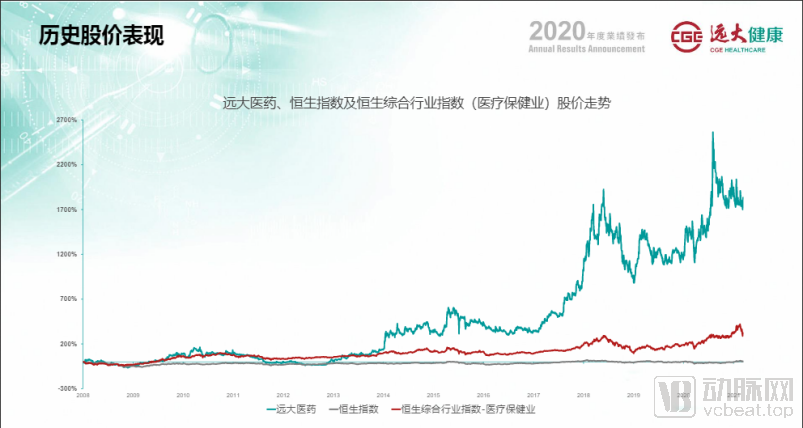
With its outstanding market performance since listing, from3Month15As of [date], Grand Pharma has been upgraded from a constituent of the Hang Seng Composite SmallCap Index to a constituent of the Hang Seng Composite MidCap Index, the latter reflecting the top total market capitalization among constituents of the Hang Seng Composite Index.95%company.
In 2020, while the Hang Seng Index fell by more than 3%, the Hang Seng Healthcare Index still achieved a 41.85% increase. Grand Pharma, which possesses both platform and innovative attributes, saw its full-year increase exceed 60%, surpassing the industry average. At its mid-year peak, Grand Pharma’s market capitalization briefly exceeded HK$30 billion.
Currently, the price-to-sales (P/S) ratio for the pharmaceutical sector in the Hong Kong stock market stands at around 7, whereas Grand Pharma’s P/S ratio is only 3.7. In contrast, companies within the Hang Seng Biotech Index, such as Zai Lab and BeiGene, have P/S ratios of 513 and 119, respectively. Therefore, Grand Pharma still possesses substantial upside potential in the future.
“The Group has set clear development goals for the coming years, aiming to launch 1–2 innovative products annually and initiate 15 innovative product projects, with R&D investment accounting for no less than 10% of operating revenue. We believe that by 2025, Grand Pharma will have evolved into a leading international integrated pharmaceutical company excelling in radiopharmaceuticals, interventional medicine, and infectious diseases. Driven by technological innovation and guided by patient needs, we aspire to become a pharmaceutical enterprise respected by physicians and patients while giving back to society,” said Shi Xiaofeng.