

Smart City Healthcare AI Play: A Review of PBATH's Strategic Layout and Product Portfolio
2021 marked the inaugural year of the 14th Five-Year Plan and the first year of China’s entry into a new stage of development. As outlined in the plan, the 14th Five-Year Plan period represents the first five years of embarking on a new journey to fully build a modern socialist country, following the achievement of the First Centenary Goal. It is for this reason that the 14th Five-Year Plan has attracted widespread attention from all sectors.
The Draft Outline of the 14th Five-Year Plan for National Economic and Social Development and the Long-Range Objectives Through the Year 2035 of the People’s Republic of China, submitted to this year’s Two Sessions, proposed “upholding innovation as the core of China’s overall modernization drive and making self-reliance and self-strengthening in science and technology a strategic support for national development.” It also put forward plans to “accelerate the construction of a digital society,” “build smart cities,” and “explore the development of digital twin cities.”
As a specific application scenario, the integration of healthcare and smart cities has demonstrated immense potential over the past year. During the COVID-19 pandemic, various smart healthcare technologies were rapidly deployed in the medical field, continuously innovating healthcare scenarios and providing powerful “weapons” for epidemic prevention and control. In particular, AI-assisted diagnosis significantly improved diagnostic efficiency and alleviated the workload of medical personnel during epidemic control efforts.
How Will the Partnership Between Medical AI and Smart Cities Evolve in the Future? How Are Smart City Giants Strategizing in This Area? VCBeat (WeChat ID: Vcbeat) Has Conducted a Corresponding Analysis.
In 2008, the concept of smart cities was introduced internationally. In 2012, China launched large-scale pilot programs for smart cities, and in 2014, this initiative was elevated to a national strategy. In March 2014, the State Council issued the National New-Type Urbanization Plan (2014–2020), which incorporated smart city development into national strategic planning for the first time and set a goal to build a group of distinctive smart cities by 2020.
Driven by policy support, China has achieved a late-mover advantage in the development of smart cities. According to a research report by Deloitte, as of 2020, China had more than 490 pilot smart cities, accounting for 48% of the global total, thereby maintaining a significant lead. Meanwhile, over 89% of prefecture-level and above cities, and 47% of county-level and above cities in China have proposed initiatives to build smart cities.
The future of smart cities is widely viewed with optimism. According to a 2019 research report by Deloitte, the market size of China’s smart city sector had already reached RMB 7.9 trillion in 2018 and was projected to reach RMB 18.7 trillion by 2021. Such a vast market has naturally attracted numerous enterprises to enter the field.
However, after the initial hype surrounding the concept, the development of smart cities has encountered bottlenecks in concrete implementation. The most significant issue is that the construction of most smart cities in China lacks top-level coordinated management and planning; government departments often adopt disparate standards, resulting in isolated information silos that cannot be interconnected. In some cases, redundant construction by local governments has led to resource wastage and unfinished projects; in others, flawed planning has rendered projects mere showpieces from the day they were completed.
This has resulted in a significant gap between actual operational performance and the initial planning and promotional claims, leading to substantial waste of resources. Industry insiders estimate that only about 30% of smart city projects truly achieve operational status, with the majority suffering from inadequate operations or lacking operations entirely.
The international landscape was no exception. As a pioneer in smart cities, Cisco quietly announced in December 2020, after several years of effort, the discontinuation of its Kinetic for Cities IoT division. The development of smart cities gradually reached a stalemate, prompting some companies to reflect and seek to reengineer their existing, overly broad and vague solutions, shifting focus toward specific use cases to derive meaningful insights from granular applications.
During this period, the sudden outbreak of the COVID-19 pandemic subjected “Smart Cities” across various regions to an unexpected and rigorous test. In some cities, data on medical resources, epidemic prevention supplies, and enterprise production capacity remained siloed, lacking support from a unified data platform and interconnectivity. Consequently, enterprises and competent authorities had to rely on traditional methods, such as manual ledgers, for temporary data reporting. This situation once led to overcrowding at medical facilities and chaotic allocation of supplies.
In some other cities, despite the implementation of information systems for mobile populations, manual ledger entries remain necessary. This necessitates dispatching staff for door-to-door inspections, which not only reduces work efficiency but also poses significant risks of disease transmission. Meanwhile, due to the lack of data interoperability, it is extremely difficult for other departments to access and utilize these data.
Although some previously developed, immature smart city initiatives underperformed during the pandemic, smart healthcare—represented by artificial intelligence and the Internet of Things (IoT)—indeed played a significant role in epidemic prevention and control. In contrast, it was surprising to discover that smart healthcare accounts for only 2.86% of the total market size within the broader smart city sector, representing a true blue ocean opportunity.
To promote the development of smart healthcare, both central and local governments have increased policy support in the post-pandemic era. Regions such as Guangdong, Chongqing, Qinghai, and Shandong have taken the lead in releasing specific work plans for smart healthcare over the coming years. The healthcare sector within smart city initiatives has received unprecedented attention.
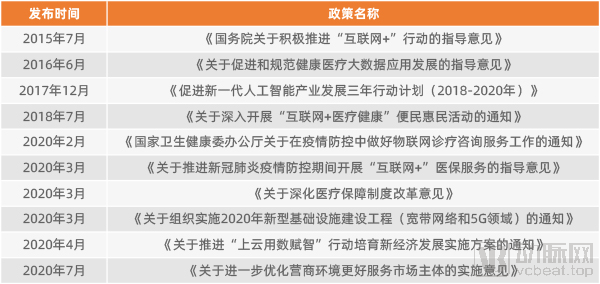
Central Government Policies on Smart Healthcare
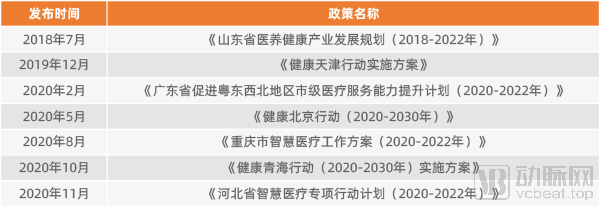
Selected Local Policies on Smart Healthcare
What are the possibilities for smart healthcare within smart cities, and how can it interact with them? Take a simple example: by analyzing big data on patient visits to medical institutions in specific areas, artificial intelligence can predict future disease trends locally. This helps city managers detect early signs of potential outbreaks amidst complex information and respond promptly through coordination with other sectors, such as smart transportation.
Of course, this is no easy task. It requires breaking down countless information silos and places extremely high demands on operators’ data mining and analytical capabilities. Meanwhile, with technological advancements and a deepening understanding of smart cities, the sector has entered its third stage. This stage entails not only an “urban brain” but also intelligent connectivity serving as the “torso,” along with intelligent interaction functioning as the “sensory organs” and “limbs,” jointly building city-wide systems for “sensing, transmission, cognition, and application.” Precisely because of this, smart cities have relatively high entry barriers and have long remained a domain dominated by a few major players. Among them, the “PBATH” group (Ping An, Baidu, Alibaba, Tencent, and Huawei) accounts for the vast majority of the market share. How are these companies strategizing their presence in “AI + Healthcare”?
Ping An Smart City
Ping An Smart City is a technology company under the Ping An Group, dedicated to the development of new-type smart cities and serving as the primary vehicle for building Ping An’s smart city ecosystem. Amidst the wave of new infrastructure development, Ping An has created an integrated “1+N+1” platform, comprehensively driving the transformation of urban management in the new era from digitalization to intelligentization and ultimately to smartification. Ping An Smart Healthcare (hereinafter referred to as “Ping An Smart Healthcare”) is a key sector and an important component of Ping An’s healthcare ecosystem. Within this framework, AI-powered healthcare represents a critical implementation pathway for Ping An Smart Healthcare.
Ping An Smart Healthcare is guided by the philosophy of “intelligent health supervision, professionalized health services, and comprehensive physician empowerment.” It is committed to providing leading integrated smart healthcare solutions for the health sector. These solutions center on “one capability platform” built around an intelligent big data platform; address “three business scenarios” for governments, residents, and physicians; deliver “seven major application services,” including public health emergency management, intelligent imaging, AskBob Doctor Station, Clinical Decision Support System (CDSS), intelligent regional chronic disease management, clinic services and supervision, and internet medical services and supervision; and feature “one regulatory platform” for comprehensive industry-wide management.
For example, since the second half of 2020, Ping An Smart Healthcare has undertaken a systematic transformation of public health services in Guangdong Province with the support of local health authorities. First, it established a regional public health emergency management platform. Taking the Zhuhai Public Health Emergency Management Platform, jointly developed by the Zhuhai Municipal Health Commission and Ping An Smart City, as an example, the platform fully integrates four major monitoring channels: hospitals, centers for disease control and prevention (CDCs), 120 emergency medical services, and nucleic acid testing. Leveraging knowledge bases and artificial intelligence technologies, it has built seven early warning systems targeting syndrome surveillance, multi-point trigger reporting for COVID-19, and medication management. This not only enables precise inquiry into the city’s epidemic status but also enhances dynamic tracking and efficient allocation of emergency resources.
Unlike the conventional direct reporting system for infectious diseases, Zhuhai has achieved “early detection, early awareness, and early action” in its epidemic prevention and control efforts. A simple example illustrates this: if a significant number of patients aged 60 or older present within a short period in Zhuhai City, most exhibiting fever, white sputum, sore throat, but no pulmonary infection, the system will automatically match these symptoms with syndromic patterns in its database, rapidly identify the likely syndrome category, and issue an early warning.
Second, efforts are being made to explore the establishment of an emergency coordination mechanism among cities in the Guangdong-Hong Kong-Macao Greater Bay Area (GBA). Currently, the GBA is building a multi-level, full-chain, and three-dimensional emergency coordination mechanism that covers various aspects, including quarantine at transportation ports, grassroots community prevention and control, epidemic trajectory tracing, and disease treatment assurance. Meanwhile, “experience sharing” within the GBA is also progressing in an orderly manner. For instance, after Shenzhen was selected as a pilot city for “promoting clinic development” in 2019, it collaborated with Ping An Smart City to launch the “Yi Zhi Jian” platform for regulating privately run medical institutions in Futian District, enabling real-time, online, end-to-end supervision of clinics within its jurisdiction. As the developer of Guangdong Province’s “Epidemic Sentinel Information System,” Ping An Smart City has already promoted the validated “Shenzhen experience” across the entire province.
As the “Yi Zhi Jian” initiative was launched in Futian District, Shenzhen, Ping An Smart Healthcare also introduced its “Ping An Smart Healthcare Ocular OCT Screening System” into community health centers through research collaborations. This system seamlessly integrates optical coherence tomography (OCT) fundus examinations with AI-based lesion screening, leveraging artificial intelligence image recognition technology for image interpretation. This approach not only enhances diagnostic accuracy but also liberates physicians from tedious, repetitive tasks, allowing them to devote more energy to serving a greater number of patients.
In addition, the Nasopharyngeal Carcinoma AI Risk Prediction System, jointly developed by Ping An Smart Healthcare’s AskBob Doctor and Sun Yat-sen University Cancer Center, leverages artificial intelligence to predict the risk of disease progression in nasopharyngeal carcinoma patients within five years. Currently, the prediction accuracy of this system has reached 78%. It further analyzes treatment outcomes across different risk strata and recommends tailored therapeutic regimens for patients with varying risk profiles, thereby facilitating the optimization of medical resources and enabling personalized, precision medicine.
Baidu
Baidu has designed a “1+2+1” City Brain architecture centered on urban governance, comprising the Urban Perception Middle Platform, Urban Data Middle Platform, Urban AI Middle Platform, and Urban Intelligent Interaction Middle Platform. This framework categorizes urban functions into systems such as urban governance, public livelihood services, industrial economy, and ecological livability. Healthcare is integrated within the public livelihood services system, where it is appropriately combined with other business operations.
Baidu Lingyi Zhihui serves as a key “window” for Baidu’s strategic push into AI + healthcare. Leveraging its core algorithms and technologies, Lingyi Zhihui has launched a comprehensive suite of AI-powered healthcare solutions that span the entire workflow of screening, diagnosis, and management, while covering both in-hospital and out-of-hospital scenarios. In its smart screening solutions, Lingyi Zhihui has developed a high-accuracy fundus image analysis system based on multimodal, expert-annotated fundus imaging data, integrating evidence-based medical algorithms with high-precision deep learning techniques. This system addresses major ocular diseases, including glaucoma, macular degeneration, and diabetic retinopathy.
Smart Diagnosis and Treatment Solutions encompass products such as Clinical Decision Support, Smart Medical Records, Intelligent Prescription Review, and Smart Patient Services. The Clinical Decision Support System covers various diagnostic and treatment scenarios in outpatient, emergency, and inpatient settings. It comprehensively enhances medical safety through multiple auxiliary functions, including diagnostic quality control and treatment plan recommendations. Furthermore, it ensures adaptability to implementing hospitals by leveraging a customizable knowledge platform and localized specialty knowledge bases. Addressing pain points in hospital medical record quality, the Smart Medical Records solution serves full-scenario needs, including comprehensive connotation quality control of entire medical records, one-click generation of medical record face sheets, quality control and correction of face sheets, and DRG pre-grouping, thereby improving the quality of medical record face sheets.
The Smart Chronic Disease Management Solution, built on the Xiaodu Smart Display, integrates patients’ full-cycle health data from both in-hospital and out-of-hospital settings. It generates personalized management plans for chronic conditions such as diabetes and hypertension, and offers a range of services including intelligent follow-ups, medication reminders, and video consultations. By leveraging convenient interaction methods such as voice and video, the solution significantly enhances the patient experience.
During the pandemic, Baidu provided free access to its LinearFold and RNA structure prediction platforms for scientific research institutions, deployed multi-person temperature screening solutions in high-traffic areas such as railway stations, and open-sourced the industry’s first face mask detection and classification model. It also supported Lianxin Medical in launching the industry’s first open-source AI model for analyzing CT images of pneumonia. These initiatives made significant contributions to epidemic prevention and control.
In 2020, Baidu also established Bioto Life Sciences. This life sciences platform company was directly spearheaded by Baidu’s founder, chairman, and CEO, Robin Li, underscoring the high level of importance attached to it. The newly founded enterprise is dedicated to accelerating the research and development of innovative drugs and precision life science products, such as those for early screening and diagnosis, by leveraging high-performance biological computing and multi-omics data technologies. Its goal is to make more diseases predictable, controllable, and curable.
Alibaba Cloud
Alibaba Cloud has built substantial expertise in smart city development. Its City Brain solution, refined over many years, covers a wide range of urban application scenarios, including healthcare. As a specialized solution for the medical sector, Alibaba Cloud’s Intelligent Health Record Service Platform is an intelligent health record engine product developed by leveraging Alibaba’s technological strengths in artificial intelligence, big data, and data middle platforms, combined with expert experience. It has been successfully implemented in Macau.
In Macau, the City Brain healthcare provider application is embedded into doctors’ and nurses’ workstations, offering functionalities such as patient profiling, automated data visualization and standardization, duplicate test/medication alerts, and intelligent quality control. The patient profiling feature automatically identifies core health issues and matters requiring healthcare providers’ attention, thereby improving service efficiency. Automated data standardization displays trends in various vital signs and provides alerts for duplicate tests and medications. Intelligent quality control flags unreasonable medical recommendations from physicians, helping to reduce medical errors.
In the field of artificial intelligence, Alibaba Cloud launched its ET Medical Brain as early as 2017, focusing intensively on five major scenarios: clinical practice, scientific research, training and education, hospital management, and future city medical brain systems. It aims to address the practical pain points of healthcare institutions by strengthening capabilities in five key areas: text structuring, image recognition, physiological signal recognition, speech processing, and knowledge graph construction.
Building on these technological advancements, Alibaba Cloud’s CT-assisted diagnostic solution for COVID-19 enables physicians to rapidly detect coronavirus pneumonia in CT scans and perform quantitative lesion analysis. Leveraging built-in algorithms for automatic lesion segmentation, the system provides intelligent, quantitative predictions of the probability of COVID-19 infection with an accuracy rate of up to 97%. The entire process, from analysis and prediction to data transmission, takes no more than 20 seconds, which is at least 30 times faster than manual diagnostic analysis.
Tencent
Tencent WeCity Smart City further integrates the interfaces across government, public livelihood, and enterprise sectors by establishing a “1+1+6” model, which entails building one comprehensive digital foundation, creating one integrated convergence engine, and covering six areas of government services.
In the healthcare sector, Tencent is exploring the integration of its AI-driven healthcare solutions, led by Tencent Miying, with smart city initiatives. In October 2020, Tencent Miying launched a new imaging cloud product, Tencent Miying Imaging Cloud. With this solution, patients can undergo imaging examinations at nearby primary care hospitals or imaging centers. Through the WeChat Mini Program for patient imaging records, patients can access their imaging reports and raw images anytime and anywhere, achieving one-stop management of personal data. This approach not only replaces traditional physical methods but also enables cross-hospital and cross-regional sharing of imaging data upon patient authorization, thereby breaking down data silos and ensuring that complete medical imaging records are accessible anytime and anywhere. Furthermore, Tencent Miying Imaging Cloud can be integrated with WeCom to facilitate remote diagnosis of medical images across various levels of healthcare institutions within medical consortia.
In addition, Tencent has also provided an AI-powered triage and diagnostic assistance system for primary care settings and a Tumor Assistant solution. The former offers primary care physicians end-to-end support throughout the patient visit, including auxiliary diagnosis, medication safety review and guidance, and follow-up consultation recommendations. The latter employs conversational interfaces, leveraging natural language processing technologies and a specialized knowledge base to intelligently answer patients’ questions related to medical knowledge and healthcare processes. To date, the Tumor Assistant has been deployed in more than 10 oncology hospitals, covering 26.6% of patients at specialized oncology hospitals, serving 370,000 patients, and saving an average of 3 minutes per consultation.
Huawei
Huawei’s smart city solutions primarily highlight its core strength: robust connectivity capabilities. Nevertheless, Huawei has been continuously exploring the integration of artificial intelligence (AI) with smart cities. As early as 2018, Huawei announced its full-stack, all-scenario AI strategy. In 2019, it launched the Ascend 310 AI inference chip, the Ascend 910 AI training chip, and the Kunpeng general-purpose computing chip, thereby building an AI ecosystem that integrates hardware, software, and cloud services.
Huawei Cloud’s EIHealth platform is committed to building the “black soil” for artificial intelligence in the healthcare industry, supporting biotechnology companies, hospitals, and pharmaceutical companies in their AI and digital transformation, with a primary focus on genomics, clinical research, and drug development.
In the fight against COVID-19, EIHealth has achieved significant results in the aforementioned three areas, providing multifaceted support to epidemic control efforts. Led by Huawei, a joint team implemented and validated rapid genomic testing for SARS-CoV-2 based on third-generation sequencing technology at temporary hospitals in Wuhan that lacked fixed IT infrastructure.
In Guangdong, the Huawei Cloud EI team assisted the Guangdong Provincial Regenerative Medicine Laboratory in accelerating the development of AI models for COVID-19 imaging, completed the training of these AI models, and jointly launched an AI-assisted medical imaging screening service with Huazhong University of Science and Technology and Lanwang Technology. The service integrates Huawei Cloud’s AI + CT inference capabilities and can be directly provided to hospitals for use by clinicians.
At the 2020 Huawei Developer Conference, Huawei open-sourced MindSpore, a deep learning framework comparable to TensorFlow and PyTorch, and further launched EI Agent solutions tailored for industries such as smart cities, the internet, industrial parks, and healthcare.
It is evident that although industry leaders possess distinct advantages and implementation strategies, they are all vying to secure a foothold in the “AI + Healthcare” landscape. As a new wave of technology reshapes smart cities, how to leverage the integration of AI and healthcare to address deficiencies in medical health services within smart cities, thereby further empowering the construction of smart cities to support the “Healthy China” initiative, will be an inevitable consideration for urban governors. This also represents both the challenges and opportunities for technology enterprises seeking to deeply participate in the intelligent transformation of cities.
References
Deloitte: Super Intelligent City 2.0—Artificial Intelligence Leading New Trends
State Information Center: Current Status, Trends, and Policy Recommendations for the Development of China’s New-Type Smart Cities
IoT Insight: Failed to “Weather the Storm”: How Dire Was the State of Smart Cities in 2020?
Dongdong Notes: The “Key Man” of New Smart Cities