

Digital Therapeutics: The Pharmaceutical Industry's Last Straw?
LIANREN Digital Health
Medical Big Data Analytics Service Provider
Since November 15, 2018, with the approval of the Central Committee for Comprehensively Deepening Reforms, a pilot program for national centralized drug procurement has been launched. The pilot regions include Beijing, Tianjin, Shanghai, Chongqing, and the cities of Shenyang, Dalian, Xiamen, Guangzhou, Shenzhen, Chengdu, and Xi’an (hereinafter referred to as the “4+7” cities). This announcement sent shockwaves through the pharmaceutical industry, akin to a cosmic explosion. As volume-based procurement expands nationwide and covers an increasing number of therapeutic areas and product categories, its impact on the entire industry continues to intensify. Facing the critical crossroads of “survival or extinction” under volume-based procurement, how should pharmaceutical and medical device companies make their strategic choices?
To ensure that the general public has timely access to affordable, safe, and effective medications, promote supply-side structural reform in the pharmaceutical industry, and facilitate China’s transition from a major pharmaceutical producer to a pharmaceutical powerhouse, the volume-based procurement (VBP) policy is imperative. This policy accelerates industry consolidation and guides pharmaceutical and medical device companies toward innovation-driven research and development. For the industry, the era of high gross margins for generic drugs has come to an end, with future profits aligning with reasonable manufacturing margins. Meanwhile, the basic medical insurance fund will free up more resources to cover patented innovative drugs.
However, the path of innovation-driven development has not been as smooth as we might have imagined. According to Deloitte’s 2018 “Statistical Report on R&D Efficiency in New Drug Development,” the return on investment (ROI) for the global top 12 pharmaceutical companies in research and development stood at merely 1.9%, the lowest figure recorded in nine consecutive years of Deloitte’s reporting.[1]
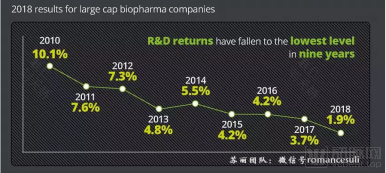
Deloitte-Measuring the return from pharmaceutical innovation 2018
For many pharmaceutical companies, you finally manage to kick off the R&D of a new drug and complete all preparatory work, only to find that a similar novel therapy has already been approved and launched on the market before your product even emerges. The time lag between domestic and international research is further narrowing. The timing for follow-on development has quietly shifted forward from post-launch stages to Phase III, Phase II, or even preclinical stages, while the number of competitors has expanded from just a few to over a dozen, or even dozens, of local innovative biopharmaceutical enterprises. A clear example at hand demonstrates that the “fast-follow” strategy is encountering intense “involution.” The current state of PD-1 monoclonal antibodies may well foreshadow the future of fast-follow approaches targeting other indications. Judged by application potential, these prospects are likely even less promising than those of PD-1. Meanwhile, under such low return-on-investment conditions, can companies still uphold their grand vision and social responsibility of “advancing human health,” continuing to pour resources into the bottomless black hole of new drug R&D?
So, where exactly do the paths to innovation and survival lie for pharmaceutical companies?
“Fortune 500 companies rise and fall, with some entering and others exiting the list. The probability of a company remaining in the Fortune 500 after 30 years is no more than 50%. What kind of company can enter the Fortune 500 and thrive for three decades? A company must have an ambitious vision, which defines its value and ultimate purpose. Only by sustainably creating value, wealth, services, and products for humanity and the planet can a company achieve enduring success.”
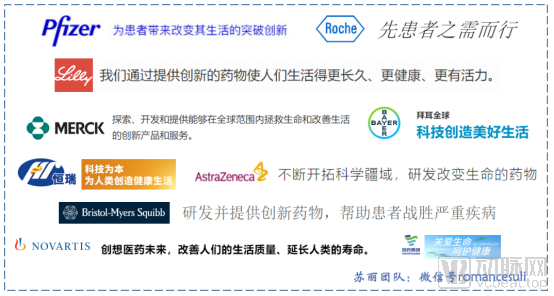
Examining the visions and missions of pharmaceutical companies both in China and abroad, we encounter many inspiring and noble keywords: “patient-centric,” “for the health of all humanity,” “technology creating a better life,” “guardians of human health,” and “letting life flourish.” A review of the development histories of these century-old pharmaceutical enterprises reveals the secret to their success: consistently putting their corporate visions into practice through innovation. On the grand journey of advancing human well-being and health through innovative breakthroughs, they have “incidentally” achieved remarkable commercial success and accumulated substantial wealth.
We are at“Insights into Digital Therapeutics (I)”As also mentioned, health is a multidimensional and dynamic concept, serving as a resource that individuals and societies can rely on and actively leverage. The determinants of health include biological factors, lifestyle and behavioral factors, environmental factors (encompassing both the physical and social environments), and healthcare service factors. These factors influence the health of individuals and populations through a socio-ecological model characterized by multi-level interactions. Among these, individual lifestyle and behavioral patterns constitute the most significant determinant of health.
Extensive medical research has demonstrated a strong correlation between chronic conditions—such as hypertension, diabetes, fatty liver disease, obesity, and cardiovascular disease—and patients’ lifestyle behaviors. These conditions cannot be controlled by medication alone; optimal therapeutic outcomes are achieved only when pharmacological treatment is administered on the foundation of modifying and avoiding unhealthy lifestyle behaviors.[2]
Medications are no longer the sole benchmark or intervention for treating diseases. The medical paradigm has gradually shifted from the biomedical model to a health-oriented medical model, with its core objective transitioning from “disease-centered care” to establishing and improving a comprehensive system of health services, health management, health education, and health promotion across the entire life course.
All great enterprises with the vision of “improving human health” should remain true to their original aspirations, uphold their mission of innovation to achieve this vision, and provide more comprehensive solutions for human health, rather than limiting themselves to “pharmaceuticals” alone.
In September 2017, a “digital pill” for the treatment of patients with substance use disorders received FDA approval, becoming the first prescription digital therapeutic and marking a milestone in the field of digital therapeutics.
Digital Therapeutics: Intervention programs driven by high-quality, evidence-based software applications to prevent, manage, or treat diseases.Digital therapeutics can be used alone, in combination with medications, or alongside other therapies to improve patients’ health outcomes. They can be understood as software-plus-hardware or software-only products whose efficacy and safety have been validated through clinical trials. The development of digital therapeutics is similar to that of pharmaceuticals, yielding comparable final therapeutic effects, and they can be prescribed just like drugs.
We have also observed that certain pharmaceutical giants, such as Novartis and Sanofi, have begun to strategically position themselves in the field of digital therapeutics in recent years. As a novel and effective treatment modality, digital therapeutics not only complement existing therapies but also enable pharmaceutical companies to deliver truly “patient-centric” comprehensive solutions built upon their traditional business foundations. Therefore, we believe that embracing the innovative solution of “digital therapeutics” represents the path to “renewed greatness through innovation” for pharmaceutical enterprises.
The essence of pharmaceutical companies’ commercial activities is to benefit more patients through standardized diagnosis and treatment. A scientific study conducted by our team on medication adherence among 11,505 hypertensive patients at a community health service center in China revealed that as many as 46% of patients discontinued medication within the first month, a figure that falls far short of the requirements outlined in hypertension diagnosis and treatment guidelines. Even in the field of oncology, which carries higher mortality and disability rates, standardized treatment with adequate dosage and full course duration has yet to meet established standards. Digital therapeutics can bring unexpected gains to pharmaceutical companies in managing patient adherence. Furthermore, by bundling digital therapeutics with treatment regimens, companies can mitigate competitive pressure from rival products. For companies with limited drug pipelines, digital therapeutics can serve as a supplement to their portfolio, reducing commercial risks associated with product concentration.
According to“Insights into Digital Therapeutics (I)”The “Eight-Step Method” for digital therapeutics mentioned above follows a development process highly consistent with that of traditional pharmaceuticals. It is believed that their future application and promotion models in the therapeutic field will also share significant similarities. Therefore, traditional pharmaceutical companies possess inherent advantages in strategically positioning themselves in the digital therapeutics sector.
1. Disease Insights
The pipeline strategy of pharmaceutical companies inherently demands in-depth research and exploration of diseases, continuously seeking new “targets,” directions, and mechanisms of action, while persistently uncovering therapeutic blind spots to address diagnostic and treatment challenges that remain unresolved. The profound understanding and insights into diseases accumulated by pharmaceutical companies over centuries also serve as the foundation for the development of digital therapeutics. They are naturally positioned to identify which therapeutic areas are most suitable for the development and application of digital therapeutics.
2. Clinical Trials
Digital therapeutics must undergo clinical validation of their efficacy and safety before they can be approved, registered, and brought to market. The standardized and systematic management of clinical trials required in this validation process is a core competency of pharmaceutical companies. High-quality historical data accumulated by pharmaceutical companies during drug R&D can serve as controls for clinical trials of digital therapeutics in certain fields, thereby significantly reducing R&D costs.
3. Registration and Market Launch
Pharmaceutical companies already have dedicated regulatory affairs teams within their existing organizational structures, along with well-established product registration processes and management mechanisms. They have maintained positive interactions and open lines of communication with regulatory authorities for many years. Although the regulatory framework and policies for digital therapeutics in China are not yet fully developed, these companies are poised to be the primary beneficiaries, regardless of how policy evolves.
4. Business Operations
Over years of commercial operations, pharmaceutical companies have progressed from pioneering the medical information consultant model to developing a comprehensive and refined marketing methodology. Their understanding of the Chinese pharmaceutical market is both profound and practical. From product registration and launch to physician prescription, a new product undergoes multiple stages, including pricing, commercial partnerships, tendering and procurement, hospital formulary inclusion, and clinical promotion. Pharmaceutical companies have established systematic strategies for each of these stages. This inevitably provides them with a solid foundation for the commercialization of digital therapeutics.
In summary, the capabilities accumulated by pharmaceutical companies in their core businesses can better support their layout across the entire digital therapeutics industry chain. As potential players, pharmaceutical companies are also more likely to stand out in the competitive blue ocean of digital therapeutics.
In the research, development, and operation of digital therapeutics, capabilities in underlying product R&D and digital operations are also required, which poses a significant challenge for pharmaceutical companies entering the digital therapeutics market.
1. Underlying Logic
Beyond insights into disease and the pursuit of therapeutic efficacy, another core logic underpinning digital therapeutics (DTx) products is the research and intervention of patient behaviors—an area where most pharmaceutical companies lack in-depth exploration. We will not elaborate on this here but will share further insights in a dedicated topic later.
2. Interdisciplinary Talent
In recent years, some pharmaceutical companies have made significant investments in industrial digitalization. However, numerous challenges have emerged during this process. The primary cause is a shortage of interdisciplinary talent with profound expertise in both healthcare and digitalization. Purely technical professionals or those with solely pharmaceutical backgrounds often face cognitive gaps that hinder effective collaboration, frequently resulting in synergies where 1+1<2. Furthermore, individuals with single-discipline backgrounds tend to have constrained innovative thinking due to rigid cognitive boundaries and established knowledge systems, making it difficult to achieve substantial breakthroughs in cross-sector integrated innovation. Only talents who possess combined expertise in both pharmaceuticals and digitalization can fully leverage digital technologies to enhance efficiency in industrial transformation and drive innovative industry layouts.
Although interdisciplinary talent is extremely scarce in the industry, it is believed that these two issues will be gradually resolved as industrial digitalization advances. At this stage, pharmaceutical companies should prioritize identifying and proactively recruiting such talent in their digital therapeutics strategies.
In an era of transformation, opportunities and challenges coexist. Pharmaceutical companies are grappling with dilemmas such as low R&D efficiency and a volatile business environment. How to leverage their inherent strengths, convert long-term accumulation into a driving force for innovation, and maximize value has become an urgent imperative for every pharmaceutical enterprise. In this age where healthcare embraces technology, digital therapeutics offer a novel solution to this challenge.
On the path of innovative exploration, each individual’s cognition is limited, while the boundaries of innovation are infinite. We look forward to engaging in in-depth exchanges with like-minded professionals in the industry, fostering mutual growth through teaching and learning.

References:
1. 《Deloitte-Measuring the return from pharmaceutical innovation 2018》
2. Practical Guidelines for Comprehensive Management of Cardiovascular Diseases at the Primary Care Level (2020)