

Zhongguancun Life Science and Technology Innovation Forum 2021 (Industry Practice Session) Files IPO Prospectus
On March 18, the first event of the 2021 Zhongguancun Forum—the Zhongguancun Science City Life Science and Technology Innovation Forum—was successfully held at the Conference Center of the Exhibition Center of Zhongguancun National Independent Innovation Demonstration Zone.
Attendees included Xu Qiang, Party Secretary of the Beijing Municipal Science & Technology Commission and the Zhongguancun Administrative Committee, and Director of the Beijing Municipal Science & Technology Commission; Yu Jun, Secretary of the Haidian District Committee of the Communist Party of China; and Hou Yun, Member of the Party Leadership Group, Deputy Director, and First-Level Inspector of the Beijing Municipal Science & Technology Commission. The forum was hosted by the Organizing Committee Office of the Zhongguancun Forum, undertaken by the Administrative Committee of Zhongguancun Science City, and co-organized by Beijing Zhongguancun Science City Innovation Development Co., Ltd. and the Beijing Haidian District Bio-Health Industry Association.
The forum, themed “New Drug Innovation Entering the First-in-Class Era,” focused on “Discovering First-in-Class Drugs.” It addressed hot topics such as the innovation ecosystem and regulation in the pharmaceutical industry, basic research and translational application of new drugs, comparative analysis of domestic and international new drug development pathways, and financing for pharmaceutical companies. Nearly 20 Chinese and foreign scientists, entrepreneurs, and investors from the life sciences and technology sectors—including Huang Niu, Huang Yuanyu, Li Zhengqing, Li Jing, and Shan Bei—were invited to deliver presentations on multiple themes, ranging from “AI-Driven New Drug R&D,” “Nucleic Acid Therapies,” and “Synthetic Biology” to “Review and Future Outlook of Biopharmaceutical Investment and Financing.”
The forum will be conducted in two sections: Frontier Trends and Industry Practices. This section covers Industry Practices, and the following are excerpts of the viewpoints:
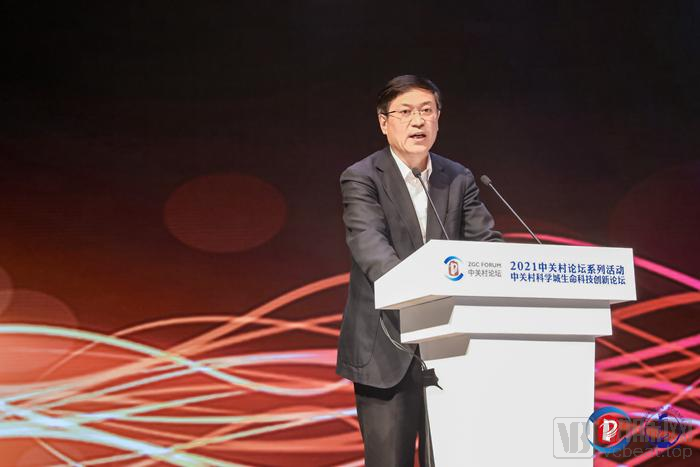
Xu Qiang, Party Secretary of the Beijing Municipal Science & Technology Commission and the Zhongguancun Administrative Committee; Director of the Beijing Municipal Science & Technology Commission
Xu Qiang stated that, looking ahead, Beijing will further leverage its advantages in science and technology, talent, and government services, intensify efforts to foster innovation, remove bottlenecks hindering the translation of original innovations into industrial applications, and continuously expand international cooperation channels for its pharmaceutical and health industries. The city strives to establish itself as a key source of innovative development in the pharmaceutical and health sectors, working with all parties to contribute to the building of a Healthy China.
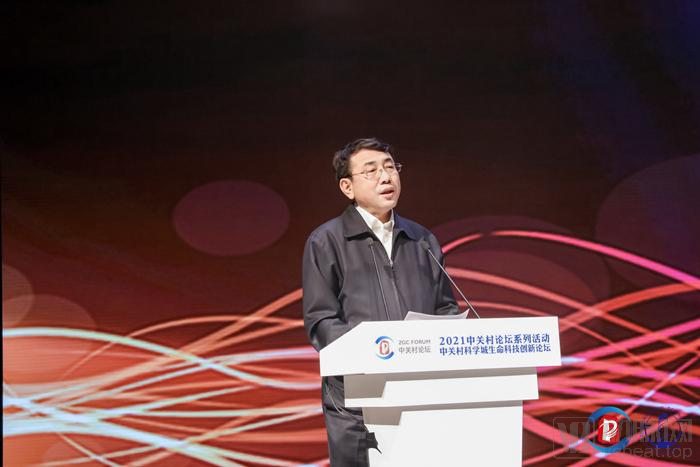
Yu Jun, Secretary of the Haidian District Committee of the Communist Party of China
Yu Jun stated that Zhongguancun Science City hosts a diverse array of innovation entities and has attracted a large pool of top-tier talent, including academicians from the Chinese Academy of Sciences and the Chinese Academy of Engineering, as well as renowned scientists. The innovative “rainforest” ecosystem of Zhongguancun Science City provides them with an environment conducive to both living and professional development. Haidian District sincerely invites friends from all sectors to come here to pioneer new endeavors and work together to build the core zone of an international science and technology innovation center with global influence.
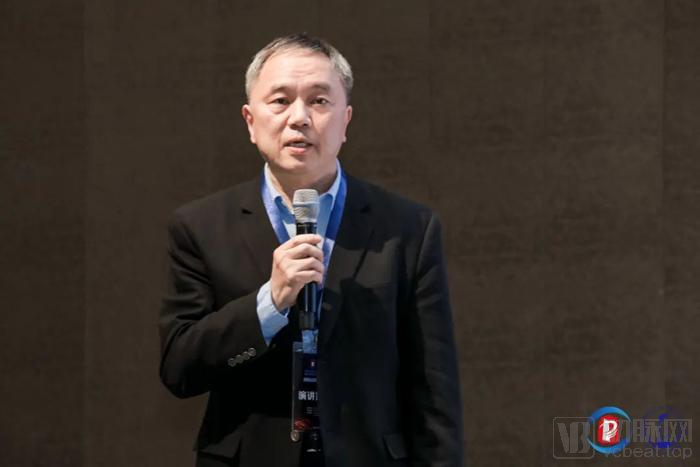
Shan Bei, Co-founder and CEO of Baifang Yingku Pharmaceutical Technology (Beijing) Co., Ltd.
Drug development in China can actually be described as a unique “Me” journey.
First is the “Me Too” phase, which represents a period primarily focused on generic drugs. There is often a time lag of at least five to six years for a drug to move from international markets to China, and some foreign drugs are unable to enter the country; during this window, generic drugs rapidly emerge.
However, the path for generic drugs is becoming increasingly narrow, making differentiation in drug development more critical. We are no longer solely focused on producing generics but are developing our own innovative drugs. This evolution has reached the “Me Better” stage, signifying our ability to deliver superior products; building on innovation, we also aim to accelerate development, which defines the “Me Faster” stage. The next step is “Me Best,” representing a pursuit of excellence, with “best” demonstrated through clinical data—a process that is often lengthy and complex.
Ultimately, our goal is “Me First”—to develop global first-in-class drugs that are unique and pioneering. How can we achieve this “Me First” strategy? This will enable China’s original innovative drugs to cross borders and expand into the global market.
From a broader societal perspective, pharmaceutical reform and innovation are increasingly aligning China with international standards. In the capital market, investments in the STAR Market and the healthcare sector have demonstrated that China’s shortfall lies not in economic strength, but in high-quality research outcomes. The generation of such outcomes hinges on talent development and recruitment. China is currently making significant efforts to attract overseas talent, while corporate R&D centers are also focused on cultivating their own professional workforce.
Environment, capital, and talent require an integrated mechanism to function effectively. We can start from the source by directly connecting with university faculty, facilitating collaborations between academia and entrepreneurs, and enabling the direct translation of research findings into clinical practice and the market.
By integrating team strengths, source advantages, technical platforms, and market investments, and further consolidating various resources through exchanges with multinational pharmaceutical companies and biotechnology firms, the phase of Me First’s China-first innovative drugs will naturally arrive.
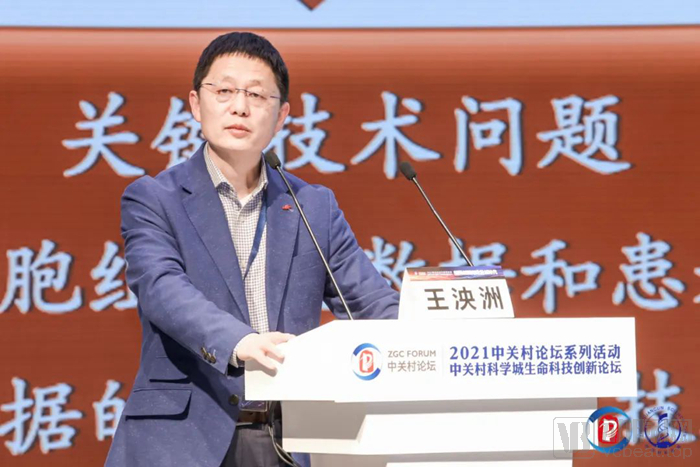
Wang Yangzhou, CEO of Beijing BioAI Biotechnology Co., Ltd.
BioAI discovers new drug discovery models and novel drug targets through its big data platform.
Taking cancer as an example, within the tumor microenvironment, various types of cancer cells and host regulatory cells interact with and influence each other. Additionally, tumor cells modulate immune cells, leading to phenomena such as immune dysregulation. The establishment of single-cell methodologies enables the isolation, sequencing, and analysis at the individual cell level, facilitating the examination of interrelationships among different cell subtypes and categories based on their data profiles.
By leveraging single-cell databases, the company characterizes the various types, functions, and proportions of tumor cells, host cells, and immune host cells. Through comprehensive big data analytics, it elucidates the interactions, mutual regulation, and adaptive relationships among cancer cells, host cells, and non-cancerous cells. Building on this foundation, the company gains insights into clonal evolution of cancer cells and the mechanisms by which non-cancerous cells, displaced by cancer cells, evade the immune system.
During the analysis process on the BioAI Hub platform, the company integrates biology with information technology, accumulates vast amounts of data, and systematically collects various types of data to facilitate new drug development. By grounding scientific research in these information technologies and leveraging big data and analytical systems, the company achieves more innovative and competitive research outcomes.
The company’s platform was established by an experienced R&D team and, through collaboration with Peking University, conducts research and development in bioinformatics analysis of the tumor immune microenvironment and bioinformatics methodology.
To date, BioAI has cumulatively archived over 27 million single-cell genomic data entries. By deeply integrating biology with information technology, BioAI drives its own innovative development and significantly empowers the growth of other enterprises through big data analytics.
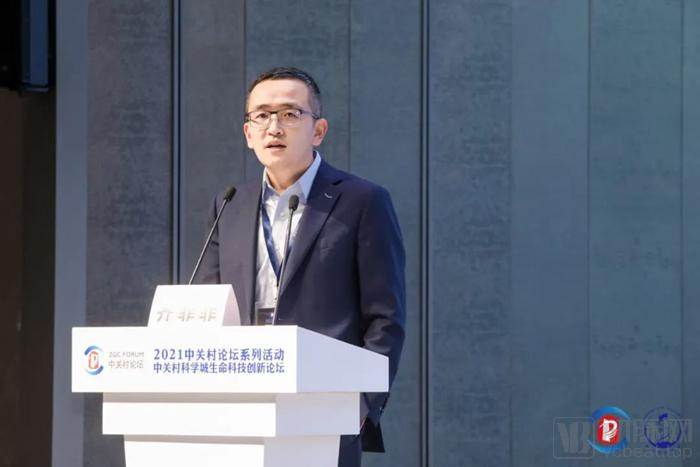
Qi Feifei, Founder and CTO of Beijing Imunopharm Biotechnology Co., Ltd.
The New Era of CAR-T Technology in Cancer Treatment Refers to the Potential of This Technique to Fundamentally Cure Cancer to a Certain Extent.
Regarding cancer, China sees 4.29 million new cases and 2.8 million deaths annually. Leukemia and lymphoma alone account for over 100,000 deaths each year. Cancer has become a disease that seriously threatens human health.
From a market perspective, the global oncology drug market reached tens of billions of dollars in sales in 2020. There is substantial clinical demand for cancer therapies, and drug development holds promising prospects.
Against this backdrop, a new technology with the potential to revolutionize cancer treatment is CAR-T. Currently, CAR-T therapy is primarily applied in two areas: leukemia and lymphoma. A representative case in the field of relapsed and refractory leukemia involves a young girl who was diagnosed with leukemia in 2010 and experienced a relapse in late 2011. In 2012, she became the first patient to receive CAR-T therapy, achieving complete remission in just 23 days.
Returning to CAR-T technology, cell therapy drugs differ significantly from traditional chemotherapy as we commonly understand it. In simple terms, we engineer T cells from patients to express artificially designed protein molecules known as CAR-T molecules. Specifically, T cells are extracted from the patient and genetically modified using viral vectors to enable them to express CAR-T molecules that recognize tumor cells. These modified cells are then expanded in culture before being infused back into the patient.
Once CAR-T cells are administered into the patient’s body, one end recognizes specific protein molecules on the surface of tumor cells, thereby activating T cells. This process leverages the patient’s own immune system to identify and destroy tumor cells. Furthermore, CAR-T cells persist permanently within the patient’s body; upon recurrence of tumor cells, they undergo further differentiation and exert additional cytotoxic effects, ultimately achieving a fundamental cure for cancer.
However, this medication also has its drawbacks, as CAR-T therapy is priced prohibitively high. Although the treatment regimen consists of a single course, manufacturing poses significant challenges. It is a fully personalized therapeutic product; unlike traditional large-molecule or small-molecule drugs, each patient’s dose constitutes a distinct batch.
YiMiao Shenzhou has engineered immune cells to build a one-stop gene therapy platform. The company has developed a series of T-cell engineering technologies, along with an industrialization platform for their scalable production. Additionally, the company has filed a series of patents to safeguard its intellectual property and advance the development of its drug candidates.