

Trapped in Longevity: A Prospectus on the Human and Systemic Costs of an Aging Society

Taikang Community
Chain养老机构
The "Locked-In" Elderly
Wang Kaijun can no longer recall the last time he slept through the night. In the years spent caring for his ailing mother, he has been like a tightrope walker high in the air—requiring constant vigilance. To better care for her, he assembled a makeshift bed just outside the small room where his mother lives, and has been sleeping there for several years.
Sometimes, he would ask himself: When will these days come to an end? Yet whenever such thoughts arose, he was filled with guilt, after all, the shriveled patient before him, unable to stretch out his body, had raised him with care and devotion in the past.
This was not the first time his mother had “lost control.” Compared to the panic he initially felt when confronted with her incontinence, he now skillfully took out the pre-prepared towels and began cleaning up the mess. “I never imagined my retirement life would turn out like this. I had originally planned to travel around after retiring, but in the end, it feels as if I’m completely locked down here.”
“Lock-in” is not a situation that Wang Kaijun alone must face. As population aging intensifies, cognitive disorders, including Alzheimer’s disease, are becoming increasingly prevalent. The decline in physical function among the elderly also renders some unable to care for themselves or move independently (physical disability). Physical disability and the deterioration or even loss of cognitive abilities (dementia) often occur alternately. Compared with physical disability, dementia imposes a heavier burden. Once such an elderly person appears in a family, most caregivers become “locked in.”
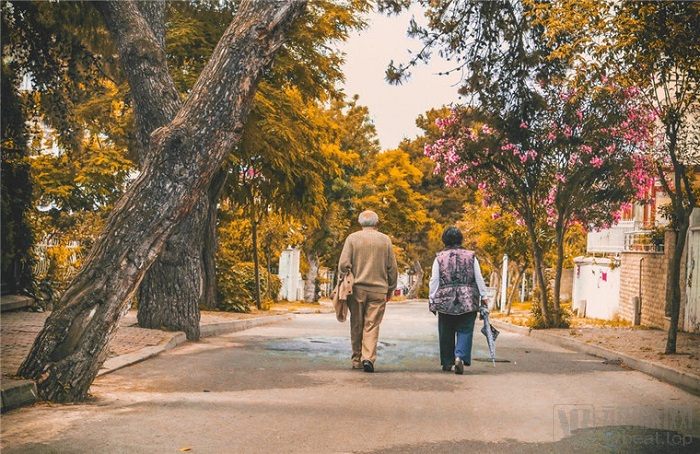
“While you are still alive, someone who once shared your daily life is gradually forgetting you. It is like a preview of what happens after your death. This is deeply distressing because you are still alive and experiencing double the pain.” Initially, when his mother occasionally forgot things, Wang Kaijun simply attributed it to her old age. But one day, when she asked in panic, “Who are you? Why are you in my house?” he finally realized the severity of the situation. Since then, he has become like a stranger to his mother.
As his mother’s sole reliance, Wang Kaijun must shoulder the responsibility of caring for his 86-year-old mother at the age of 60. The two are thus inextricably bound together. He often finds himself wondering: What if one day, while his mother is still alive, he too becomes like her?
The “Threshold” for Entering or Not Entering Nursing Homes
While both are cases of elderly care, Academician Liao, 87, seems to enjoy a much more comfortable retired life. However, in conversation, he described his decision to move into a senior living community as “forced.” Initially, he had not considered moving into Taikang Community, as he continued working for a long period after retirement.
The accident occurred while installing a wind deflector on an air conditioner, when he accidentally fell from an A-frame ladder. His planned retirement life had to take a different form due to this incident. At the time, it coincided with the COVID-19 pandemic, and he was confined to his home. Due to inadequate rehabilitation therapy, muscle atrophy developed in his affected leg. Unwilling to become a burden to their children, Academician Liao and his wife began to rethink their future elderly care arrangements.
Previously, Academician Liao was no stranger to elderly care institutions. However, his skepticism toward such facilities hindered him from taking further action. After his injury, he remained conflicted throughout the process—from initially engaging with Taikang Community to making the final decision. On one hand, his children had little time to care for the elderly; on the other, they were generally reluctant to have their parents reside in an elderly care institution.
The traditional concept of “raising children to provide for old age” has not disappeared, and “living in a nursing home” often carries a pejorative connotation; therefore, aging in place remains the mainstream approach. In households with elderly family members suffering from illness, adult children typically play a role by providing both financial support and hands-on care, or the healthier spouse cares for the other.
For Academician Liao, his children’s feedback was equally clear—they opposed their parents’ move into a retirement community. Just as Academician Liao had been forced to accept living with illness, his children felt “compelled” to accept his decision to reside at Taikang Community. This sense of compulsion manifested as protest: on the day Academician Liao moved into Taikang Community, his children chose to stay away and did not make a special trip to accompany him.
The inability to bear the judgmental gaze of others is a psychological barrier for children when deciding whether to place their parents in a nursing home. This barrier, however, is bidirectional. A student visiting Academician Liao realized that Taikang Community was an excellent choice and considered moving his own parents there. Yet when he proposed this idea to them, his parents broke down. In their eyes, moving into a senior care facility is no less of a psychological hurdle.
However, there is a world of difference in elderly care across different generations. The post-80s and post-90s cohorts, who are becoming the backbone of society, often have grandparents with multiple children; typically, these baby boomers (born in the 1950s and 1960s) can take turns caring for their aging parents. In contrast, the post-80s and post-90s generations consist largely of only children, who often must bear the sole responsibility for caring for their parents when needed. This pressure may drive this generation to place their parents in nursing homes. Indeed, one survey found that as many as 82% of adult children opted for institutional care for their parents only because no one was available to provide care at home.
"The Anxiety of the 'Longevity Era'"
The situation faced by Wang Kaijun, where the elderly are cared for by their own aging peers, is not an isolated case. In reality, most people do not possess the decisiveness or financial means of Academician Liao. Even when they meet the criteria for admission to nursing homes, many remain constrained by traditional values, reluctantly enduring the significant inconveniences of home-based care.
China’s aging trend has become increasingly pronounced. According to data released by the National Bureau of Statistics, the proportion of China’s population aged 65 and above rose from 7.0% in 2000 to 12.6% in 2019. The United Nations projects that this proportion will reach 14% by 2025, and by 2045, one in every four Chinese individuals is expected to be an older adult.
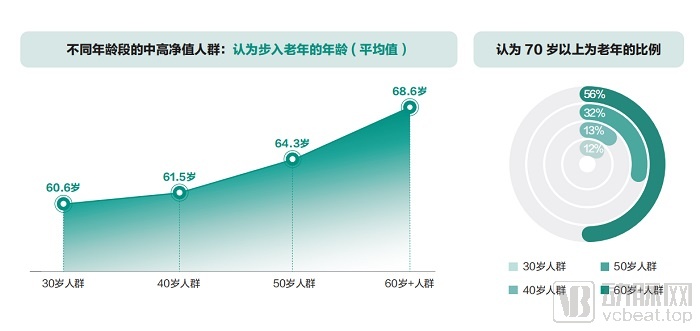
Image source: "2020 White Paper on Medical and Elderly Care for China's Middle- and High-Net-Worth Individuals"
With the improvement of living standards, increased longevity accompanies population aging. In 2016, the average life expectancy in China was 76.3 years; some experts project that, if current trends continue, it will reach 81.9 years. We are inevitably entering the “Era of Longevity.”
“The Era of Longevity” faces a more severe situation: on the one hand, the elderly population is growing at an accelerated pace; on the other, healthcare security systems and welfare protection frameworks struggle to keep pace with the impending demographic age structure. Japan’s current reality may serve as a potent warning for us, making it imperative that we address how to prevent the phenomena of “getting old before getting rich” and “being both old and poor.”
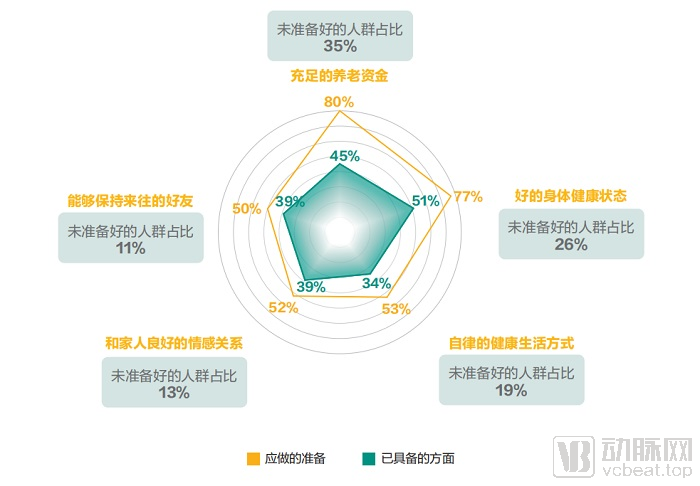
Source: “2020 White Paper on Medical and Elderly Care for China’s Middle- and High-Net-Worth Individuals”
We are not inactive. Historically, the elderly care market has been dominated by two types of institutions: social welfare-oriented facilities focused on meeting basic subsistence needs (“food and clothing”), and for-profit entities—comprising large real estate developers, insurance companies, state-owned enterprises, and professional elderly care service operators—that tend to offer high-end senior living projects. Under this landscape, the phenomena of “scarcity of available beds” and “high vacancy rates” have coexisted. In recent years, with the deregulation of the elderly care market, the sector has gradually begun to align more closely with user demands, while the “asset-light” model of publicly built but privately operated facilities has also contributed to the market’s development to some extent.
However, the situation remains severe. During this year’s Two Sessions, a total of 57 proposals related to elderly care were submitted. These proposals covered a wide range of areas, including the construction of the elderly care security system and elderly care finance, smart elderly care, the development of the elderly care service system alongside the cause and industry of elderly care, talent cultivation, and the integration of medical and elderly care services. Among them, proposals focusing on the construction of the elderly care security system—such as expanding the investment scope of pension funds and enterprise annuities; further leveraging tax policies to promote the development of the third-pillar personal pensions; and exploring the establishment of exclusive accounts for the third pillar of pensions—have become particular focal points.
We have inevitably entered the era of longevity. Scenarios such as elderly individuals caring for their own aging parents, exemplified by Wang Kaijun, and patients like Wang Kaijun’s mother and Academician Liao living with chronic diseases for extended periods, will become increasingly common. How to truly enjoy life in old age and transform this era of longevity into a blessing has emerged as a new challenge.
Where Do Leaves Return?
Although initially opposed by their children, Academician Liao quickly gained his daughter’s understanding. Shortly after moving in, his daughter came to visit the elderly couple. This visit was more akin to an inspection of Taikang Community. Eager to assess her parents’ current living conditions, she sought to determine whether their decision had been the right one.
In reality, the reluctance to place parents in nursing homes is a complex issue. Beyond psychological factors, the infrastructure and service quality of elder care facilities are also critical determinants in the decision-making process. Key considerations include poor dietary options, substandard living environments, unqualified caregiving staff, inadequate attention to personal care, low standards of medical and nursing care, concerns about potential abuse by staff, and worries that limited activities fail to meet residents’ emotional and psychological needs.
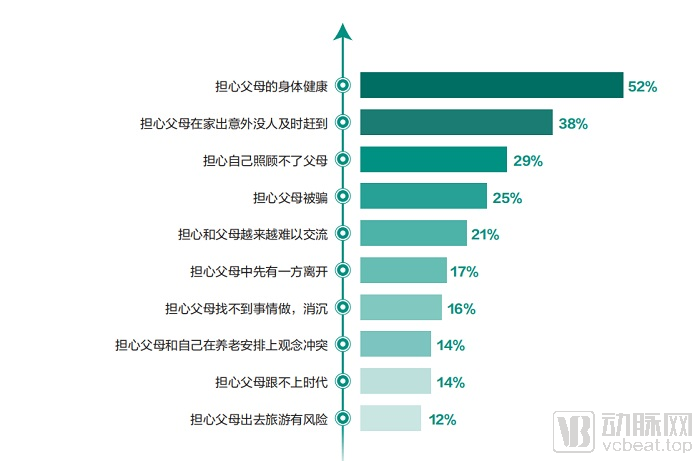
Young People’s Concerns About Elderly Care for Their Parents, Image Source: “2020 White Paper on Medical and Elderly Care for China’s Middle- and High-Net-Worth Individuals”
At Taikang Community, the comfortable natural environment, age-friendly design, abundant recreational facilities, art-infused courses and activities, an on-site secondary rehabilitation hospital, and convenient access to tertiary Grade A hospitals within a 5- to 10-minute drive finally eased the concerns of Academician Liao’s daughter.
“Of course, what my daughter is most concerned about is Academician Liao’s health. Relaying his daughter’s words, Academician Liao said, ‘My daughter mentioned that she used to be most afraid of receiving phone calls in the middle of the night. But now, with dedicated caregivers providing assistance, they have been relieved of this burden and can finally enjoy a restful night’s sleep.’”
Even so, accessing high-quality elderly care services remains a challenge for most people. This requires a societal shift in attitudes toward aging and greater support for the elderly care industry. Just as the Two Sessions have consistently advocated for the development of the third pillar—private pensions—the commercial insurance industry has been continuously exploring new business models in this process.
Taikang Insurance Group’s solution, which has been included as a teaching case at Harvard Business School and emulated by numerous insurance institutions, can be regarded as an effective approach currently in practice. In contrast to the traditional model of exchanging cash payments for elderly care services, Taikang Insurance Group is pioneering a model that integrates insurance with health and elderly care services.
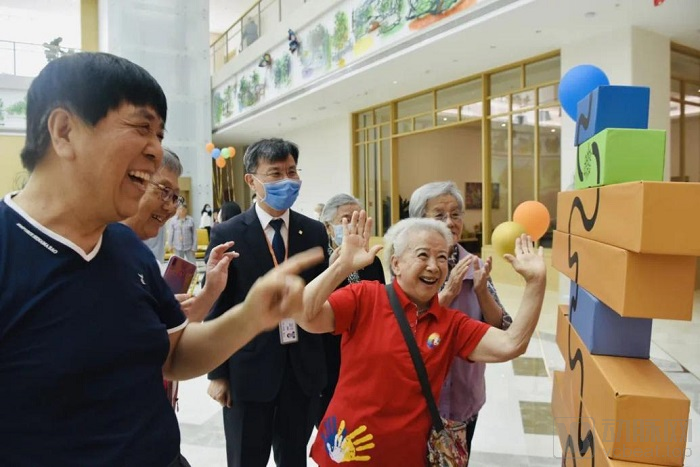
Taikang Community · Yan Garden: Glimpses of Residents’ Lives
Currently, Taikang is deploying its senior living communities in 22 key cities across China, including Beijing, Shanghai, and Guangzhou, and has established rehabilitation hospitals within these communities, specializing in rehabilitation and geriatric medicine. Through chain-style operations, Taikang Community is systematically reducing costs. To address challenges such as “aging before becoming wealthy” and “being both old and poor,” Taikang integrates insurance with Taikang Community by offering the exclusive annuity product “Happiness Promise,” which includes a guaranteed admission letter to the senior living communities. This approach enables elderly individuals to accumulate funds for their retirement while securing access to senior care services in advance.
Furthermore, during this year’s Two Sessions, in addition to focusing on issues such as private pensions, it was also emphasized that efforts should be made to “promote the integration of medical and elderly care with health and wellness care, and steadily advance the pilot programs for the long-term care insurance system.” In 2020, the number of cities in China approved to conduct long-term care insurance pilots increased from 15 to 49, with the aim of addressing the long-term care security needs of individuals with severe disabilities.
In fact, there is still much to be done to promote the healthy development of the future elderly care industry and to optimize and upgrade the entire industrial chain. Yet everything we are doing today will one day enable us to truly “return to our roots,” ensuring that longevity is no longer a burden but a blessing.
(At the interviewee’s request, names in the text have been anonymized, and certain content has been adapted or rephrased.)