

World's First AI-Powered QFR System for Coronary Physiological Assessment Launched: A Potential Game-Changer in Coronary Artery Disease Diagnosis and Treatment
On March 17, the inaugural Shanghai Forum on Artificial Intelligence and Coronary Physiology, co-initiated by Academician Ge Junbo of the Chinese Academy of Sciences and Academician Chen Yazhu of the Chinese Academy of Engineering, was successfully held. The conference was jointly organized by the National Clinical Research Center for Interventional Medicine, Shanghai Institute of Cardiovascular Diseases, and the School of Biomedical Engineering of Shanghai Jiao Tong University, with co-organization by the China Cardiovascular Physicians Innovation Club (CCI) and Pulse Medical Imaging Technology (Shanghai) Co., Ltd.
Represented by computational FFR technology for coronary physiology, the conference explored the clinical application value of artificial intelligence. During the event, Pulse Medical Imaging Technology launched the world’s first AI-QFR device for quantitative flow fraction measurement in coronary arteries. This innovative technology is poised to significantly advance the precise diagnosis and treatment of coronary heart disease for patients in China and worldwide. The conference attracted over 120 cardiovascular experts and scholars from more than 50 domestic hospitals, including Zhongshan Hospital Fudan University, Fuwai Hospital, Ruijin Hospital, The Second Affiliated Hospital of Zhejiang University School of Medicine, and Renji Hospital. Additionally, 7,600 participants from China, the United States, Europe, Japan, and other regions joined online, collectively witnessing this historic moment.
Pressure wire-based FFR (Fractional Flow Reserve) is a functional index for evaluating coronary hemodynamics. It is currently the gold standard for assessing myocardial ischemia caused by coronary stenosis, facilitating precise diagnosis of coronary artery disease, avoiding under-treatment and misdiagnosis, reducing unnecessary interventional procedures, and helping physicians better plan treatment strategies for coronary artery disease.
In China, the United States, Europe, and Japan, FFR has been incorporated into clinical practice guidelines for the diagnosis and treatment of coronary artery disease (CAD). When the FFR value is ≤0.8, percutaneous coronary intervention (PCI) is indicated; when the FFR value is >0.8, medical therapy is recommended. Therefore, physicians can scientifically tailor CAD management plans based on FFR measurements.
However, due to drawbacks such as the high cost of fractional flow reserve (FFR) technology, its technical complexity, and potential side effects, its adoption rate in China lags significantly behind that in other countries. Consequently, most patients can only undergo conventional coronary angiography, which hinders the implementation of precision cardiovascular care and severely limits the application and dissemination of coronary physiology in primary clinical settings. There is an urgent need for precise, cost-effective, easily implementable diagnostic and therapeutic technologies for coronary artery disease that are tailored to China’s national conditions.
Academician Ge Junbo initiated and championed the China Cardiovascular Innovation Club (CCI). Guided by collaborative innovation between medicine and engineering, the club pools the premier resources of cardiovascular experts and engineers across China. It has vigorously advanced the exploration, application, and translation of artificial intelligence in the diagnosis and treatment of cardiovascular diseases, yielding numerous globally leading innovative cardiovascular products, such as bioresorbable coronary stents, transcatheter aortic valve implants, and coronary Quantitative Flow Ratio (QFR) measurement systems.
Professor William Wijns, President of the European Association of Percutaneous Cardiovascular Interventions (EuroPCR) and Principal Investigator in multiple QFR clinical trials, stated in his address at the conference and the AI-QFR launch event that physiological assessment should be integrated with anatomical assessment in routine clinical practice. Non-invasive, rapid, and precise methods for evaluating coronary physiology should be readily accessible in daily clinical work. The newly launched AI-QFR represents a milestone in global coronary physiology and is expected to have a significant impact on the diagnosis of cardiovascular diseases.
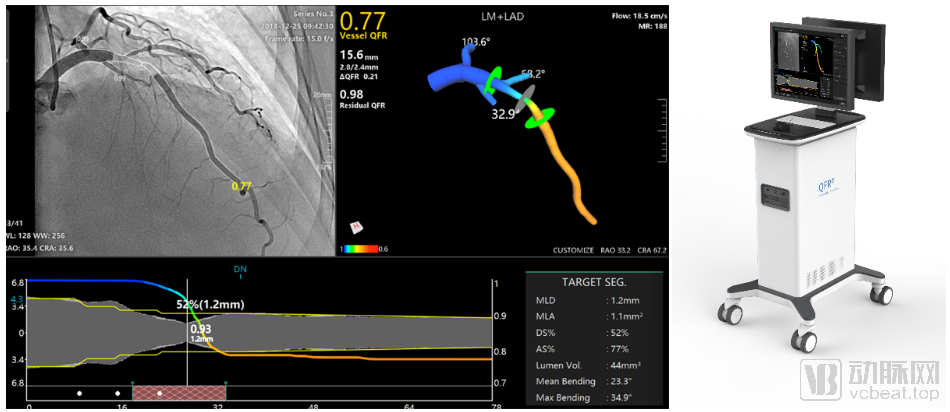
The world’s first QFR (Quantitative Flow Ratio) coronary quantitative flow fraction analysis technology, jointly and independently developed by Professor Tu Shengxian’s team under Academician Chen Yazhu at Shanghai Jiao Tong University and Pulse Medical Imaging Technology (Shanghai) Co., Ltd., enables non-invasive, rapid, and precise physiological assessment of coronary arteries. QFR can perform functional calculations quickly and non-invasively using only coronary angiography images, thereby accurately assessing the degree of myocardial ischemia. Meanwhile, its unique PCI (Percutaneous Coronary Intervention) surgical navigation technology will facilitate the rapid implementation of precise treatment strategies in China, allowing hospitals at all levels to achieve the surgical proficiency of senior physicians at Grade 3A hospitals.
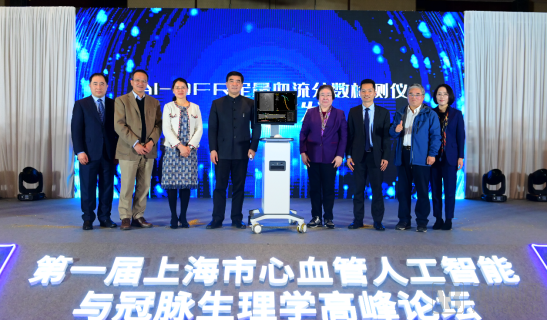
Since the QFR technology first received NMPA approval for market launch in 2018, it has attracted significant attention within the industry. QFR is also the first domestically developed FFR-like technology approved for marketing in China. After five years of iterative development, the product has undergone comprehensive upgrades. The new generation of AI-enabled QFR products (AI-QFR, μQFR) has recently received renewed approval from the National Medical Products Administration (NMPA) for market launch.
QFR Quantitative Flow Ratio Analyzer is a China-originated, globally pioneering domestic FFR product and the first of its kind to receive approval from the National Medical Products Administration (NMPA) for market launch. It also features exclusive PCI surgical navigation capabilities. According to statistics from over 100 published QFR clinical research studies, this technology has accumulated more than 20,000 cases of clinical validation data across over 20 countries worldwide. It is also the only wire-free FFR technology globally to have completed large-scale randomized controlled trials (RCTs). Therefore, QFR is currently the angiography-based, wire-free FFR product with the most robust clinical evidence and thorough validation worldwide.
After years of exploration, this technology was included in the official training curriculum for interventional cardiologists by the European Society of Cardiology in 2019 and in the 2018 Japanese Expert Consensus on Interventional Treatment of Acute Myocardial Infarction (AMI). This marks the recognition of QFR technology by experts both domestically and internationally, reaching an international leading level and gradually becoming the “new standard” for intraoperative diagnosis of coronary artery disease.
At the forum, Academician Ge Junbo mentioned that Professor Tu Shengxian’s team, in collaboration with Pulse Medical Imaging Technology (Shanghai) Co., Ltd., has developed and established a new evaluation metric known as Quantitative Flow Ratio (QFR). This technology enables precise assessment of coronary artery lesions and provides objective, quantitative indicators for myocardial ischemia. It assists physicians in determining whether patients require interventional treatments such as Percutaneous Coronary Intervention (PCI) or Coronary Artery Bypass Grafting (CABG). Furthermore, its features for PCI planning and virtual stenting help surgeons perform procedures more effectively, holding promise for advancing precision medicine in cardiovascular diseases in the future.
The new generation of AI-QFR, empowered by artificial intelligence, has further expanded its indications, enabling coronary computed functional assessment to be more widely applied in real-world clinical practice. Today, FFR assessment of both main and branch coronary arteries and PCI navigation can be fully automated within one minute, requiring only a single angiographic image and a single computational step. Empowered by AI, this next-generation technology facilitates rapid and accurate diagnosis and PCI procedural planning, making it better suited for actual clinical workflows. Clinical research results published in 2021 in *Circulation: Cardiovascular Interventions* demonstrated that AI-QFR achieved a diagnostic accuracy of 93%, representing a substantial 33% increase in diagnostic precision during interventional procedures for coronary artery disease.
QFR technology can also identify latent high-risk lesions at an early stage, predict and prevent many cases of acute myocardial infarction, yielding significant social benefits. This aligns with the national advocacy for precision medicine and the overall requirements and direction of the “Healthy China 2030” strategic plan, thereby holding substantial value for economic development and social progress.
Despite its significant economic and clinical value, the adoption of QFR still faces multiple challenges.
The first challenge is commercialization. Traditional QFR has already received approval from the National Medical Products Administration (NMPA), and the new generation of AI-enhanced products has also been approved by the NMPA for market launch. Following regulatory approval, the next hurdle is inclusion in the price catalog, which requires hospitals and enterprises to spend several months completing the approval process in each individual province. It is reported that over the past year, QFR-based assessment procedures have gradually gained approval in more than ten provinces across China, including Beijing, and have been incorporated into the medical service pricing system. This has established a closed-loop business model, positioning it at least two years ahead of other similar products in the industry. As more imaging-based FFR technologies receive approval and enter the market in the future, they will likewise face significant barriers related to the approval of medical service items.
Furthermore, clinicians’ acceptance of new technologies still requires support from high-level clinical evidence. Various products and technologies for image-based coronary physiological FFR derived from computational imaging differ in terms of algorithmic models, system robustness, and clinical feasibility. Consequently, concordance studies alone are insufficient to gain widespread recognition and adoption among most clinicians. High-quality clinical outcome studies and randomized controlled trials (RCTs) remain essential pathways to establish the clinical value of image-based FFR and secure physician endorsement. Similarly, due to differences in technological approaches, clinical evidence supporting one specific technology cannot be extrapolated to demonstrate the clinical value of other image-based FFR products. Therefore, each manufacturer’s image-based FFR solution, implemented via distinct technologies, must be backed by high-level clinical evidence to achieve broad clinical acceptance—a requirement that many domestic startups currently lack.
According to statistics, Pulse Medical Imaging Technology holds a global leading position among companies specializing in imaging-based fractional flow reserve (FFR) technologies in terms of clinical evidence accumulation. Over 60 clinical outcome studies conducted across more than 20 countries have demonstrated that percutaneous coronary intervention (PCI) guided by the QFR product significantly reduces the long-term incidence of adverse events in patients and lowers healthcare costs. The FAVOR III China study, initiated by Fuwai Hospital of the Chinese Academy of Medical Sciences and recognized as the world’s first randomized controlled trial (RCT) on non-invasive FFR, is currently underway. Leveraging real-world data from 26 top-tier hospitals in China, this study will provide direct proof of the clinical benefits and health economic value of QFR using the highest level of global evidence. This will substantially enhance clinicians’ recognition of the QFR product, thereby facilitating the inclusion of QFR technology into interventional cardiology guidelines worldwide.
Next come the changes and opportunities driven by policy guidance. Data from 2019 show that China had approximately 330 million patients with cardiovascular diseases, including 11 million with coronary heart disease (CHD). In that year, about 1.03 million patients underwent percutaneous coronary intervention (PCI). With ongoing urbanization and population aging, both prevalence and mortality rates continue to rise annually. The National Healthcare Security Administration spearheaded the volume-based procurement of coronary stents, which was largely completed by the end of 2020. This initiative has saved the country more than RMB 10 billion in annual healthcare expenditures, aiming to substantially reduce spending on high-value consumables and conserve medical insurance funds. Conversely, national policies are also promoting increases in fees for medical technical services to better reflect the labor value of healthcare professionals, which will be specifically manifested through higher charges for medical service items.
Amid policy-driven changes, companies should seize industry opportunities by securing approvals for new medical service items and achieving a commercial closed loop, thereby continuously driving technological innovation. This presents both challenges and opportunities for all enterprises. Pulse Medical Imaging Technology (Shanghai) Co., Ltd. assisted hospitals in more than ten provinces in obtaining approval for QFR as a reimbursable medical service item within just one year. This demonstrates the recognition by provincial and municipal healthcare security and health commissions of the health economic value of this innovative technology, and also reflects the commercialization and market access capabilities of Pulse Medical’s marketing and access team.
It is reported that Pulse Medical Imaging Technology (Shanghai) Co., Ltd. has extensively laid out its product portfolio in the field of precise diagnostic solutions for coronary intervention. Its computed tomography angiography (CTA)-based fractional flow reserve (FFR) product (CT-QFR) and intravascular ultrasound (IVUS)-based FFR product (UFR) have been included in the National Special Examination and Approval Channel for Innovative Medical Devices, while its optical coherence tomography (OCT)-based FFR product (OFR) has entered the National Priority Approval Channel for Medical Devices. Together with its QFR product, which has already been approved through the innovative device pathway, Pulse Medical has had four products enter the national innovative or priority approval channels within five years, ranking among the top in China.
In his keynote address and during the roundtable discussion, Academician Ge Junbo pointed out that achieving accurate screening and precision diagnosis and treatment for patients with coronary heart disease is critical, as not all patients benefit from interventional therapy. Therefore, effectively guiding patients through a tiered diagnosis and treatment system, and promptly and accurately identifying those who require revascularization, represents a significant challenge in the field of cardiovascular disease management.
He also stated that imaging assessment techniques integrating structural and functional analyses can provide physicians with more comprehensive information, facilitate the selection of optimal candidates for interventional therapy, assist in guiding clinicians to formulate more appropriate and optimized treatment strategies, predict potential long-term risks for patients, and thereby guide the development of diagnostic and therapeutic plans that maximize clinical benefit.
Therefore, FFR is regarded to some extent as a transformative technology in the diagnosis and treatment of coronary artery disease (CAD). Currently, the volume-based procurement policy for stents has underscored the national commitment to standardizing cardiac interventional therapy, while the advancement of FFR-like technologies holds promise for addressing this public health issue starting from the earlier diagnostic stage.