

Ehome Health Secures $10M Series B Funding from Joy Capital to Accelerate Penetration in China's Primary Care Market

Legend Star
Angel Investment Firm
PURPLE COW STARTUPS
Early-stage Venture Capital Firms
Primary healthcare has long served as the cornerstone of China’s medical system, accounting for over half of all clinical visits—a proportion that continues to rise annually—and representing up to 97% of healthcare institutions. Laboratory testing has consistently been a critical foundation for physicians’ diagnostic decisions and a significant revenue source for hospitals. Globally, two-thirds of medical decisions are based on diagnostic results, with in vitro diagnostics (IVD) comprising 80% of these tests. In most Chinese hospitals, laboratory tests account for 80%–90% of outpatient visits and contribute 30% of total revenue. However, in primary care settings, most clinics lack testing capabilities and scientific diagnostic equipment, forcing physicians to rely on past experience rather than evidence-based diagnostics.Therefore, providing testing services to primary healthcare institutions represents a vast untapped market.
Recently, Hunan Yihong Health Technology Co., Ltd. (“Yihong Health”), a provider of innovative point-of-care testing (POCT) services for primary healthcare institutions, announced the completion of its Series B financing, exclusively invested by Joy Capital. Previously, Yihong Health secured Series A financing led by PURPLE COW STARTUPS with participation from Legendstar Capital, as well as angel investment from Legendstar Capital and Xiangjiang Qifu.
Yihong Health was founded in 2014. The company integrates high-performance, low-cost diagnostic devices with mobile internet technology.Providing comprehensive solutions for precise diagnosis and treatment to primary healthcare institutions.To date, Yihong Health has covered 2At over 10,000 primary healthcare institutions, physicians conduct patient testing using Yihong Health’s devices and deliver precise diagnosis and treatment based on the test results.
The development of the healthcare industry is closely linked to public welfare. On September 11, 2015, the General Office of the State Council issued the Guiding Opinions on Promoting the Establishment of a Tiered Diagnosis and Treatment System, proposing the creation of a tiered diagnosis and treatment model characterized by initial consultations at primary care institutions, two-way referrals, separate management of acute and chronic conditions, and coordination between upper- and lower-level medical facilities. By 2017, the policy framework for tiered diagnosis and treatment was gradually improved, and a basic mechanism for division of labor and collaboration among medical and health institutions was established. The implementation of initial consultations at primary care institutions requires grassroots medical facilities to possess accurate diagnostic capabilities, in which Point-of-Care Testing (POCT) will play a crucial role in the construction of the tiered diagnosis and treatment system.
According to the latest data released by the Statistical Information Center of the National Health Commission on its official website, as of the end of August 2020, there were a total of 1.02 million medical and health institutions in China, including 967,000 primary-level medical and health institutions,Among them, there are 35,000 community health service centers (stations), 36,000 township health centers, 616,000 village clinics, and 252,000 clinics (medical rooms).
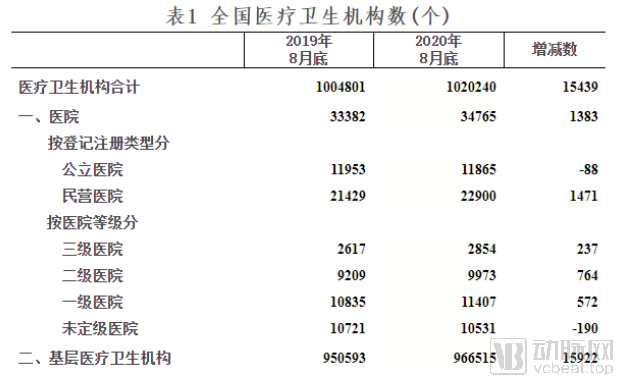
Currently, primary care institutions constitute the majority of China’s healthcare system, handling over 4.5 billion patient visits annually. However, the vast majority of diagnoses at the primary care level still rely on empirical judgment, with diagnostic tools limited to the “traditional trio” (sphygmomanometer, stethoscope, and thermometer), failing to benefit from the advancements technology has brought to the medical industry. Taking the common cold as an example, physicians cannot determine whether a patient requires antiviral treatment or antibiotics based solely on these traditional tools, leading to issues such as antibiotic misuse and overmedication.
Yihong HealthHu Shuang, the founder and a serial entrepreneur who holds a master’s degree in biomedical engineering from the State University of New York, stated that“Testing is essential for medical institutions. Clinical medicine should adhere to the principles of evidence-based medicine, and from an economic perspective, revenue from laboratory tests constitutes a significant proportion of hospital income. Therefore, the current lack of testing capabilities in primary healthcare institutions urgently needs to be addressed. Primary care settings represent the most suitable entry point for Point-of-Care Testing (POCT). Yihong Health is deeply committed to serving grassroots healthcare, focusing on township and community hospitals as well as clinics at all levels. With Yihong’s testing devices, doctors and patients can obtain results within just five minutes, enabling precise diagnosis and targeted treatment based on these reports. We aim to help primary care physicians rapidly improve their diagnostic and therapeutic standards through Yihong’s products and services, allowing patients to access testing services at the primary care level that are equivalent in quality to those offered by hospitals.”
It is reported that Yihong Health has comprehensively empowered primary healthcare, spanning from online to offline services and from hardware to content.Aimed at “standardizing primary healthcare,” it helps primary care institutions achieve more precise diagnoses and targeted treatments, manage a broader range of common diseases, mitigate medical risks such as misdiagnosis and missed diagnoses, foster differentiated operations, and build a strong reputation.
By leveraging its first POCT product, the “Zhangzhongce” portable immunoassay analyzer, to assist primary care physicians in diagnosis, Yihong Health helps establish standardized diagnostic and treatment protocols at the grassroots level, ensuring that every medication decision is based on accurate monitoring and diagnosis. Meanwhile, Yihong Health’s backend system supports iterative learning. In response to the diversity and variability of clinical cases, the AI model engages in deep learning to continuously adjust and improve its accuracy, reducing reliance on human intervention and creating a product truly suited for primary healthcare settings.
Compared with traditional POCT, Yihong’s products have achieved a leap from “feature phones” to “smartphones.”
First,Significant Cost Reduction:Traditional complete blood count (CBC) tests rely on the electrical impedance method, with machines featuring precision instruments at their core and overall costs ranging from 15,000 to 30,000 RMB. Yihong employs cell morphology analysis, which inherently avoids high-cost components. By leveraging an AIoT architecture to shift computational power to the cloud and incorporating AI compensation algorithms, Yihong has reduced costs to an extremely low level, making its solution affordable for primary healthcare facilities.
Second, the operation is user-friendly with low usage costs: cloud-based quality control and calibration eliminate the need for after-sales engineers to perform on-site maintenance, thereby accommodating the diverse scenarios found at the primary care level.
Third, AI-assisted interpretation and interoperable data connectivity: enhancing the efficiency and accuracy of clinical diagnosis, resolving data silo issues, and enabling access to upstream high-quality medical resources, thereby laying a scalable foundation for the “smart device” era.

Yihong has also established a comprehensive digital operational standard system, achieving a closed-loop digital operation across market development, service, and maintenance, thereby serving primary healthcare institutions more efficiently. For instance, within its service system, Yihong organizes large-scale academic conferences, small roundtable discussions, community sharing activities, online courses through “Yi Academy,” and the video series “Primary Care Physicians’ Voice.” These initiatives aim to enhance physicians’ theoretical and clinical diagnostic capabilities, foster organized networks among primary care doctors, attract more practitioners to join, and collectively promote the “standardization of primary healthcare.”
According to Hu Shuang, Yihong Health achieved counter-trend growth during the pandemic. Notably, this growth was reflected not only in market penetration but also in daily testing volume—a metric considered more substantive within the industry—where Yihong Health delivered even more impressive performance. In 2020, its daily testing volume recorded a half-on-half increase of 800%, continuously breaking records. In 2021, Yihong Health is expected to add over 100,000 new partner primary healthcare institutions, suggesting that its daily testing volume will continue to maintain robust growth. According to Yihong Health’s five-year plan, the company aims to collaborate with more than 800,000 primary healthcare institutions, reaching a population of over 200 million people in grassroots communities, so that every corner of these areas can benefit from the advantages of standardized primary healthcare.
Regarding this round of financing, a partner at Joy Capital stated: “Community clinics serve the vast grassroots population. Yihong Health leverages new infrastructure to promote inclusive healthcare, providing services at prices affordable for grassroots patients, thereby returning to the fundamental principle of healthcare for social good. Joy Capital has long focused on the development direction of inclusive healthcare driven by new infrastructure and will continue to support Yihong Health in its mission to make high-quality medical services accessible to the general public.”
Dr. Yu Bo, Executive Director of PURPLE COW STARTUPS, stated: "It is a great honor to invest in Hunan Yihong Health Technology Co., Ltd. This represents another significant investment for us in the primary healthcare sector. PURPLE COW STARTUPS has consistently focused on innovative companies dedicated to primary healthcare scenarios. Through its 'convenient, intelligent, and fully automated' POCT diagnostic products, Yihong Health is supporting the development of new infrastructure in primary care and has already achieved remarkable results. The company’s young yet highly driven founding team has left a deep impression on us. We look forward to the company leveraging its diagnostic capabilities as an entry point to expand from single-product services toward a channel platform model. Whether through horizontal product portfolio diversification or vertical integration with pharmaceuticals, we anticipate that Yihong Health will truly evolve into an enabling platform for primary healthcare, establishing a complete closed-loop medical service ecosystem within primary care settings."
Wang Yi, an investor at Legendstar Capital, stated: “Yihong Health is an angel investment project of Legendstar Capital. We have been seeking a technological solution capable of linking the needs of primary healthcare with China’s foundational IVD industrial capacity, thereby enabling the grassroots population in China to benefit from the rapidly rising medical industrial production capabilities in recent years. The decades-old habit in primary care settings of prescribing medications based solely on the ‘traditional three tests’ without sufficient evidence-based support needs to be broken. In addition to regulators’ long-standing advocacy for rational drug use, entrepreneurs must leverage their innovative capabilities to develop products that meet this demand and seize the emerging opportunities. Yihong Health serves precisely as this bridge. While its informational technology, SaaS cloud technology, AI technology, and POCT testing technology may not be the most cutting-edge in their respective fields, they are mature and reliable. Yihong has gradually mastered the essentials and achieved a leading position by leveraging the transferability of these technological capabilities combined with years of understanding and iterative development tailored to the primary care market. We believe such a bridge will play an even greater role in the future.”