

MayBio Biomedical: Building a Collagen Protein Ecosystem to Empower the Future of Aesthetic Medicine

MAYBIO
Medical Aesthetic Product Developer, Manufacturer, and Distributor
In recent years, with the continuous advancement of the socio-economy and the steady improvement of living standards, people’s pursuit of physical appearance, as well as their willingness and ability to pay for it, have been gradually increasing. The medical aesthetics industry is now entering a golden period of development.
According to iResearch data,In 2019, the market size of China's medical aesthetics industry reached RMB 176.9 billion, with a growth rate as high as 22.2%. Notably, China became the world's second-largest medical aesthetics market in 2017 and is one of the fastest-growing countries globally. It is projected to surpass the United States to become the largest medical aesthetics market worldwide by 2021, with its market size expected to reach RMB 311.5 billion by 2023.
Driven by strong market demand and robust purchasing power, the medical aesthetics industry is poised for sustained rapid growth in the long term, which also entails increasingly fierce market competition. Against this backdrop,Customer acquisition costs in the medical aesthetics industry continue to rise, a trend exacerbated by irregular industry practices. Consequently, low net profit margins among mid- and downstream enterprises have become increasingly pronounced and remain difficult to reverse.
Based on this, the medical aesthetics market is reaching an inflection point in its industry development, with increasing attention shifting toward the upstream sector, which features higher technological barriers, stronger profitability, and more standardized production. So, who dominates the upstream medical aesthetics landscape?
When we describe someone as looking youthful, we often say, “She looks full of collagen.” Collagen is also frequently highlighted as a key ingredient in the beauty products we encounter daily. So, what exactly is collagen? And what benefits does it truly offer to the human body?
Collagen is the most abundant functional protein in the human body and a major component of the extracellular matrix, accounting for 25%–30% of the total protein content. As a primary constituent of the skin, collagen makes up more than 75% of the dermis and is closely associated with cellular activities. In simple terms, it acts like an elastic, moisture-retaining net that locks in hydration, keeping the skin supple and smooth. However, collagen is not permanent; with advancing age, its levels decline, leading to skin aging and the formation of wrinkles.
To prevent signs of skin aging, people have begun to receive hyaluronic acid injections to restore their skin to a more youthful state, thus“Hyaluronic Acid” has become the first “billion-dollar IP” to emerge in the medical aesthetics market.According to market research, hyaluronic acid is currently the best-selling medical aesthetic treatment in China. Since the first Restylane product entered the Chinese market in 2008, there have been few competitive alternatives to hyaluronic acid fillers.
Based on the above description, many people may wonder: if collagen loss is the issue, why are hyaluronic acid injections used instead of collagen?
In fact, looking at the global minimally invasive aesthetic industry, collagen emerged earlier than hyaluronic acid and initially dominated the market. However, due to significant technical barriers in collagen production at the time, high costs, and potential immune rejection reactions associated with animal-derived raw materials, its market acceptance was gradually supplanted by hyaluronic acid, which entered the market in the 1990s.
Compared to the stagnant "collagen," hyaluronic acid, as an emerging product, has seen rapid R&D progress, demonstrated more convincing overall efficacy than collagen during the same period, and offered superior cost-effectiveness. As a result, the market for dermal fillers is now virtually monopolized by hyaluronic acid-based products.
According to the National Medical Products Administration,As of February 17, 2021, after excluding skin booster products and cases where product approval numbers were renewed upon expiration for the same product, there are currently 39 approved hyaluronic acid filler products, indicating extremely fierce competition.
While the hyaluronic acid market was engaged in fierce competition, its “predecessor,” collagen, was by no means dormant. In recent years, with deepening research, core technological barriers to collagen have been systematically overcome, leading to a significant reduction in production costs and markedly improved efficacy in practical applications compared to the past.
According to the Grand View Research report,In 2019, the market size of collagen in China grew to $983 million, accounting for approximately 6.4% of the global market. The compound annual growth rate (CAGR) from 2016 to 2027 is projected to be 6.54%, significantly higher than the global market growth rate of 5.42%.
Therefore, we have reason to believe that as the technology continues to mature, the immense potential of collagen in the fields of medical repair, medical aesthetics, tissue engineering, and regenerative medicine will be better realized.
A market opportunity for startups has gradually taken shape, with some emerging companies beginning to enter the field of collagen production. Among them,MAYBIOParticularly noteworthy. When we delve into the company’s “founding history,” it becomes evident that the transition of its three founders from “operating independently” to “moving in lockstep” was partly serendipitous, yet also an inevitable outcome.
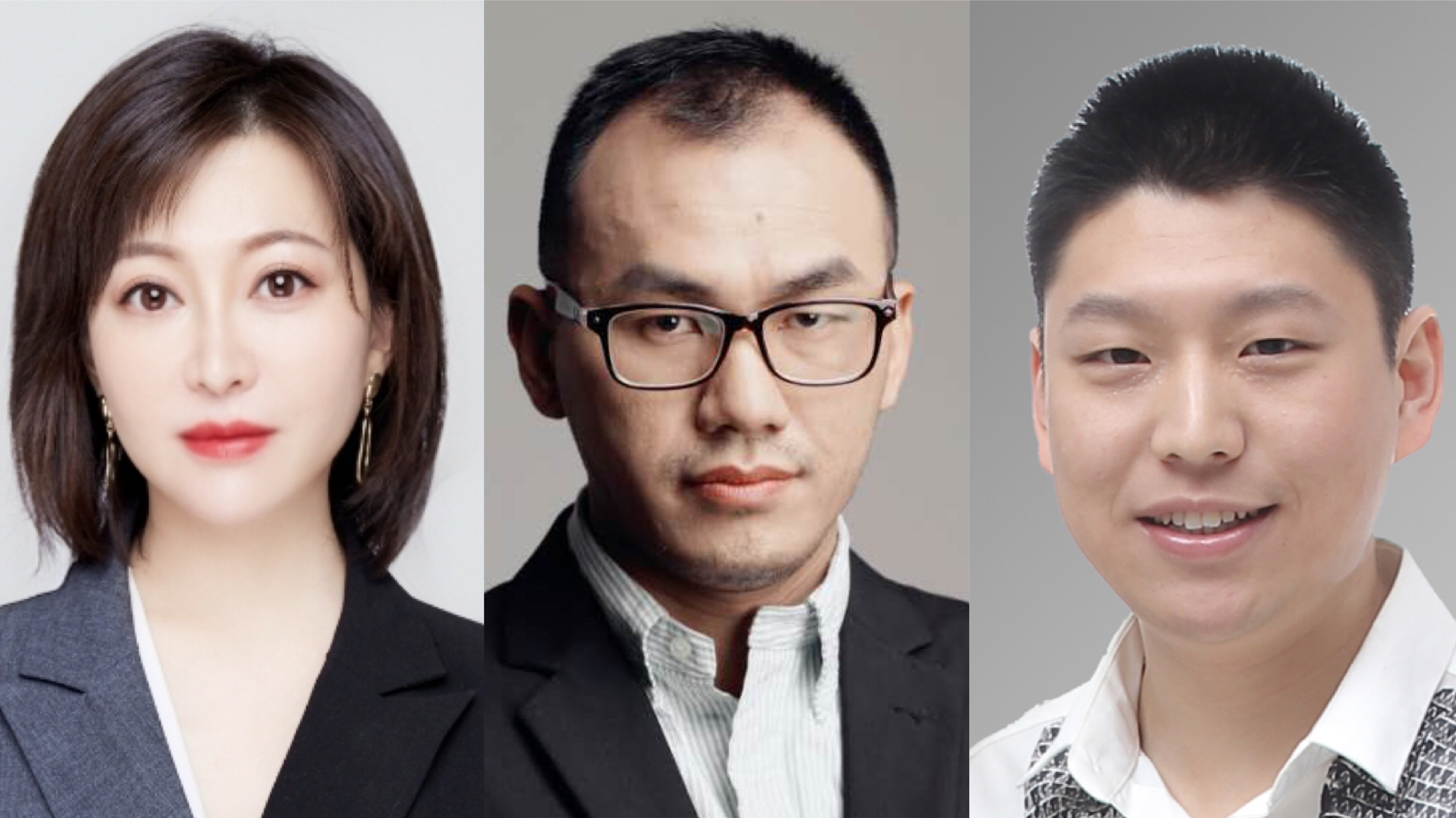
From left to right: CEO Mei Jinzhuo, Dr. Xiao E, CTO and Chairman, and Dr. Wei Qiang, Chief Scientist
MAYBIOCEO Mei JinzhuoMei Jinzhuo pursued her graduate studies in Business Administration at the University of International Business and Economics. After graduation, she continued her education at Paris 1 Panthéon-Sorbonne University in France, where she earned an MBA degree. With a long-term focus on the healthcare and medical aesthetics industries, Mei has worked for several renowned foreign pharmaceutical companies and accumulated extensive experience in healthcare marketing and medical aesthetics operations. Prior to founding MAYBIO, she operated a medical aesthetics clinic. However, over time, she realized that this path did not align with her true aspirations. Consequently, she conducted in-depth research into the medical aesthetics industry chain, seeking to identify a niche that closely resonated with her professional goals.
Through investigation, Mei Jinzhuo discovered thatThroughout the medical aesthetics industry chain, the upstream sector undoubtedly boasts the highest technical barriers and the greatest market potential., prompting her to focus on this sector. However, the ensuing question is: among the numerous upstream segments, which specific niche should she select for specialized research?
At this moment, another founder of MAYBIO appeared; he wasDr. Xiao E, Chief Technology Officer and ChairmanDr. Xiao earned his Ph.D. in Oral and Maxillofacial Surgery from the Health Science Center of Peking University and completed his postdoctoral training in basic medical sciences at the University of Pennsylvania in the United States. After returning to China in 2015, he established the Molecular Biology Platform for Oral and Maxillofacial Surgery at Peking University. His primary research focus has been on the basic and clinical studies of mesenchymal stem cells and their derivatives in the treatment of maxillofacial tissue injuries. He has presided over or participated in more than ten projects funded by the National Natural Science Foundation of China and has received numerous accolades, including the First Prize for Outstanding Youth Scientific Paper of Beijing (13th Edition) and the Second Prize for Scientific and Technological Progress awarded by the Ministry of Education. In 2019, after resigning from Peking University School of Stomatology, Dr. Xiao initially planned to accept an invitation from his former mentor in the U.S. to return to the University of Pennsylvania for work and to reunite with his family in America. However, a fortuitous alignment of vision with Mr. Mei completely changed his original plans. With years of dedication to R&D and a deep understanding of the medical aesthetics industry, Dr. Xiao was equally optimistic about the future development of the upstream sector and decisively set his sights on collagen, which was then still in its “Ice Age.”
With the market secured and raw materials in place, how should the specific product be developed? This task falls to the third founder, who isDr. Qiang Wei, Chief Scientist.
Dr. Wei primarily engages in research related to biomaterials and regenerative medicine. He previously served as the project leader for a joint research program between Freie Universität Berlin and the Max Planck Institute for Medical Research. Currently, he is a Distinguished Researcher under the “Young Talent Project” of China’s National Program for Global Recruitment of High-Level Talents. Dr. Wei has published dozens of high-impact academic papers with international influence, been granted multiple patents, and led numerous national-level scientific research projects. He serves as a key academic backbone in the National 13th Five-Year Plan Key Special Project on Innovative R&D and Platform Construction for Biomedical Materials. As for his decision to join the MAYBIO team, Dr. Wei took only one hour to consider it. After further discussions with Dr. Xiao, both parties agreed thatScientific research achievements should “step out” of the laboratory, be transformed into products in response to market demands, and ultimately serve the public.It was precisely based on this tacit understanding that the two parties hit it off instantly, and Dr. Wei made up his mind on the spot to co-found a venture.
“Beauty More Than You See”It has been MAYBIO’s mission since its inception to seek effective biological therapies that induce the body’s self-repair and regeneration, making beauty not only about appearance but also safe, healthy, and natural; and ensuring that beauty goes beyond the surface to embody spiritual confidence and freedom. This is the philosophy established by MAYBIO at its founding.
A cutting-edge team is merely a prerequisite for market entry; true market foothold depends on the multidimensional enhancement of product performance and production capabilities.
In raw material manufacturing, unlike collagen derived from animals and recombinant expression in the past, MAYBIOUtilizing human-derived mesenchymal stem cells as the expression vector, we developed the “MB Protein (Maybio Matrix)” component, which maximally restores the composite collagen composition of the human extracellular matrix through in vitro tissue engineering technology.Collagen is a major, but not the sole, component of the extracellular matrix (ECM). To achieve optimal tissue regeneration, it is essential to restore the full composition of the ECM as closely as possible. According to CEO Mei Jinzhuo, this dermal filler based on purified human recombinant collagen leverages a novel cross-linking technology that combines high-molecular-weight polymers with collagen. This approach addresses the limitations of rapid collagen degradation and the poor bioinductivity associated with synthetic polymeric materials.
It is understood that MAYBIO utilizes stem cells derived from healthy humans as expression vectors, thereby overcoming the challenges associated with prokaryotic and eukaryotic expression of collagen, such as low yield and lack of post-translational modifications, while maximizing the restoration of human extracellular matrix components.Re-"evolved" collagen exhibits excellent repair capabilities, guided regeneration potential, and biocompatibility. It promotes cell growth and adhesion, facilitates synergistic wound repair, and can be formulated as injectable agents or used as wound-healing materials, finding wide application in both surgical and non-surgical medical aesthetics.In addition, the application of collagen in tissue engineering and regenerative medicine has remained a research hotspot, with current achievements primarily including bone repair materials and tissue engineering scaffolds.
To reduce production costs and enhance the core competitiveness of its products, MAYBIO has established2,200 m² GMP-compliant sterile gel filling workshop with an annual capacity of 800,000 units of sterile gel, enabling industrialized, safe, and efficient production of recombinant human collagen.According to Dr. Xiao E, human stem cells naturally possess the gene for human collagen, eliminating the need to introduce exogenous genes through potentially risky methods such as viral vectors or plasmids. Furthermore, by employing their independently developed “PITID” 2.5D tissue engineering culture system, the yield of extracellular matrix-complexed collagen has increased approximately 15-fold, achieving protein production levels of 1.25–2.5 g/L of culture medium, which meets industrial-scale standards.
As an innovative enterprise, MAYBIO has achieved rapid growth, securing significant technological and product successes within less than two years of its establishment. Looking ahead, MAYBIO harbors even greater ambitions for the future.
First, further expand raw material production capacity to ensure continuous market supply.Maybio Matrix, an extracellular matrix complexed with collagen, is undoubtedly a key manifestation of MAYBIO’s core competitiveness and a critical factor determining its ability to capture market share. In response to growing market demand, the company will further expand its raw material production capacity by enhancing production technologies and optimizing factory operational mechanisms.
Second, expand the product pipeline to create a closed-loop industrial chain service.Currently, MAYBIO is primarily focused on developing medical aesthetic products. However, this is not the company’s ultimate goal; rather, it serves as a foundation from which they will gradually extend their product pipeline into medical-grade products, thereby achieving comprehensive synergy across a closed-loop industry service chain.
Third, shifting from To B to To C.In Dr. Xiao E’s view, direct-to-consumer (DTC) engagement represents the second growth curve for corporate development. Only by adopting this approach can the technical and cost barriers for aesthetic seekers be lowered, thereby breaking through reach bottlenecks. With long-term considerations in mind, the company has incorporated this product line into its future plans and will develop functional skincare products in the future, gradually shifting its business focus from B2B to B2C.
The objectives are clearly defined, but their actual realization requires strengthening and supplementation across multiple stages. Mei Jinzhuo, CEO of MAYBIO, told VCBeat, “For MAYBIO,The most pressing need at present is the development of a talented workforce., as this would significantly hinder the maintenance and implementation of corporate research technologies and operational systems. In addition,The injection of capital is also a critical need for the company at its current stage. On one hand, it can better support the rapid advancement of various business segments; on the other hand, it can foster synergistic cooperation with investment institutions.", jointly driving the continuous advancement of the enterprise and the entire collagen industry."
During the interview, Dr. Xiao E once said,“Whether a sector is a ‘blue ocean’ or a ‘red ocean’ depends on your understanding of the market.”For MAYBIO, first, its three founders possess profound expertise in their respective fields, along with top-tier R&D and marketing capabilities. Second, driven by both market demand and technological advancements, collagen is emerging as a key trend in the medical aesthetics industry, poised to become the next economic growth engine following hyaluronic acid. Therefore, the future prospects of MAYBIO are certainly promising.
It is precisely by relying on its experienced team and cohesive collaborative atmosphere that MAYBIO has achievedRedhill CapitalLead the tens of millions of yuan angel round financing. As a medical professional fund focusing on innovative medical technology, Redhill Capital will leverage its understanding of capital markets and rich resources in the healthcare industry to support the rapid commercialization of the company's collagen product pipeline. The funds raised will be used for team expansion, production capacity scaling, and initial sales channel development.