

Chengdu Badachu Medical Beauty Hospital Files IPO Prospectus, Leveraging 'National Team' Resources to Deliver High-Quality Aesthetic Services
Most professionals in the plastic surgery and medical aesthetics industry are undoubtedly familiar with the Plastic Surgery Hospital of the Chinese Academy of Medical Sciences (also known as Badachu Plastic Surgery; hereinafter referred to as “Beijing Badachu”). As the only public Grade 3A specialized hospital for plastic surgery in China, Beijing Badachu is hailed as the “National Team of Plastic Surgery” and the “Cradle of China’s Plastic Surgery Industry,” attracting numerous patients drawn by its prestigious reputation. According to information on the hospital’s official website, it handles over 170,000 outpatient and emergency visits annually and performs nearly 70,000 plastic, reconstructive, and cosmetic surgeries each year.
In alignment with the Chinese Academy of Medical Sciences and Peking Union Medical College’s initiative to “strengthen the development of clinical hospital branches,” the Chengdu Badachu Medical Aesthetic Hospital (hereinafter referred to as “Chengdu Badachu”) project was officially established and launched in October 2018. Backed by Beijing Badachu, Chengdu Badachu is a new type of medical aesthetic institution dominated by state-owned equity. It integrates the clinical, scientific research, educational, and academic strengths of public hospitals with the advantages of mixed-ownership structures, with investment participation from Mingfeng Capital, Sichuan Energy Investment Group, and other stakeholders.
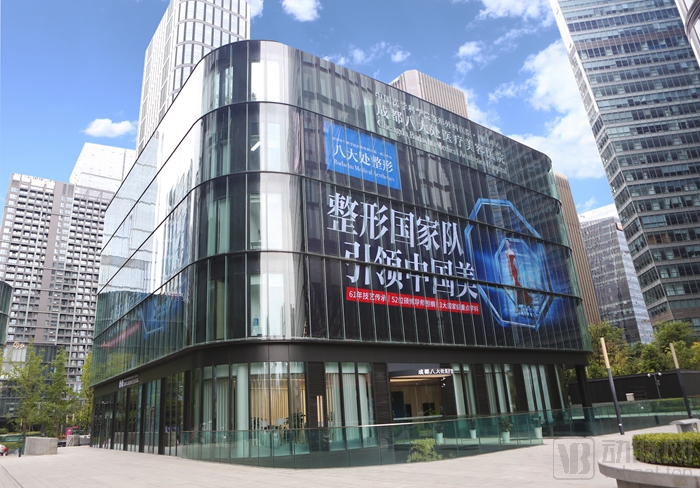
In this instance, VCBeat sought to understand the hospital’s operational logic through a conversation with Li Yong, the Operational Director of both Chengdu Badachu and Wuhan Badachu.
Making High-Quality Medical Aesthetic Services Accessible to More People
Before delving into the details of Chengdu Badachu, let us first consider the following background:
According to the “2017 White Paper on China’s Medical Aesthetics Industry” released by Gengmei, the industry’s growth rate in China exceeded 40% in 2017, with the total number of procedures surpassing 10 million. This milestone marked China’s official overtaking of Brazil to become the world’s second-largest medical aesthetics market, after the United States. Domestically, medical aesthetics is also regarded as the fourth-largest service sector, following housing, automobiles, and tourism.
Behind the industry’s rapid growth lies the public’s demand for beauty. Accompanying this surge, however, are irregular practices such as the provision of medical aesthetic treatments in non-medical settings, practitioners operating without formal training, and the use of substandard medical aesthetic products. These issues, in turn, constrain the industry’s overall development, prompting a growing number of individuals seeking aesthetic enhancements to travel to countries like Japan and South Korea for related procedures.
In 2018, Chengdu proposed the goal of building a “Capital of Medical Aesthetics” and actively formulated and implemented various policies to encourage the development of the medical aesthetics industry. These policies covered multiple segments across the upstream, midstream, and downstream of the medical aesthetics industrial chain, thereby promoting the rapid growth of Chengdu’s medical aesthetics sector from various aspects and facilitating the aggregation of high-end medical aesthetic institutions and talent.
With the support of multiple factors, Chengdu Badachu Hospital opened in October 2018, marking the official establishment of the “National Team of Plastic Surgery” in the “Capital of Medical Aesthetics.” Leveraging the abundant medical resources of Beijing Badachu, Chengdu Badachu is able to provide high-quality plastic surgery and medical aesthetic services to a broader population. During the hospital’s implementation, investors, including Mingfeng Capital, provided extensive post-investment support for preparatory work, hospital construction, and operations, while Beijing Badachu was responsible for providing brand authorization, core personnel, and technical support.
Sharing Beijing Badachu's Clinical Resources, with Equivalent Medical Quality
Talent acquisition remains a pervasive challenge across numerous industries, and the medical aesthetics sector is no exception. When discussing the shortage of talent in this field, most people immediately think of the scarcity of plastic surgeons. In reality, however, the industry suffers not only from a lack of physicians but also from a deficit of professional management and operational expertise.
To address this issue, during its early establishment, Chengdu Badachu recruited a significant portion of its medical team from Beijing Badachu. Leveraging the brand equity of Beijing Badachu, the team gradually attracted top talent from prestigious institutions such as West China Hospital and Sichuan Provincial People’s Hospital. Subsequently, the physician team was further developed and expanded through the hospital’s internal training and mentorship programs. In contrast, the operational management team was built not only by selecting outstanding professionals from within the healthcare industry but also by appointing numerous individuals from outside the sector.
Furthermore, during its operations, Chengdu Badachu can share the expert resources of Beijing Badachu. It is understood that experts from Beijing Badachu holding the title of associate professor or above regularly rotate to Chengdu Badachu to conduct clinical consultations, surgeries, and training, thereby ensuring homogeneity in medical quality. In addition to leveraging the excellent resources from its headquarters, Chengdu Badachu also recruits its full-time medical and nursing staff according to high standards. Currently, Chengdu Badachu has 35 resident physicians (including residents), among whom 7 hold senior professional titles, 2 hold associate senior professional titles, and 13 hold intermediate professional titles. There are 16 physicians qualified as attending specialists in aesthetic medicine and authorized by the hospital to receive patients, all of whom (100%) hold intermediate professional titles or above.
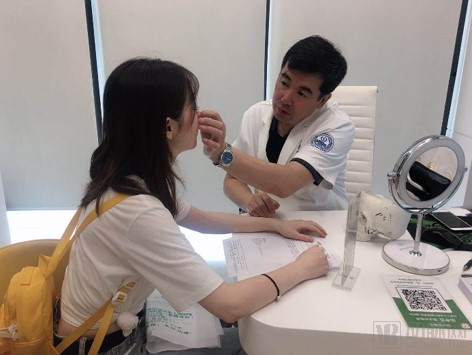
As a novel medical institution, Chengdu Badachu has its own unique characteristics in both operations and clinical practice. Unlike conventional medical aesthetic hospitals, Chengdu Badachu does not rely primarily on advertising to build its influence. Instead, it fosters external brand recognition of the “National Team of Plastic Surgery” through extensive continuing education, widespread public science popularization, and large-scale public welfare initiatives. In the patient consultation process, Chengdu Badachu follows the longstanding registration and medical care model of Beijing Badachu, enabling direct access to physicians and ensuring that doctors can independently and comprehensively fulfill their diagnostic and treatment responsibilities. This approach differs from the consultant-led preliminary consultation model commonly adopted by typical medical aesthetic institutions, allowing physicians to gain a clearer understanding of patients’ needs and expectations, while also avoiding a series of issues arising from inadequate doctor-patient communication.
Furthermore, Chengdu Badachu has gradually established several subspecialty groups, which are expected to evolve into fully operational clinical units in the future. Currently, Chengdu Badachu primarily offers services in two major areas: reconstructive and restorative plastic surgery, and medical aesthetics. In addition to basic departments such as cosmetic surgery and cosmetic dermatology, it features multiple cross-departmental specialty centers, including the Fat Grafting Center, Facial Rejuvenation Center, Rhinoplasty and Revision Center, Comprehensive Scar Treatment Center, and Women’s Health Center, thereby meeting a broader range of patients’ specialized healthcare needs.
Integration of Medical Care, Education, Research, and Industry to Empower Sector Development
Leveraging existing medical resources, Chengdu Badachu is also pursuing multidimensional development, striving to build an integrated platform encompassing clinical care, education, research, and industry, so as to provide a broader population with higher-quality plastic surgery and medical aesthetic services.
Chengdu Badachu has always adhered to the principle of returning medical aesthetics to its medical essence. Both internal operational innovations and external marketing initiatives are centered on clinical practices, leveraging high-quality diagnostic and treatment resources to maximize its advantages in plastic surgery and medical cosmetology. The institution drives the growth of non-surgical services through its surgical operations, and at a certain stage, further consolidates and enhances its surgical expertise through specialized sub-specialty teams.
In terms of education, in addition to conventional physician training, mentorship, and technical workshops, Chengdu Badachu has launched an exclusive academic exchange program for physicians—initially internally and now gradually expanding externally. This initiative is centered on the study of the latest international literature. Specifically, senior experts and professors guide junior and mid-career physicians in reviewing cutting-edge foreign technical literature, extracting valuable insights for discussion and sharing, and ultimately achieving phased group consensus to guide clinical practice.
Furthermore, medical staff from Chengdu Badachu regularly travel to Beijing Badachu for advanced study and training. As the designated host hospital for the “Peking Union Medical College Training Center for Plastic and Aesthetic Surgery (Chengdu),” Chengdu Badachu provides specialized and targeted training in plastic and aesthetic surgery for healthcare professionals from other hospitals. Additionally, through its “Joint Discipline Development in Plastic and Aesthetic Surgery” initiative, it assists central hospitals in other regions with collaborative discipline building, facilitating the decentralization of high-quality diagnostic and treatment resources from Chengdu Badachu and effectively enhancing the technical standards of plastic surgery and medical aesthetics in Southwest China. Hospitals that have signed agreements include Pengzhou People’s Hospital, Mianyang Traditional Chinese Medicine Hospital, Ziyang First People’s Hospital, Yibin Second People’s Hospital, and Jianyang People’s Hospital, all of which are Grade III Class A hospitals.
In terms of research, Chengdu Badachu and Beijing Badachu have distinctly different research focuses. Currently, the project research conducted by Chengdu Badachu is more inclined towards clinical applications, and it has already produced patented physical products such as devices for preoperative aesthetic measurement and surgical simulators.
In terms of industry development, Chengdu Badachu is also actively making strategic moves in the upstream segment of the medical aesthetics supply chain. In addition to independent research and development, Chengdu Badachu maintains active collaborations with multiple brands within the industry. Moving forward, the institution will sequentially launch a series of functional skincare products. As a clinical hospital, Chengdu Badachu can gather extensive clinical feedback and gain deeper insights into patient needs, thereby possessing distinct advantages in its upstream supply chain expansion.
The Imminent Launch of Wuhan Badachu and the Validation of the Chengdu Model
From the perspectives of brand impact, social benefit, and even economic returns, the establishment of Chengdu Badachu has undoubtedly achieved phased success. However, given Chengdu’s significant advantage as the “Capital of Medical Aesthetics,” can Badachu’s model—characterized by “direct access to doctors, doctor-assistant collaboration, and transparent pricing”—prove viable in other regions?
It is reported that Ba Da Chu will soon establish the Wuhan Ba Da Chu Plastic Surgery Hospital. This move aims to make advanced plastic surgery techniques and services accessible to a broader population, while also validating the feasibility of replicating the Chengdu Ba Da Chu model in other regions.
Geographically, Beijing is located in North China and serves as the region’s hub. Chengdu is situated in Southwest China and acts as its central node. Wuhan, located in Central China, is the regional center and a critical transportation hub with superior geographic advantages. Moreover, Wuhan boasts outstanding medical resources and healthcare standards. According to data from the "2019 China Hospital Rankings," five hospitals in Wuhan were listed among the top 100 nationwide, with their rankings improving compared to previous years. This indicates that Wuhan has abundant medical resources and a strong talent pool. In addition, the high level of activity in Wuhan’s medical aesthetics market further facilitates the subsequent development of its hospitals.
Next, Chengdu Badachu will gradually establish regional flagship hospitals in central cities across various regions to further develop the “Badachu Plastic Surgery” brand. Concurrently, it will open light medical aesthetic clinics around these flagship hospitals, offering common medical aesthetic services such as photoelectric therapies and injectable treatments. Throughout this process, Chengdu Badachu will continuously invest in talent development to lay a solid foundation for the brand’s long-term growth.