

Effector Therapeutics Files for IPO: Pioneering Selective Translation Regulator Inhibitors in Oncology with $507M Pfizer Partnership
Effector Therapeutics
Oncology Drug Developer
Headquartered in San Diego, California—“the nation’s #1 biotechnology and pharmaceutical cluster”—eFFECTOR Therapeutics is a pharmaceutical company focused on the clinical development of small-molecule anticancer drugs that are selective translation regulators.
In January 2021, Effector Therapeutics entered into an exclusive licensing and collaboration agreement with Pfizer, securing $507 million in funding to jointly develop small-molecule inhibitors of eukaryotic translation initiation factor 4E (eIF4E).
From the $38.6 million Series C financing round led by Pfizer in 2017 to today’s $507 million exclusive partnership, why has this company, founded less than a decade ago, become the preferred partner of the world’s top pharmaceutical company?
The Most Common Structure of Startup Teams: Top Technical Experts + Senior Management Talent. A pharmaceutical company’s success also hinges on these two key elements, and eFFECTOR Therapeutics has demonstrated exceptional acumen in leveraging this model. The integration of distinguished academic innovators, an experienced management team, and visionary leaders has shaped eFFECTOR Therapeutics into what it is today, successfully translating advances in basic science into improved patient therapies.
Dr. Steve Worland, President and Chief Executive Officer, earned a Bachelor’s degree in Biochemistry from the University of Michigan and a Ph.D. in Chemistry from the University of California, Berkeley, before completing his postdoctoral fellowship in Molecular Biology at Harvard University under the auspices of the U.S. National Institutes of Health. With 25 years of extensive experience in the pharmaceutical industry, he has served as Vice President and Head of Antiviral Research at Pfizer; Vice President, Global Anti-Infective Strategy, at Warner-Lambert; and initially as Chief Scientific Officer and President of Pharmaceuticals, later as Chief Executive Officer, at Anadys Pharmaceuticals. As of 2015, he also serves as a member of the Board of Directors of Tracon Pharmaceuticals, Inc.
With a professional background and 25 years of industry management experience, Dr. Steve Worland’s arrival has laid a solid foundation for the success of Effector Therapeutics.
Co-founder Dr. Kevan Shokat is a Professor in the Department of Cellular and Molecular Pharmacology at the University of California, San Francisco, a Professor in the Department of Chemistry at the University of California, Berkeley, and an Investigator at the Howard Hughes Medical Institute. Also included are Dr. Davide Ruggero, holder of the Helen Diller Family Foundation Chair in Basic Research and a pioneer in the fields of translational control and cancer, along with other members of the management team, such as Dr. Siegfried Reich, Senior Vice President of Drug Discovery; Kevin Eastwood, Senior Vice President of Business Development; and Dr. James Appleman, a member of the Scientific Advisory Board.
“Cancer will become the leading cause of death in the 21st century and will be the most significant barrier to increasing life expectancy worldwide,” stated the latest 2020 global cancer burden estimates report published by the International Agency for Research on Cancer (IARC), an agency under the World Health Organization (WHO), in the journal CA: A Cancer Journal for Clinicians.
eFFECTOR Therapeutics, Inc. was founded in 2012, with both its management team and scientific founders being industry veterans. The company explores novel cancer therapies based on the pioneering research conducted in the laboratories of Dr. David Ruggero and Dr. Kevan Shokat, and has secured an exclusive license from the University of California, San Francisco for the proprietary application of translational analysis technologies.
The Office of Innovation, Technology and Alliances at the University of California, San Francisco (UCSF ITA) holds over 1,700 active inventions and 450 intellectual property licenses. As of 2013, more than 97 products based on UCSF technologies had been commercialized, and over 90 companies had been founded leveraging UCSF technologies.
This signifies that Effector Therapeutics is exploring and cultivating cutting-edge science, with the promise of translating it into therapies and products that directly benefit patients worldwide, bringing a new vision for drug discovery and development into commercial reality.
When it comes to cancer, the available treatment modalities are by no means scarce: surgical resection, chemotherapy, radiotherapy, targeted therapy, immunotherapy, traditional Chinese medicine (TCM), gene therapy, endocrine therapy, hyperthermia, laser therapy, cryotherapy, and more. Among these largely exploratory therapeutic approaches, the most significant revolutions have been the progression from chemotherapy to targeted drugs, and subsequently to cancer immunotherapy.
Chemotherapy for cancer is generally administered via intravenous injection and is applicable to all cancer patients. Its drawbacks are significant: it kills both cancer cells and normal cells, causing substantial collateral damage, and is associated with numerous toxic side effects, such as hair loss and weight loss.
Targeted therapy delivers specific treatment by acting on molecular targets present on tumor cells. This means that targeted therapy requires the presence of a defined target; its limitations are significant, and treatment is difficult to administer for cancer cells lacking such targets. Meanwhile, targeted therapy has one major characteristic: treatment cannot be discontinued. Once medication is stopped during the course of therapy, there is a high probability of tumor rebound.
Immunotherapy works by mobilizing the body’s own immune system, specifically T cells and immune memory cells, to kill tumor cells. The cunning nature of cancer cells lies in their ability to deceive; they employ sophisticated camouflage to trick the human immune system, thereby enabling them to wreak havoc within the body. Immunotherapy, characterized by its high specificity, can recognize this “camouflage” of cancer cells, allowing the host immune system to detect and destroy them.
The human immune system possesses memory. When a prolonged treatment duration yields therapeutic effects, medication may be discontinued in select patients based on their individual conditions. The therapeutic benefits can persist after discontinuation, sustaining the efficacy of immunotherapy. Furthermore, compared with targeted therapy, immunotherapy remains effective for the general patient population.
Effector Therapeutics is such a pharmaceutical company focused on pioneering a novel class of oncology drugs known as Selective Translation Regulator Inhibitors (STRIs).
In disease treatment, transcriptional regulation has long been widely recognized by the pharmaceutical industry, while the importance of translational control is gradually gaining recognition. eFFECTOR Therapeutics possesses its proprietary selective translation regulator technology platform, positioning it at the forefront of pioneering novel cancer therapies targeting selective translation regulators (STRs).
Since its establishment in 2012, Effector Therapeutics has sequentially advanced three key product candidates: EFT508, EFT226, and EIF4E. Each of Effector Therapeutics’ products targets distinct elements of the protein translation machinery, with each inhibited target (MNK1/2, eIF4A, and eIF4E) exerting different effects on tumors, thereby indicating their suitability for different types of cancer.
On December 5, 2015, Dr. Kevin Webster presented a preclinical model of diffuse large B-cell lymphoma (DLBCL) at the 57th Annual Meeting of the American Society of Hematology (ASH) held in Orlando, Florida. He reported that EFT508, a potent and highly selective oral inhibitor targeting MNK1 and MNK2, demonstrated beneficial efficacy in preclinical models of diffuse large B-cell lymphoma (DLBCL).
With this, EFT508 is officially launched.
A month later, eFFECTOR Therapeutics announced the official initiation of the first-in-human clinical trial of EFT508 in patients with advanced solid tumors. This clinical trial aims to evaluate the safety, pharmacokinetics, and anti-tumor activity of orally administered EFT508 in patients with advanced solid tumors. The primary objective is to determine the maximum tolerated dose (MTD) and the recommended dose for further evaluation of the preliminary efficacy of EFT508. This marks a significant milestone in the development history of eFFECTOR Therapeutics.
2017 was a pivotal year for the development of EFT508. In March, the U.S. Food and Drug Administration (FDA) granted orphan drug designation to EFT508 for the treatment of diffuse large B-cell lymphoma (DLBCL), an aggressive form of non-Hodgkin lymphoma. In June, eFFECTOR Therapeutics entered into a clinical supply collaboration agreement with Pfizer Inc. and Merck KGaA, Germany, to evaluate cancer immunotherapies for the treatment of microsatellite-stable colorectal cancer. The partnership between EFT508 and avelumab, built upon preclinical data, provided a scientific rationale for combining EFT508 with checkpoint inhibitors. In October of the same year, the Phase 2 combination trial of EFT508 and avelumab was officially launched.
In April 2018, Effector Therapeutics published the design and profile of EFT508 in the peer-reviewed Journal of Medicinal Chemistry. EFT508 has the potential to provide meaningful therapeutic benefits to cancer patients, either as a monotherapy or in combination with checkpoint inhibitors. Shortly after this announcement, Effector Therapeutics translated this theoretical framework into practice. One month later, the company announced that EFT508 had entered Phase II clinical trials, with the first patient dosed in a regimen combining EFT508 with the anti-PD-L1 checkpoint inhibitor Avelumab for the treatment of microsatellite-stable colorectal cancer (MSS CRC).
Research is in full swing, yet the path of drug trials has not been smooth. Due to the inadequate response of most patients to checkpoint inhibitor monotherapy, eFFECTOR Therapeutics announced in July 2018 that it had administered the oral small-molecule MNK1/2 inhibitor EFT508 to the first patient in its Phase II clinical trial. This inhibitor was added to the regimen of patients already receiving FDA-approved anti-PD-1 or anti-PD-L1 checkpoint inhibitors, which may include Keytruda, Opdivo, Tecentriq, Bavencio, or Imfinzi. This initiative is unprecedented.
On October 16, 2018, eFFECTOR Therapeutics announced a clinical collaboration agreement with Merck to evaluate the combination of eFFECTOR Therapeutics’ EFT508 and Merck’s anti-PD-1 therapy KEYTRUDA, through its subsidiary, for the treatment of patients with metastatic triple-negative breast cancer (TNBC).
On December 11, 2018, eFFECTOR Therapeutics announced that the first male patient with metastatic castration-resistant prostate cancer (mCRPC) progressing on second-line hormonal therapy was dosed with EFT508.
Dr. Steve Worland, President and Chief Executive Officer of eFFECTOR Therapeutics, stated: “EFT508 demonstrates robust activity in preclinical models of prostate cancer, including patient-derived xenografts and syngeneic models. Thus, EFT508 may offer a novel approach to addressing treatment-resistant prostate cancer, including cancers driven by androgen receptor variants.”
In clinical studies conducted to date in solid tumors and lymphoma, EFT508 has demonstrated a favorable safety and tolerability profile at the recommended Phase 2 dose, which has shown clinical activity, including partial responses and durable stable disease in patients with advanced cancer who were refractory to or relapsed after multiple prior therapies.
On January 14, 2019, a study published by eFFECTOR Therapeutics in Nature Medicine demonstrated the immunomodulatory effects of EFT508, directly showing that EFT508 selectively inhibits the production of key immunosuppressive factors. Furthermore, findings from a novel mouse model of aggressive metastatic liver cancer indicated that the increased PD-L1 expression in these tumors was due to enhanced translation rather than increased transcription. Treatment with EFT508 selectively inhibited the translation of PD-L1 mRNA without affecting global protein synthesis.
In this study, treatment with EFT508 significantly reduced tumor growth, prevented metastasis, and more than doubled the survival time of treated mice.
Collectively, these data provide substantial support for eFFECTOR Therapeutics’ ongoing Phase 2 combination trial of CPI-A with approved PD-1/PD-L1 inhibitors, as well as the company’s planned Phase 2 trial in combination with Merck’s Keytruda for the treatment of patients with triple-negative breast cancer.
In April 2018, eFFECTOR Therapeutics announced the structure and discovery of EFT226 at the American Association for Cancer Research (AACR) Annual Meeting held in Chicago.
EFT226 is a novel, potent, and selective small-molecule inhibitor of eIF4A (an RNA helicase that regulates the expression of key oncogenes and tumor survival factors). It was designed using a combination of ligand-based computational methods and small-molecule crystal structure analysis, and it can simultaneously suppress the expression of several critical oncogenes. Given the robust in vivo efficacy demonstrated by EFT226 in tumor models, Effector Therapeutics has decided to advance EFT226 into clinical development for patients with B-cell lymphoma.
After nearly two years of phased exploration, in November 2019, Effector Therapeutics announced the initiation of a Phase 1/2 study to evaluate the safety and efficacy in patients with advanced solid tumor malignancies, targeting aggressive cancers with RTK (HER2, ERBB3, FGFR1, FGFR2) and KRAS mutations.
Dr. Steve Worland, President and Chief Executive Officer of eFFECTOR Therapeutics, stated, “There is an urgent need for more effective treatment options for patients with advanced cancer who do not respond to alternative therapies.”
Indeed, in the journey of cancer research, EFT226 has only just begun to show promise.
In 2020, the global outbreak of COVID-19 revealed another therapeutic potential of EFT226. In April 2020, Effector Therapeutics reported in an independent international study published in the peer-reviewed journal Nature that EFT226 demonstrated in vitro antiviral activity against SARS-CoV-2 (the virus causing COVID-19).
This remarkable finding suggests that EFT226 has the potential to inhibit viral replication at an early stage of the disease, before life-threatening severe respiratory complications arise. This discovery undoubtedly offers significant therapeutic benefits for patients.
However, it is worth noting that these studies were not conducted in humans, and there is currently insufficient evidence to prove that EFT226 is an effective drug for treating patients with COVID-19. To this end, Effector Therapeutics is actively engaging with the biopharmaceutical and scientific communities, the NIAID, and funding stakeholders to determine how best to advance the original development plan for EFT226 while simultaneously promoting research aimed at combating the COVID-19 pandemic. We await further developments.
On June 19, 2015, Dr. Davide Ruggero, co-founder of eFFECTOR Therapeutics, published a groundbreaking study in the prestigious biomedical journal *Cell*, highlighting the preliminary promise of a cancer therapeutic approach centered on the selective modulation of cellular protein synthesis (translation). The study demonstrated that EIF4E selectively influences oncogenic proteins in both animal models and human tumor cell lines. This finding suggests that selectively targeting EIF4E can shut down the production of known oncogenic proteins without affecting normal cellular processes. However, this line of research requires extensive time for experimental validation.
Dr. Steve Whelan, President and Chief Executive Officer of eFFECTOR Therapeutics, has stated, “EIF4E is one of the last remaining major oncogenic drivers that has not yet been leveraged as a foundation for cancer therapy.” eFFECTOR Therapeutics’ chemistry platform enables the company to effectively overcome the inherent technical challenges associated with this target, thereby advancing its development programs.
In January 2020, eFFECTOR Therapeutics entered into an exclusive global license and collaboration agreement with Pfizer Inc., involving $507 million in funding, to jointly develop small-molecule inhibitors of EIF4E for the treatment of multiple cancer types.
Dr. Steve Worland, President and Chief Executive Officer of eFFECTOR Therapeutics, stated, “This collaboration highlights the importance of the emerging field of translational regulation as an exciting new therapeutic approach.” It will leverage eFFECTOR Therapeutics’ collective development capabilities and Pfizer’s global commercial resources to build momentum around the development of EIF4E inhibitors and maximize their potential impact on cancer patients. Importantly, we believe this agreement validates eFFECTOR Therapeutics’ relentless pursuit of targeting EIF4E.
We look forward to the collaboration between eFFECTOR Therapeutics and Pfizer, which promises to deliver a promising new therapy for cancer patients worldwide.
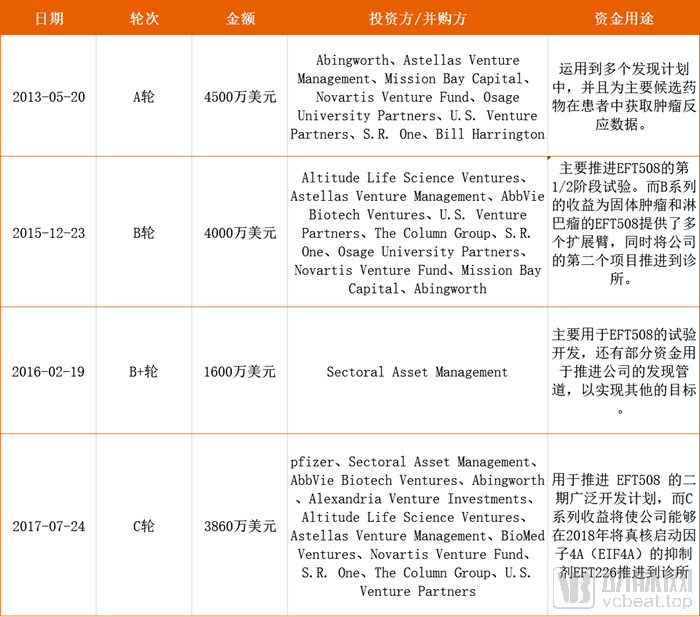
From its founding in 2012 to its Series C financing round in 2017, a span of five years, Effector Therapeutics secured nearly $140 million in funding, attracting repeated interest from multiple companies. This success was primarily attributable to its unique approach to cancer therapy.
In today’s society, the cancer landscape is becoming increasingly severe, and the journey of fighting cancer is arduous and prolonged. We look forward to EffectorTherapeutics will bring us entirely new treatment methods in the near future.