

Sangamo Therapeutics Announces Proposed Public Offering to Advance Pipeline of 17 Gene and Cell Therapy Programs in Collaboration with Pfizer, Novartis, Takeda and Others

Sangamo Therapeutics
Genomic Medicine Developer
Since the concept of “gene therapy” was proposed by renowned American biologists Friedmann and Roblin in the journal Science in 1972, nearly five decades of research and development have been conducted in the field. Gene therapy refers to the introduction of exogenous normal genes into target cells to correct or compensate for diseases caused by defective or abnormal genes, thereby achieving therapeutic objectives.
Gene therapy has a broad range of clinical applications, with its techniques being utilized in the treatment of tumors, HIV/AIDS, and cancer. In recent years, the consistently record-high investments by enterprises in gene therapy have further demonstrated its promising development prospects and strong market momentum.
Sangamo Therapeutics (hereinafter referred to as “Sangamo”), a leader in gene therapy, was founded in 1995. Headquartered in Richmond, California, USA, the company went public in 2000. Sangamo is a clinical-stage genetic medicine company. Its areas of focus encompass biotechnology, genome editing, gene therapy, MPS II, MPS I, hemophilia A, hemophilia B, thalassemia, Fabry disease, cell therapy, tauopathies, and immunology.
Sangamo completed three rounds of financing after its IPO. In September 2013, it raised $7.42 million post-IPO to accelerate the development of gene therapies; in February 2018, it received an $11 million grant from the U.S. National Institutes of Health to research gene-edited T cells for viral elimination; and in April 2018, it secured an $8 million grant from the California Institute for Regenerative Medicine to evaluate ST-400 (a gene-edited cell therapy candidate) for the treatment of patients with transfusion-dependent beta-thalassemia.
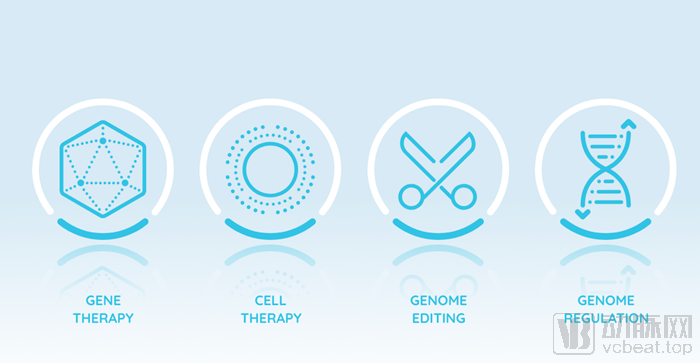
Image source: Sangamo Therapeutics official website
Sangamo possessesFour Unique and Complementary Research Platforms,gene therapy, cell therapy, in vivo genome editing, and in vivo genome regulationSangamo develops products with technological applications in various directions by conducting early-stage clinical trials through its platform and executing late-stage clinical trials and commercialization development in collaboration with biopharmaceutical companies. Key information on its core technologies and projects is as follows:
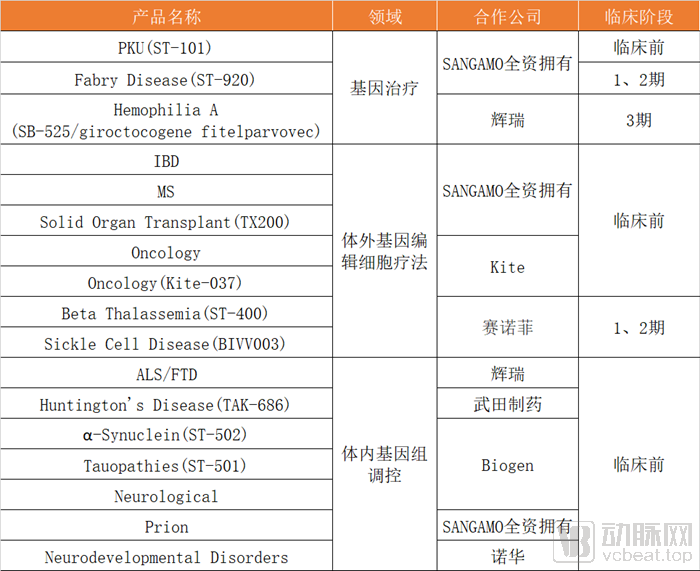
Key Project Information
Gene therapy is a technique for treating diseases by delivering new genes into patients' cells to replace incorrect or damaged genes. Gene therapy typically involves introducing corrected copies of defective genes into patients' cells, thereby treating or potentially curing genetic disorders by increasing the number of normal copies of the disease-causing gene.
Viral vectors for gene therapy are categorized into two major classes: viral vectors (primarily including adeno-associated virus, lentivirus, adenovirus, retrovirus, vaccinia virus vector, poxvirus vector, and herpes simplex virus vector) and non-viral vectors (primarily including naked DNA, liposomes, and nanocarriers).
Sangamo Therapeutics’ platform commonly employs adeno-associated viral (AAV) vectors. AAVs are among the simplest known single-stranded DNA defective viruses. Due to their favorable safety profile, broad host cell range, low immunogenicity, and ability to sustain long-term expression of exogenous genes in vivo, they are regarded as the most promising gene therapy vectors and have been widely used in gene therapy and vaccine research worldwide.
Sangamo Therapeutics currently has three gene therapy programs, namely:
ST-101 Project, for the treatment of PKU (phenylketonuria), an autosomal recessive genetic disorder caused by gene mutations that lead to a deficiency of phenylalanine hydroxylase in the liver, resulting in impaired phenylalanine metabolism;
Project ST-920, designed for the treatment of Fabry disease, a genetic disorder caused by defects on the X chromosome. It primarily results from mutations in the gene encoding alpha-galactosidase A, leading to the accumulation of undegraded lipids within cellular lysosomes, which subsequently causes cardiac, renal, cerebrovascular, and neurological complications.
SB-525/giroctocogene fitelparvovec project for the treatment of Hemophilia A. This condition ranks first among hereditary coagulation disorders and is caused by mutations in the anti-hemophilic globulin gene on the X chromosome. It is primarily characterized by a bleeding tendency, with widespread and recurrent bleeding episodes that can lead to hematoma formation and joint deformity. The most common cause of death is intracranial hemorrhage.
The first two projects are both wholly-owned research projects of Sangamo.The SB-525 program, a collaborative project with Pfizer, has been granted Orphan Drug, Fast Track, and Regenerative Medicine Advanced Therapy (RMAT) designations by the U.S. FDA, as well as Orphan Drug designation by the European Union.
Gene-edited cell therapy refers to the infusion or transplantation of modified human cells into patients to treat diseases, utilizing autologous (or allogeneic) adult cells (or stem cells) to repair tissues and organs. It is widely used in the treatment of conditions such as bone marrow transplantation, advanced liver cirrhosis, osteonecrosis of the femoral head, malignant tumors, and myocardial infarction.
Gene editing technologies are employed in the process of site-specific modification of genes. Currently, the three main technologies are zinc finger nuclease (ZFN) technology, TALEN gene editing technology, and CRISPR-Cas9 technology.ZFN gene editing technology has been monopolized by Sangamo since its inception; Sangamo has been researching ZFN gene editing technology for over 20 years and is the primary patent holder of this technology., securing several key patents related to the design, screening, optimization, and laboratory and clinical application of zinc finger proteins.
Sangamo leverages its zinc finger nuclease (ZFN) genome editing technology to develop autologous and allogeneic gene-edited cell therapies for blood disorders, including beta-thalassemia and sickle cell disease, immune system disorders, and various types of cancer. Drawing on its extensive experience in manufacturing cell therapies derived from its foundational T-cell and hematopoietic stem cell programs for HIV, Sangamo has pioneered the first ex vivo genome editing product to enter human clinical trials, which involves the therapeutic editing of human cells outside the body using ZFN technology.
ZFN genome editing technology offers several advantages, including diverse gene repair mechanisms, precise gene replacement, and minimal impact on gene expression levels. The advantages of Sangamo’s zinc finger platform are as follows:
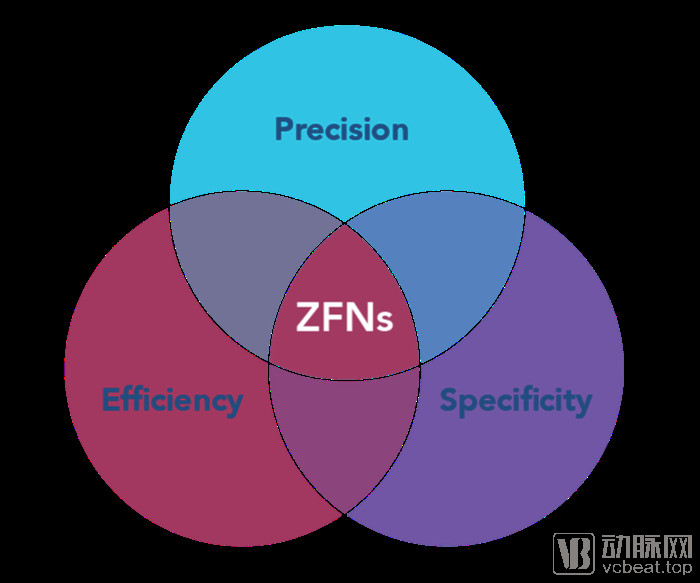
Image source: Sangamo Therapeutics official website
Sangamo currently has seven cell therapy programs, primarily as follows:
TX200 Project for Solid Organ Transplantation. Due to pre-existing organ dysfunction in transplant recipients, the significant surgical trauma involved, and the routine postoperative use of immunosuppressive therapy, patients are prone to infectious complications and surgery-related technical complications in the early postoperative period. The application of cell therapy in organ transplantation leverages the unique immunomodulatory properties of specific cells, making them highly valuable in the highly activated immune environment characteristic of transplantation.
ST-400 Project, for the treatment of beta-thalassemia (β-thalassemia). The molecular pathology underlying beta-thalassemia is highly complex, with over 100 known β-globin gene mutations identified; these are primarily point mutations, with a minority resulting from gene deletions.
BIVV003 Project for the Treatment of Sickle Cell Disease. This disease is an autosomal dominant hemoglobinopathy caused by the substitution of valine for glutamic acid at the sixth position of the β-globin chain, resulting in the formation of sickle hemoglobin that replaces normal hemoglobin. Clinical manifestations include chronic hemolytic anemia, susceptibility to infection, and recurrent pain crises leading to chronic local ischemia and subsequent organ tissue damage.This project, in collaboration with Sanofi, was granted orphan drug designation by the committee.
In addition, Sangamo Therapeutics has ongoing research programs in cell therapy for the treatment of inflammatory bowel disease and multiple sclerosis. The company has also partnered with Kite Pharma, a subsidiary of Gilead Sciences, to advance research projects in oncology.
In vivo genome editing utilizes engineered nucleases, which function as molecular scissors, to enable in situ modification or alteration of genomic DNA in higher animals, including humans. By precisely cleaving DNA at specific locations within the genome, this technology facilitates the removal, addition, or replacement of DNA sequences to achieve therapeutic effects. The aim of genome editing is to provide permanent curative solutions or treatments for genetic diseases.
Sangamo Therapeutics, Inc. utilizes zinc finger technology to cleave target sites within coding genes, after which a functional copy of the gene is integrated into the genome via homologous recombination to achieve therapeutic efficacy. The company currently has seven in vivo genome editing programs, primarily as follows:
TAK-686 Project, for the treatment of Huntington's disease (HD). This condition is an autosomal dominant neurodegenerative disorder, primarily caused by mutations in the Huntington gene on chromosome 4, which impair neuronal function.Takeda Pharmaceutical has licensed the project from Sangamo Therapeutics and will operate it independently.
Project for the Treatment of Prion-Related Diseases: The prion protein is a product encoded by normal genes in organisms and is inherently non-infectious and non-pathogenic. However, genetic mutations can give rise to infectious prions. Due to their unique structure, these prions cannot be degraded by proteases within cellular lysosomes, leading to significant accumulation. This ultimately causes lysosomal rupture, releasing proteases that damage cells and result in extensive neuronal death, forming spongiform vacuoles. Bovine spongiform encephalopathy (mad cow disease), scrapie, and Kuru are all caused by prions.
ALS Treatment-Related Projects. Amyotrophic lateral sclerosis (ALS) results from damage to both upper and lower motor neurons, leading to progressive weakness and atrophy of muscles in the bulbar region (i.e., muscles innervated by the medulla oblongata), limbs, trunk, and thoracoabdominal areas.
In addition, Sangamo Therapeutics has in-development products leveraging its in vivo genome editing technology for alpha-synuclein (to slow the progression of Parkinson’s disease), tauopathies (for the treatment of Alzheimer’s disease, Parkinson’s disease, and corticobasal degeneration), and other neurological conditions.
Genomic Regulation In Vivo: A Complex Process That Orchestrates the Spatiotemporal Order of Gene Expression in Cells and Enables Responses to Environmental Changes. Every cell in our body contains the same genes, yet neurons, muscle cells, and skin cells differ in their appearance and function.
Our cells can turn certain genes on or off as needed. Sangamo Therapeutics utilizes zinc finger proteins—transcription factors that regulate gene expression by recognizing and binding to specific DNA coding sequences—to enable cells to distinguish target genes from thousands of others. Currently, there are no ongoing projects under Sangamo’s in vivo genome regulation platform.

Image source: Sangamo Therapeutics official website
In addition to its versatile technology platform and numerous collaborative projects with major pharmaceutical companies, Sangamo’s management team is also worthy of close examination and understanding:
Sandy Macrae, President and Chief Executive Officer and member of the Board of Directors, graduated from King’s College, Cambridge, where he studied under James Black, the 1988 Nobel Laureate in Physiology or Medicine. Dr. Sandy Macrae was also nominated for the Nobel Prize in Physiology or Medicine in 2013. He has 20 years of experience in the pharmaceutical industry and has previously served as Global Medical Officer at Takeda Pharmaceutical Company and Senior Vice President of R&D for Emerging Markets at GSK.
Executive Vice President and General Counsel Gary H. Loeb holds a Bachelor of Arts degree from Stanford University and a Juris Doctor degree from Columbia Law School. Mr. Loeb has over 20 years of experience in pharmaceutical compliance, legal transactions and operations, and executive leadership. He previously served as General Counsel, Corporate Secretary, and Chief Compliance Officer at Achaogen, an anti-infective company, and as General Counsel at Counsyl, a genetic screening company, and Amyris, a synthetic biology company.
Led by a team with extensive industry experience, the company is dedicated to leveraging platform technologies such as genome editing, gene therapy, gene regulation, and cell therapy to translate groundbreaking scientific achievements into genomic therapies, thereby transforming patients’ lives.
Although gene therapy was initially developed and researched abroad, China launched the world’s second clinical trial of gene therapy for patients with hemophilia B as early as 1991, and in 2003 approved the world’s first gene therapy product, Gendicine (Jin You Sheng).
Currently, there are over a thousand companies in China engaged in gene-related research, underscoring the vitality and promising prospects of the gene research wave. In the future, China’s pharmaceutical industry will align with global biopharmaceutical R&D trends and the evolving landscape of domestic R&D to develop proprietary innovative gene-based therapies, while exploring new targets, novel therapeutic approaches, and emerging technologies.