

China's Traditional Chinese Medicine Medical Devices Market Expected to Exceed RMB 24 Billion in 2023
This article was first published on Huoshi Creation and is republished with permission by VCBeat. Author:Hu Boyang, Header image: 123rf.
Under China’s current medical device industry standards, there is a lack of corresponding standards for traditional Chinese medicine (TCM) medical devices; only eight such standards exist, and they are of a relatively low hierarchical level. Meanwhile, the absence of TCM medical device standards leaves government regulators without adequate reference points, becoming one of the constraints hindering industry development. As we enter the inaugural year of the 14th Five-Year Plan period, greater emphasis should be placed on the research and development and intelligent advancement of TCM medical devices.
China has introduced a series of macro-level policies to encourage the development of the traditional Chinese medicine (TCM) medical device industry. Enhancing the digitalization and intelligent manufacturing capabilities, along with R&D upgrades of TCM healthcare equipment, will significantly propel the growth of this sector. The comprehensive integration of TCM medical devices with technologies such as artificial intelligence will become the dominant trend shaping the future of the industry.
By 2030, our goal is to achieve breakthroughs in the research and development of common key technologies and core components for traditional Chinese medicine (TCM) medical devices, and to develop, translate, and apply a range of refined, integrated, digital, and intelligent products that meet clinical needs and market demands.
01
Market Size and Characteristics of Traditional Chinese Medicine Medical Devices
Traditional Chinese Medicine (TCM) medical devices refer to medical devices developed and applied under the guidance of TCM theory. These include traditional TCM medical devices used in diagnostic and therapeutic activities such as acupuncture, gua sha (scraping therapy), and cupping, as well as modern TCM medical devices that integrate TCM theory with modern scientific and technological advances, such as four-diagnostic instruments, meridian detectors, and electroacupuncture therapeutic apparatuses.
Compared with large-scale segments of traditional Chinese medicine (TCM), such as proprietary Chinese medicines, TCM decoction pieces, and formula granules, the overall market size of TCM medical devices in China is relatively small. Driven by favorable policies and growing demand, the market size of China’s TCM medical device industry has been steadily expanding.
In 2020, the market size of China's traditional Chinese medicine (TCM) device industry reached RMB 15.28 billion. From 2014 to 2020, the market size of the TCM device industry continued to grow at a compound annual growth rate (CAGR) of 17.5%. Over the next three years, China's TCM device industry is expected to maintain rapid growth with a CAGR of no less than 17.0%, and the market size is projected to reach RMB 24.47 billion by 2023.
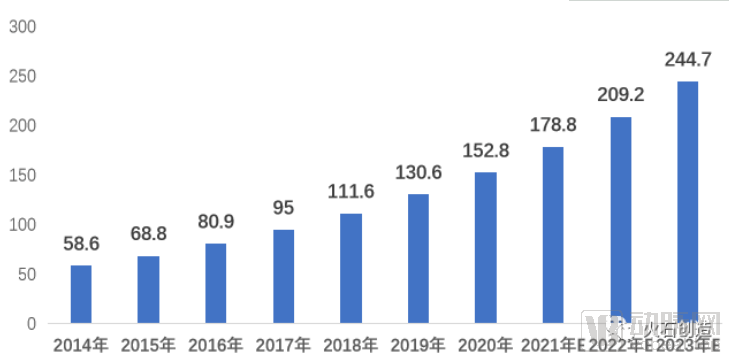
Figure 1: Market Size of Traditional Chinese Medicine Medical Devices in China
Source: Huoshi Chuangzao Database, public data from LeadLeo Industry Research Institute
The market size of China's traditional Chinese medicine (TCM) device industry has continued to grow at a high rate, primarily driven by the following three factors:
(1) Public Demand
Currently, health awareness among the Chinese population is gradually increasing. The expanding elderly and sub-health populations are driving market demand for traditional Chinese medicine (TCM) devices. As China’s aging process accelerates, the number of patients with chronic diseases continues to rise, while improving living standards further enhance public health awareness. TCM is increasingly recognized by the public due to its distinct advantages in wellness, healthcare, prevention, and rehabilitation, leading to growing demand.
(2) Market Potential in the Future
Rising household income levels and enhanced purchasing power have provided the material foundation for the consumption of traditional Chinese medicine (TCM) devices. New technologies, such as virtual reality (VR) and artificial intelligence (AI), are driving continuous advancements in TCM devices. Supported by financial, talent, and technical resources, as well as operational expertise from private TCM hospitals, TCM clinics, elderly care facilities, rehabilitation and convalescence institutions, and wellness and healthcare centers, the TCM health and elderly care service industry has entered a period of rapid growth, significantly stimulating the fast expansion of the TCM medical device market.
(3) National policies are in place
The Chinese government has issued a series of policies to encourage the healthy and rapid development of the traditional Chinese medicine (TCM) device industry.
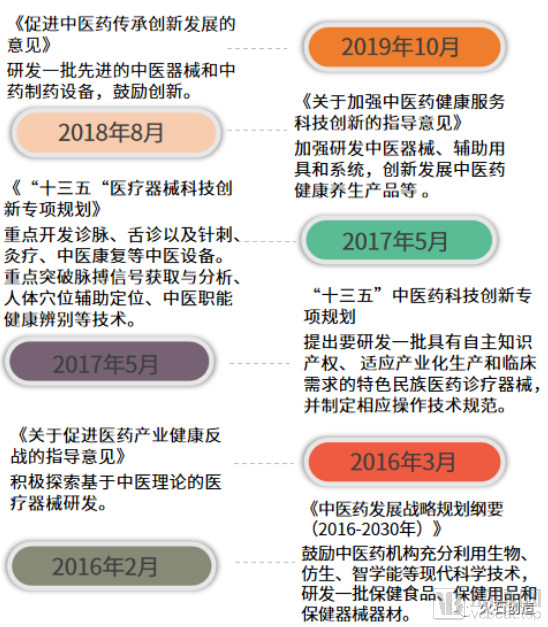
Figure 2: Policy Sources in the Field of Traditional Chinese Medicine Medical Devices – Compiled from Public Information
02
Classification and Development History of Traditional Chinese Medicine Medical Devices
TCM instruments are the devices used by Traditional Chinese Medicine in diagnosis, treatment, and other procedures.
Table 1: Major Categories of Traditional Chinese Medicine Medical Devices

Source: Compiled from public information
Table 2: Development History of Traditional Chinese Medicine (TCM) Therapeutic Devices
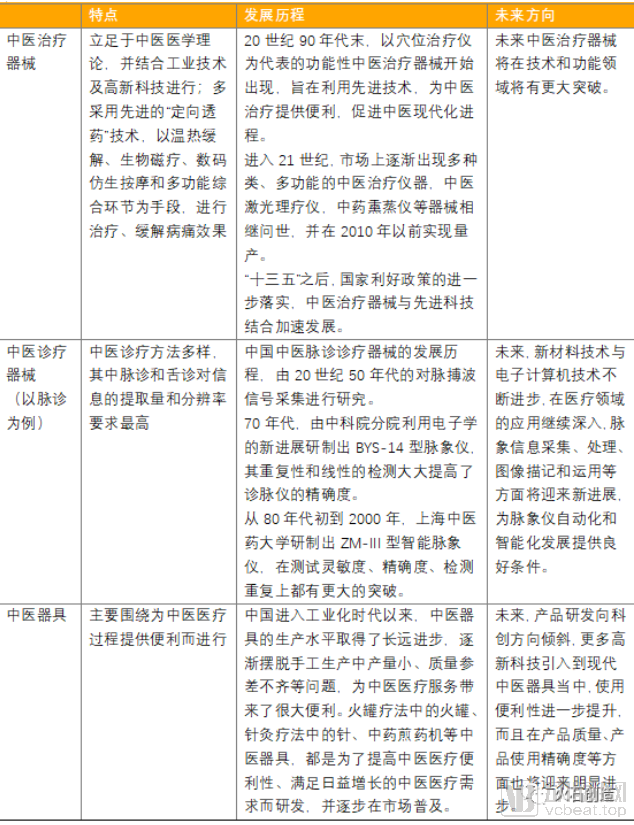
Source: Compiled from public information
Table 3: National Catalogue for Classification and Registration of Traditional Chinese Medicine Medical Device Products
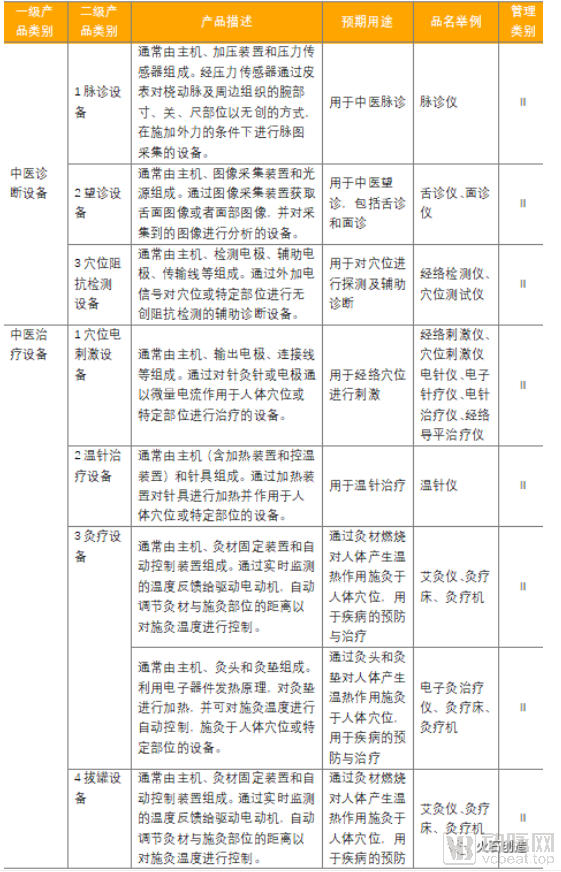
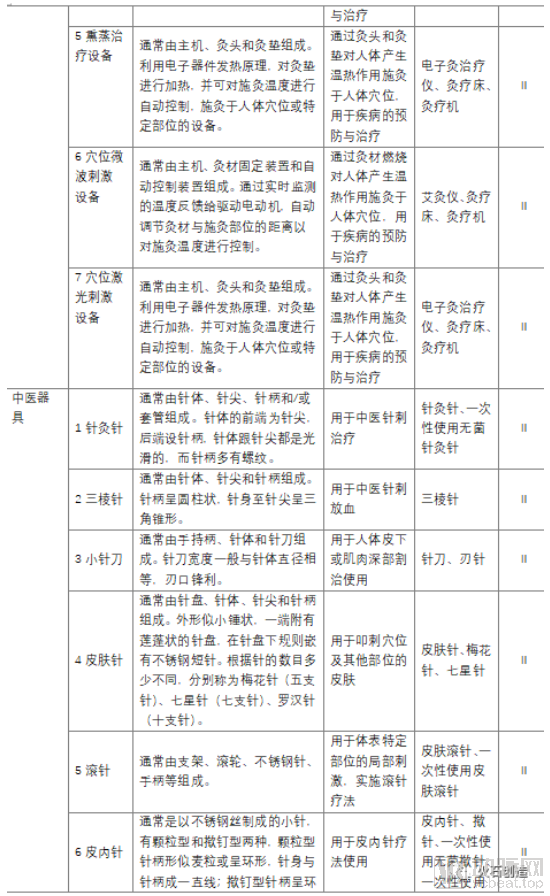
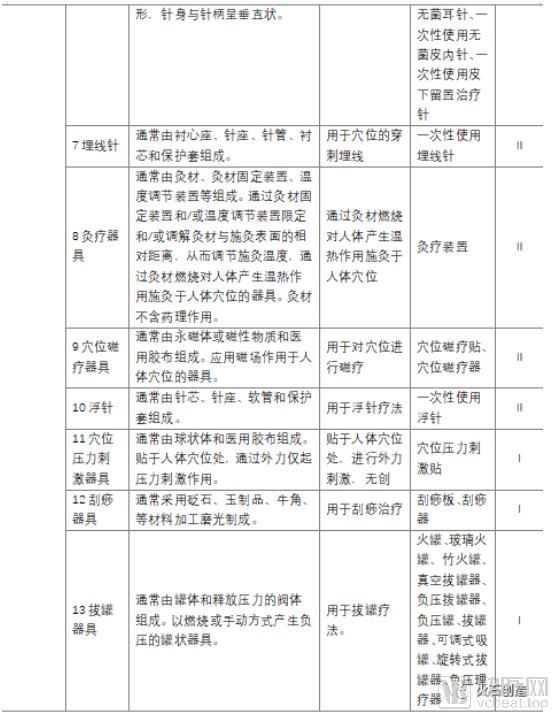
Source: Official Website of the Former China Food and Drug Administration
03
Market Distribution and Patent Count of Traditional Chinese Medicine Medical Devices
The overall number of traditional Chinese medicine (TCM) medical device products is relatively small. Jiangsu Province in China significantly leads other regions, with major TCM medical device R&D enterprises primarily distributed along the eastern coastal areas and in central China. Data from the Huoshi Chuangzao database shows that the number and scale of TCM medical device manufacturers have been expanding in recent years. As of January 2021, there were 254 manufacturers in China with nationally approved TCM medical device products; among them, 28 were enterprises above designated size, and 37 were high-tech enterprises.
The R&D capabilities of TCM medical device manufacturers are significantly strengthening. As of January 2021, government-affiliated TCM research institutions had undertaken a total of 3,672 research projects. Currently, Class II TCM medical device manufacturers in China mainly focus on passive acupuncture needles, intradermal needles, and active acupuncture needle products. Class I TCM medical device manufacturers in China mainly focus on cupping products, gua sha products, acupoint patches, and other patch-type products.
In terms of regional distribution, there are 406 approved traditional Chinese medicine (TCM) medical devices currently valid in China. Jiangsu Province has the highest number with 130 products (accounting for 32.01%), followed by Guangdong Province with 28 (6.89%), Henan Province with 28 (6.89%), and Shanghai with 23 (5.67%). Regarding patents held by manufacturers of TCM medical devices, a total of 2,768 patents have been granted.
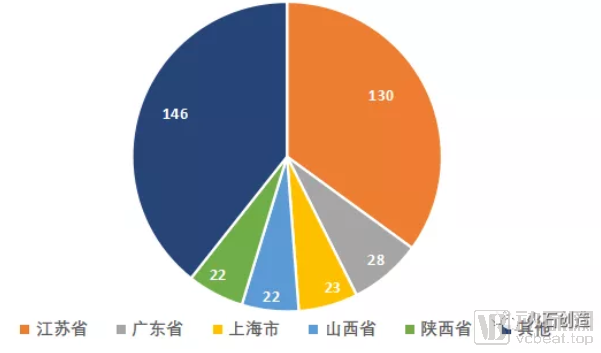
Figure 4: Distribution of the Number of Approved TCM Medical Device Products in ChinaSource: Huoshi Creation Database
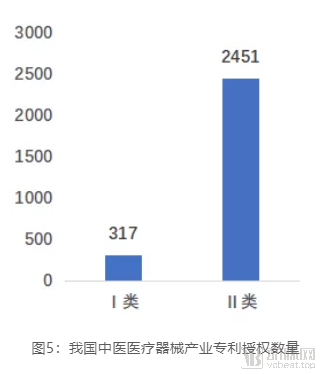
Figure 5: Number of Patents Granted in China's Traditional Chinese Medicine Medical Device Industry
Source: Huoshi Creation Database
04
Constraints and Future Development Trends in the Traditional Chinese Medicine (TCM) Medical Device Industry
Although the overall development trend of the traditional Chinese medicine (TCM) device industry is positive, there are still a series of factors constraining its growth. The industry as a whole has a low level of concentration, characterized by “small scale, low efficiency in resource allocation, and chaotic operations.” Meanwhile, TCM devices continue to face challenges in terms of technology and safety.
With the further implementation of favorable national policies, rising demand for TCM diagnosis and treatment, and enhanced innovation capabilities, the TCM medical device industry is expected to maintain a positive growth trajectory, with market concentration likely to increase. However, challenges in R&D outcomes, prolonged development cycles, and low efficiency—making it difficult to achieve significant short-term returns—remain key constraints on industrial development.
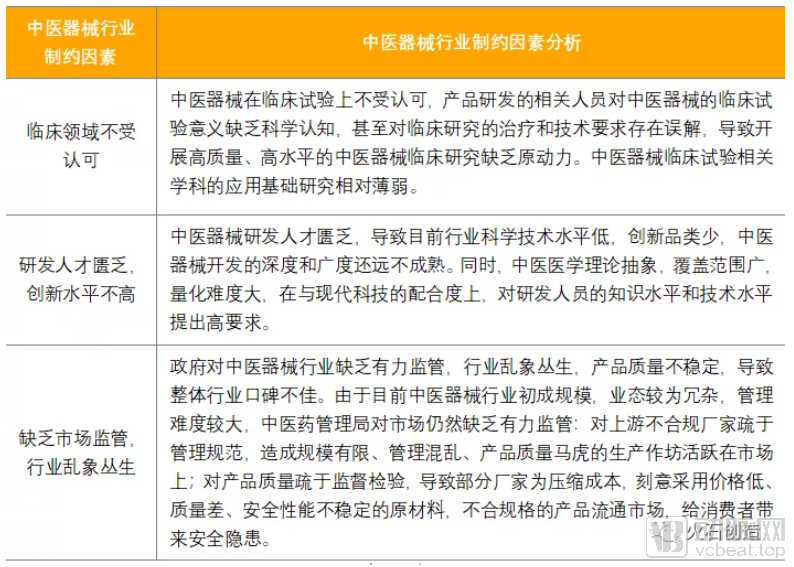
Table 4: Analysis of Constraints on the TCM Medical Device Industry in China
Source: Compiled from public information
In response to the constraints facing the TCM medical device industry, the author believes that China can expand its focus in the future along dimensions such as “AI+” TCM devices and health supplement-related TCM devices. Intelligent TCM devices will be a key development trend in the future.
1. “AI+” Traditional Chinese Medicine Devices
Since 2018, the Chinese government has continuously introduced incentive policies for medical devices related to “AI+,” accelerating the integration of artificial intelligence in the medical device sector, including traditional Chinese medicine (TCM) instruments.
As an important component of medical devices, traditional Chinese medicine (TCM) equipment will also leverage the favorable “tailwind” of AI-supportive policies to accelerate product innovation and broaden the application scenarios of “AI+,” thereby enabling more precise and personalized diagnostic and therapeutic analysis.
2. Traditional Chinese Medicine (TCM) devices for health preservation have promising development prospects
The escalating aging population in China, coupled with the fast-paced and high-pressure modern lifestyle, has led to a gradual increase in the prevalence of chronic diseases. This trend has spurred growing demand for healthcare products, including Traditional Chinese Medicine (TCM) wellness devices. Recognized for their gentle therapeutic processes and efficacy in alleviating chronic pain, TCM wellness devices are increasingly gaining consumer acceptance.