

Zhiyun Health Launches 'Healthy Community 2030 Initiative' in Laogang Town, Establishing a Community Health Management Model
Amid the trend toward tiered diagnosis and treatment, community-based settings have gradually become a key “lever” for enhancing the quality of primary healthcare services. However, in actual practice, most community health and medical services continue to face numerous challenges, including uneven allocation of medical resources and weak service delivery capacity. This has prompted various stakeholders in the health industry to continually seek better solutions to the question of “how to empower community-based medical services.”
On March 26, the Health Hut collaboration project among Zhiyun Health, the People’s Government of Laogang Town in Pudong New Area, Shanghai, and Dianbangbang (Shanghai) Network Technology Co., Ltd. was officially launched. Attendees included Chen Xiaoqing from the Social Construction Office of Laogang Town, Pudong New Area, Shanghai; Shen Huaqiong, Party Branch Secretary of Jiangang Village, Laogang Town; Yao Zhihua, Party Branch Secretary of Chengri Village, Laogang Town; Ni Dingjia, Deputy Party Branch Secretary of Chengri Village, Laogang Town; Jia Yan, Vice President of Operations at Zhiyun Health; Song Jubin, General Manager of Dianbangbang; and Wang Yi, Executive Deputy General Manager of Dianbangbang.
It is reported that this collaboration, centered on the “Healthy Community 2030 Initiative,” leverages iMedic’s long-established advantages in integrated online-to-offline chronic disease management to introduce Health Stations into Laogang Town. The partnership aims to jointly create a model for community health management and tangibly improve the health outcomes of residents in Laogang Town.
Unequal distribution of healthcare resources has long been a major public concern. China also faces new challenges brought about by industrialization, urbanization, population aging, and the continuous changes in disease patterns, ecological environment, and lifestyles.
On March 25, 2021, Ling Feng, a member of the National Committee of the Chinese People's Political Consultative Conference (CPPCC), proposed deploying “Rehabilitation and Health Huts” in village clinics. These huts are equipped with common rehabilitation devices, physiotherapy instruments, electrocardiographs (ECGs), sphygmomanometers, and smart TVs with screen-casting capabilities, thereby facilitating convenient access to rehabilitation services and basic chronic disease prevention and management for villagers in their local communities.
It is not just village clinics; under the broader context of healthcare reform, medical and health services should extend to the locations closest to households and residents. By leveraging community health management data clouds to address the “last kilometer” challenge in accessing medical care for community residents, we can effectively enhance the diagnostic and treatment capabilities of primary healthcare providers, thereby delivering faster and better medical security and medication support to community residents.
Meanwhile, unlike acute and critical conditions that require specialized hospital-based care, chronic diseases are characterized by their incurability in the short term, prolonged management cycles, and individualized patient needs. However, China has long suffered from an imbalance in healthcare resource distribution, with secondary and tertiary hospitals—accounting for only 35% of medical facilities—shouldering 90% of the chronic disease patient load. This severe concentration of patients not only compromises the care experience for those with chronic conditions, who often endure hours of travel and waiting for merely minutes of consultation, but also strains the system. Therefore, the “Healthy Community 2030 Initiative” is a tailored program designed to enhance community-level medical service capabilities for chronic disease patients. By positioning community healthcare as the first point of contact in the patient journey and alleviating overcrowding at major hospitals, the initiative aims to effectively realize tiered diagnosis and treatment.
Laogang Town, under the jurisdiction of Pudong New Area in Shanghai, is located in the southeastern part of Pudong New Area. Due to its considerable distance from downtown Shanghai, residents often incur significant time costs when seeking medical care. Therefore, it is particularly important to ensure that residents in the area have access to convenient and efficient healthcare services.
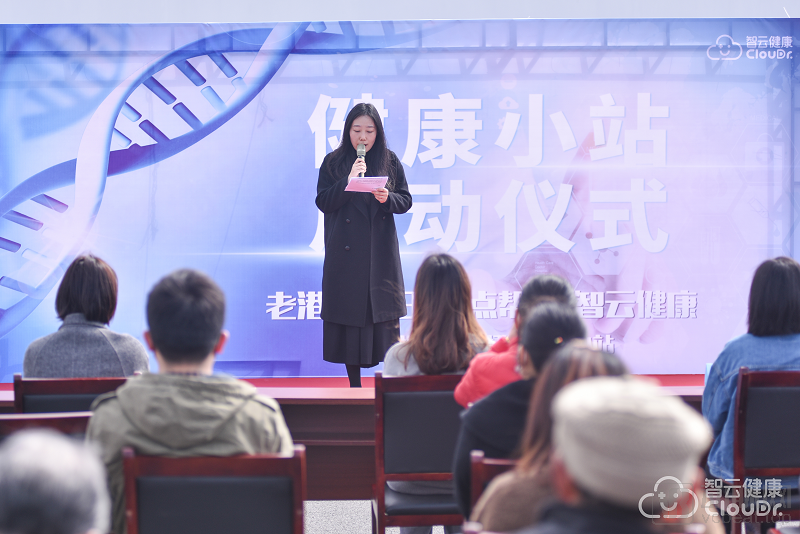
(Jia Yan, Vice President of Operations at Zhiyun Health)
According to Jia Yan, Vice President of Operations at Zhiyun Health, the “Healthy Community 2030” initiative is built upon Laogang Town’s existing community management and service model. By integrating Zhiyun Health’s customized service products, it establishes an online-to-offline closed loop centered on community scenarios. The program creates a “20cm mobile health service experience” and ensures that “community health stations are within a 30-meter reach,” providing residents with comprehensive health management services—including health education, online medical consultations, chronic disease management, and general health management—truly making healthcare “within easy reach.”
After seven years of practice, Zhiyun Health has charted a viable path for “Internet + Chronic Disease Management.”
As of 2020, Zhiyun Health’s hospital SaaS system had covered nearly 2,000 hospitals in China, its pharmacy SaaS system served over 110,000 pharmacies, and 33,000 doctors on the Zhiyun Health Internet Hospital platform were providing high-quality medical services to patients with chronic diseases across China.
By entering community-based scenarios, Zhiyun Health aims to create a patient-centric, full-ecosystem solution that digitally empowers all collaborators across the industry chain. Through innovative and scalable solutions, it seeks to generate strong network ecosystem effects, ultimately enhancing the efficiency and capabilities of chronic disease management.
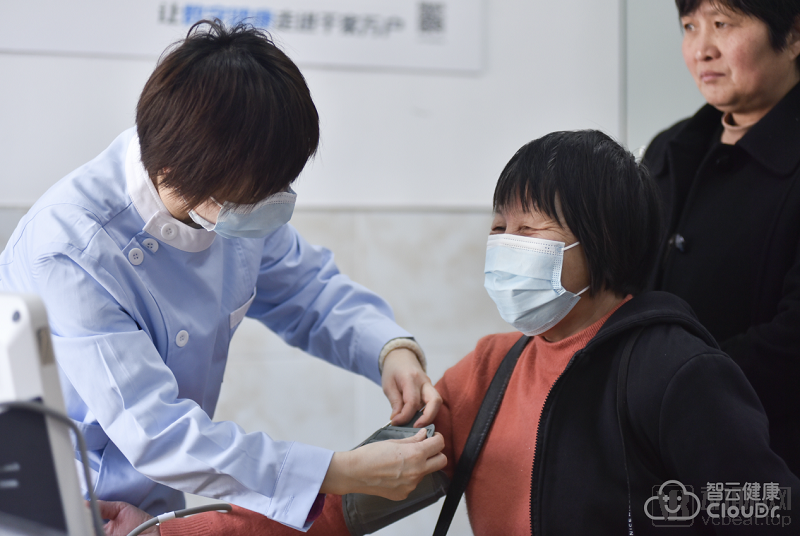
Zhiyun Health will leverage its community health management data cloud to connect diverse scenarios—including homes, communities, hospitals, and pharmacies—establishing the community as the third core setting for residents’ health management, alongside hospitals and pharmacies. This integration bridges in-hospital and out-of-hospital chronic disease services, delivering full-cycle health management from prevention through treatment to rehabilitation, thereby helping healthcare professionals enhance diagnostic and therapeutic efficiency, improve chronic disease management outcomes, and boost patient satisfaction.