

Neusoft Hanfeng Launches IoT-Enabled Smart Critical Care Solutions to Bolster Pandemic Response

Hifly Medical
Medical IoT Product Developer
Recently, Hifly Medical, in collaboration with Shengjing Hospital of China Medical University, held a launch event for an intelligent ventilator weaning assistance system designed for critically ill patients. The event officially announced that the AI-powered system for determining optimal ventilator weaning timing has entered the practical implementation phase, which will provide significant support to the diagnosis and treatment of severe COVID-19 cases.
In the clinical management of critically ill patients with COVID-19, ventilator weaning has consistently served as a critical milestone. Clinical research data indicate that prolonged mechanical ventilation may lead to pulmonary complications such as infection and hemorrhage, induce structural alterations in lung tissue, and cause irreversible damage. Consequently, determining the optimal timing for ventilator withdrawal remains a highly challenging endeavor.
What are the highlights of this intelligent ventilator weaning assistance system? In which medical scenarios has Hifly Medical’s IoT technology been applied? What key challenges remain in the integration of IoT and healthcare? Looking ahead, what is Hifly Medical’s strategic layout for driving technological and service innovation in IoT-enabled healthcare?
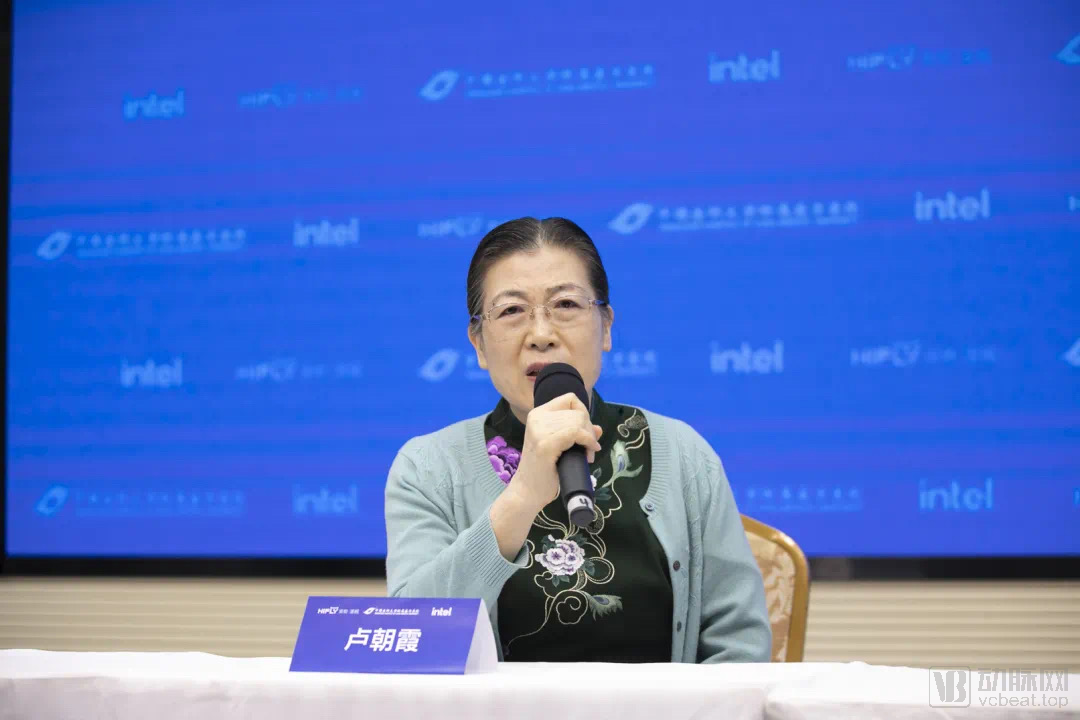
To address these issues, VCBeat interviewed Professor Lu Zhaoxia, Chairwoman and CEO of Hifly Medical.
Professor Lu stated that the diagnosis and treatment of acute and critical illnesses impose stringent requirements on the real-time availability and accuracy of patients’ vital sign data, as their conditions require immediate intervention to prevent life-threatening consequences. In this context, big data and artificial intelligence offer significant advantages, while Internet of Things (IoT) technology has emerged at an opportune time.
Therefore, the MICU expert team involved in the research and development at Shengjing Hospital integrated their medical expertise with over a year of practical clinical experience in combating the epidemic, cleaned and transformed extensive clinical data, and, through rigorous mathematical modeling and system development conducted by the Hifly Medical R&D team and the mathematics expert group at Northeastern University, ultimately completed the mathematical model and the intelligent ventilator weaning assistance system.
This system leverages models to assess the weaning readiness of mechanically ventilated patients through objective data analysis, providing physicians with quantifiable and clear evaluation recommendations. It assists clinicians in making weaning decisions by real-time acquisition of data from bedside monitoring devices and ventilators. By employing artificial intelligence to determine the optimal timing for weaning, the system offers precise and intelligent support for clinical decision-making regarding ventilator weaning.
Compared with traditional clinical judgments based on physicians’ experience and intuition, assisted weaning systems can significantly reduce the incidence of ventilator-associated lung injury and ventilator-associated pneumonia, lower reintubation rates and mortality, alleviate patient suffering during the weaning process, buy time for patients, and reduce the workload of clinical healthcare professionals.
In the future, the project team will continue to conduct clinical research based on this system to constantly improve the accuracy of assessment. Building on the software platform, the team will further explore the integration of hardware and software within the project, aiming to achieve more intelligent clinical application of ventilators and provide more patient-centered care to a broader population.
The intelligent ventilator weaning assistance system, jointly developed by Hifly Medical and Shengjing Hospital, is a key application of the pan-critical care diagnosis and treatment system. This integrated auxiliary diagnostic and therapeutic system combines data acquisition from multiple medical devices with real-time monitoring and analysis of critically ill patients. Leveraging Internet of Things (IoT) technology, it enables automated data collection from various medical equipment, including patient monitors, ventilators, anesthesia machines, hemodialysis machines, and infusion pumps, providing auxiliary diagnostic and treatment recommendations based on multi-parameter vital signs.
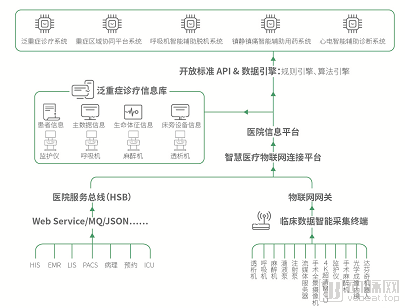
Clinical Application Scenario: Intelligent Ventilator Weaning Assistance System
Professor Lu stated that in healthcare informatization, the most effective applications are those that leverage smart medical technologies to benefit patients and facilitate doctors and nurses in enhancing the value of their care. Currently, many subsystems within healthcare information systems are essentially human-computer interfaces that require manual data entry. This process consumes significant time for medical staff and is prone to issues such as non-standardization, timeliness delays, lack of systematic integration, and inaccuracy.
Therefore, to develop big data and artificial intelligence, standardized data with consistent granularity are required, along with secure and reliable databases. More importantly, appropriate application scenarios are essential for data to realize its value.Therefore, it is necessary to develop mass-market, high-demand, and scalable intelligent application scenarios.
Guided by this strategic vision, Hifly Medical has leveraged Internet of Things (IoT) technology to develop various smart hospital subsystems, including a 5G-enabled pre-hospital emergency care system, an intelligent dialysis system, a medical equipment monitoring system, an IoT-based medical waste supervision system, a remote surgical demonstration system, and a real-time remote consultation and ward round system.
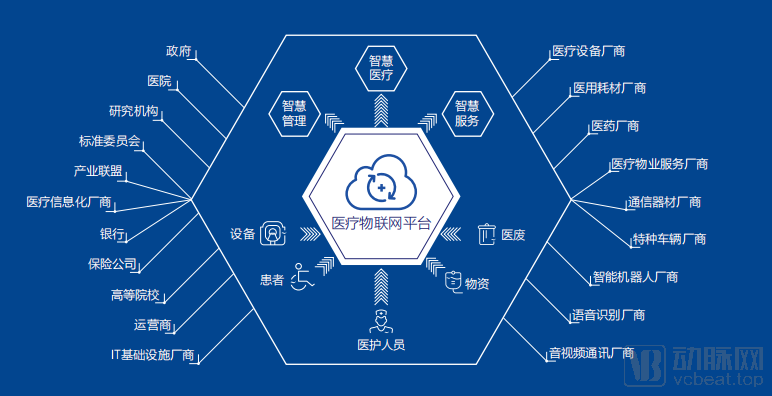 Hifly Medical IoT Ecosystem
Building smart hospitals still faces challenges in data standardization and interoperability among various systems. As an integrated entity responsible for connectivity and transmission, IoT intelligent terminals need to parse data collected from medical devices. However, some devices lack standardized interfaces; their interfaces may be proprietary and closed, requiring vendor authorization for data acquisition. This poses significant challenges to the construction of IoT data platforms.
Although Hifly Medical has developed multiple IoT healthcare application scenarios, Professor Lu stated, “A hospital IoT system involves medical equipment, logistical infrastructure, and various assets, with a vast number of items requiring connectivity. Currently, however, the proportion of items that achieve effective connectivity and enable real-time collection of raw data is less than 10%.”
Regarding Hifly Medical’s next steps, Professor Lu stated: “We will continue to invest in enhancing hospital connectivity capabilities, and our core smart terminals will undergo continuous iteration. Furthermore, communication security cannot be overlooked; we must ensure that data transmission is secure, encrypted, and protected against leakage. To this end, we will integrate security chips into the process.”
“We aim to build a comprehensive ecosystem for the Internet of Medical Things (IoMT) and establish close collaborations with domestic and international partners. For instance, we are working with Huawei, ZTE, and the three major telecom carriers to develop a new multi-network converged architecture for hospitals. This architecture supports hospital private networks, 5G, Wi-Fi, Bluetooth, and other technologies, enabling connectivity for a vast number of smart terminals,” Professor Lu added.
In addition to outlining the technological development roadmap, Professor Lu also revealed the company’s business development direction. First, Hifly Medical will build its proprietary core database model to enhance data connectivity capabilities, addressing the shortage of scenario-specific application data and the challenges in practical implementation. This will enable the integration of various application scenarios into a unified platform, thereby delivering greater value to customers. Second, she stated that Hifly Medical will focus on benchmark hospitals and lighthouse clients, optimizing service planning and providing refined, high-precision services.
As for the company’s long-term goals, Professor Lu stated:“Hifly Medical must strive to be a good company—one that truly delivers value to customers, patients, and society. Its development must be of high quality, compassionate, and distinguished.”
As a rising star in the IoT healthcare sector, Hifly Medical has launched multiple IoT healthcare service solutions over the past two years. The company is actively building a win-win ecosystem for the medical Internet of Things (IoMT), creating perceptually interconnected smart hospitals, and enabling new models of healthcare services.
Looking ahead, Hifly Medical will continue to strengthen its R&D of globally leading IoT technologies, integrate Neusoft’s resources in the big health sector, empower smart healthcare with sensing capabilities, realize the value of medical care through technology, and create the beauty of life through connectivity.