National Traditional Chinese Medicine Brain Launched: Zhongyi Congbao Drives AI-Powered Innovation and Files IPO Prospectus
In the vibrant spring of March, by the scenic West Lake, the 2021 TCM AI Industry Summit was successfully held amidst the gentle breeze. The summit saw the establishment of the “National TCM Brain Innovation Consortium,” which aims to redefine “Smart TCM,” contribute to the development of artificial intelligence in traditional Chinese medicine (TCM), harness the power of AI for the inheritance, innovation, and advancement of TCM, and collaboratively shape the overall landscape of the TCM AI industry.
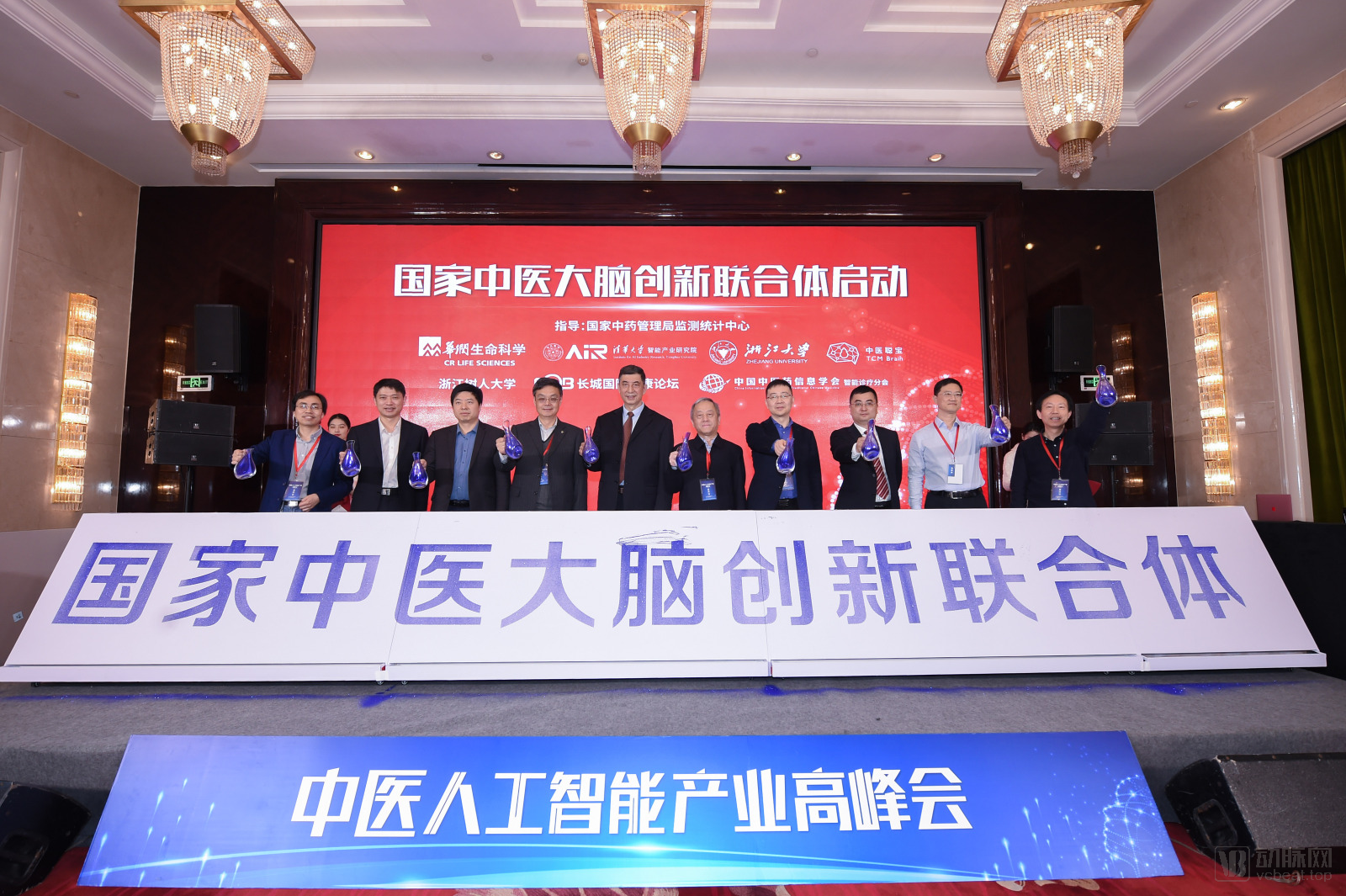
The “National Traditional Chinese Medicine (TCM) Brain Innovation Consortium” was established under the guidance of the Monitoring and Statistics Center of the National Administration of Traditional Chinese Medicine and initiated by China Resources Life Sciences Group, with joint participation from Tsinghua University, Zhejiang University, Zhejiang Shuren University, Hangzhou Congbao TCM, and other entities. Attendees included Yang Youqun, Vice President of the China Association of Traditional Chinese Medicine Information; Li Shangqing, Deputy Director of the Monitoring and Statistics Center of the National Administration of Traditional Chinese Medicine; Li Lu, Member of the Standing Committee of the Zhejiang Provincial Committee of the Chinese People’s Political Consultative Conference and President of Zhejiang Shuren University; Ying Xumin, Deputy Director of the Hangzhou Municipal Health Commission; and Liu Guangzong, Director of the TCM Division of the Tianjin Municipal Health Commission. The conference featured a compact and rich agenda, which VCBeat categorized into three segments: keynote presentations, project launches, and case studies of typical examples.
The conference commenced with an opening address by Secretary Zhang Zhizhen of the Management Committee of Jiangbei Science and Technology Park in Hangzhou National High-Tech Industrial Development Zone. Yang Youqun, Vice President of the China Association of Traditional Chinese Medicine Information and former Vice President of the China Academy of Chinese Medical Sciences, pointed out in his presentation that with both traditional Chinese medicine (TCM) and artificial intelligence (AI) elevated to the level of national strategy, the present moment represents the optimal time for developing TCM AI. He emphasized that the integration of TCM and AI will be a key future direction in the field of TCM, and expressed hope that various sectors would step forward to take on leading roles, thereby driving new breakthroughs in China’s TCM AI development.
Li Shangqing, Deputy Director of the Monitoring and Statistics Center of the National Administration of Traditional Chinese Medicine, shared his grand vision for the “TCM Brain.” He expressed hope that the “National TCM Brain” would establish standards and provide direction for the development of smart TCM, empower TCM with technologies that uphold fundamental principles while fostering innovation, achieve interconnectivity between national-level TCM intelligent platforms and health information platforms, and provide medical institutions with access to TCM healthcare information resources.
Furthermore, as one of the key agenda items of this conference, it was announced that TCM Congbao has completed a financing round worth hundreds of millions of yuan, led by China Resources Life Sciences Group. Notably, China Resources Life Sciences Group’s investment announcement coincides with the establishment of the “National Traditional Chinese Medicine (TCM) Brain Innovation Consortium,” sending a clear signal to the industry: TCM Congbao has emerged as a core player in the field of TCM artificial intelligence, and the participation of state-owned enterprises will serve as a significant driving force for the development of the TCM AI industry.
Gu Gaosheng, founder of TCM Congbao (Hangzhou Congbao Technology Co., Ltd.), then delivered an impassioned speech titled “Industry-Driven: Serving as the Vanguard in Pioneering Trials.”
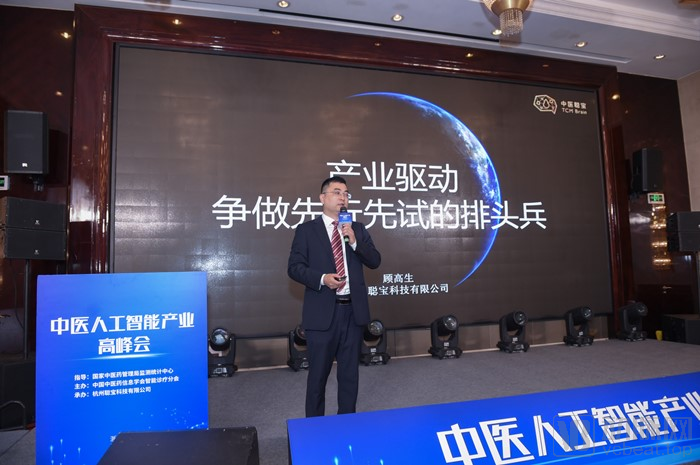
Gu Gaosheng analyzed that, from Fuxi’s creation of the Eight Trigrams and the Yellow Emperor’s annotation of the Inner Canon of the Yellow Emperor (Huangdi Neijing), to renowned TCM masters such as Zhang Zhongjing and Sun Simiao, each leveraged the most advanced technologies of their respective eras to uphold fundamental principles while pursuing innovation. This has enabled Traditional Chinese Medicine (TCM) to remain vibrant after thousands of years of heritage, continuing to shine in the present day and play a significant role in combating the COVID-19 pandemic.
Gu Gaosheng believes that these pioneering TCM practitioners, who courageously broke free from the conventional constraints of traditional Chinese medicine, are precisely the driving force behind the innovative development of TCM. To this end, Gu Gaosheng is willing to follow in their footsteps and embrace the role of a contemporary “maverick,” integrating TCM with modern technology to promote the industrialization of traditional Chinese medicine.
However, when examining the modernization of Traditional Chinese Medicine (TCM), it becomes evident that its pace lags significantly behind that of Western medicine. This disparity stems from TCM’s historically traditional development trajectory and its limited utilization of modern scientific and technological advancements for self-improvement. Addressing this gap was the original intent behind the establishment of Congbao TCM.
Gu Gaosheng’s analysis reveals that, when placed in the context of modernization, traditional Chinese medicine (TCM) faces two major developmental challenges: first, a weak foundation in TCM informatics, characterized by a lack of information platforms with distinct TCM features; and second, an insufficient basis for big data research in TCM. Against this backdrop, the path toward industrializing TCM is akin to a “moon landing.”
Zhongyi Congbao originated from a grassroots informatization project in traditional Chinese medicine (TCM) under the National Administration of Traditional Chinese Medicine in 2014, and was formally established in 2015. Over the past five years, Zhongyi Congbao has consistently adhered to the strategic direction outlined in China’s 13th Five-Year Plan, committing itself to the integrated application of TCM and artificial intelligence technologies.
“Although a comprehensive view of the entire landscape has yet to emerge, certain achievements have been made.” After five years of development, TCM Congbao, leveraging big data, cloud computing, and artificial intelligence as its core technologies, has integrated upstream and downstream resources to revitalize regional traditional Chinese medicine (TCM) industry chains. It provides scalable and replicable solutions for building intelligent TCM medical consortia, urban TCM brains, and specialized intelligent TCM departments. Currently, its services cover more than 5,000 medical institutions across 18 provinces and municipalities in China, with over 10 million prescriptions issued to date.
Gu Gaosheng noted that the scarcity of TCM practitioners is a major factor currently constraining the development of artificial intelligence in traditional Chinese medicine (TCM). In response, Congbao TCM has independently developed an Intelligent TCM Inheritance and Innovation Platform. This platform facilitates the practical application of clinical experience from renowned senior TCM experts across various schools throughout China, and supports the personalized development of expert-system robots for specialized disease diagnosis and treatment plans with regional characteristics. Furthermore, at this conference, Congbao TCM entered into a partnership with Zhejiang Shuren University to pilot its Intelligent TCM Teaching Innovation Project, and jointly launched with Zhejiang University a research project titled “Application of Artificial Intelligence Technologies in the Field of Traditional Chinese Medicine,” which was approved by the National Administration of Traditional Chinese Medicine.
As the first intelligent traditional Chinese medicine (TCM) medical consortium in China and the creator of the nation’s first county-level big data platform for TCM, Haiyan is no longer an obscure county. The successful dissemination of the “Haiyan Model” also demonstrates the feasibility and leading position of grassroots AI-driven TCM medical consortia.
In 2015, as a pilot county for provincial and municipal health informatization projects, Haiyan County partnered with Zhongyi Congbao to take the lead among counties nationwide in constructing a “Disease–Syndrome–Therapeutic Principle–Prescription” data model for traditional Chinese medicine (TCM) clinical practice. This initiative leveraged informatization tools to automatically upload TCM clinical data—including four diagnostic methods, diagnoses, prescriptions, and medication records—to a centralized system for integrated management, thereby standardizing clinical diagnosis and treatment, collecting and preserving TCM case records, and facilitating scientific research analysis and the inheritance of TCM knowledge.
In terms of diagnosis and treatment, Haiyan has launched an intelligent TCM diagnosis and treatment system to enhance the modernization of primary-level traditional Chinese medicine (TCM) services. Regarding pharmaceutical distribution, Haiyan strives to achieve rapid turnover and standardized management of TCM decoction pieces across the entire region. A central pharmacy has been established at the County Hospital of Traditional Chinese Medicine to address bottlenecks such as incomplete stocking of decoction pieces in primary healthcare institutions, inconveniences in prescription issuance, and difficulties in equipping community health service stations with decoction pieces. Jiang Yanfeng, Chief of the TCM Section at the Haiyan County Health Bureau, stated that after years of effort, Haiyan County has successfully forged a development path characterized by “grassroots-oriented TCM, intelligent applications, and integrated services.”
“Personalized Prescriptions in Traditional Chinese Medicine (TCM)” highlights that medication regimens vary among individuals. The same principle applies to the TCM Artificial Intelligence Medical Consortium. As a pilot region, Haiyan County has successfully operated this model for five years, with its application extended to 5,000 medical institutions across China. Given that the National Comprehensive Reform Pilot Zone for Traditional Chinese Medicine was launched in 2020, what practical outcomes will it yield?
Tan Tianlin, Party Secretary of the First Affiliated Hospital of Chengdu Medical College, stated that Xindu District is a national pilot zone for comprehensive traditional Chinese medicine (TCM) reform, and the TCM intelligent medical consortium has played a pivotal role in advancing TCM development in the district. However, the current construction of medical consortia commonly faces challenges such as staff shortages, insufficient capabilities, and low efficiency, leading to low patient satisfaction. To reduce operational costs for county-level TCM healthcare institutions and training costs for TCM physicians, and to alleviate the public’s difficulties and high expenses in accessing medical care, the hospital began exploring the TCM intelligent medical consortium model and implemented it in Xindu District, Chengdu.
Tan Tianlin introduced that the hospital has collaborated with TCM Congbao to build an intelligent TCM medical consortium, launching six intelligent systems and establishing two service platforms. Currently, the hospital has achieved preliminary construction results. The intelligent systems have achieved full coverage of the TCM hospital and its affiliated primary healthcare institutions, and have been comprehensively applied by western medicine practitioners who have studied TCM, as well as by junior and senior TCM physicians. The system is seamlessly integrated with the hospital’s HIS (Hospital Information System), enabling interconnectivity of patient diagnosis and treatment records within the medical consortium. Within just two months of launch, the prescription volume increased significantly. In 2020, the hospital’s annual outpatient visits reached 574,000, an increase of 62,000 compared to 2019. Tan Tianming stated that next, the hospital will continue to enrich the connotation of the intelligent TCM medical consortium, further explore its operational mechanisms, and develop replicable and scalable models.
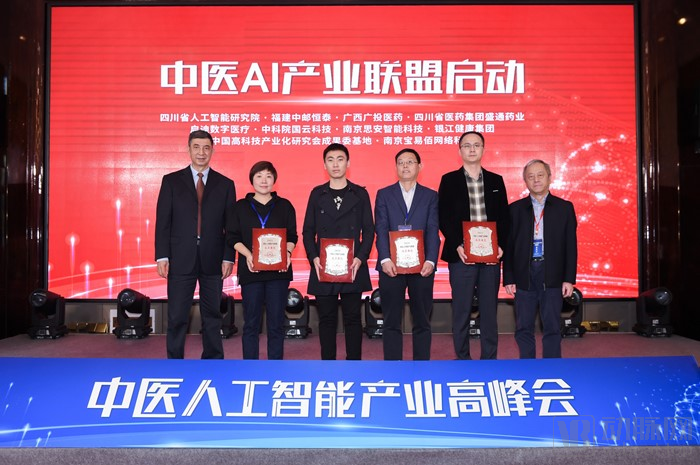
As the highlight event of this conference, the Traditional Chinese Medicine Artificial Intelligence Industry Alliance was officially established in the presence of representatives from dozens of enterprises. Subsequently,VCBeatCommitted to advancing the development of artificial intelligence in traditional Chinese medicine.