

JD Health Reports 78.8% Revenue Growth and 117.7% Profit Surge in First Annual Report Since IPO

JD Health
Internet Medical and Health Service Platform Provider
On March 29, 2021, JD Health International Inc. (stock abbreviation: “JD Health”, 6618.HK) released its first annual results announcement since its listing.
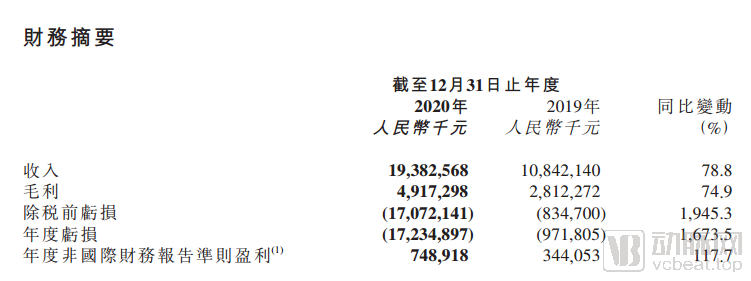
The announcement shows that JD Health's total revenue in 2020 was RMB 19.38 billion, a year-on-year increase of 78.8%; under the non-International Financial Reporting Standards (IFRS), the profit was RMB 750 million, a year-on-year increase of 117.7%.
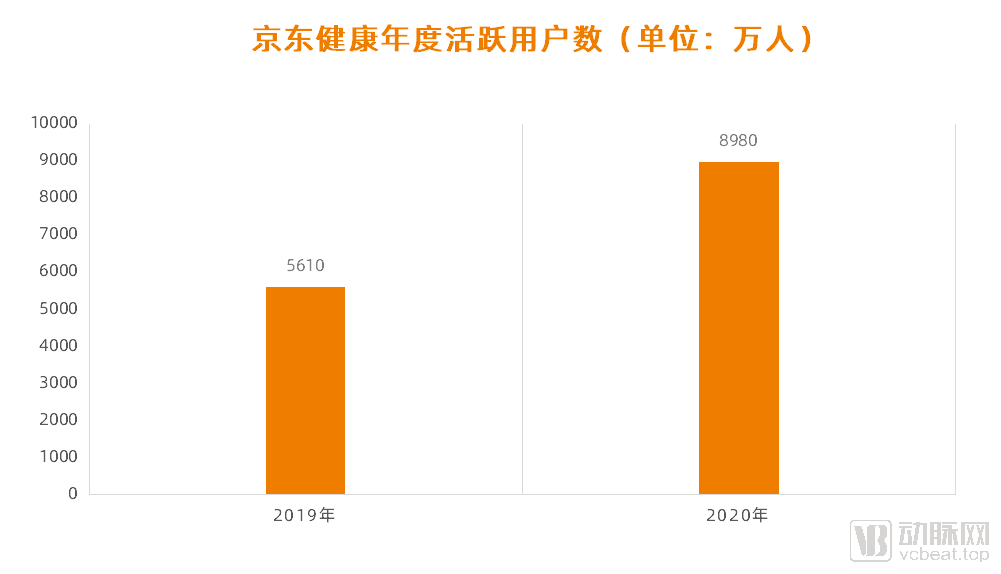
Source: JD Health 2020 Annual Report; Graphic by VCBeat
In terms of the number of users,As of December 31, 2020, JD Health had 89.8 million annual active users, a net increase of 33.7 million year-on-year, representing a growth rate of over one-third., which is a testament to its adherence to strategic positioning and steady growth. Xin Lijun, CEO of JD Health, stated, “Over the past year, JD Health’s user penetration rate within the JD.com Group has continued to rise. Given JD.com Group’s 470 million active users, this means there is still a substantial untapped user base within this channel alone, indicating significant growth potential for JD Health’s future user base.”
Specifically in terms of business operations,JD Health’s retail pharmacy business offers over 20 million stock-keeping units (SKUs). The platform hosts more than 12,000 third-party merchants and has over 110,000 full-time and external physicians practicing on it. The average daily volume of online consultations exceeds 100,000, representing a fivefold increase compared to 2019.
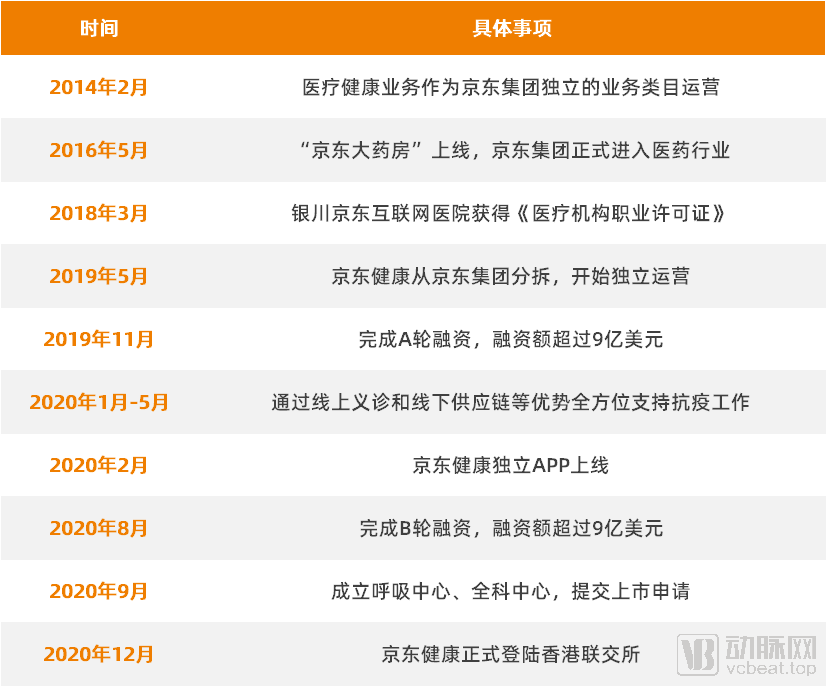 JD Health Milestones
As the third “high-potential” entity cultivated by JD Group, following JD Digits and JD Logistics, every step taken by JD Health has drawn significant market attention and anticipation. In 2014, healthcare services were operated as an independent business segment within JD Group. In 2016, “JD Pharmacy” was launched, marking JD Group’s formal entry into the pharmaceutical industry. In 2019, JD Health was spun off from JD Group to operate independently, completing its Series A financing round of over USD 900 million in November of the same year.
In 2020, JD Health entered a new stage of development.First, in terms of pandemic response, JD Health implemented measures and services such as emergency supply guarantees, free online consultations, and scientific medication guidance, cumulatively serving over 10 million people and making outstanding contributions to the fight against the epidemic;Second, in terms of core businessJD Health’s standalone “APP” and “JD Family Doctor” were launched successively. On the internet healthcare front, a number of specialty centers—including the Cardiology Center, Mental Health and Psychology Center, Traditional Chinese Medicine (TCM) Hospital, Respiratory Center, and Otolaryngology Center—were established one after another, fully meeting users’ personalized needs and further deepening “Internet + Healthcare” services;Third, at the corporate architecture level, In August 2020, JD Health completed its Series B financing, raising over $900 million. Four months later, JD Health (HK: 06618) officially listed on the Hong Kong Stock Exchange, becoming the first profitable internet healthcare company in China to go public. Notably, it took JD Health just over a year from independent operation to its IPO, demonstrating remarkably rapid growth.
Overall, leveraging its technology investments over the past year and continuously strengthening its supply chain and healthcare service capabilities, JD Health has achieved substantial growth and significant gains in both its business operations and service delivery. It has gradually emerged as a “benchmark” enterprise in the internet healthcare industry, carving out a modern development path suited to its own trajectory.
However, the development of any endeavor is not achieved overnight; it requires a gradual, step-by-step process. As a “dark horse” in China’s healthcare sector, how has JD Health, which started as a pharmaceutical e-commerce platform, strategically built its “Internet + Healthcare” ecosystem? And during the pivotal year of 2020, how did JD Health focus its efforts to achieve stepped improvements across various key performance indicators? Answers to these questions can be found in JD Health’s 2020 annual results announcement.
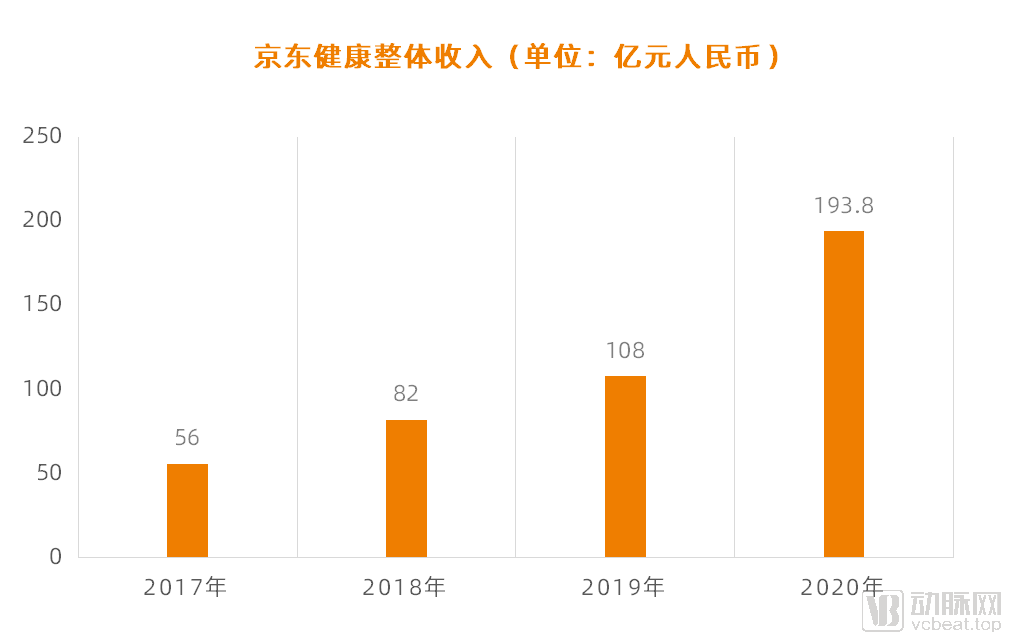
Data source: JD Health 2020 Annual Report; graphic by VCBeat
According to the prospectus released at the time of its listing last year, JD Health’s total revenue from 2017 to 2019 was RMB 5.6 billion, RMB 8.2 billion, and RMB 10.8 billion, respectively. In 2020, despite the impact of the pandemic, overall revenue continued to rise, reaching RMB 8.8 billion in the first half alone. By the second half, revenue further climbed to RMB 10.58 billion, nearly matching the full-year figure for 2019. This demonstrates its substantial commercial potential and market value.
JD Health’s business is primarily divided into two major segments: retail pharmacy operations and online medical and health services.In terms of the revenue structure of its two business segments, pharmaceutical and health product sales account for more than 80% of JD Health’s retail pharmacy business, while online medical and healthcare services currently represent a smaller proportion of total revenue but have shown clear upward momentum.
Although there is a significant revenue gap, these two core businesses are not operating in isolation as competitors; rather, they exhibit strong interconnectivity. Specifically,The enhancement of online medical and health service capabilities has greatly met the more diversified needs of retail users, while the retail pharmacy business has also provided healthcare service users with a more convenient and timely one-stop health consumption experience.
At the level of individual business segments, JD Health’s retail pharmacy operations represent its original mission in entering the internet healthcare sector. They constitute a significant portion of its revenue and serve as a strategic springboard for expansion into other business areas. In its operational model, JD Health leverages its retail pharmacy business as a core driver to provide users with comprehensive, high-quality services, including the supply of a full range of medical and health products, first-to-market launches of innovative drugs, customized health-related products, and precision delivery.It primarily covers high-quality pharmaceutical and healthcare products, including over-the-counter (OTC) drugs, prescription drugs, medical devices, and nutritional health supplements, to meet users’ diverse medical and healthcare needs.
As one of JD Health’s core businesses, the retail pharmacy business mainly includesSelf-Operated, Online Platform, Omnichannel LayoutThree Models, Each Demonstrating Its Application Value Across Different Service Dimensions.
1Self-operated Business: Revenue reached RMB 16.8 billion, a year-on-year increase of 77.8%, accounting for the largest share of the company’s total revenue.
JD Health’s total revenue in 2020 was RMB 19.38 billion, with its direct-sales business generating RMB 16.8 billion, accounting for 86.7% of the total revenue. Undoubtedly, this segment constitutes a core component of JD Health’s business portfolio.
But this is not difficult to understand. JD Health entered the healthcare sector as a “pharmaceutical e-commerce” player. First, in terms of logistics, JD Health enjoys advantages unmatched by its peers. Leveraging the logistics strengths of JD.com, JD Health is able to provide customers with integrated supply chain solutions covering the entire process of pharmaceutical warehousing and transportation. Second, in pharmaceutical R&D, JD Health draws on JD.com’s years of successful collaboration with pharmaceutical companies to continuously explore partnerships with upstream supply chains, particularly in online channels. This facilitates the premier launch of innovative drugs and new specialty medicines on its online platform, providing domestic users with access to cutting-edge treatment options synchronized with global advancements.
Finally, there is the massive operational scale.As of December 31, 2020, JD Health operated a total of 14 dedicated pharmaceutical warehouses and over 300 non-pharmaceutical warehouses across China. The expanded service coverage significantly shortened delivery times and markedly improved overall customer satisfaction.
2Online Platform: Onboard third-party merchants to offer a more diverse product portfolio
Although JD Health’s self-operated business is its “main battlefield,” it still suffers from the drawback of incomplete product category coverage. The emergence of the online marketplace platform effectively addresses this weakness, creating a “virtuous complementarity” with the self-operated segment and offering users a more diverse range of products.
The online platform facilitates the online sales of pharmaceutical and health products by integrating chain pharmacies, independent pharmacies, as well as manufacturers and suppliers of pharmaceutical and health products. According to the announcement, as of December 31, 2020, the retail pharmacy business offered more than 20 million stock-keeping units (SKUs), with over 12,000 third-party merchants onboarded on the platform. This initiative not only expanded JD Health’s service coverage but also generated substantial profits for third-party merchants, representing a typical win-win cooperation mechanism.
3Omnichannel Strategy: Partnering with Offline Pharmacies Nationwide to Meet Urgent Medication Needs
In addition to its online presence, offline deployment is equally critical. Supported by the efficient fulfillment capabilities of JD Health and its partners, the company has extensively expanded its omnichannel layout and O2O (Online-to-Offline) model. Building on this foundation, JD Health offers location-based home delivery services for medication purchases, effectively addressing users’ urgent needs for medicines.
During the reporting period,“JD Medicine Express” has covered more than 300 cities across China, providing users with next-day delivery, same-day delivery, 30-minute delivery, and 24/7 medicine delivery services.It is understood that “JD Medicine Express” not only collaborates with large pharmaceutical retail enterprises but has also become the preferred partnership platform for many small and medium-sized regional pharmacy chains. Its popularity among pharmacies stems from its access to a diverse range of delivery service providers, including Meituan, Dada, JD Logistics, and other third-party logistics networks. This ensures reliable delivery capacity and timeliness, thereby enhancing the speed of medication delivery to some extent.
In addition, for specialty medications such as oncology drugs, “JD Medicine Express” has developed a one-on-one operational plan and launched the “Same-City Delivery” model. It is reported that the “Same-City Delivery” model of JD Medicine Express was previously piloted in multiple cities, including Chongqing, Chengdu, and Shenzhen.To date, partnerships have been established with over 155 stores across China. Jingtaitang Pharmacy, which collaborates under the “same-city delivery” model, has achieved an average daily sales volume of over RMB 6,000 per store, with peak single-day sales exceeding RMB 17,000.
The announcement stated that over the past year, JD Health has been committed to building high-quality, professional medical services centered around users. Adhering to a “user-centric” service philosophy, the company has continuously expanded the boundaries of healthcare services, striving to provide users with a one-stop health consumption experience covering all scenarios and the entire lifecycle.
To deliver sufficient and high-quality medical and healthcare services, it is essential to ensure an adequate supply of resources, including key components of the healthcare system such as physicians and hospitals. Physician resources, in particular, are the critical factor determining whether a project can be successfully implemented, making this a vital element in JD Health’s exploration of pathways in the internet healthcare sector.
During the reporting period, JD Health assembled a medical team comprising more than 110,000 full-time physicians and external collaborating physicians. The adoption of a “self-built” plus “collaborative” physician development model aims to leverage the complementary strengths of both approaches, thereby optimizing the utilization of medical resources and generating greater value.
During the early stage of the epidemic, JD Health handled an average of over 100,000 consultations per day.Full-time physicians can see up to 200 patients per day, whereas affiliated physicians see a maximum of only 20. In terms of individual service volume, full-time physicians far exceed affiliated physicians. However, this does not indicate that affiliated physicians make insufficient contributions; rather, many objective factors are at play. First, affiliated physicians primarily provide consultations during their spare time, which results in both lower patient volumes and less guaranteed availability. The advantage, however, is that the company avoids fixed monthly labor costs, instead sharing revenue with physicians based on consultation volume. This model yields more favorable cost-efficiency compared to employing full-time physicians. Consequently, within JD Health’s organizational structure, the number of affiliated physicians significantly exceeds that of full-time physicians.
In terms of “user-centric” innovation in healthcare services, JD Health has launched specialized internet medical centers and family doctor service products. Focusing on specific diseases and specialties, the specialized centers integrate resources from renowned industry experts to provide users with integrated online-to-offline solutions for the prevention, treatment, and rehabilitation of chronic diseases.Currently, 18 specialized centers have been established, including the Heart Center, Otolaryngology Center, Traditional Chinese Medicine Hospital, Respiratory Center, and Diabetes Center. Nearly 100 renowned physicians are affiliated with these centers, including Academician Han Demin, Professor Hu Dayi, Professor Gao Sihua, and Professor Lin Jiangtao.
To further enhance the user service experience, JD Health has leveraged its years of accumulated expertise in internet-based medical and healthcare services to launch its family doctor service, “JD Family Doctor.” Catering to the consumption habits and characteristics of different demographic segments, JD Health will continue to upgrade and iterate its products based on the “JD Family Doctor” platform.
During the COVID-19 pandemic prevention and control efforts, Traditional Chinese Medicine (TCM) played a positive role, further raising its public profile. During the reporting period, JD Health deepened its “Internet + TCM” services, exploring an integrated online-offline TCM service model through online TCM consultations and remote consultations with renowned TCM practitioners, thereby improving the efficiency of TCM diagnosis and treatment. To promote the development of a quality system for TCM decoction pieces, JD Health collaborated with partners to establish drug quality control measures and launched the “Online Service Platform for TCM Decoction Pieces.” By setting relevant standards to regulate the stocking and sales processes of TCM decoction pieces, the platform provides users with high-quality and safe pharmaceuticals and health products.
Currently, the internet healthcare industry is at a critical stage of development characterized by the deep integration of various business segments and the formation of closed-loop ecosystems. The “online + offline” integrated service model is becoming increasingly well-defined, while the industrial ecosystem linking pharmaceuticals, healthcare services, and insurance is growing more robust. Driven by both policy guidance and market demand, the novel “Internet + Healthcare” model is leveraging the momentum of “New Infrastructure” initiatives to achieve explosive growth.
While empowering the improvement of public health, JD Health opens up its core capabilities and advantages—including its supply chain, technology, big data, and resources—to provide services to various stakeholders, including governments, hospitals, and pharmaceutical companies. Building on this foundation, JD Health collaborates with partners to drive the upgrading and transformation of the broader healthcare industry, jointly establishing a new ecosystem for “Internet + Healthcare” services.
For governments, leveraging its digital intelligence and information technology capabilities, JD Health collaborates with local governments to co-develop digital “Healthy City” projects, accelerating the digital transformation of the health industry. Furthermore, JD Health utilizes its technological advantages to support the development of regional public health systems. During this period, JD Health entered into a strategic partnership with the Hubei Provincial Health Commission to bolster the construction of Hubei’s public health system and vigorously promote the growth of the medical and health industries, including mental health services, smart wearable devices, and medical protective supplies.
For hospitals, JD Health leverages its own and JD Group’s leading cloud technologies toInfrastructure as a Service (IaaS), Platform as a Service (PaaS), and Software as a Service (SaaS)and other measures to improve hospital operational efficiency. JD Health has partnered with Tianjin Nankai Hospital to establish the “Nankai-JD Internet Hospital,” providing Tianjin residents with services including online follow-up consultations, health counseling, and follow-up management. This platform enhances the hospital’s operational capabilities, enabling physicians to build their personal brands and increase their online income.
For pharmaceutical companies, JD Health leverages its digital intelligence and advanced technologies to facilitate the digital transformation of the supply chain, thereby creating new development opportunities for upstream suppliers on their path to transformation.In 2020, JD Health entered into partnerships with multiple globally renowned pharmaceutical companies, including Eisai China, AstraZeneca, Pfizer, Novartis, Bristol Myers Squibb (BMS), Sanofi, and Abbott, to jointly drive a comprehensive upgrade of pharmaceutical and healthcare management services, thereby meeting user needs.
Overall, driven by policy guidance and strong market demand, JD Health has leveraged its core business segments as a breakthrough point, focusing its efforts on the government, hospital, and pharmaceutical enterprise sectors, thereby fully demonstrating the value of its products.
For enterprises, corporate quality and vitality constitute the micro-foundation of an economy’s competitiveness and are critical factors influencing corporate growth. Meanwhile, proactively assuming social responsibility and addressing pressing challenges in current social development serve as a concentrated manifestation of a company’s sense of mission and accountability.
Over the past year, JD Health has leveraged its supply chain capabilities and medical health service expertise to continuously help alleviate difficulties in accessing medications and medical care for populations in underdeveloped healthcare regions as well as special needs groups.
During the pandemic control period, in response to issues such as patients’ difficulties in seeking medical care and purchasing medications, JD Health made concerted efforts in drug supply assurance, online consultations, and open platform capabilities, sparing no effort to ensure the immediate supply of medicines, medical protective equipment, and other essential materials.Providing free online consultations for all disease categories nationwide; meanwhile, medication guidance and pharmaceutical purchasing services are offered to the general population and patients with chronic diseases for prevention purposes,Open up platform capabilities to government agencies, hospitals, and enterprises to help them establish online zones for free medical consultations or epidemic prevention and control.
To improve the accessibility of high-quality medical resources in remote areas and support the decisive victory in the “battle against poverty,” JD Health launched in 2020"Live Consultations with Renowned Physicians" and "Pharmaceutical Subsidy Program"such activities. Over the past year, JD Health has ventured into multiple medically underserved areas across Yunnan, Guizhou, and Sichuan provinces, hosting “Live Consultations with Renowned Physicians” to help villagers break through geographical barriers and engage in “face-to-face” interactions with top medical experts.“Healthy China • Pharmaceutical Subsidy Program” provides an annual medication purchase subsidy of RMB 1,000 per person to impoverished households registered in the national database (including those who have been lifted out of poverty).
To address the healthcare challenges faced by special populations, JD Health recently launched the “Rare Disease Care Initiative.” By leveraging its integrated “medical + pharmaceutical” advantages and mobilizing resources from all sectors of society, JD Health willCreating a One-Stop Solution Platform for “Healthcare, Pharmaceuticals, Insurance, and Public Welfare”, helping to alleviate the three major challenges faced by the rare disease community: difficulties in obtaining a diagnosis and accessing medical care, limited access to medications, and barriers to medication affordability.
2020 was a year worth remembering, especially for the broader health and wellness sector, which ushered in unprecedented development opportunities driven by the pandemic.First, in terms of policy, the state has issued numerous policies, regulations, and guidance documents to promote the rapid development of the “Internet + Healthcare” industry;Secondly, in terms of market demand, the sudden outbreak of the COVID-19 pandemic severely restricted individual mobility, drawing increasing consumer attention to online healthcare;Finally, in terms of technological application, driven by emerging technologies such as 5G, AI, and cloud computing, medical scenarios are becoming increasingly diverse, with rapid improvements in overall healthcare service capacity and operational efficiency.
In the face of new opportunities for industry development, JD Health, with innovation as its core competitiveness, firmly grasped market trends in 2020. It continuously refined and iterated its business model, basing itself on the “retail pharmacy + healthcare services” ecosystem to actively build a one-stop internet healthcare and health management platform. By strengthening its capabilities in core supply chains, JD Health has delivered greater value to all participants across the healthcare value chain.
The mission of JD Health is toLeverage core strengths to build an “Internet + Healthcare” ecosystem, enhance healthcare services for the entire population, transform the healthcare industry, and create substantial social value.. From the perspective of specific development paths,From its initial foray into pharmaceutical e-commerce to its entry into the field of internet healthcare, from expanding consultation services to offering health management solutions, and from independent operations to emerging as the third unicorn incubated by JD.com, JD Health has achieved successive leaps, with its value proposition becoming increasingly evident.
Faced with the trillion-yuan blue ocean of the broader health industry, JD Health will continue to uphold its mission as the “Nation’s Premier Health Steward,” adhering to its strategic positioning as a “digitally driven, full-lifecycle, all-scenario health management platform anchored by pharmaceutical and health product supply chains, with medical services as a key lever.” By continuously strengthening its foundational capabilities, JD Health aims to create greater value for users, the industry, and society.
Therefore, standing at a new historical starting point and carrying infinite dreams and saturated enthusiasm for internet healthcare, JD Health will present more possibilities in the future.
Remarks:
Unless otherwise specified, all monetary figures mentioned in this article are in Renminbi (RMB).
The financial data presented in this article are excerpts from the company’s performance announcement; please refer to the full version of the announcement for definitive information.